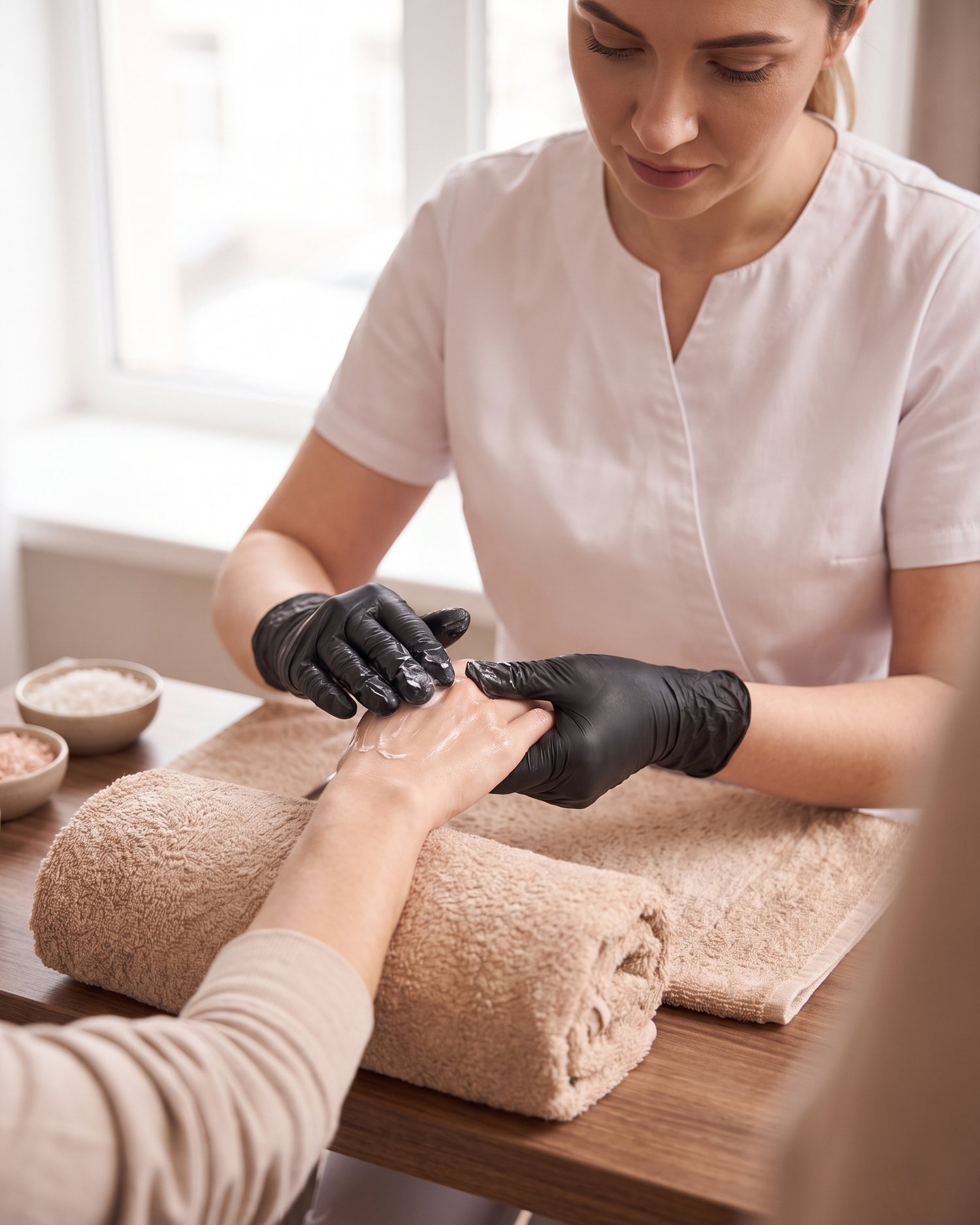
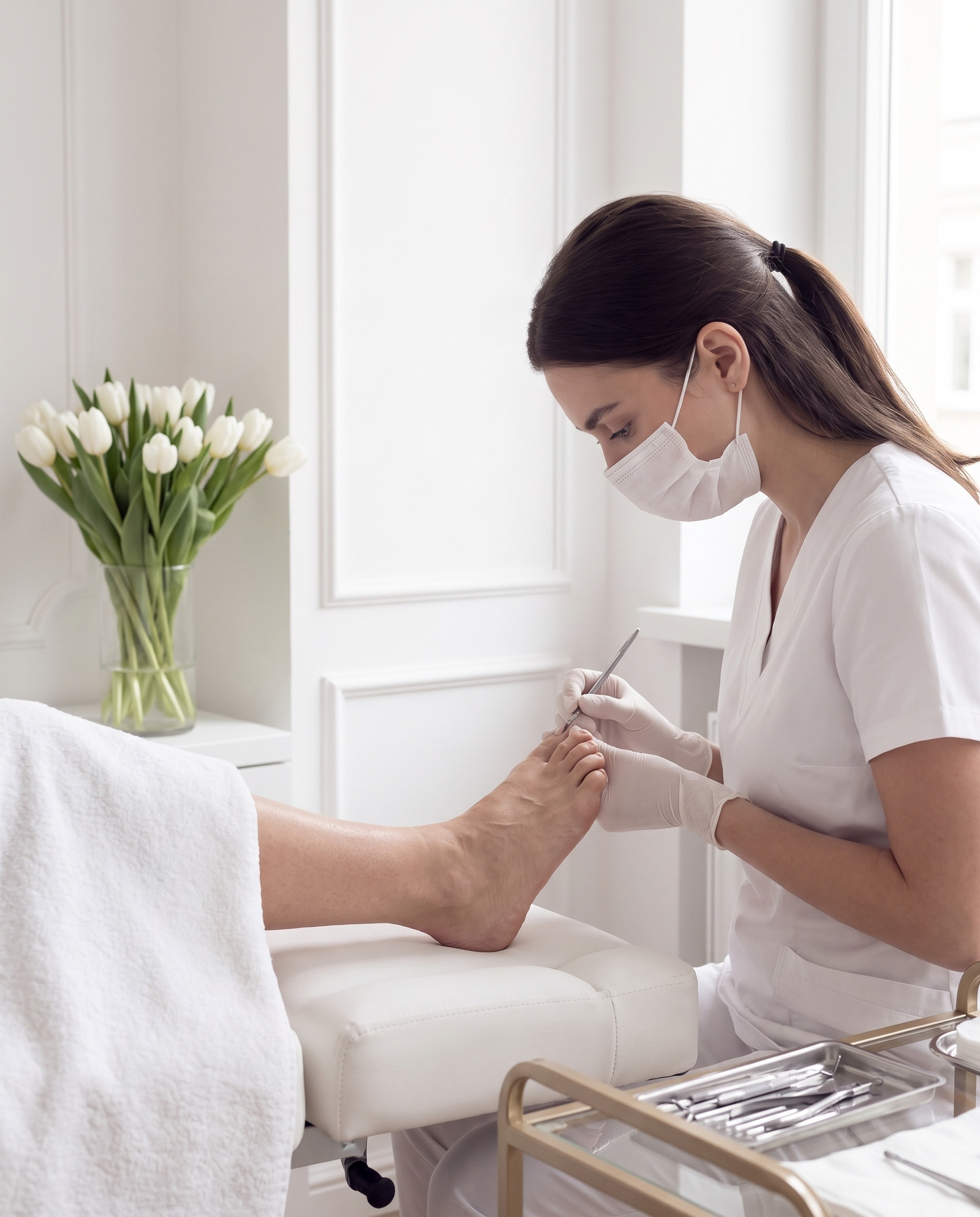
Two weeks before, observe, do not fix by force
Preparation begins with answering a simple question: is the problem cosmetic? Dryness, roughness, and tightness after washing usually fall within the scope of care. A bleeding fissure, oozing, severe itching, unilateral swelling, pain when walking, or a change in nail colour first require an assessment by an appropriate specialist. A ritual with a peel, a mask under occlusion, and a massage does not diagnose fungal infections, psoriasis, or the cause of swelling.
For a few days, also observe what exacerbates the dryness. Sometimes hands crack not because they need another mask, but because they come into contact with detergent several times a day without gloves. Feet may react to tight footwear, synthetic socks, or intense training. This observation helps to select the right care during your visit and a home plan afterwards.
A crack is not the place for a peel
Superficial, closed dryness can be gently exfoliated. A deeper fissure behaves differently: it stretches with movement, can be painful, and constitutes a breach of the barrier. Scrub grains, a scented preparation, or a long massage can then sting and deepen the irritation. Do not try to close a fissure just before your visit with aggressive scrubbing. Take a photo for your own observation, protect the area according to a doctor's or podiatrist's advice, and inform the salon before your appointment.
A week without experiments gives the skin a clear starting point
Acid socks are a particularly bad idea before a visit. Exfoliation after them can start with a delay and last for many days. Skin that looks calm in the morning starts to peel in patches by the evening. Adding another peel and occlusion does not reasonably speed up the process; it increases the risk of stinging and uneven irritation.
Two days before, put away the foot file, pumice stone, and nippers
Also, do not cut calluses on your toes and soles yourself. The specialist should see their location, boundaries, and reaction to pressure. If a callus is painful at a specific point, interferes with walking, or returns quickly, the right address may be a podiatry clinic, not a relaxation ritual.
Schedule your manicure and pedicure in the right order
Fresh polish on the day of your consultation obscures the colour and surface of the nail. If you are not ordering styling and something about the nail plate worries you, come without opaque colour. A ridge, lifting, discolouration, or brittleness is information. The ritual should not cover it up just because the purpose of the visit is relaxation.
Do not wax or shave skin that will be massaged the day before
- Micro-trauma after hair removal. Shaving calves, forearms, or the back of the foot often ends in micro-cuts or folliculitis, especially with repeated use of a razor.
- Reaction to cosmetics. In contact with a peel or aromatic preparations, damaged areas begin to sting and burn.
- The time rule. If hair removal is important to you, do it well in advance so the skin has time to calm down completely before your visit.
The same applies to tanning. Fresh sunburn, hot and tender skin are not suitable for exfoliation or massage. The treatment will not reverse a sunburn. You must reschedule your appointment, even if the event for which you planned smooth hands or feet is near.
On the day of your visit, wash your skin gently and do not mask anything
- Hygiene. A regular shower or washing your hands is perfectly sufficient before your visit.
- What to avoid. Do not apply a thick layer of lotion, self-tanner, oil with shimmer, or an anaesthetic product just before leaving.
- Why it is important. Such a layer makes it difficult to assess peeling, redness, and small wounds. Furthermore, self-tanner can come off unevenly during a peel, which is not a skin reaction, but the mechanical removal of stained epidermal cells.
Come in clothing that does not compress your feet and allows you to freely expose your forearms or calves. After a rich cream, tight sleeves and tight shoes are simply uncomfortable. For your feet, clean, soft socks and footwear with room for your toes will be useful. For your hands — gloves in winter, because leaving a warm salon straight into the frost quickly takes away the comfort.
A list of products and illnesses is more important than perfect nails
Before starting, tell us about contact allergies, atopy, psoriasis, diabetes, sensory disorders, circulatory problems, a tendency for skin to crack, and medications that affect healing. This is not a formality. Occlusion strengthens the contact of the cosmetic with the skin, a peel increases its reactivity, and massage changes tissue blood supply. Each of these stages can be skipped or modified, but only if the specialist knows the situation.
- Provide the name of the preparation after which stinging or a rash occurred previously.
- Report any loss of sensation, tingling, or unusual hypersensitivity of your hands or feet.
- Tell us about recent treatments, injuries, sprains, and surgeries in this area.
- Do not hide a change under a plaster without explaining what is underneath it.
Five minutes of looking at the skin can change the entire plan
Good preparation leaves space for such a decision. When everything has been previously filed, painted, and covered with cream, assessment is more difficult. The natural state of the skin is not a reason for shame; it is a map for the person who has to choose the pressure, the type of peel, and the duration of occlusion.
Before an important event, leave a margin for skin reaction
If you are having the ritual for the first time, do not schedule it a few hours before a photoshoot, wedding, or trip in closed footwear. Even gentle care can cause temporary redness, and a rich product may prove unsuitable for someone with an undiagnosed allergy. A margin allows you to observe your skin without pressure and change your home care if something stings.
A known, well-tolerated ritual can be planned closer to an event, but you still need to consider logistics: cleaning, travel, swimming, or long walks immediately after the visit shorten the feeling of softness. The surface effect is best preserved when the skin does not fight against detergent, friction, and chlorine for the rest of the day.
Prepare your hands after work and your feet after training separately
The feet of a runner or a person wearing work boots tell a different story. A blister after a long training session, a black nail after pressure, and a corn in one spot do not become an indication for a stronger peel. A few days before the ritual, limit activity that constantly opens the same wound. Care can soften the surface, but it will not correct the mechanics of an ill-fitting shoe.
If you book both hands and feet, do not assume that both zones must undergo an identical protocol. Hands may tolerate an enzymatic peel and a longer massage, while feet may need a red area to be skipped. The ritual is a set of stages, not a mandatory package to be performed from start to finish. This difference does not lower the quality of the visit; it means that the skin has been truly thoroughly examined.
- Frequency of cream application. Ask the specialist how often to apply care preparations in your case.
- Selection of ingredients. Find out if your skin needs the addition of urea and when it is safe to return to peeling.
- Early warning signs. Determine which symptoms should prompt an immediate visit to a podiatrist to maintain the effects of skin barrier protection.
The work of a nail stylist, hairdresser, or mechanic leaves specific marks on the hands: dust, dye, solvent, lubricant, and frequent washing. Do not scrub them with an aggressive preparation on the eve of your visit. Tell us what your skin has been in contact with and whether you use gloves. Product residue can be removed gently, whereas redness after a solvent requires soothing. The specialist should not have to guess whether the redness is a symptom of an allergy, friction, or home cleaning.
Preparation for an elderly person or someone with limited mobility also includes safe transport after the ritual. A rich cream can briefly reduce the grip of your feet in loose flip-flops, and a massage should not end with a hurried climb up the stairs. Bring stable footwear, inform us about dizziness when standing up, and do not plan a long walk on a slippery surface immediately afterwards. The comfort of the treatment only matters if it also lasts safely upon leaving.
Your first visit requires different preparation than a subsequent ritual
Before your first appointment, write down the names of any cosmetics that caused stinging, itching or redness lasting longer than usual. If the reaction was visible, show an unedited photo taken in natural light. Do not re-test the product just to recreate the symptom. For subsequent visits, previous tolerance helps, but it does not exempt you from a short interview. A new medication, a fresh blister from a shoe, gel polish removed with a file or a change from office work to contact with detergents can make a previous protocol no longer suitable. A regular client does not arrive with automatic consent to repeat all stages. She arrives with a history that must be compared with what is visible on the skin that day.
After your visit, protection wins over another peel
On the first evening, let emollients remain on the skin. Afterwards, return to using cream after washing your hands, protective gloves for household chemicals and comfortable footwear. Do not try to prolong smoothness with daily abrasion. Excessive exfoliation weakens the barrier, so the skin may become rougher precisely because it is constantly irritated.
If you are preparing for a hand and foot SPA in Warsaw, do not bring perfectly polished skin to your visit, but rather accurate information about its behaviour. Two weeks of observation, two days without tools and one calm morning give the specialist more than a home repair marathon. The best result begins with leaving the skin alone.