 A treatment room at J'adore
HANDS & FEET
Your foot hurts, the nail is ingrown and throbs with every step, your heels are so cracked that they snag your tights, and a thickened callus presses on your foot when walking — these are not "cosmetic" problems, and a classic pedicure will not solve them. This is what podology: specialist, paramedical foot care and treatment is for.
At J'adore Instytut, the treatment is performed by a podiatrist (podology specialist) — using sterilised instruments, with an assessment of the foot's condition and documentation. The podiatrist treats the ingrown nail (usually without surgery), reduces calluses and hyperkeratosis, dresses cracked heels, treats the nail plate in cases of fungal infection, and safely cares for the feet of people with diabetes. An honest distinction is important: this is care and treatment, not a medical diagnosis or treatment — in the case of pathological changes, the podiatrist will refer you to a doctor or dermatologist. You do not need a referral for podology — you can book directly, including for a consultation alone. Below you will find everything worth knowing before your visit.
from a single visit to a corrective cycle (e.g., a brace grows with the nail over several weeks)
HANDS & FEET
Podology is specialist, paramedical foot care — on the border of cosmetology and healthcare. A podiatrist deals with what a classic, cosmetic pedicure does not cover: ingrown nails, painful calluses and corns, deep heel cracks, treatment of the nail plate in cases of fungal infection, and safe foot care for people with diabetes.
The most important distinction to understand from the start: podology is treatment and care, not a medical diagnosis or treatment. A podiatrist will solve many real, everyday foot problems — but in the case of pathological changes, they do not replace a doctor, but rather refer you to one and often cooperate with them. This is a responsible approach: we help within the scope where we are effective, and we state clearly where our competence ends.
We work with sterilised instruments, assess the condition of the foot, and document it between visits — especially during the correction of ingrown nails, which we conduct in a cycle. You do not need a referral for podology — you book directly.
How it works
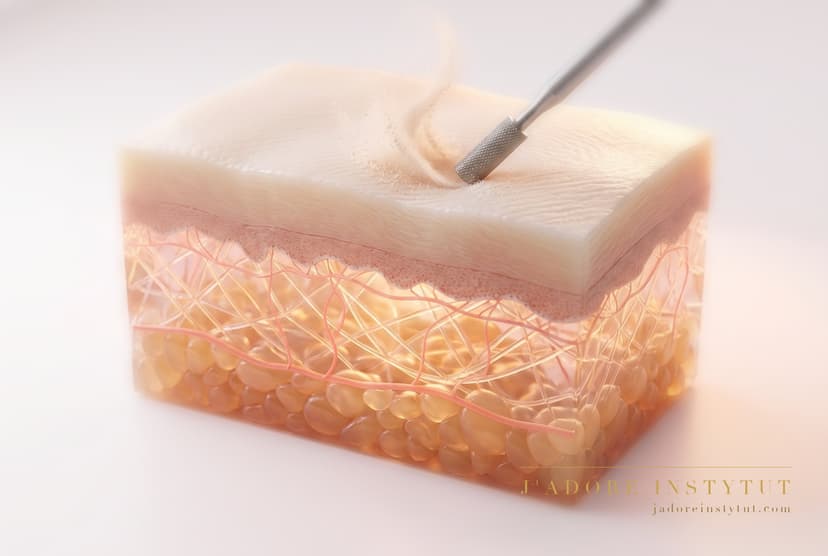
Most problems that bring people to a podiatrist have one common mechanical cause: pressure and friction repeated thousands of times a day. The foot reacts to this in the only way it knows — it thickens the stratum corneum exactly where the load is greatest. The trouble is that the thickening itself becomes a hard, protruding point that presses harder than the original cause. A loop is created: pressure builds the thickening, and the thickening increases the pressure. The podiatrist breaks this from two sides at once — they treat the overgrown layer with a sterile burr and relieve the area where the pressure originated.
With an ingrown nail, the same logic applies to the geometry of the nail plate. The nail grows only forward, so when its side edge is too curved or cut in an arc, it presses into the skin fold with every millimetre of growth, and the irritated tissue responds with swelling, which presses the edge even more. The podiatrist's work here consists of separating these two structures and correcting the curvature of the regrowing nail plate, rather than cutting the nail "to the quick" — which is why the correction follows the rhythm of regrowth and is sometimes spread over a cycle of visits. The boundary is clear: this is treatment, relief, and dressing of the foot, not a diagnosis — in the case of inflammation, a wound, suspicion of infection, or a pathological change, the podiatrist refers you to a doctor or dermatologist.
Interesting fact: in some European countries — for example, in Germany — podology is a separate, regulated medical profession with its own training programme and a protected professional title. In Poland, this specialisation developed later and is still sometimes confused with a pedicure — hence so many misunderstandings about who actually does what.
HANDS & FEET · Podology
Women's zone and men's zone
Podology for women is very often the result of footwear: narrow toes and heels promote ingrown nails, corns and calluses in the front part of the foot, and the sandal season exposes cracked heels. This is in addition to preventive care and — increasingly — conscious care for foot health, not just their appearance.
What we work with
Podology for men is most often about burdened feet: working on your feet, sports (runners, footballers), wearing full footwear all day. Hence ingrown nails, hard calluses and cracked heels — often ignored for a long time, "because it doesn't hurt that much", until it starts to. Aesthetics are secondary here; what matters is the comfort and efficiency of the foot.
What we work with
Podological problems do not ask about gender — an ingrown nail or a callus looks the same in a woman and a man, and the podologist treats them identically. The main difference is the cause (footwear vs load/sport) and why someone comes in. For the sake of aesthetics and foot hygiene, men often choose a men's pedicure, and they come to the podologist with a specific problem.
Ingrown nail
This is the most common reason for podiatry visits — and the most common fear: "will I need surgery?". In the majority of cases, no. The podiatrist treats the ingrowing conservatively, using methods that move the nail away from the irritated skin fold and correct its growth over time.
🚩 If an ingrown nail is accompanied by an abscess, oozing discharge, severe throbbing pain or fever — this is a sign of inflammation that may require medical intervention (sometimes antibiotics or a minor surgical procedure). The podiatrist will assess the foot, provide care within their scope and refer you to a doctor — do not delay such a visit.
Interesting fact: a correction brace works a bit like an orthodontic brace — but for the nail. It uses constant, very gentle pressure to "accustom" the plate to a correct, flat shape over several weeks, instead of forcing it out.
Podology · HANDS & FEET
Calloused, thickened epidermis is the foot's reaction to pressure and friction — over time it starts to hurt, burn and make walking difficult. The podiatrist reduces it with a podological burr, safely and with a feel for the thickness, to provide relief without irritating the healthy skin underneath.
Why does it come back? Calluses and cracks are very often the result of pressure — improper footwear, walking style or foot alignment. Reducing the thickening provides relief, but you will only maintain the full effect with home care and sometimes offloading (insoles, correctors) selected by the podiatrist. This is why some problems are managed in a cycle, not "once and for all".
Fungal infections and diabetic foot
These are two areas where the podiatrist is a particularly important link — and where it is equally important to honestly indicate the boundaries of podology.
🚩 Do you have diabetes? Inform the podiatrist before the treatment — it changes the way we work with your foot. 🚩 Also always report: a non-healing wound or ulcer, loss of sensation/numbness, a suspicious mole, a dark spot under the nail or a rapidly changing skin lesion — these are situations where we refer you to a doctor or dermatologist. Podology does not replace them.
From the podiatrist's office
I tell every person with diabetes: a regular visit to the podiatrist is not a luxury, it is prevention. A foot that feels less and heals more slowly needs a professional eye — many serious problems start with a trifle that is easy to manage when noticed in time.
Contraindications
Some situations mean that we postpone the podiatry treatment or perform it more cautiously and in cooperation with a doctor, while others mean that a medical consultation is needed first. Contraindications here are more serious than for standard beauty care, but it is still a care treatment — we do not puncture vessels or intervene surgically.
🚩 See a doctor first, not a podiatrist, if you see: an abscess or rapidly increasing, throbbing pain; a dark spot/discolouration under the nail not explained by an injury; a non-healing wound (especially with diabetes); extensive, advanced fungal infection. The podiatrist will provide foot care within their scope, but will refer you to a doctor or dermatologist — this is the correct procedure, not "passing on the problem".
This is not a full list — we will discuss your illnesses, medications and previous treatments individually during your visit. If you have diabetes, please mention this at the very beginning.
What to expect
Portfolio
A record of the work in our salons — the place where we publish treatment frames and, after photo sessions, results.
A record of results — in preparation. We publish photographs of our clients only with their consent.
After your podiatry visit
Podiatry usually does not disrupt your daily life — you can walk, work and function normally immediately after your visit. However, a few recommendations help maintain the effect and avoid irritating the freshly treated foot.
A daily urea cream for heels and thickened skin, along with cuticle oil — this home care determines whether the effect lasts. Your podiatrist will select the concentration and product for your skin.
Comfortable, non-restrictive footwear and insoles/correctors recommended by your podiatrist relieve the pressure that caused the problem. Without this, calluses and ingrown nails can return.
When dealing with ingrown nails, the trimming method is crucial — trim straight across and do not force the corners to round off. If you have a brace or tamponade, do not touch the applied element and wait for your follow-up.
When treating a nail plate affected by a fungal infection, avoid walking barefoot in damp, shared areas. Use flip-flops and apply the recommended products — this limits recurrence and infection of others.
If deep heel fissures or corns have been treated, treat the area gently for a few days — moisturise, do not soak excessively and do not "pick" at it yourself.
Increasing pain, redness, swelling, oozing, fever or (if you have diabetes) any non-healing wound — contact your podiatrist or a doctor. This is a sign that more than just care is needed.
Podology
These are three different things that are easy to confuse — and choosing the right one saves time and money. Simply put: aesthetics → cosmetic pedicure; treatment of a foot problem → podiatrist.
aesthetics and care
does not treat ingrown nails, deep calluses or cracked heels — see pedicure
care for "problematic" feet
this is treatment, not styling — colour is a secondary matter
correction and treatment of foot problems
we do not diagnose or treat diseases — we refer to a doctor when necessary
Podiatry solves the problem, while other treatments complete the aesthetics and comfort. The podiatrist decides on the order — usually, the problem is treated first, followed by the aesthetic part.
The most common misunderstanding: someone books a "pedicure" while actually having an ingrown nail that has been painful for weeks. A nail stylist should not treat ingrown nails — this is a task for a podiatrist. If you have pain, ingrowing, bleeding cracks or a change in nail plate colour — choose podology. If your feet are healthy and you just want them smoothed and painted — a cosmetic pedicure is enough.
Methods and products
The podiatrist selects the method for the problem — not the other way around. Below are the most important conservative tools; the specific solution and its intensity are determined by the podiatrist after assessing your foot.
A soft material that moves the ingrown nail away from the irritated skin fold; it relieves pain and allows the nail plate to grow correctly.
Dla kogoIngrown nail — early and moderate ingrowing, "instant" relief.
An individually fitted brace that uses constant, gentle pressure to straighten the nail plate as it grows out. It works over a cycle of a few weeks.
Dla kogoRecurring ingrowing or a severely curved nail plate — instead of surgical treatment.
Safe thinning of thickened epidermis and treatment of an affected nail plate — with thickness control to avoid irritating healthy skin.
Dla kogoCalluses, hyperkeratosis, corns, nail plate treatment for fungal infections.
Urea creams, ointments for fissures, antiseptics, antifungal nail products and offloading (insoles, correctors).
Dla kogoCracked heels, prevention, continuing the effect at home and offloading pressure points.
Fact: What is not here: the podiatrist does not prescribe oral medications or conduct systemic treatment (e.g. tablets for advanced fungal infections) — this is the domain of a doctor/dermatologist. Podiatry treats the foot and cares for it with sterile tools; where a prescription or diagnosis is needed, we refer you to a doctor.
Price list
Checking free hours…
From the magazine
Editorial pieces on how this treatment works in practice — what happens during the session, how to prepare, where the limits are and what the first days after look like.
See also
The result lastseffect depends on the problem and regrowth cycle; for ingrown nails and calluses, a series of visits is often requiredJ’adore Instytut
Information. Podology is a specialist care service — foot treatment and care; the effect depends on home care and individual characteristics. The text above is for information purposes only. Podology does not replace a medical consultation — in the case of pathological changes (advanced fungal infection, inflammation, abscess, suspicious skin lesions), the podiatrist will refer you to a doctor or dermatologist. People with diabetes must inform the podiatrist before the treatment. Details and the choice of procedure are determined by the podiatrist during the visit.
Home care
Cosmetics matched to what your skin needs after a treatment — so the clinic effect lasts longer.
 foot carePodopharmExtra Dry Skin Serum 30mlView in the shop(opens in a new tab)
 foot carePedibaehrWellness Green Asia cream foam with lotus and bamboo extract 125 mlView in the shop(opens in a new tab)
 foot carePodopharmPODOFLEX® Foot Cream with ColostrumView in the shop(opens in a new tab)
 foot carePedibaehrintensively moisturizing cream for cracked skin with ceramides 125 mlView in the shop(opens in a new tab)