Why cheap and expensive lashes are not the same
Before we move on to the myths, one basic fact: lash extensions involve working with living tissue. Each fibre is attached to one natural lash. It must be matched in thickness, length and curl, using an adhesive with a specific drying time and safety profile. Any deviation at these stages builds up over time. It affects lashes you may not notice until they are gone. A low price does not come from nowhere. It reflects decisions about the product, adhesive, time spent with you and the lash artist’s preparation. This distinction matters because most myths on this list are designed to hide it.
Six myths — one by one
Myth 1: “Glue is glue, it is the same everywhere.” This is untrue and may lead to an allergic reaction. Lash adhesives differ in composition, viscosity, drying time and cyanoacrylate content. This substance provides durability, but may also cause irritation. Cheaper adhesives often contain higher concentrations of irritants, have a shorter drying time — which requires precision, as mistakes cannot be reversed — and are less tolerant of humidity. A good lash artist knows which adhesive they use. They know the temperature and humidity they work in, and how to match the adhesive to your sensitivity. This knowledge is part of the treatment price.
Myth 2: “1D Hollywood is a simple treatment, anyone can do it.” The 1D technique means attaching one artificial fibre to one natural lash. It sounds simple, but requires precise selection. The lash artist must assess the thickness of each lash, its cycle phase, eye type and natural curl. Only then can they choose the right fibre and length. Replacing analysis with speed is a real cause of uneven sets. They may look good for a week, then fall out unevenly after two. In a lower-cost salon, consultation and treatment time are often half that of an experienced lash artist.
Myth 3: “My lashes are damaged because they are weak — that is just how they are.” We hear this very often in the treatment room, and it is often untrue. Natural lashes do not “damage themselves” after a correctly performed treatment. If your lashes are sparser, shorter, broken or falling out unevenly after several sets, the cause is a technical error, not your genetics. The most common issues are fibres that are too thick or heavy for fine lashes, adhesive touching the eyelid skin, insufficient fibre isolation — lashes stuck together pull on each other — or no assessment of the lash cycle. Your natural lashes have an impressive ability to regenerate, provided they are allowed to grow back.
Myth 4: “An infill is an infill — you do not need to find the same lash artist.” Technically, an infill replaces lashes that have fallen out with the natural cycle. In practice, however, every lash artist works slightly differently. They select fibres differently, apply adhesive differently and distribute lengths differently. When two different approaches overlap in one set, the result may be uneven density, different curls or adhesive incompatibility. This is particularly likely if the new adhesive is incompatible with the old one. Returning to the same lash artist is not about loyalty — it is about the safety of your lash set.
Myth 5: “A cheap salon and an expensive salon use the same technique, with a different margin.” The “margin” argument works for factory-made products, where every item is identical. Lash styling is not a factory-made product. The price difference reflects real differences: time spent on analysis, the quality of the fibres used — polyester fibres versus synthetic imitations — the safety and composition of the adhesive, the lash artist’s certificates, hygienic working conditions, and availability for an infill or correction if something is not right. This is not a calculation. It is simply a list of areas where costs can be cut — and the consequences of doing so.
Myth 6: “A break after a failed set is enough — lashes will grow back on their own.” This is only partly true. Lashes do grow back. However, if the follicle is repeatedly overloaded, lashes may grow back more slowly, more sparsely or finer than before a series of unsuccessful treatments. A hair follicle that has carried a fibre that is too heavy for a long time, or has been exposed to adhesive contact, needs time and sometimes support, such as care products or a serum. A break is necessary. Its length and the support needed depend on the scale of the problem.
What really determines lash health after the treatment
Since all these myths come down to technique and materials, it is worth knowing what to ask at every treatment room. Not as a list of accusations, but as sensible questions that reveal much about a lash artist’s approach to their work.
- Which fibres do you use, and how do you select the thickness? A good lash artist will explain how they assess the thickness and condition of your natural lashes before choosing a fibre. They do not use one size for everyone.
- How long does a full set take? A very short treatment time with a large number of lashes suggests that the selection and isolation stages are being skipped.
- Which adhesive do you use, and can you tell me about its composition? A treatment room that takes you seriously will answer without hesitation — and ask about any allergies.
- What do you do if irritation occurs after the treatment or the set falls out quickly? The approach to complaints and corrections says more about working standards than the price.
What makes a well-performed 1D Hollywood different
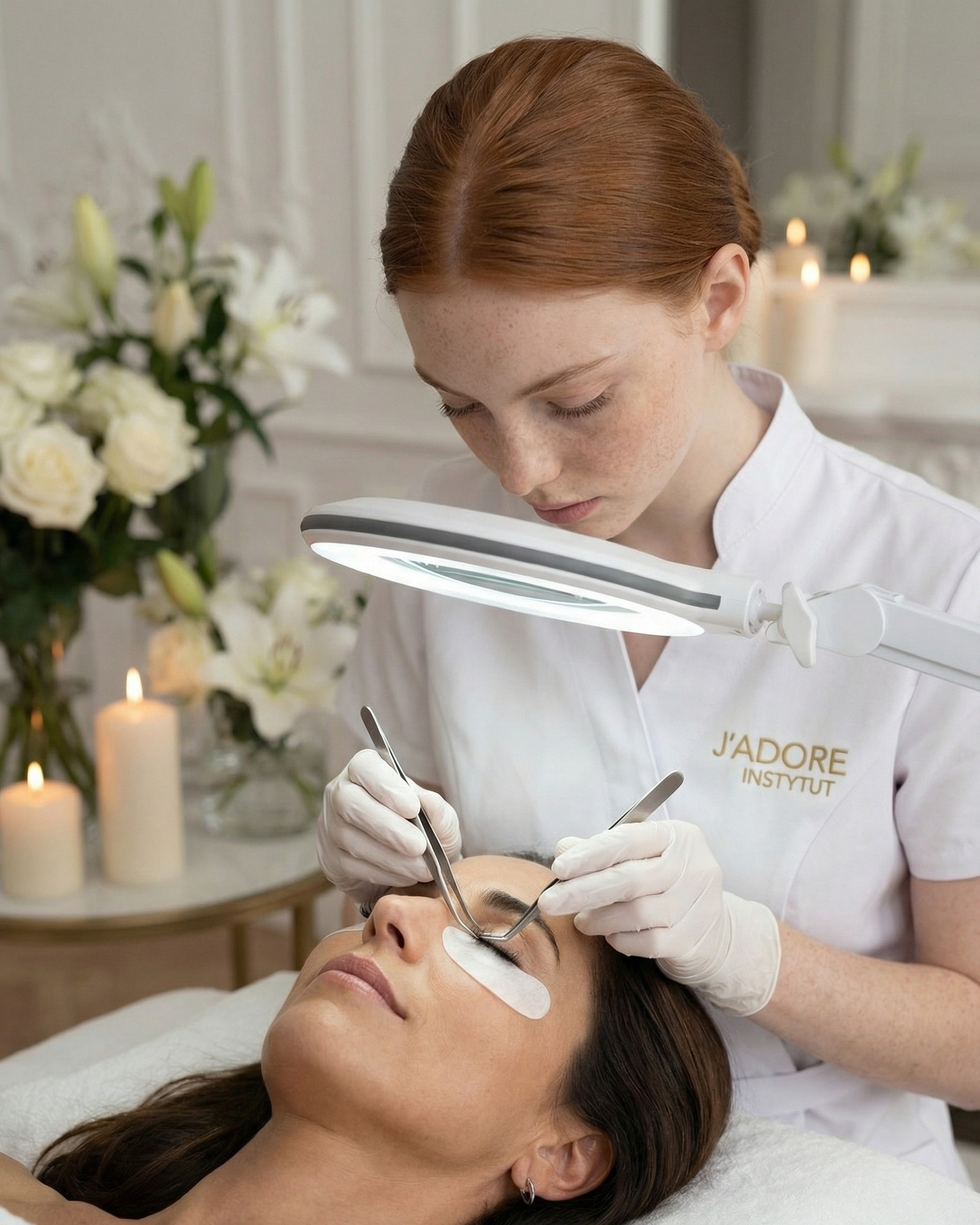
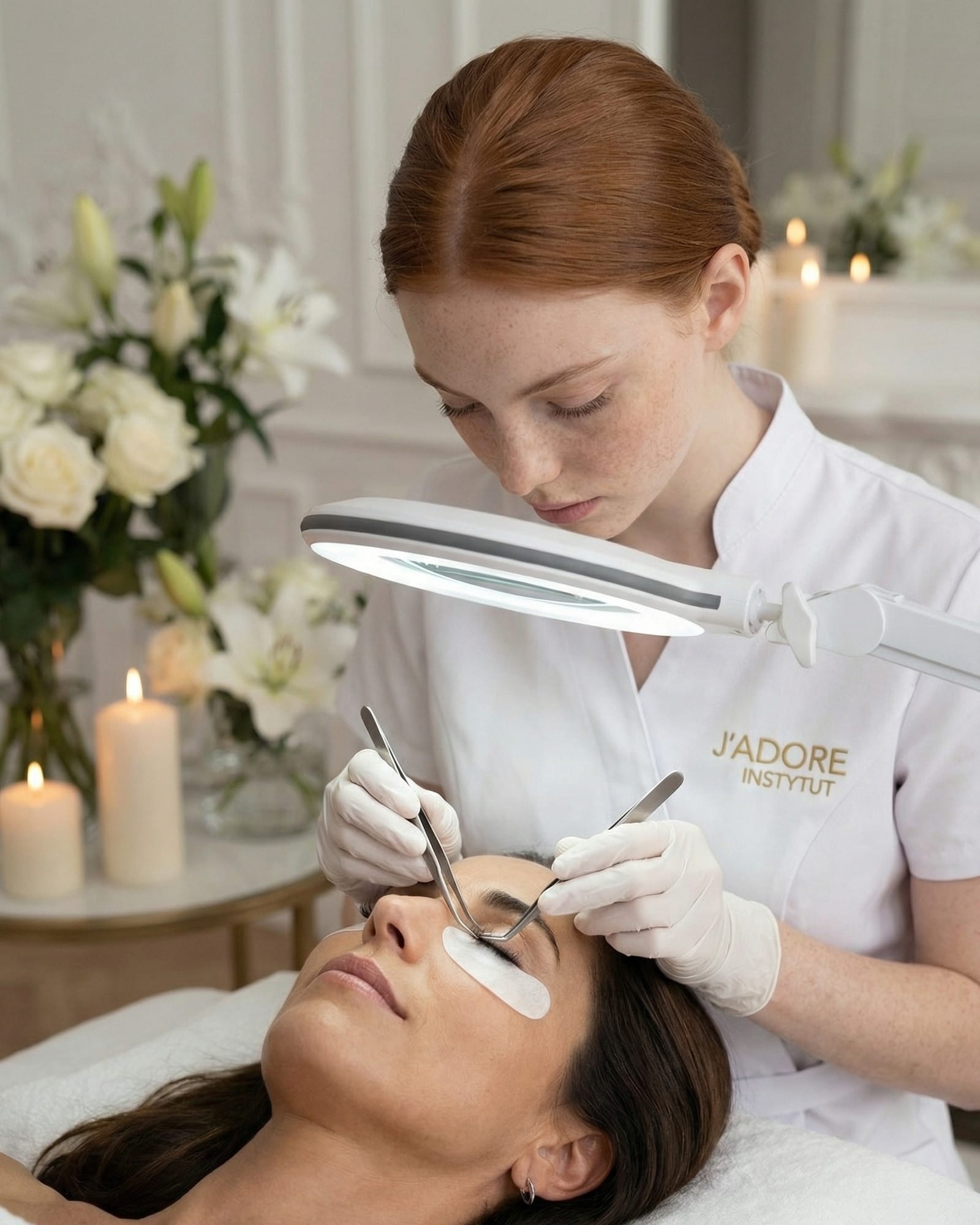
Hollywood is the more popular of the classic techniques. Its popularity also makes it the technique most often “standardised downwards”. In theory, 1D means precision and lightness: one matched fibre per lash. The result is more intense than natural lashes, without overloading them. In practice, the quality of a set depends on decisions made before and during the treatment — before the tweezers are even picked up.
- 01
Pre-treatment analysis
Assessment of your natural lash condition — thickness, density, cycle phase and eye shape. This stage often “does not exist” in low-cost salons, yet it determines everything that follows.
- 02
Fibre selection
Thickness, length and curl matched to your lashes, not to a template. A fibre thicker than your natural lash — even by a fraction of a millimetre — places strain on the follicle for several weeks.
- 03
Lash isolation
Each fibre is attached to one isolated lash. Lashes stuck together pull on each other as they grow and fall out. This is one of the main mechanisms behind damage to natural lashes.
- 04
Adhesive drying time
Applying adhesive at the wrong temperature or humidity, or attaching the fibre too quickly without allowing enough time, are mistakes that may not be visible immediately. They become visible after two weeks, when the set starts to fall out unevenly.
- 05
Post-treatment assessment
The final stage: checking that no lashes are stuck together and that the adhesive line does not touch the eyelid. Skipping it shortens the treatment time — and the lifespan of the set.
Every one of these steps can be skipped or shortened. Every skipped step has a cost. Not immediately, but cumulatively, after several sets, when you suddenly realise that “my lashes have been damaged”.
Do you always need a break after a bad set?
This question comes up often: after a series of unsuccessful treatments, is a break necessary, or can you start again straight away — in a better place? It depends on the condition of your natural lashes. If your lashes are sparse but healthy, a well-performed corrective set with lighter fibres may sometimes be enough. It does not weigh down regrowing lashes, while also smoothing the regrowth aesthetically. If your lashes are genuinely weakened, brittle or visibly sparser than before the series, a break is sensible. There is no single rule: lash condition must be assessed individually.
One set, two different results — how it looks on different people
The same “1D Hollywood” can look completely different on two people. This is the point at which many adverts and portfolios become misleading. The result depends on what the lash artist has to work with: the density, length and thickness of natural lashes, eye shape and the spacing between lashes. On someone with naturally dense, long lashes, the Hollywood effect is dramatic. On someone with naturally sparse, fine lashes, it is subtle and requires working with smaller fibres.
Naturally dense lashes
An easy result to achieve
- Wide fibre selection options
- A dramatic Hollywood effect is easy to achieve
- More room for error when selecting thickness
- Fills every 3–4 weeks are sufficient
Naturally sparse or fine lashes
The result requires greater precision
- Choosing lighter fibres is key
- Less margin for error in fibre thickness
- A more natural result, while still defined
- Breaks and care between sets are more important
Before you book — a few practical points
If you are looking for a salon or changing lash technicians, these three points are a useful quality filter. They are more reliable than price and stronger than portfolio photos.
- Ask about the treatment time. A full new 1D Hollywood set should take as long as it takes. It cannot be done “express” without skipping stages. A short treatment time suggests that an important stage has been shortened.
- Check whether the lash technician asks you questions. A consultation before your first treatment is standard. It should cover allergies, previous reactions to adhesive, lash condition and lifestyle. No questions means no assessment.
- See how the salon responds to concerns. Do they answer questions about the adhesive? Is there a correction policy if the set falls out quickly? A professional salon does not avoid these questions — because it has answers.