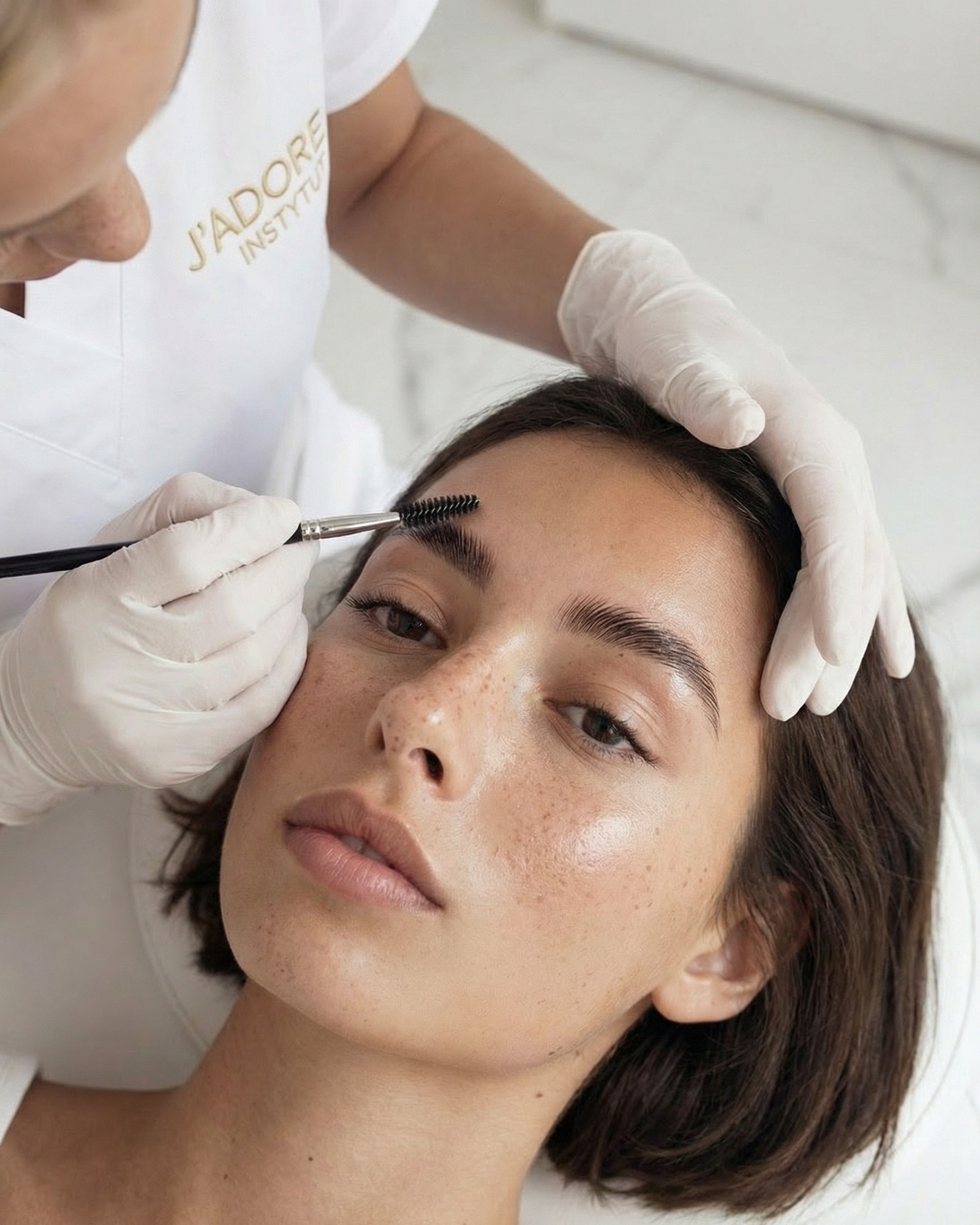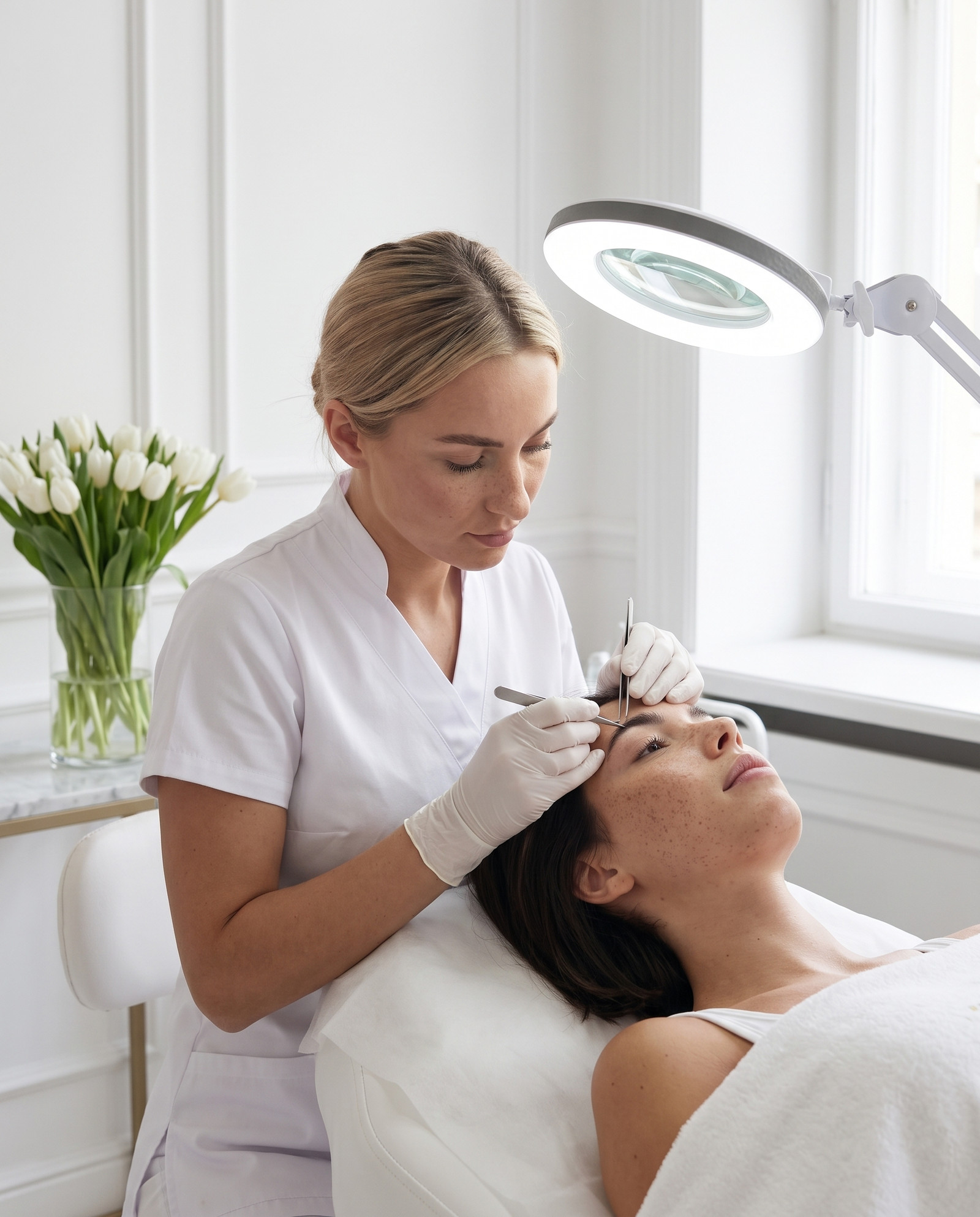
What actually happens to the hair during lamination
Brow lamination is a treatment that changes the shape and direction of the hair — not its colour or thickness. To understand this, it helps to look briefly at the structure of the hair itself. Each hair is made of keratin, a protein built from spiral chains linked together by chemical bonds. These bonds determine whether a hair is straight or curly, whether it lies flat or sticks upward.
Lamination happens in two chemical steps. The first product applied to the brows opens these bonds, softening the hair and making it temporarily receptive to reshaping. At this stage, the hair can be moulded in any direction and easily takes a new shape. The second product — the setting solution — closes the bonds back up, but this time in the position the hair has been set into. The result is a permanently changed growth direction and a new set.
And here's the crux of it: the treatment ends in the salon, but the setting process only finishes at home. Moisture, heat, mechanical friction and oily substances can, within this time window, disrupt the closing of the bonds. The result can be uneven set, shorter-lasting results, or brows that "revert" to their previous shape faster than they should.
Why water is the first enemy — and for how long
The first and most important rule after lamination is avoiding water for a minimum of 24 hours — for many people, specialists recommend extending this to a full 48 hours. At first glance this sounds disproportionately strict, since water seems like a neutral substance. But here it's a matter of physics, not composition.
The keratin bonds that are currently closing are very sensitive to moisture and temperature. Water — especially warm water — can loosen this structure again before it has fully set. The effect is similar to ruining a hairstyle with curling tongs before it's had time to cool: the work reverts to the starting point, or to a state somewhere in between, which is worse than either extreme.
- 01
First 12 hours
Avoid water completely. Don't wash your face over the brow area, don't go to the gym or sauna, and try not to cry for long stretches (a joke — but the temperature of tears really does matter). Avoid even steam from cooking.
- 02
12–24 hours
You can gently cleanse your face, avoiding the brow area, or use cotton pads on the rest of your face. A hot shower is risky — steam behaves much like direct contact with water.
- 03
24–48 hours
You can lightly dampen your brows when washing your face, but still avoid long baths, saunas, swimming pools and activities that cause heavy sweating. The bonds are closing, but they're not yet fully stable.
- 04
After 48 hours
The result has set, and your brows return to their usual care routine. From this point on, regular moisturising is actually recommended — hydrated hair is more flexible and holds its shape for longer.
What else to avoid — and why each restriction makes sense
Water is the most important factor, but not the only one. In the first 48 hours after lamination, several other things can disrupt the setting process — each for a different reason.
- Creams and oils on the brow area. Oily substances create an occlusive layer on the hair — and while this is a welcome hydrating effect a week later, straight after lamination it can slow or disrupt the bonds from closing properly. Exception: a dedicated post-lamination brow balm, if your specialist specifically recommends it and tells you when to start using it.
- Friction and rubbing. The hair is still in its moulded position — mechanically pushing it in another direction can shift the set. This includes rubbing face cream near the brows, drying your face with a towel over the brow area, or even resting your forehead on your hand in a way that shifts the hairs.
- Brow makeup straight after the treatment. Pencils, tints and brow gels are usually fine from the second day onward — but it's best to skip them on day one. Applying and removing makeup mechanically — especially with oil-based removers — carries a double risk: friction plus occlusion.
- Heat — hairdryers, curling tongs, saunas. Like warm water, heat sources can soften the bonds again. If you need to use a hairdryer, keep it well away from your face and use cool air only, avoiding the brow area.
- Swimming pools and the sea. Chlorinated and salt water carry a separate risk — beyond the moisture itself, they act chemically on the hair structure. Definitely off the list of activities for the first day.
What you can and should do — aftercare that supports the result
Post-lamination rules aren't just a list of bans. A few things actively support the setting process and extend the result — and they're worth knowing, because they're often overlooked.
First 48 hours
setting phase
- Leave your brows alone — don't touch them unnecessarily
- Wash your face with cool water, avoiding the brow area
- Sleep on your back or side (not on your face) — friction against the pillow can shift the hairs
- If you have a dedicated post-lamination oil, start using it only from the second day, following instructions
From hour 48 onward
regular care phase
- Daily moisturising with castor oil or a dedicated brow serum — this often speeds up growth and improves hair quality
- Regular brushing with a spiral brow brush — keeps the set in place and stimulates microcirculation
- Avoiding harsh alcohol-based removers directly on the brows
- Sun protection — UV speeds up the fading of the lamination effect
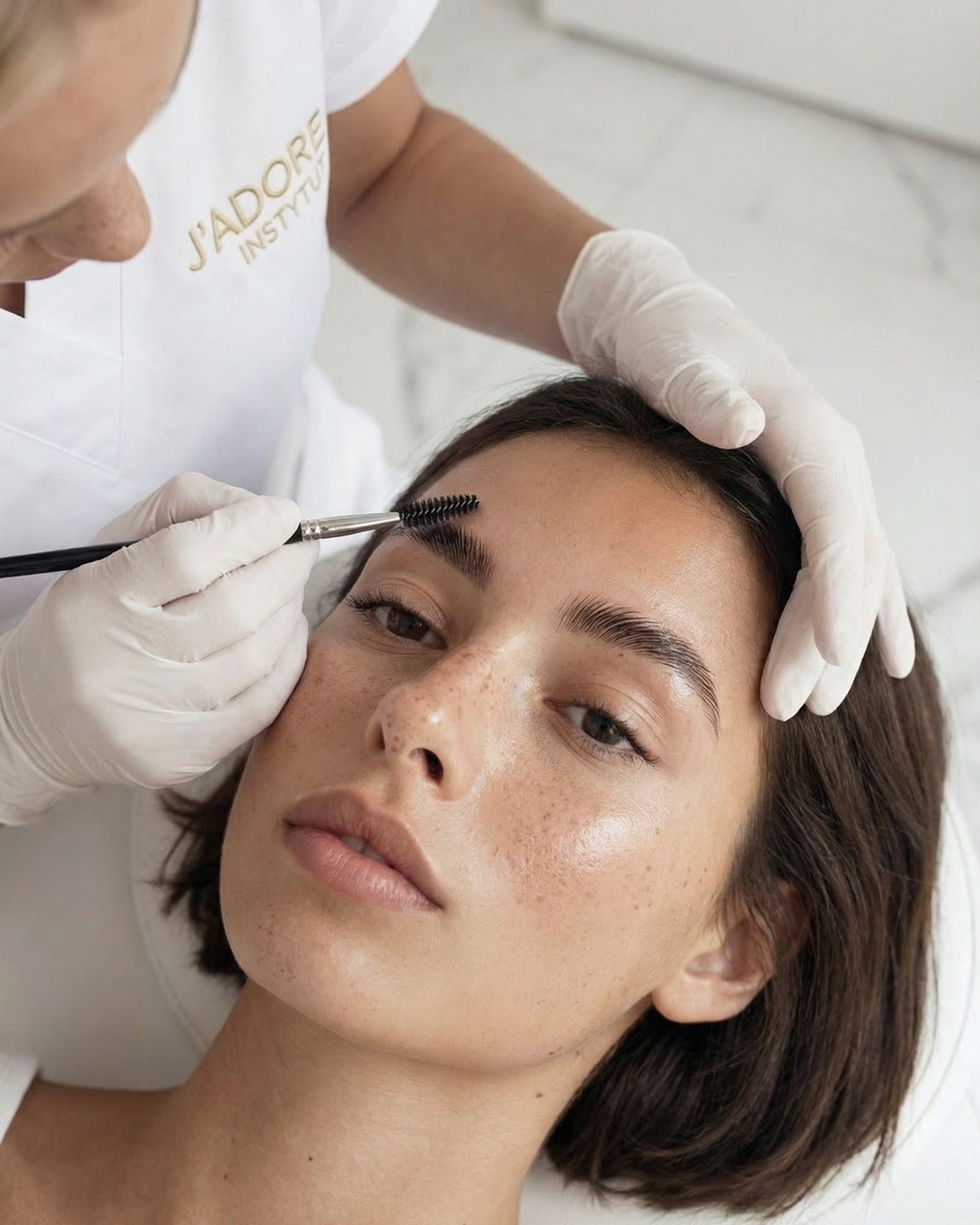
Post-lamination aftercare is also a good moment to make friends with a brow brush. Brushing your brows each morning — literally 10 seconds — helps maintain the set direction and builds a habit that makes a difference over the following weeks. Brows that are brushed regularly "remember" the new position — which can matter when you come back for your next session in a few weeks.
How long the result lasts — and what it really depends on
How long lamination lasts is often a point of mismatched expectations. The usual figure quoted is four to six weeks — but this is a broad estimate. For some people the result is clearly visible for two weeks before the brows gradually return to their previous state. For others, it lasts over two months. Why the difference?
- The natural hair growth cycle. Lamination works on hairs that have already grown — new hairs come through without the treatment applied to them. The faster your brows grow (this varies from person to person), the sooner the result gets "diluted" by unshaped new growth.
- Hair type and thickness. Thinner, softer, naturally more obedient hairs tend to hold the result for longer. Thick, springy brows have a stronger "memory" and revert to their original shape more readily.
- Aftercare. This is the one variable you have direct control over. Neglecting the first 48 hours can cut the result's lifespan by as much as half — particularly if there's been heavy contact with water or heat on day one.
- Sun and chlorine exposure. UV and chemicals speed up the breakdown of keratin bonds. If you swim regularly or spend a lot of time in the sun, the result fades faster.
When the results aren't what you expected — what to do
Sometimes, despite following the aftercare rules, the result feels underwhelming — your brows aren't set the way you wanted, or the effect faded very quickly. The first honest question worth asking yourself: did I actually follow the rules for the first 48 hours? A swimming pool, a hot shower, face cream applied too close to the brows — these are the most common causes that look like "a weak treatment" but are actually down to aftercare.
If you did follow the rules and you're still not satisfied, it's worth going back to your specialist and telling her exactly: when the result started to fade, how the brows looked straight after the treatment, and how they looked a week later. This gives her a basis to change the product, adjust the timing or the setting technique — and often the next session gives a noticeably better result. Lamination is also, in part, an experiment with your particular hair: the first attempt gives information, and the second can already be tailored to you.