Three methods, three shaping philosophies
Before we go into detail, it helps to set a starting point: tweezing gives precision, waxing gives a clean line, threading gives gentleness. Any of these qualities could be exactly what you're looking for — or exactly what you want to avoid.
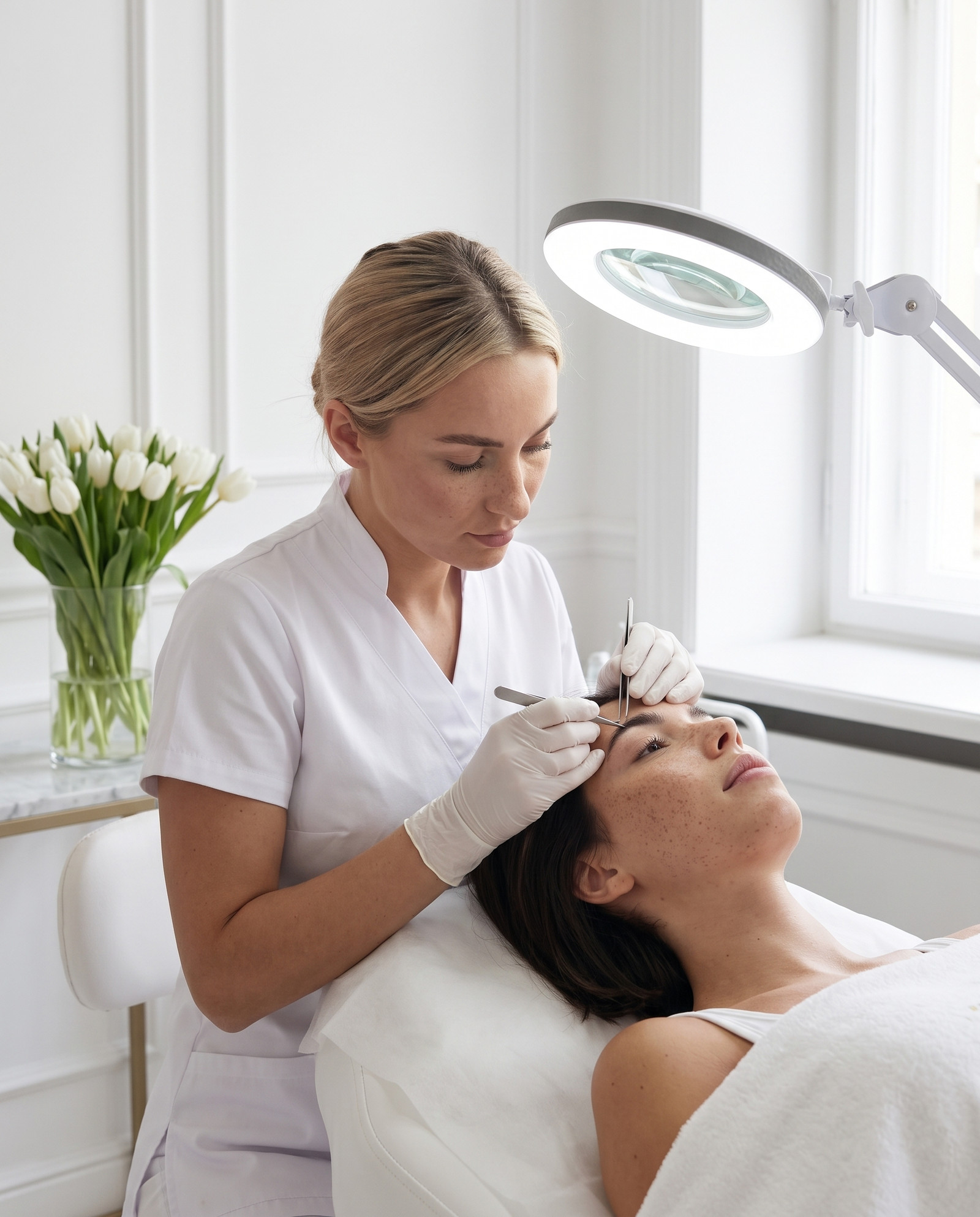
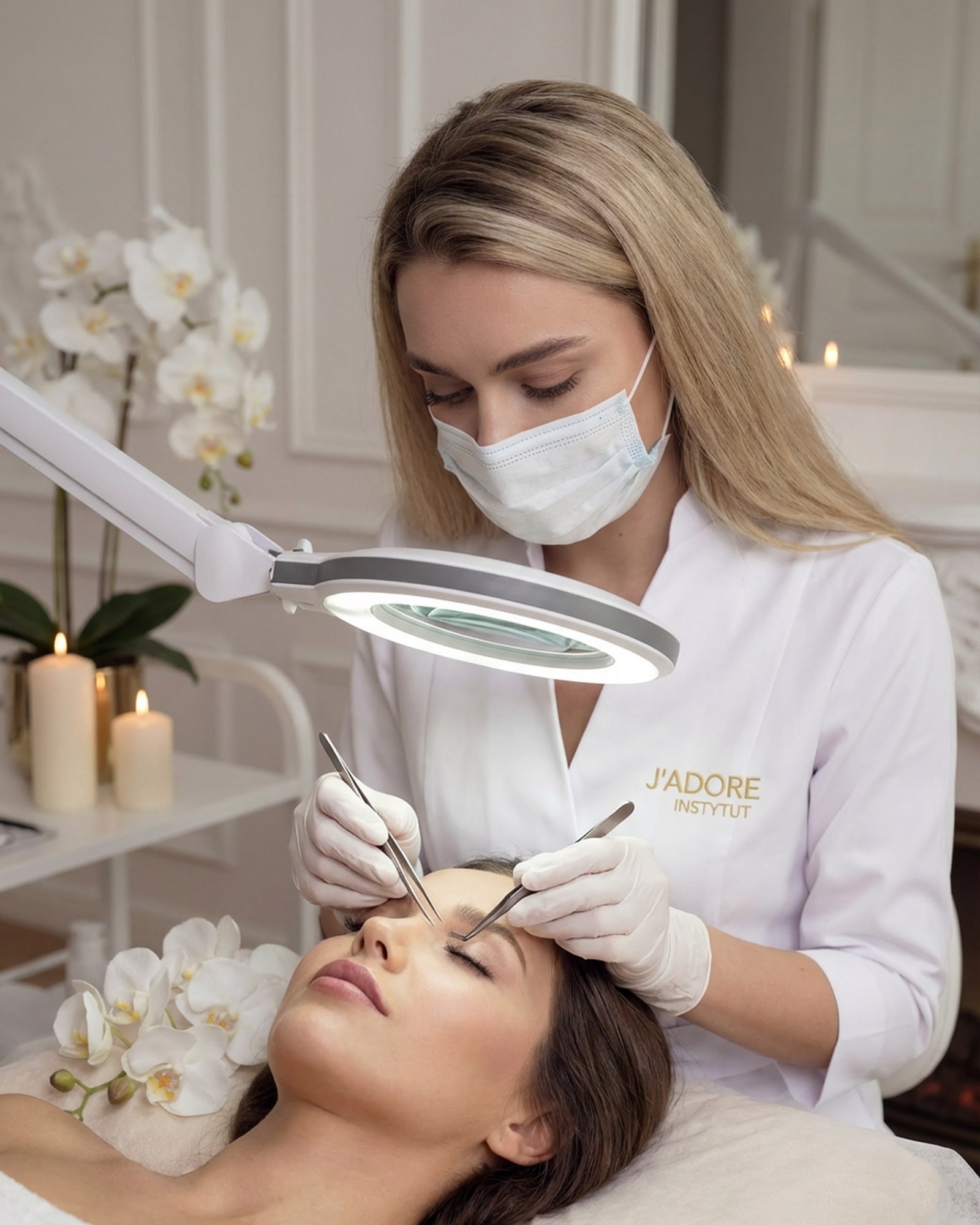
Tweezing
precise, hair-by-hair correction
- ideal for small touch-ups and filling in between sessions
- full control over direction and depth of removal
- works well on sensitive skin without irritation
- hair removed together with the follicle — slower regrowth
Hot waxing
quick clean-up and a defined line
- removes many hairs at once — fast results
- excellent for dense or coarse hair
- leaves skin smooth and clear of fine hair
- a defined, clean shape line, visible straight away
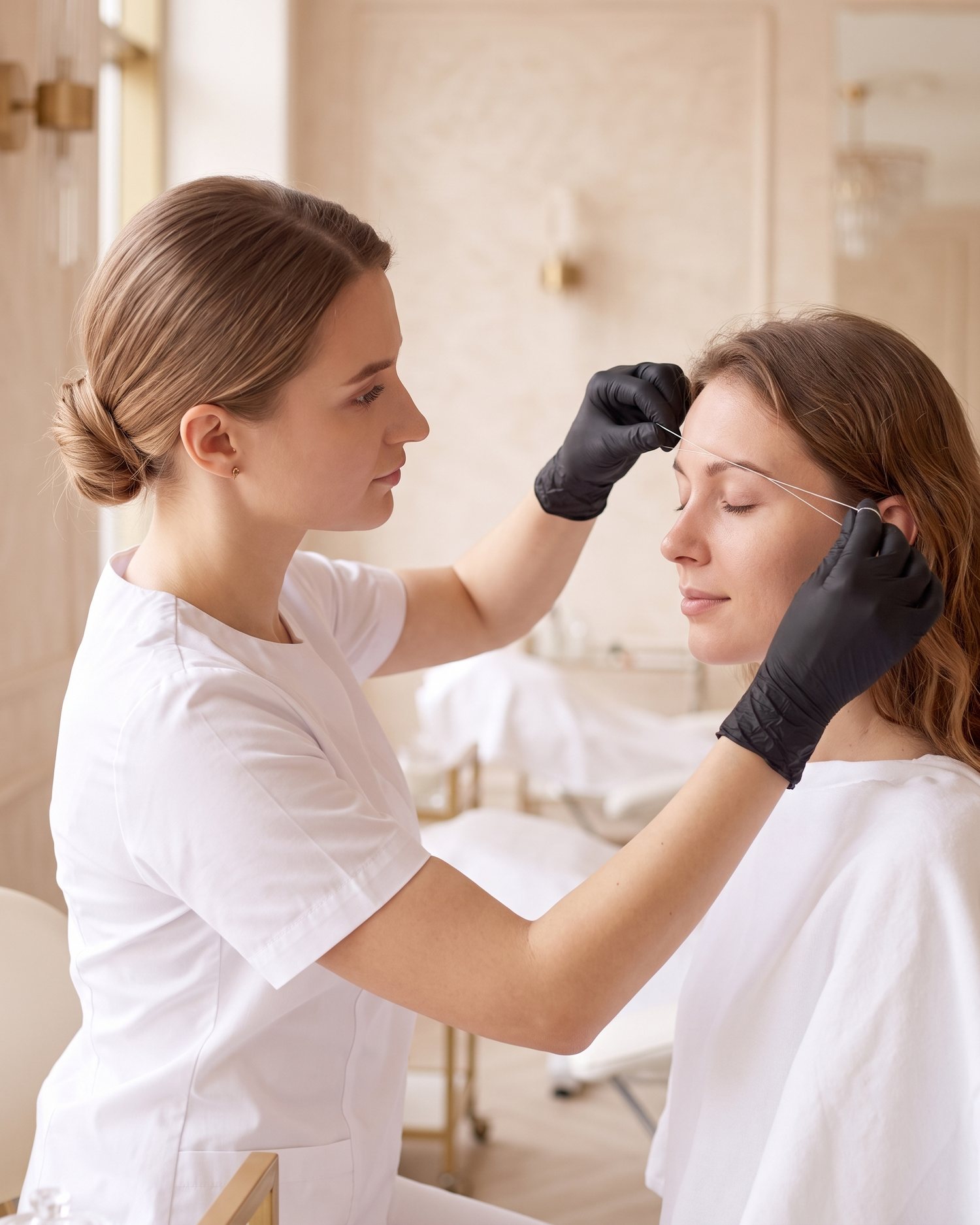
Threading
precision without chemicals or heat
- removes hair with cotton thread — zero chemical products
- ideal for sensitive, vascular or acne-prone skin
- a precise line, achieved with skilled technique
- safe for active skin concerns
How to tell which method suits you — questions to consider
Before you decide, answer a few questions. That's enough to narrow down your choice before you ask your specialist:
- What is your skin like? Sensitive, vascular or acne-prone skin → best suited to threading or tweezing. Normal skin with no particular concerns → any method is safe.
- Do you use active skincare products? Retinoids, acids and strong peels reduce skin's tolerance to heat and pulling → waxing is not recommended; tweezing or threading is safer.
- Is speed a priority for you? A large area with a lot of hair → waxing shortens treatment time. Correcting a few hairs → tweezing is enough.
- What result do you want? A soft, natural line → tweezing. A defined, clean contour → waxing. Maximum precision with no products → threading.
- How quickly does your hair grow back? With fast regrowth, waxing and threading give "clean" results for longer than plucking individual hairs with various improvised techniques.
Brow shape and choice of method — what's worth knowing
The method is one thing — but the final result also depends on the shape you want to achieve. Not every technique gives the same precision for every type of correction:
- 01
Defining the arch
A defined arch needs a precise line along the lower edge of the brow. Waxing is fastest here — one application draws the contour. Tweezing gives more control with irregular hair growth.
- 02
Clearing the space between the brows
The so-called "unibrow" area, at the bridge of the nose. Waxing works excellently here — quick and clean. Threading also gives a great result without heat, for sensitive skin.
- 03
Correcting the top line
The top line of the brow can be tricky — removing too much hair changes the whole expression. Most specialists use tweezing here, as it allows work hair by hair.
- 04
Removing fine hair and peach fuzz
Very fine hairs can be difficult for tweezing. Threading picks them up precisely; waxing usually handles them well too — it depends on the wax quality and technique.
When it's worth combining methods
The line between methods isn't fixed — and experienced specialists often combine them in a single treatment. The logic behind these combinations is simple:
Waxing + tweezing
Waxing clears the main area and draws the shape; tweezing refines hard-to-reach spots and corrects any stray hair. The most common combination in salons.
Threading + tweezing
Threading instead of waxing for sensitive skin, with tweezing for precise touch-ups. Ideal for reactive skin or sensitivity to wax ingredients.
Shaping + henna or lamination
Shaping is just the first step — colour or lamination builds the full, defined-brow effect. The shaping method is chosen so as not to irritate the skin before the next step.
The most common questions — straight answers
A few questions we hear most often at the salon:
- "Doesn't waxing damage the skin?" With healthy skin and good technique — no. Problems arise with irritated skin, active skincare products, or waxing too frequently. Your specialist will assess this before the treatment.
- "Does threading hurt more?" For some people the sensation is more intense than with waxing, for others it's the opposite. It's very individual — worth trying for yourself.
- "How often should I shape my brows?" It depends on your regrowth rate — often every 3–5 weeks. With slower regrowth or a less defined shape, less often.
- "Tweezing at home between visits — yes or no?" Yes, but only for obvious cases — a single hair clearly outside the shape. Avoid correcting the shape yourself, especially the top line.