WarszawaŻelazna 59WarszawaMińska 29AKrakówKarmelicka 45Warsaw · Krakow

Full perspective

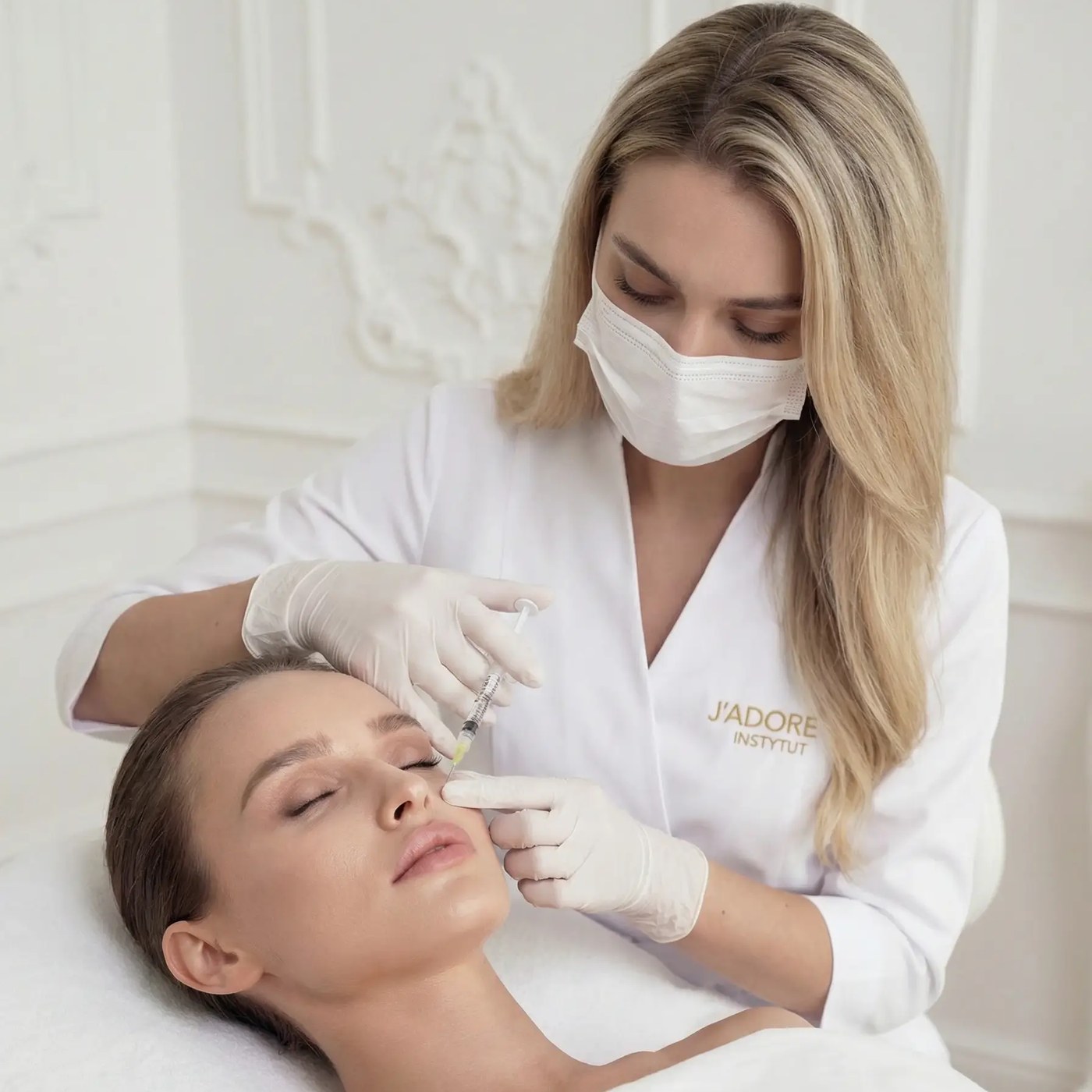
Dermamelan for women

Female skin and the melasma mechanism — why it's a harder case

In women, melasma is most often hormone-dependent — it appears or worsens during pregnancy, after contraception, or during menopause. The typical pattern is symmetrical patches on the cheeks, forehead and above the upper lip. This is a classic indication for Dermamelan in women: the protocol targets the pigmentation mechanism itself, not just the "surface symptom".
Duration
around an hour in the salon + a mask worn for several hours at home
Result
many months of remission with consistent SPF use
Recovery
several to a dozen or so days of intensive flaking
Sessions
one in-clinic treatment + a few weeks of at-home care (about 6 months in total)
Performed by
experienced cosmetologist
ListenDermamelan — this whole page read aloud

When it's worth it — indications

  • Melasma and chloasma — symmetrical grey-brown patches on the cheeks, forehead and above the upper lip; hormone-dependent and resistant to standard methods.
  • Post-pregnancy pigmentation — chloasma triggered by hormonal changes during pregnancy; one of the most common indications.
  • Pigmentation after contraception and during hormonal changes — when the pill or hormonal fluctuations "switch on" melanocytes.
  • Deep sun spots (lentigines) — the result of years of sun exposure on the face, temples and décolletage.
  • Post-inflammatory hyperpigmentation (PIH) — especially with darker skin tones, where it's more pronounced and harder to treat.
  • Cases resistant to other methods — when superficial peels, IPL or laser haven't given a satisfactory result, or have even made the problem worse.
  • Darker skin phototypes (IV–VI) — where the risk of post-inflammatory hyperpigmentation is higher, and Dermamelan remains safe.

The areas we work on

  1. pregnancy-related chloasma and pigmentation after hormonal contraception;
  2. symmetrical patches on the cheeks / forehead / upper lip;
  3. pigmentation that "comes back every summer";
  4. the protocol can also cover the neck and décolletage.
Drawing of the treatment areas — face, neck and décolletage, female figureForeheadCheeksNeckDécolletage
Indicative map of the areas

Female skin and the melasma mechanism — why it's a harder case

Oestrogen and progesterone have a direct effect on melanocyte activity. That's why melasma and chloasma affect women disproportionately more often — pregnancy, hormonal contraception and cycle fluctuations can switch on melanin overproduction even in skin that has been trouble-free for years. This isn't a matter of skincare or neglect. It's physiology.
Dermamelan acts directly on this mechanism: it not only lightens existing hyperpigmentation, but targets the ACTH-melanocortin pathway — the hormonal signal responsible for melasma recurrence after treatment. This is why it is the first-choice treatment precisely in cases where other methods have failed.

Pregnancy, breastfeeding and timing the treatment — what you need to know

Dermamelan contains active ingredients at clinical concentrations — the treatment is safe, but requires a fully functioning skin barrier and the ability to use SPF 50+ for a minimum of 6 months. For these reasons, we perform the treatment only after breastfeeding has ended and at least several months after childbirth.
The best time is autumn or winter — less sun makes rigorous protection easier, and results visible by summer are the reward for patience. During a consultation, the specialist helps you plan the timing individually, taking into account your hormonal cycle and any contraception.

Active skincare vs a Dermamelan course — what to stop and when to resume

Retinol, AHA and BHA acids, vitamin C in higher concentrations, enzymatic peeling — all of these require a break before the treatment. The skin must begin the treatment in a balanced state, without a dehydrated or over-reactive barrier.
The timeline looks like this:
  • 4 weeks before: you stop retinoids and strong acids, and start the Mesoestetic Pre-treatment cream
  • Day of the treatment: mask Dermamelan 1 applied by the specialist — you leave the treatment room with the mask on your face
  • 8–12 hours at home: you remove the mask following precise instructions — this step matters just as much as the treatment itself
  • 7–10 days: intensive flaking — under no circumstances should you speed it up mechanically
  • 4–6 weeks: cream Dermamelan 2 twice daily, absolutely SPF 50+ every morning
  • After 3 months: you can gradually return to retinol and acids — after consulting a specialist

Makeup, red skin and returning to your routine

The first 7–10 days are worth planning ahead. Skin will be red, tight and visibly flaking — makeup isn't advisable during this time, and it wouldn't sit naturally on flaking skin anyway. Most clients take leave or work remotely during this period.
After the peeling is complete, the skin is ready for a light, mineral make-up with SPF. Return to full-coverage foundations only once the skin barrier has fully regenerated — the specialist will assess this at a follow-up appointment. Throughout the entire 6-month course of SPF 50+, you apply it as the first step — always, regardless of the weather and the time of year.

Frequently asked questions

Can I book Dermamelan if I've just stopped taking the contraceptive pill?
Changing contraception or stopping it is a good moment to talk to a specialist — the hormonal system needs a few weeks to stabilise. A consultation will help assess whether your skin is ready and how to plan the treatment so that it does not coincide with the peak of hormonal fluctuations, which could activate melanocytes after the treatment.
Will I look too brightened or unnatural after Dermamelan?
The goal of the protocol is an even skin tone — lightening applies only to the pigmented areas, which return to your skin's natural colour. The rest of the face stays unchanged. The final result is uniform, rested-looking skin — not over-lightened.
I've used high-strength retinol for years — do I need to give it up permanently?
No — retinoids return to your skincare routine after completing the home course Dermamelan 2, typically 3–4 months after the treatment. During the consultation, the specialist will discuss with you how to gradually reintroduce retinoids so as not to reduce the depigmentation results.
Can Dermamelan be combined with body treatments or other facial treatments at the same time?
For the face — a full break of at least 6 weeks from deeper treatments before Dermamelan and at least 3 months after. Body treatments (e.g. body contouring, laser hair removal on other areas) may be continued — the course concerns only the facial area.
Can pigmentation return after the protocol, and what then?
Melasma is a chronic condition — hormonal factors or intense UV exposure without sunscreen can reactivate it. Dermamelan gives long-term remission, not a cure. The key is daily SPF 50+ and, if the hyperpigmentation starts to return, an early response: maintenance treatment with Dermamelan 2 cream or a consultation with a specialist before the changes become permanent.

Where we offer it

Dermamelan for women — we perform it in three J'ADORE INSTYTUT salons: two in Warsaw and one in Krakow.

  • WarsawŻelazna 59 · Wola · Mirów
  • WarsawMińska 29A · Praga-Południe · Kamionek
  • KrakowKarmelicka 45 · Stare Miasto · Piasek

Price list

    Book a visit

    Prices from the treatment price lists. The variant and number of treatments are determined by the specialist during the consultation.

    Book a visit