WarszawaŻelazna 59WarszawaMińska 29AKrakówKarmelicka 45Warszawa · Kraków

Careers

ENPL

Full perspective

Programme for sensitive skin / vascular skin for women

When every new cream is a lottery

In women, sensitivity and reactivity are the most common "problem skin type" — thin skin, a tendency to flush, and intolerance to one cosmetic after another, often intensifying after age 30 and around menopause. Sometimes rosacea is behind it. This is the classic sensitive skin programme for women.
Czas
single visit — usually from several dozen minutes to around an hour
Efekt
result maintained with home care + follow-up sessions
Regeneracja
zero downtime — skin may be slightly flushed for a few hours at most
Seria
a programme spanning several weeks: series usually 4–6 sessions, every 1–2 weeks
Wykonuje
experienced cosmetologist
ListenProgramme for sensitive skin / vascular skin — this whole page read aloud

When it's worth it — indications

  • Reactive skin — stinging, tingling or redness after "ordinary" cosmetics that don't affect other people at all.
  • Vascular skin — visible capillaries (telangiectasia) on the cheeks and around the nose.
  • Tendency to flush — sudden redness after heat, cold, alcohol, spicy food or stress.
  • Rosacea — persistent redness and capillaries; we work gently, in coordination with a dermatologist.
  • Very thin, "see-through" skin — with visible blood vessels and low tolerance for triggers.
  • Dry, tight skin with a weakened barrier — a feeling of tightness, roughness, dehydration.
  • Intolerance to ingredients — fragrances, alcohol, SLS, strong acids.
  • Skin after summer sun/laser treatments, or during dermatological treatment (retinoids, antibiotics) — in need of regeneration.
  • Atopic dermatitis — as supportive care, after consultation and outside flare-up periods.

The areas we work on

  1. redness and flushing — going red after heat, emotions, red wine;
  2. intolerance to cosmetics — "every new cream is a lottery";
  3. capillaries on the cheeks and around the nose, visible through thin skin;
  4. gentle introduction of ingredients, with a lot of focus on the barrier and hydration.
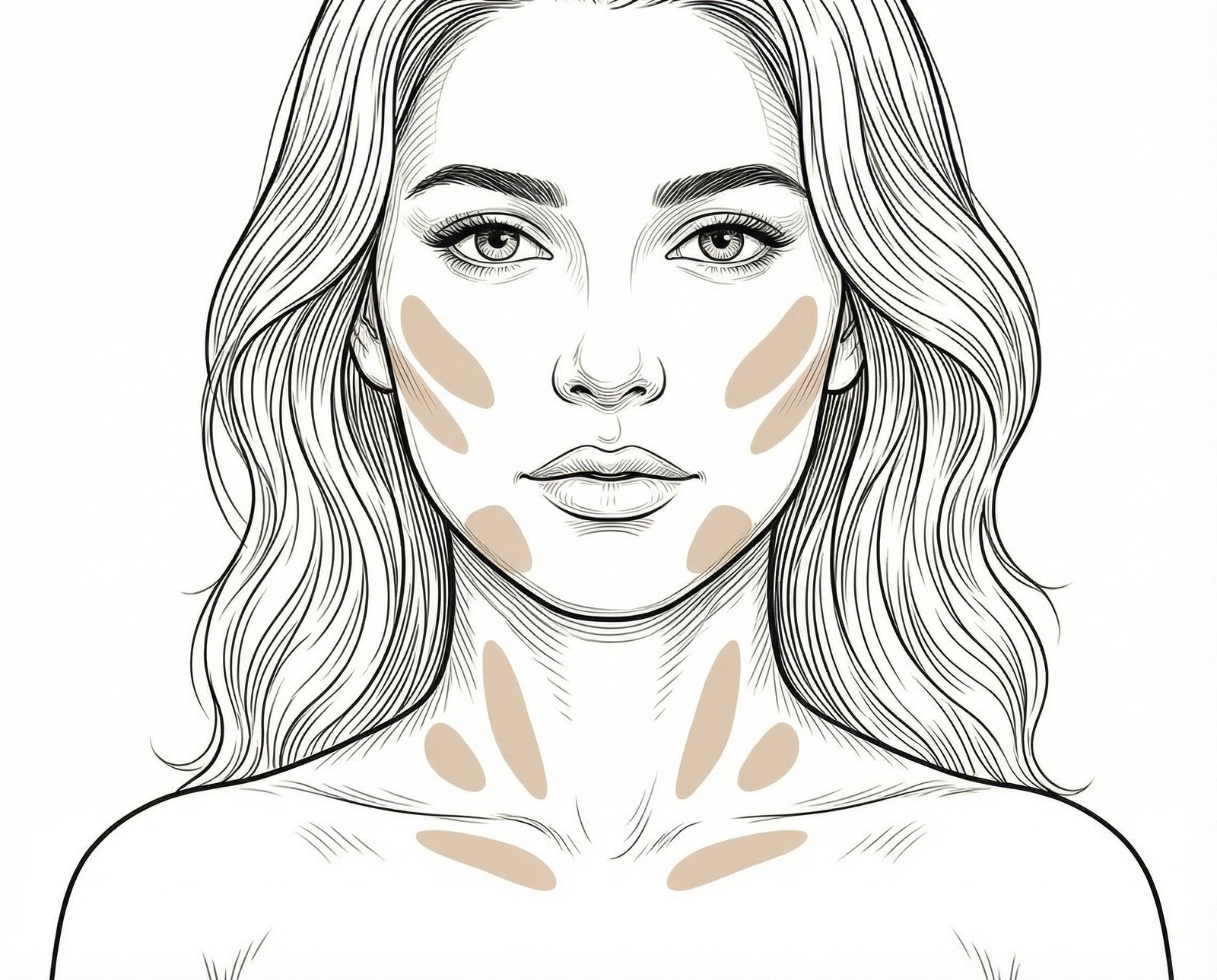
Rysunek stref zabiegowych — twarz, szyja i dekolt, sylwetka kobiecaForeheadPoliczkiSzyjaDécolletage
Indicative map of the areas

When every new cream is a lottery

If you're at the point where you put a product back on the shelf after the third use because "you already know how it'll end" — stinging, redness, a feeling of burning — you're not "difficult" or "not taking care of your skin". You have skin with a weakened hydrolipid barrier that literally lets irritants penetrate deeper and loses water faster than it should. This isn't about willpower or finding the right cream. It's epidermal physiology, and it can be improved — with methods that don't attack it.
In women, reactivity and vascularity are the most common "problem type". Thin, almost translucent skin with visible capillaries on the cheeks and around the nose. Sudden redness after a glass of red wine, hot soup, or coming in from the cold to a warm office. Stinging that appears regardless of which cream — "gentle", "hypoallergenic", "for sensitive skin" — ends up on your face. And often: these symptoms intensify after the age of 30, and especially around menopause, when skin becomes progressively thinner and less resilient.

What happens differently in women's skin

Hormonal fluctuations — the menstrual cycle, pregnancy, menopause — directly affect the thickness and hydration of the epidermis, as well as vascular reactivity. During the premenstrual phase and perimenopause, skin is noticeably more overreactive; redness and stinging after triggers that had no effect a week earlier are then a physiologically amplified response. This isn't "in your head". It's a changing oestrogen level that affects the barrier's ceramides and vascular regulation.
Women also develop rosacea more often than men, in its erythematotelangiectatic and papulopustular forms — persistent redness of the cheeks and nose that doesn't fade after a few hours, blood vessels visible through thin skin, episodes of flushing with no obvious cause. This is no longer just a reactive barrier — it's a vascular-inflammatory condition diagnosed by a dermatologist. We run soothing cosmetology treatments alongside medical care — never instead of it.
A specifically female trigger we see in our salons is also a skincare routine based on too many active ingredients at once — retinol, glycolic acid, vitamin C, high-strength niacinamide, all together, because "that's what the reviews say". On sensitive skin, this strategy backfires. Together, we simplify your routine to the essentials: gentle cleansing, ceramides, soothing actives, mineral SPF.

The programme — how we build it around you

The programme doesn't start with the strongest treatment available. It starts with a diagnosis: what exactly is your sensitivity? A ceramide-deficient barrier? Vascular reactivity? Suspected rosacea? The order and pace depend entirely on this — and only on this.
The first stage is always strengthening and calming: bioengineered EstGen colostrum with growth factors (EGF, IGF, TGF-β) rebuilds the barrier and calms microinflammation, without any acids or heat. Alongside this, soothing treatments from the professional Skeyndor Hydrasensitiv line — designed specifically for reactive, vascular skin — plus a medical LED lamp in the red spectrum, which has an anti-inflammatory effect with no risk of causing an allergic reaction. Zero downtime. You can go straight back to work.
Once skin is calmer — stinging less often, flushing less often, tolerating touch and cosmetics better — we move into the deep hydration and resilience-building stage. This adds intensive hydrating lines, and for some women (in coordination with a doctor) Profhilo bioremodelling — the purest hyaluronic acid, which improves skin quality and its resilience to external triggers.
The vascular stage — closing visible telangiectasia and reducing persistent redness with selective light — is planned only once skin is calm and prepared. Never during an active flare-up, never "straight away at the first visit".

Home care — this is really where half the result happens

Our salon builds the barrier; your home care decides whether that barrier holds until your next visit. At your consultation we'll review your routine and agree which ingredients to remove (SLS, ethyl alcohol, strong fragrances, harsh acids, retinol at the start) and which to keep or add:
Check any departure from this routine (a new serum "because a friend bought one", a peel bought on sale) with your cosmetologist before you try it on your face. For sensitive skin, "just for one night, let's see" can undo three weeks of progress in a single week.
  • a gentle gel or lotion cleanser, pH around 5.5, no SLS, no alcohol
  • a cream with ceramides and soothing ingredients: panthenol, allantoin, bisabolol, niacinamide at a low concentration
  • mineral SPF 50+ with zinc oxide, fragrance-free — every day, not just in summer
  • nothing more at the start — fewer ingredients means fewer potential triggers

Frequently asked questions

My skin reacts to literally everything — could any salon treatment harm it?
This is the most common question, and we understand it completely. That's why we start with the absolute safest methods — EstGen, LED, soothing hydration — no acids, no heat, no mechanical friction. If you have clear intolerances, we test on a small area before the full treatment. We adjust intensity to how your skin reacts, not to a standard protocol. A good salon adapts the plan; it doesn't push through it.
I have permanent redness on my cheeks — is that already rosacea, and can you even help?
Rosacea is diagnosed by a dermatologist — we don't diagnose it in our salon. If we notice symptoms suggesting rosacea (persistent redness, capillaries, papules, flushing episodes), we say so directly and recommend a dermatology consultation. We're happy to run cosmetology treatments — EstGen, LED, soothing lines — alongside medical care, because well-coordinated work between our salon and your dermatologist gives noticeably better results than either alone.
I've had capillaries for years — will they disappear forever after one series?
A vascular series can noticeably reduce visible telangiectasia. But capillaries are a skin trait — triggers (sun, heat, alcohol, stress) can create new ones over time. That's why after the series we plan touch-ups once or twice a year and maintain results with gentle care and by avoiding triggers. This is management, not a one-off "cure" — and we explain this honestly at the consultation.
Can I use retinol during the programme?
At the start — we advise against it. With a weakened barrier, retinol can be too irritating and may increase reactivity rather than calm it. We introduce it (if at all) only once the barrier is stronger, at the lowest available concentration, gradually and a few times a week to start. Never without first checking with the cosmetologist running your programme.
I'm in perimenopause and my skin has suddenly become much more sensitive — is this temporary?
Unfortunately, this often isn't a temporary state, because the oestrogen level that regulates the barrier's ceramides and vascular reactivity is changing permanently. The good news: this sensitivity can be effectively managed. A programme that strengthens the barrier and reduces redness works regardless of hormonal stage, and results maintained with regular care and follow-up visits last — matched to your skin's current state, not to how it was five years ago.

Where we offer it

Programme for sensitive skin / vascular skin for women — we perform it in three J'ADORE INSTYTUT salons: two in Warsaw and one in Krakow.

  • WarszawaŻelazna 59 · Wola · Mirów
  • WarszawaMińska 29A · Praga-Południe · Kamionek
  • KrakówKarmelicka 45 · Stare Miasto · Piasek

Price list

    Book a visit

    Prices come from the salon price lists. The choice of cocktail and the number of sessions is decided by your specialist at the consultation.