

 A treatment room at J'adore
HANDS & FEET
Cracked heels that catch on bedsheets, thickened skin after a long day on your feet, nails cut "in a hurry" in the bathroom — men's feet work the hardest and get the least attention. Men's pedicure isn't "polish and flowers" — it's proper foot care: trimming and shaping the nails, softening and removing hardened skin, smoothing calluses and heels. The result is purely practical — fewer blisters, no more rough heels, greater comfort in trainers and dress shoes alike.
At J'adore Instytut, it's performed by a nail stylist. Here's everything worth knowing before your first visit.
regularly every few weeks; athletes more often in season
HANDS & FEET
Men's pedicure is comprehensive foot and nail care, tailored to how a man's foot looks and works: thicker skin, larger calluses, stronger nails, and often standing work or sport. The stylist trims and shapes the nails, cleans and pushes back the cuticles, softens and removes hardened skin, and smooths calluses and heels.
Most often it's without colour — the goal is a "well-groomed, not done-up" look. Skin is smoother, nails are short and even, heels are free of roughness. This is a purely practical treatment: it improves walking comfort rather than appearance for show.
Did you know: the foot accounts for roughly a quarter of all the bones in the body — 26 bones per foot. With several thousand steps a day, each one carries your weight, and the skin on the heel and sole thickens exactly where the pressure is greatest. A callus isn't a sign of poor hygiene — it's a natural protective reaction. That's why it comes back, and why it's worth treating it regularly.
How it works
A man's foot works under different conditions than a woman's: greater load, closed and stiff shoes for most of the day, and significantly more sweat — the soles hold one of the densest concentrations of sweat glands in the body. Moisture inside the shoe softens the skin, and movement of the foot within the shoe adds shear friction: the surface layer of skin shifts against the layer beneath it. This combination of pressure, moisture and shear is exactly what thickens the outer skin layer on the heel, under the metatarsals and along the sides of the toes.
So the treatment works on three levels at once. First, softening — water and keratolytic products loosen the bonds between hardened cells, so the compacted layer can be removed evenly without irritating the living skin underneath. Then rebalancing pressure distribution: as the thickened skin comes away, the foot rests again on its whole surface instead of on one hard, protruding point — which is where the relief you feel in your shoe comes from. Finally, oiling and moisturising, because flexible skin bends under load, while dry, stiff skin at the heel cracks along the lines of greatest stretch with every step.
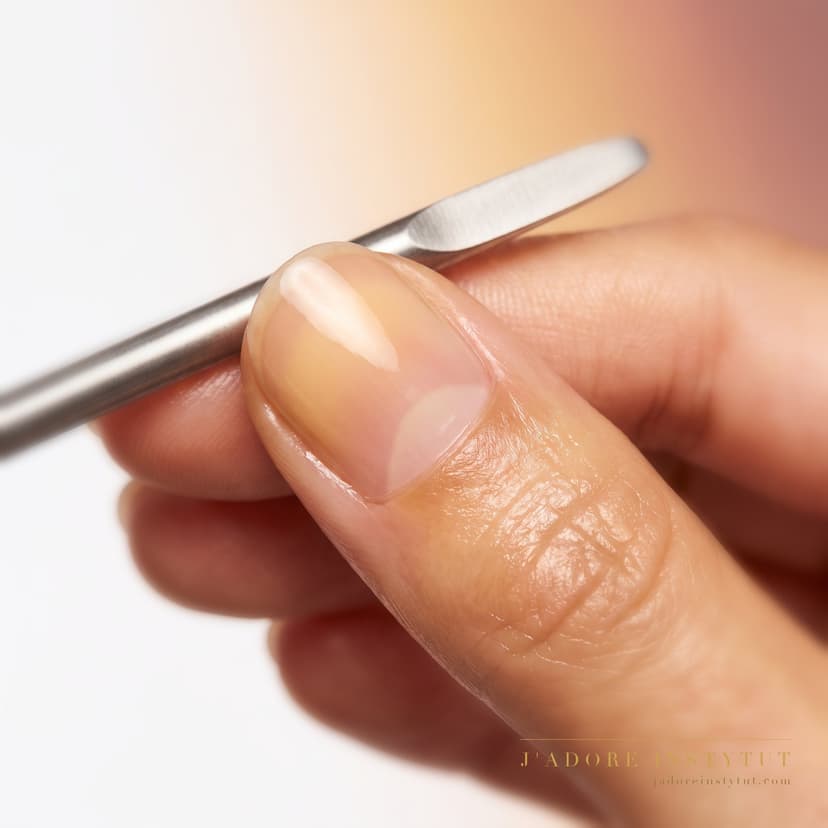
Did you know: the big toenail grows back much more slowly than a fingernail — a full plate replacement on the foot takes many months, not weeks. That's why a dark mark from hitting the tip of your shoe takes so long to disappear: it doesn't fade in place — it moves forward with the regrowing nail.
Ideal for
If a nail is ingrown, painful, red, or shows signs of inflammation, this isn't a regular pedicure job — it's a matter for a **podologist. The same applies to thickened, crumbling, yellow-brown nails (suspected fungal infection), deep painful corns, or cracked heels with an open wound. In these cases, the stylist won't force the treatment — she'll refer you to a podologist, and to a dermatologist** if infection is suspected. This isn't an inconvenience — it's a safety measure. A poorly handled issue can get worse.
Men's pedicure vs women's pedicure
For women, pedicure is more often full foot styling: colour, French tips, hybrid or gel on the nail, SPA treatments and seasonal care. Different language, different expectations from the men's version — we cover it separately.
What we work with
This is a fully male-focused variant. A man's foot usually has thicker skin, larger calluses and stronger nails, and the main goal is comfort, not styling. Hence the emphasis on thorough treatment and smoothing, most often without colour. This is the classic men's pedicure.
What we work with
Looking after your hands too? A natural addition is **men's manicure** — the same "well-groomed, not done-up" philosophy, just for your hands.
Contraindications
Pedicure is a safe treatment that doesn't involve needles on the skin, but in a few situations it's better to postpone it or see a specialist first.
This isn't an exhaustive list — the stylist will assess your foot condition, any medical conditions and possible allergies individually at the start of your visit.
The visit
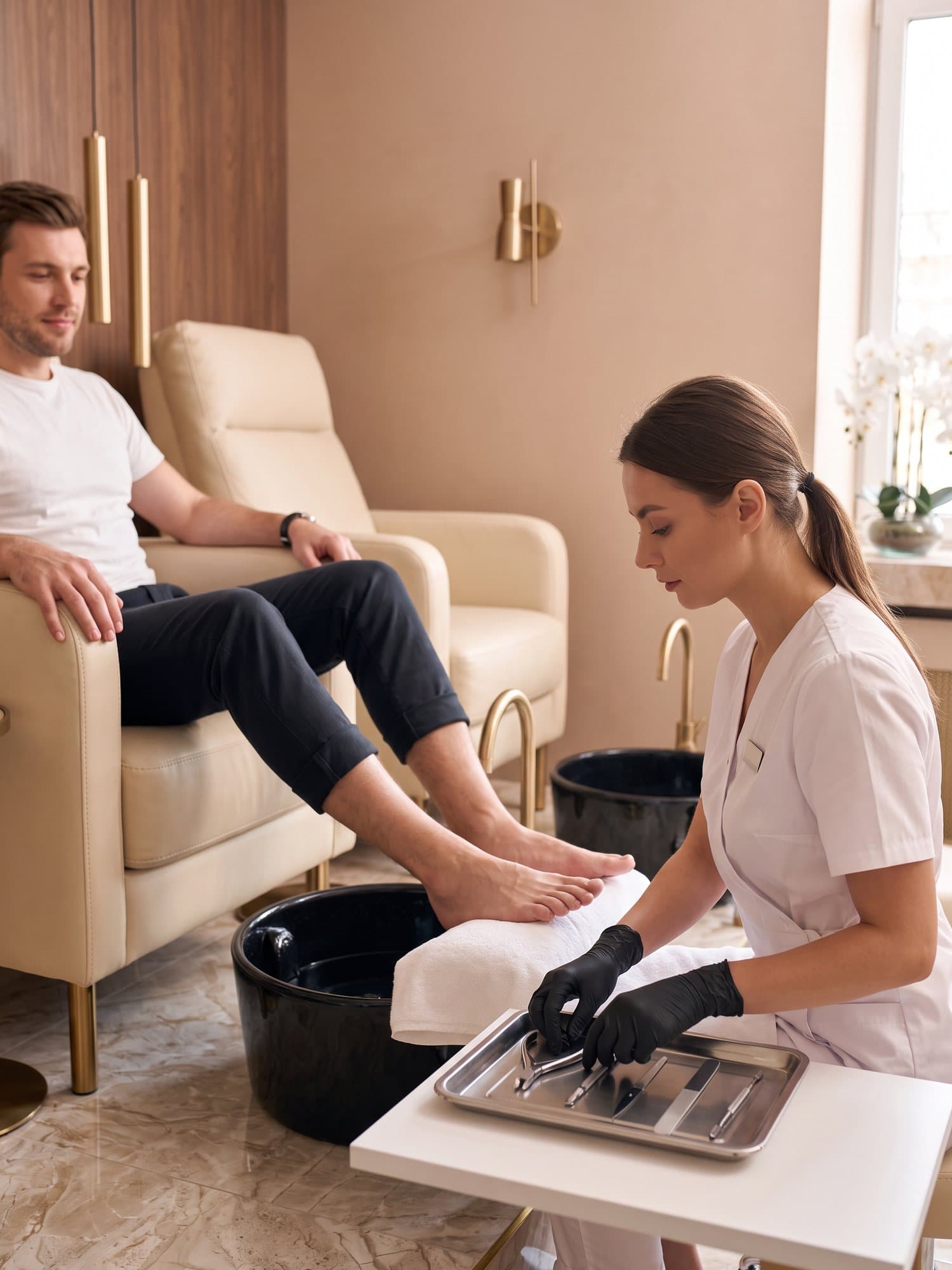
A brief chat and foot assessment
the stylist asks about your lifestyle (sport, standing work), examines your nails, calluses and heels, and chooses the variant.
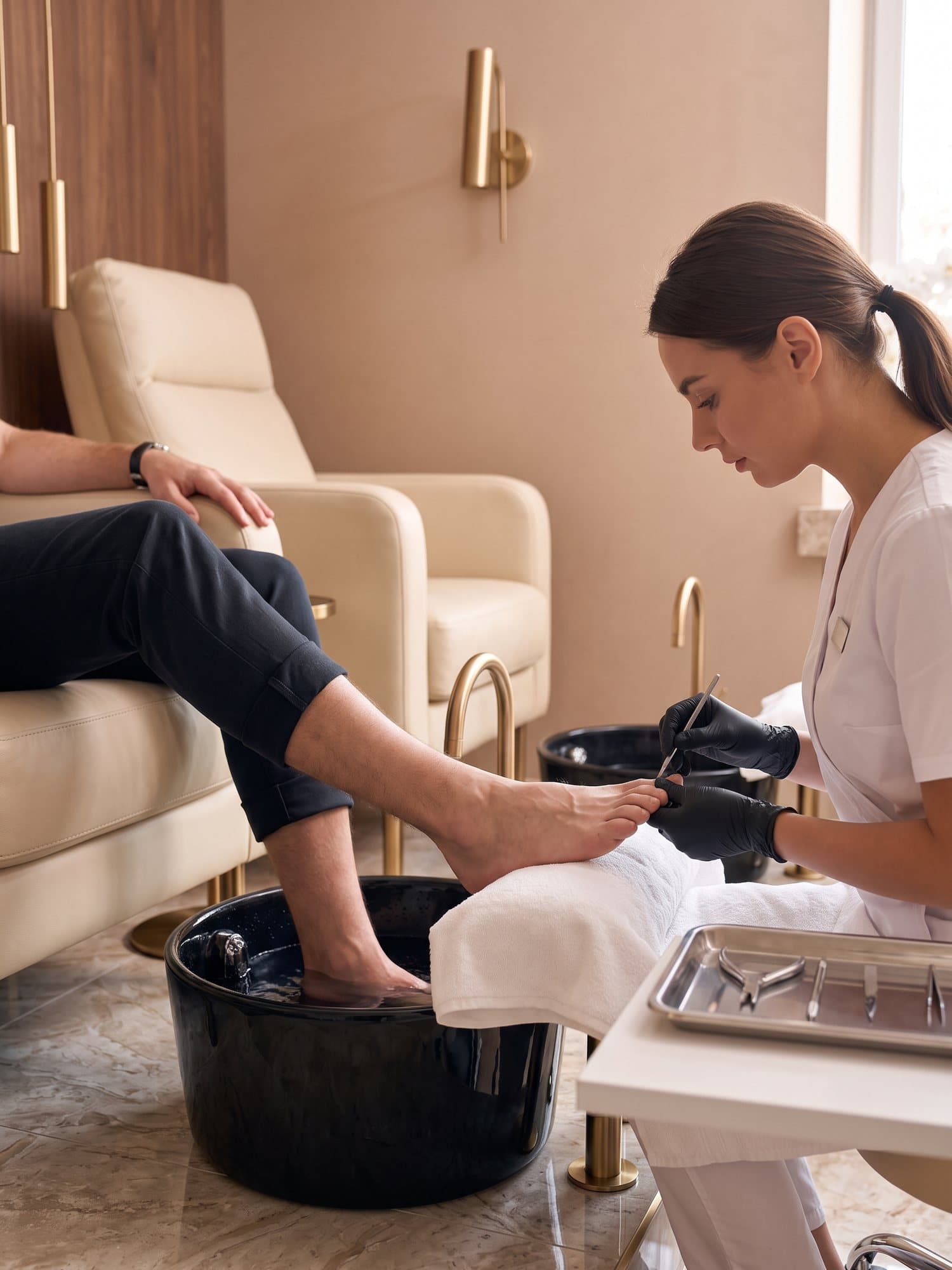
Soak and softening
feet are soaked or treated with a softening product, so the hardened skin can be removed safely.
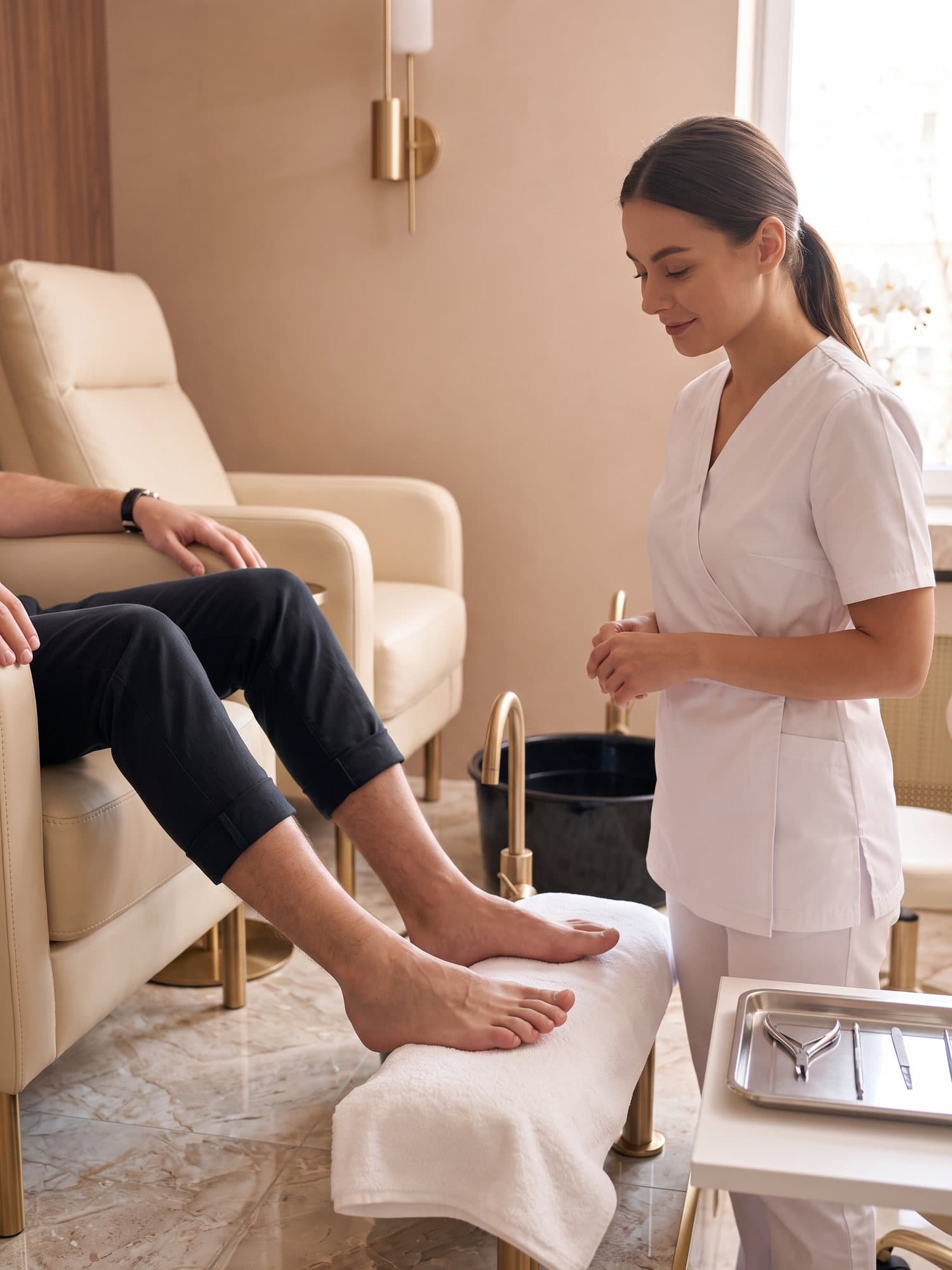
Nails and cuticles
trimming, shaping, cleaning and pushing back the cuticles; we work carefully to minimise the risk of ingrowth.
Skin, calluses and heels
removal of hardened areas and smoothing of the surface; never treated "to the quick."
Finishing
massage with cream, optionally clear hybrid or natural care. You put your shoes on and leave — no downtime.
Portfolio
A record of the work in our salons — the place where we publish treatment frames and, after photo sessions, results.
A record of results — in preparation. We publish photographs of our clients only with their consent.
After your pedicure
A men's pedicure doesn't rule anything out — you go straight back into your shoes. A few simple habits, though, make the result last longer and stop heels reverting to square one after a week.
You can train the same day — a pedicure doesn't limit movement. One tip: for your first longer run after the treatment, wear trusted, broken-in shoes, since freshly smoothed skin can be briefly more sensitive.
This is the most important habit. Urea cream on heels and soles before bed (ideally with socks on) slows the return of hardened skin and prevents cracking.
Cotton, wool or technical socks with breathable footwear reduce moisture and friction. A hot, sweaty foot in synthetic material is a quick route to calluses and odour.
Between visits, cut your nails straight across — don't round the corners. This is the main way to prevent ingrowth. Leave the rest to the stylist.
Don't remove hardened skin with sharp graters or metal "blade" tools — it's easy to go too deep and cause a wound. A coarse-grit file and cream are enough at home.
If pain, redness, ingrowth or a change in the nail's appearance appears, don't wait for your next pedicure. That's a signal to visit a **podologist**.
Men's pedicure
Three different things that are easy to confuse. Simply put: appearance and care → pedicure, medical foot problem → podology, regeneration and relaxation → SPA.
foot care and appearance
doesn't treat ingrown nails, fungal infections or inflammation
specialist treatment of problems
not styling — it's about foot health and comfort
hydration and relaxation
doesn't treat nails or remove advanced calluses
Variants
There's no single "men's pedicure." The stylist chooses the variant based on the condition of your feet, your lifestyle, and whether you want anything visible on the nail. We usually start with the classic option, then add optional shine or natural care.
The most common misunderstanding: "I have an ingrown nail, I'll get a pedicure and it'll go away." It won't — a pedicure takes care of appearance, but an ingrown nail is a job for a **podologist, who will fit a packing or brace. Simple rule: it hurts or looks concerning → podologist. You just want well-groomed feet → pedicure.**
Variants
There's no single "men's pedicure." The stylist chooses the variant based on the condition of your feet, your lifestyle, and whether you want anything visible on the nail. We usually start with the classic option, then add optional shine or natural care.
Full treatment: trimming and shaping nails, cuticles, removing hardened skin, smoothing calluses and heels. The nail stays matte and natural.
Dla kogoFirst visit, regular care, men who want "well-groomed, but not obvious."
After treatment, we apply a clear hybrid to the nail. It gives a subtle, natural shine and strengthens the nail — without a "polished" look. Lasts until the nail naturally grows out.
Dla kogoPeople with brittle, fragile nails; anyone who wants their feet to look fresh for longer.
Natural nail care without polish — nourishes the nail and gives it a healthy, subtly satin look. No layer that could get in the way.
Dla kogoRunners and athletes who don't want anything on the nail but care about its condition.
Price list
Checking free hours…
See also
The result lastscare lasts a few weeks; hybrid until natural nail regrowthJ’adore Instytut
Information. Men's pedicure is a cosmetic care service; results depend on home care and individual skin and nail characteristics. This text is for information purposes only. Details and choice of variant are agreed with the specialist during your visit. If an ingrown or painful nail, advanced calluses, suspected fungal infection or other pathological changes appear on the foot, we refer you to a podologist or dermatologist.
Home care
Cosmetics matched to what your skin needs after a treatment — so the clinic effect lasts longer.
 foot carePodopharmExtra Dry Skin Serum 30mlView in the shop(opens in a new tab)
 foot carePedibaehrWellness Green Asia cream foam with lotus and bamboo extract 125 mlView in the shop(opens in a new tab)
 foot carePodopharmPODOFLEX® Foot Cream with ColostrumView in the shop(opens in a new tab)
 foot carePedibaehrintensively moisturizing cream for cracked skin with ceramides 125 mlView in the shop(opens in a new tab)


