WarszawaŻelazna 59WarszawaMińska 29AKrakówKarmelicka 45Warsaw · Krakow

Full perspective

TRX — for hyperpigmentation for men

Hyperpigmentation in men — when it's worth acting
TRX for men mainly addresses patches from years without sun protection and acne marks. Men's skin tends to be thicker and oilier, with more frequent scarring and post-acne hyperpigmentation, plus the habit of skipping SPF — a real problem, because without sun protection, a peel for hyperpigmentation can't produce lasting results.
Duration
a few dozen minutes
Result
results depend on consistent SPF use — with protection, the effect lasts for months
Recovery
a few days of light peeling
Sessions
best done in a series of 4–6 sessions every 1–2 weeks
Performed by
experienced cosmetologist
ListenTRX — for hyperpigmentation — this whole page read aloud

When it's worth it — indications

  • Sun-induced hyperpigmentation — lentigines and uneven skin tone after years of UV exposure.
  • Melasma — symmetrical brown patches on the cheeks, above the upper lip, on the forehead; hormonal in origin. Here TRX is often part of a broader plan rather than a standalone solution.
  • Post-inflammatory and post-acne hyperpigmentation — brown marks left after healed blemishes.
  • Grey, fatigued, dull skin — when skin tone has lost radiance and evenness.
  • Minor texture irregularities — while brightening skin tone, the skin also becomes smoother and more radiant.
  • Pre-season care — autumn and winter are the optimal time for a depigmenting series.

The areas we work on

  1. sun patches from years of outdoor work or sport;
  2. hyperpigmentation and acne marks, oily skin;
  3. even skin tone without looking "worked on";
  4. education on SPF — the most important element that's usually missing.
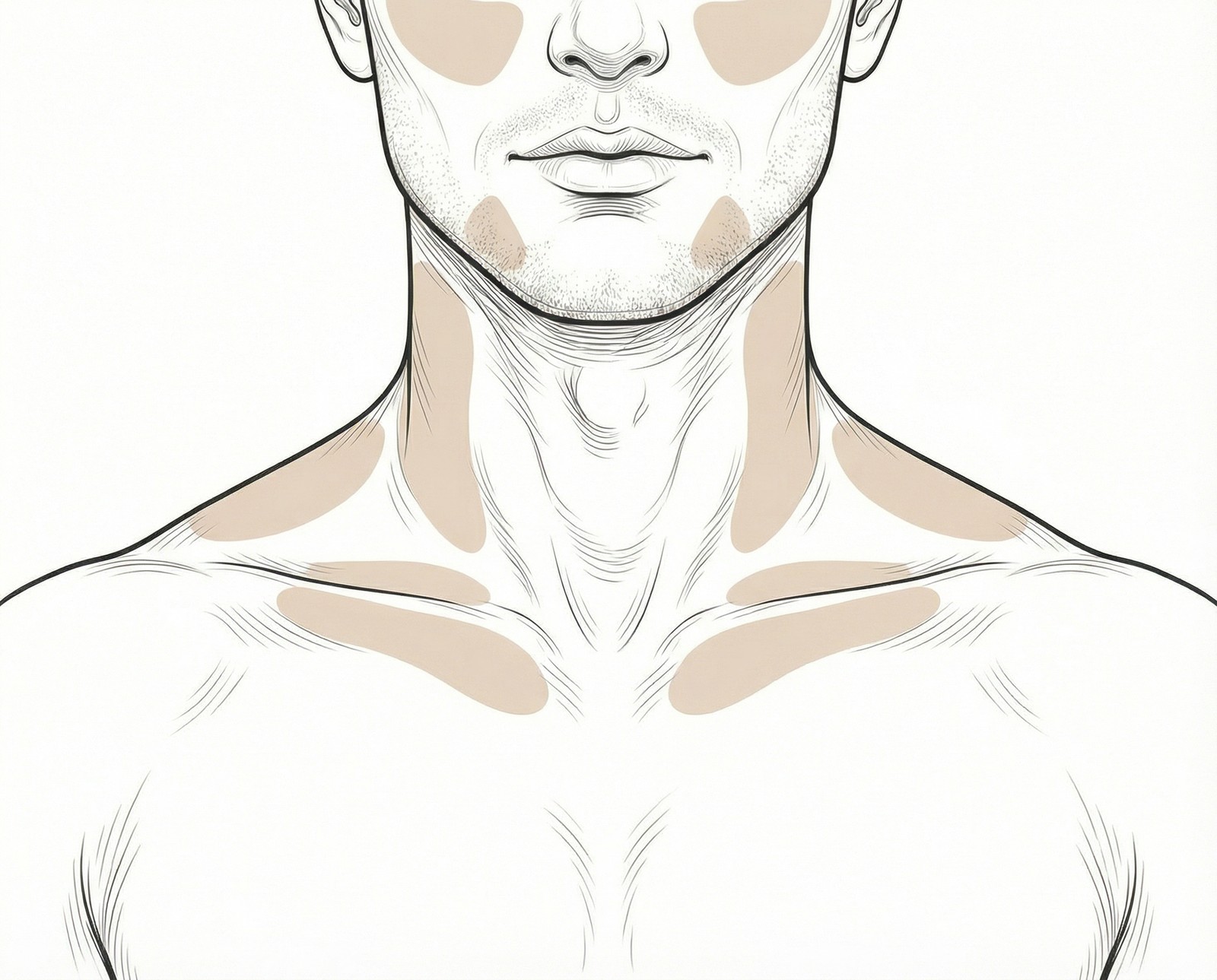
Drawing of the treatment areas — face and neck, male figureForehead and templesCheeksJawlineNeck
Indicative map of the areas

Hyperpigmentation in men — when it's worth acting

Men's hyperpigmentation is rarely the result of hormonal shifts — it's mostly the result of years in the sun without protection: outdoor work, sport, unprotected holidays. Acne marks add to this — men's skin tends to be thicker and oilier, so post-acne and post-inflammatory hyperpigmentation can be more pronounced and set deeper. The end result: uneven skin tone, grey-looking skin, brown patches on the cheeks and forehead that start "adding years" at some point.
Peeling TRX targets precisely this mechanism: it exfoliates the hyperpigmented epidermis while simultaneously calming tyrosinase — the enzyme that produces melanin. The result is an even, fresher complexion — without the "just had a facial" look, without dramatic peeling, without a long downtime.

What's different about men's skin

  • Men's epidermis is generally thicker — which means the skin is more resilient, but pigment can also sit deeper. The cosmetologist tailors the protocol to your skin's actual condition.
  • Oiliness — more common in men — can contribute to post-acne hyperpigmentation. TRX works on skin tone and also smooths texture along the way.
  • Not being in the habit of using SPF — this is the biggest practical issue with depigmentation. Without sun protection, the peel's results reverse faster and patches come back. SPF after a TRX series is a condition for the treatment to work, not a suggestion.
  • Shaving and beard growth — gentleness matters during peeling: don't pull at flakes while shaving, and don't apply shaving products directly onto peeling skin. Your cosmetologist will tell you what to use during this time.

Results — what you'll see after the series

Even skin tone and freshness — without a "done" look. The skin simply looks healthier and less tired, spots become lighter, and the texture is smoother. Downtime is a few days of gentle peeling, which can usually be "lived through normally". We plan the series in the cooler part of the year — spring and summer are the time when we maintain the effect with a good SPF, not the moment for intensive depigmentation.

Frequently asked questions

Will people be able to tell I've had something done?
Peeling is usually discreet — for a few days your skin might be dry and flake lightly, but it rarely requires hiding away or giving up normal activities. On the day of the treatment and for a few days after, your skin is more sensitive — avoid intense exercise in the heat and avoid the sauna. Otherwise, you can go about your day as usual.
How many times do I need to come in — and how often?
The optimal series is 4–6 sessions every 1–2 weeks. With sun-induced hyperpigmentation from years without SPF, a single session shows a visible effect, but lasting improvement in skin tone builds through the series. It's a matter of weeks, not months.
Can I have a peel if I have active breakouts or acne?
Active skin inflammation is a temporary contraindication — in that case, we postpone the treatment until your skin settles down. With scarring or post-acne skin, we adjust the strength and protocol accordingly. This is decided by the cosmetologist during consultation, not automatically.
Do I need to use any products at home?
SPF 50+ every day — this is the absolute basis and the condition for lasting results. The cosmetologist may also recommend a brightening cream between sessions and products for the peeling phase. Without a home routine, the series' results don't last as long.
Are there any special restrictions after the treatment — sport, swimming pool?
Skip sport on the day of the treatment. No restrictions from the next day — just remember SPF if you're training outdoors. Swimming pool and sauna: a few days' break, since chlorine and high temperatures can irritate freshly peeled skin.

Where we offer it

TRX — for hyperpigmentation for men — we perform it in three J'ADORE INSTYTUT salons: two in Warsaw and one in Krakow.

  • WarsawŻelazna 59 · Wola · Mirów
  • WarsawMińska 29A · Praga-Południe · Kamionek
  • KrakowKarmelicka 45 · Stare Miasto · Piasek

Price list

    Book a visit

    Prices from the treatment price lists. The variant and number of treatments are determined by the specialist during the consultation.

    Book a visit