WarszawaŻelazna 59WarszawaMińska 29AKrakówKarmelicka 45Warszawa · Kraków

Careers

ENPL

Full perspective

Scalp PRP for women

Women and hair loss — why your story looks different
In women, hair loss is most often diffuse: hair thins across the whole scalp, and the parting gradually widens — distinct "bald patches" rarely appear. Telogen effluvium is also common (after childbirth, stress, dieting, or during perimenopause). Scalp PRP for women targets density and improved hair condition, ideally as a series and after ruling out general causes (deficiencies, thyroid, hormones).
Czas
a short visit — blood draw, plasma preparation and micro-injections
Efekt
results build over weeks and need maintenance
Regeneracja
minimal — mild scalp redness for a few to several hours
Seria
a series of several sessions at intervals + maintenance sessions
Wykonuje
trichologist or experienced cosmetologist
ListenScalp PRP — this whole page read aloud

When it's worth it — indications

  • Female or male pattern baldness — thinning at the crown and along the parting (in women) or a receding hairline and crown thinning (in men). This is the main indication.
  • Telogen effluvium — diffuse, intensified hair loss after stress, childbirth, illness, sudden dieting or seasonal changes.
  • Weakened, thin hair — when hair is getting finer, softer and slower to regrow, even without visible bald patches yet.
  • Support after diagnosis — when a trichologist or dermatologist has identified the cause and PRP is meant to complement a home-care plan or general treatment.
  • Prevention for those with a family history — when early baldness runs in the family and you want to act on the first signs.

The areas we work on

  1. thinning at the crown and a widening parting;
  2. telogen effluvium after childbirth, stress or dieting;
  3. increasingly thin hair, scalp showing through when hair is tied up;
  4. support for hair condition after a period of intense seasonal shedding.
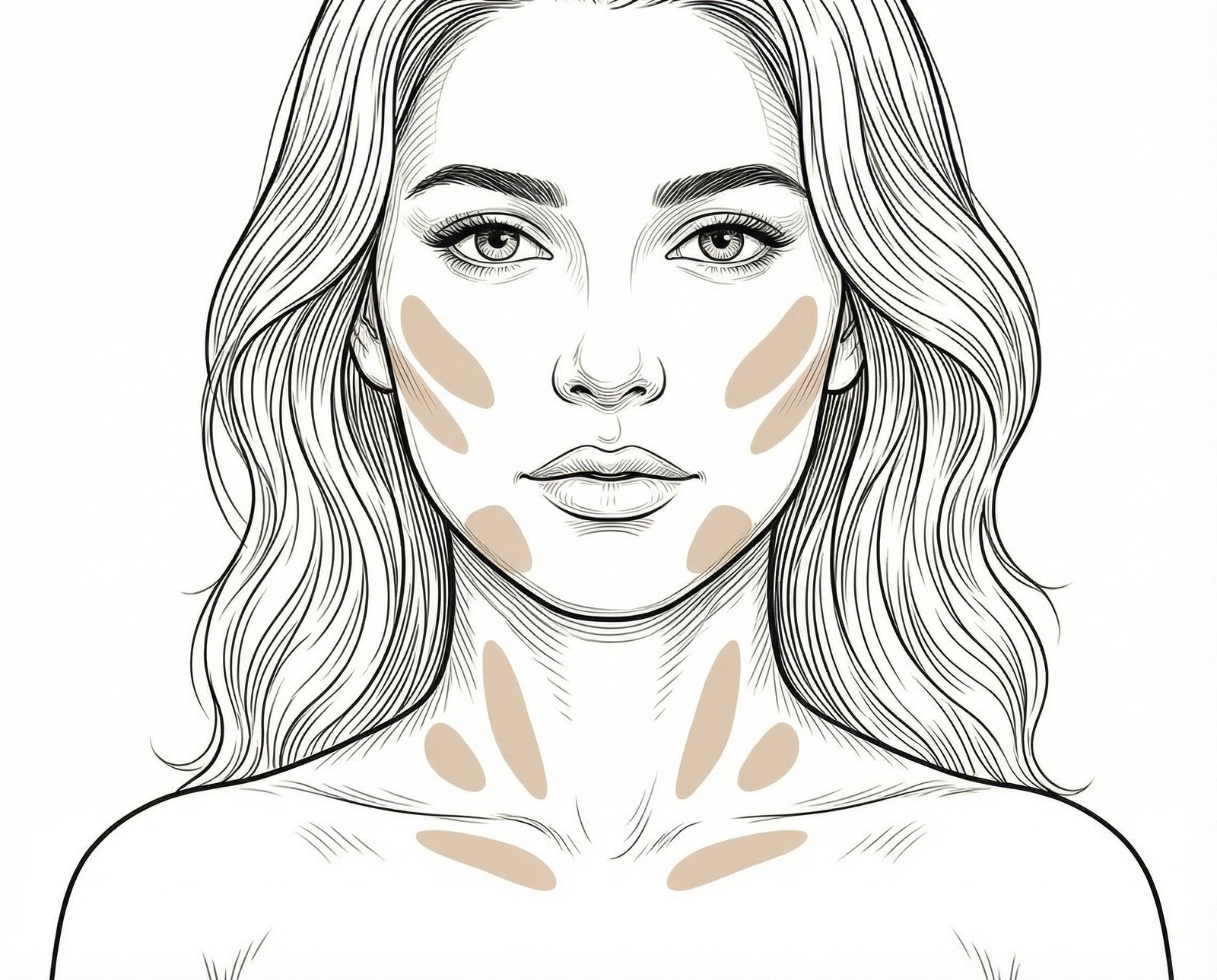
Rysunek stref zabiegowych — twarz, szyja i dekolt, sylwetka kobiecaForeheadPoliczkiSzyjaDécolletage
Indicative map of the areas

Women and hair loss — why your story looks different

Hair loss in women doesn't look the way it does in men — which is why it often goes unnoticed for years. There's no obvious bald patch or receding hairline. Instead, the parting gradually widens, hair becomes finer and seemingly "lighter", and the scalp shows through more when you tie your hair up. It's often only when hair comes out in clumps after childbirth, stress or an extreme diet that a woman starts to react.
In women, thinning is most often caused by female pattern baldness (diffuse, not localised) or by telogen effluvium — a phase in which a large proportion of follicles enter a resting state at once and begin to shed. Triggers include childbirth, rapid weight loss, iron or ferritin deficiency, stress, hormonal changes (including perimenopause), or thyroid disease.
In this situation, scalp PRP acts as a signal to work for the follicles that are still functioning — it slows their miniaturisation and supports a longer growth phase. It isn't the answer for every type of hair loss, which is why we start with a diagnosis, not a needle.

Your areas, your concerns

The female pattern of thinning is concentrated mainly at the crown and along the parting. These are the areas where the scalp is most exposed — when combing, tying hair up, or looking down. That's exactly why so many women say they noticed their hair loss "by accident in a photo", or when their hairdresser mentioned it was "getting a bit thinner".
The female profile of scalp PRP use:
  • thinning at the crown and a widening parting — the main indication;
  • postpartum telogen effluvium: follicles enter a resting phase in months 3–5 after childbirth, and PRP can help shorten that resting phase;
  • hair loss after a sudden diet, fasting or deficiencies (iron, ferritin, zinc, B vitamins) — here, blood diagnostics come first, because no treatment will stop hair loss without correcting the deficiency;
  • seasonal shedding that "just won't let up this year";
  • support for hair condition — when hair is getting thinner, softer and more brittle, even without visible bald patches yet;
  • prevention for those with a family history — if your mother or grandmother had thinning hair.

Scalp and hormones — what's worth knowing before a series

The female hair follicle is particularly sensitive to hormonal fluctuations. Oestrogens have a protective effect on the follicle — which is why hair often looks its best during pregnancy, then sheds dramatically afterwards. During perimenopause, as oestrogen levels drop, testosterone's androgenic effect on the follicle becomes more noticeable — and that's when female pattern baldness typically appears.
PRP isn't a hormonal treatment — it doesn't regulate your hormone balance. It's a regenerative signal in the tissue that works independently of hormones. That's why it gives the best results when follicle miniaturisation itself is the cause of hair loss, rather than an active deficiency or an ongoing hormonal imbalance. When there's a strong androgenic component, the most lasting results come from combining PRP with general treatment prescribed by a gynaecologist or endocrinologist.

What PRP looks like in practice — the woman's perspective

The treatment takes a short visit. We draw a small amount of blood from a vein in the crook of your elbow — just like a standard blood test. The plasma is ready after a few minutes in the centrifuge. We perform micro-injections with a very fine needle, targeting the follicle areas — particularly where the parting is widest and thinning most visible.
After the treatment, you go home with no bandages. Your scalp may be slightly red and tender for a few hours — that's normal. You don't wash your hair until the next day, avoid intense exercise for 24 hours, and hold off on the sauna and swimming pool for a few days. That's the extent of the restrictions.
You can style and tie up your hair as usual straight away, but plan colouring or a perm a week ahead, or a few days after the treatment.

Frequently asked questions

I'm 3 months postpartum and losing loads of hair — will PRP help me?
Postpartum (telogen) hair loss is nearly universal and follows a predictable course: follicles enter a resting phase all at once, then shed in large numbers over several months. Many recover from this phase on their own. PRP can support a faster return to the growth phase and improve the condition of follicles that are "fighting to come back" — but it won't stop a process rooted in the body's hormonal normalisation after childbirth. We start with a trichoscopic assessment: if follicles are active, it's worth doing. If your body simply needs time, we'll tell you honestly.
My parting has widened — how do I know it's not menopause, and that PRP is worth it?
Trichoscopy answers that question more precisely than any description can. We examine the follicles under magnification and assess whether they're miniaturised, in a resting phase, or whether the scalp is inflamed. In female pattern baldness, you can see characteristic miniaturised hairs alongside normal ones. Based on this, we decide whether PRP is a good choice, and refer you to an endocrinologist or dermatologist if broader diagnostics are needed.
Can I colour my hair after a PRP series, same as before?
Yes. Colouring isn't off the table — we simply push back the session right after the treatment by a few days, so we don't irritate freshly treated skin. After that, you can dye, lighten and style without restriction. PRP doesn't change hair structure — it strengthens the follicle, not the fibre.
Will it hurt more than a blood draw?
The blood draw itself is identical to a standard lab test — one prick in the elbow vein. The micro-injections in the scalp are a series of quick, short pricks. Many women describe it as a light pinching or tightening sensation. For comfort, we can apply a topical anaesthetic — selected individually, based on your sensitivity and the treatment area.
Will results last, or do I need to keep doing this forever?
PRP's effect fades without maintenance — particularly with pattern baldness, where a persistent hormonal component drives the hair loss. The starting series builds the effect, and maintenance sessions in the following months sustain it. There's no single answer for everyone: some women need maintenance every few months, others less often. We agree the plan during consultation and review it after the series, based on how your skin responds.

Where we offer it

Scalp PRP for women — we perform it in three J'ADORE INSTYTUT salons: two in Warsaw and one in Krakow.

  • WarszawaŻelazna 59 · Wola · Mirów
  • WarszawaMińska 29A · Praga-Południe · Kamionek
  • KrakówKarmelicka 45 · Stare Miasto · Piasek

Price list

    Book a visit

    Prices come from the salon price lists. The choice of cocktail and the number of sessions is decided by your specialist at the consultation.