
What collagen actually is — and why you're losing it
Collagen is the protein that builds the skin's scaffolding. Picture a network of taut ropes — it keeps skin firm, springy, and in place. After your twenties, your body starts producing less of it. The rate of loss speeds up with sun exposure, smoking, high blood sugar, and — importantly for men — chronic stress. By your forties, the difference is visible to the naked eye.
Men have one advantage: their skin is naturally thicker, which means a larger starting reserve. But there's a downside too — for years, they tend to dismiss the signs. Sallow skin, greyish tone, a loss of "tension" — these are often early signs of collagen loss, not just tiredness or poor sleep. As the scaffolding weakens, tissue starts to sag, and expression lines deepen faster.
Density, not "smoothness" — what you're actually after
When men say "I want to look better", they rarely mean a smooth forehead. They mean their face shouldn't look older than it is. Cheeks shouldn't sag. Skin along the jaw shouldn't feel loose. The nose and lips shouldn't look "heavier" because of the grooves around them. These are all effects of tissue density loss — and that's exactly what collagen-stimulating treatments address.
The difference between collagen rebuilding and a classic "filler treatment" is fundamental. A filler injected under the skin adds volume here and now — the wrinkle disappears, but the underlying structure doesn't improve. Biostimulators and PRP therapy work differently: they stimulate your own skin cells to produce collagen. The effect is subtler, but longer-lasting — skin genuinely becomes denser, not just filled.
Collagen rebuilding
how biostimulators and PRP work
- stimulate fibroblasts to produce collagen naturally
- results build over weeks to months
- density and elasticity, not volume
- results last: from several months to over a year
The male goal
what men are actually after
- skin holds its shape, doesn't sag
- face looks rested, not "done"
- results that don't look like a treatment
- nothing dramatic — just a better version of yourself
Which treatments — and in what order
There's no single "collagen procedure". It's a toolkit — treatments differ in depth of action, timeframe for results, and who they suit. A good doctor or specialist chooses the right combination for your skin's condition, not from a catalogue.
- 01
step
Mesotherapy — the starting point. Micro-injections deliver cocktails of amino acids, vitamins and peptides directly into the skin. It improves hydration and nourishment and kick-starts regenerative processes. A good introduction before more advanced therapies.
- 02
step
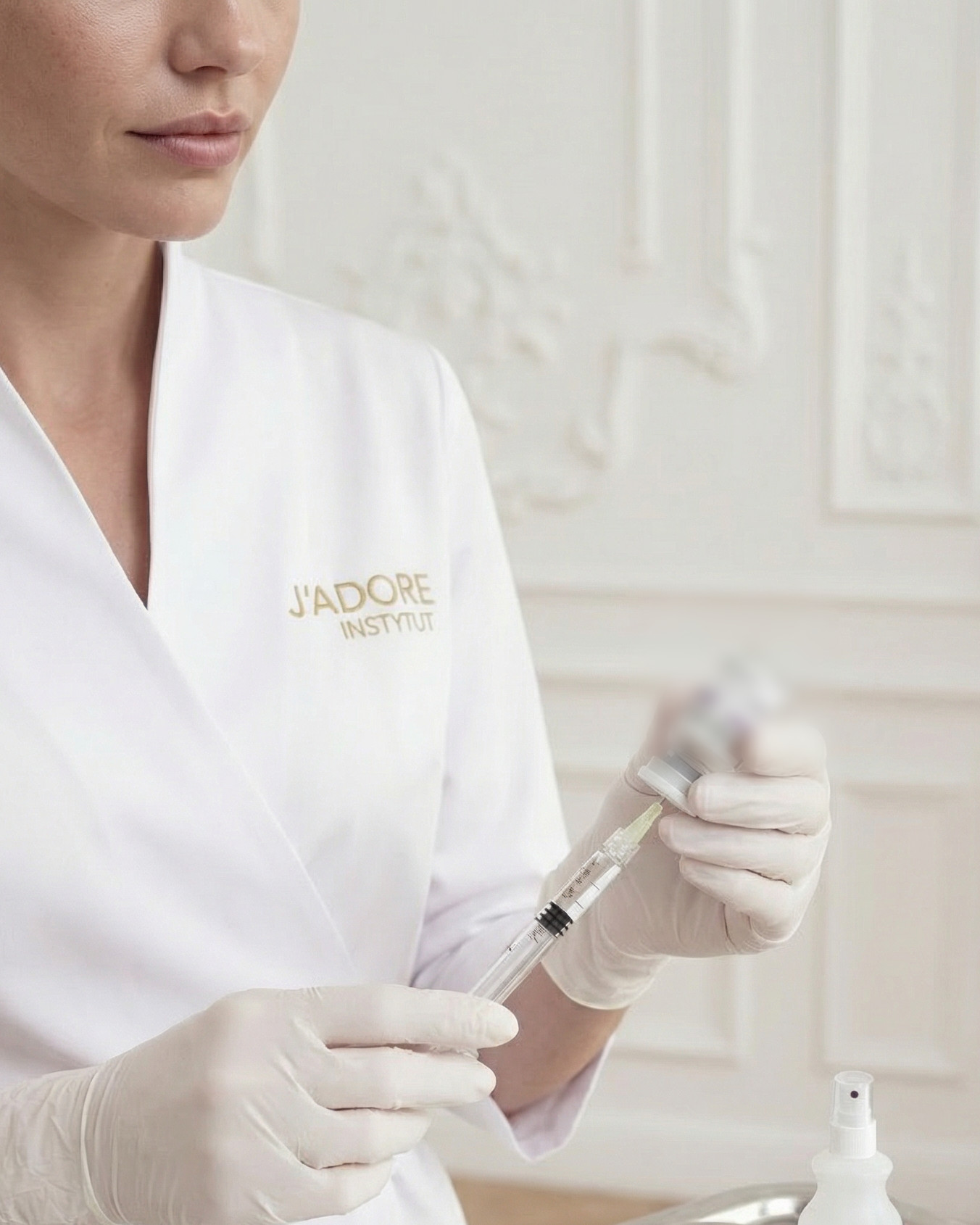
PRP (platelet-rich plasma) — your own "collagen boost". We draw your blood, spin it down, and inject the growth-factor-rich plasma back into your skin. This stimulates fibroblasts to produce collagen — 100% natural, because it comes entirely from your own body.
- 03
step
Polynucleotides and biostimulators — rebuilding at a deeper level. These work longer and deeper than mesotherapy, supporting regeneration of the cellular matrix. Visible improvements in tissue density and elasticity build over several weeks.
- 04
step
Exosomes — the next generation of stimulation. Signalling molecules that "instruct" skin cells to rebuild more intensively. Particularly effective where classic mesotherapy hasn't delivered the expected results.
Supplements — do they actually help
The question that comes up almost every time: "will collagen from the pharmacy be enough on its own?" The honest answer: supplements can support the therapy, but they can't replace stimulation from within the skin itself. Hydrolysed oral collagen supplies amino acids — your body can use them for rebuilding, but there's no guarantee they'll reach the facial skin specifically. The mechanism is too complex to claim 100% effectiveness.
What actually influences your collagen levels outside the treatment room? A diet rich in vitamin C, zinc and lysine, cutting back on sugar (glycation of collagen is one of the main mechanisms behind its breakdown), UV protection (even in winter, even through glass), and — for many men, the hardest part — managing cortisol-driven stress. Collagen breaks down faster under high cortisol than it does under sun exposure. This isn't specialist medical knowledge — it's biochemistry that translates directly into what you see in the mirror.
What a visit looks like — straight answers to straight questions
The first question men ask: "does it hurt, and how long will I look battered?" It depends on the treatment. Mesotherapy involves small injections — noticeable, but brief. PRP and biostimulators are similar. With standard protocols, any redness or minor bruising settles within a day or a few days. For most men — no visible marks after 24 hours.
The second question: "when will I see results?" Mesotherapy — the first improvements after a few days (skin better hydrated, brighter). Biostimulators and PRP — results build over 4–8 weeks, as that's how long tissue remodelling takes. This isn't a filler that works instantly — but it's also not a procedure you need to repeat every month. Good protocols are designed around a cycle, after which results last for many months.