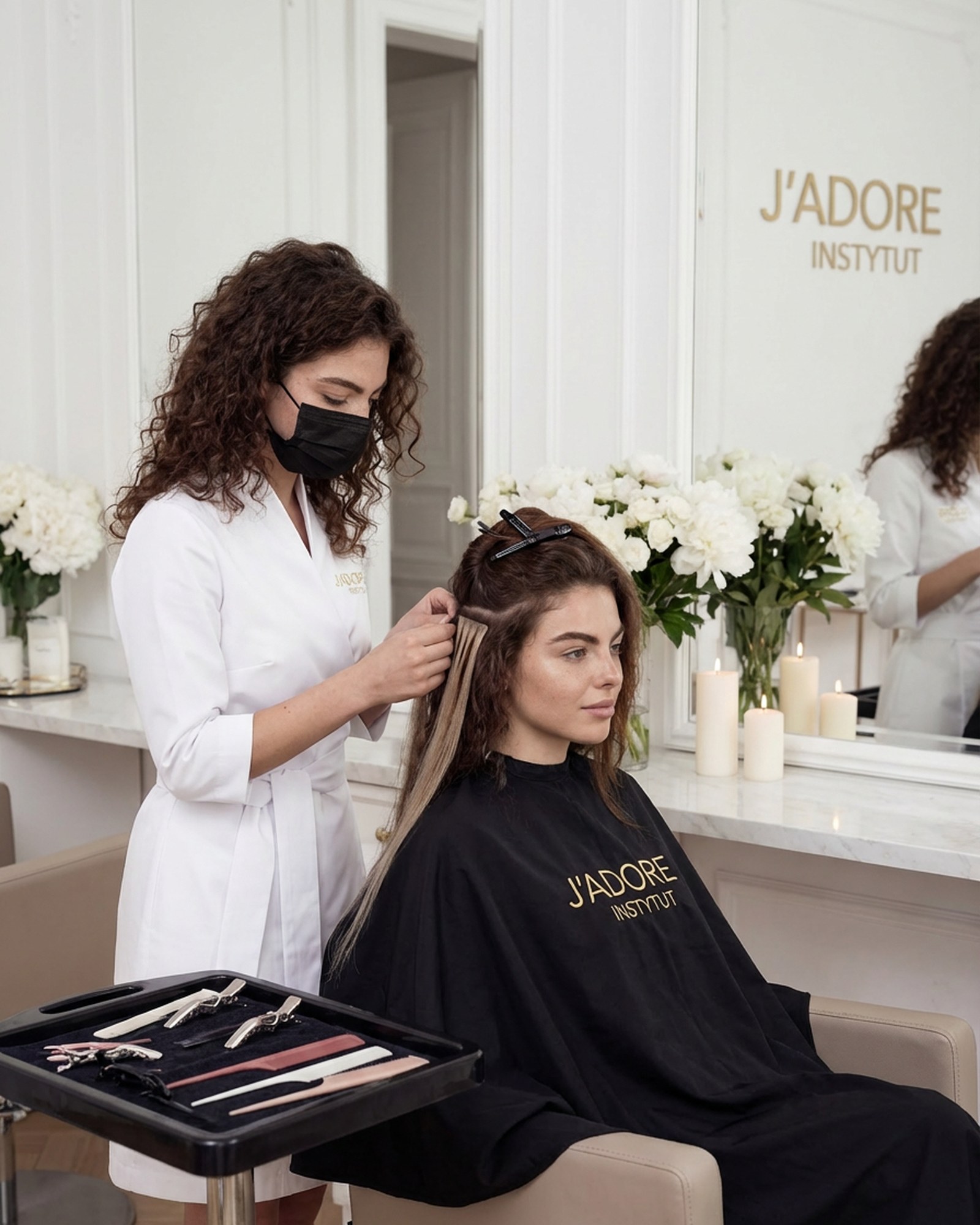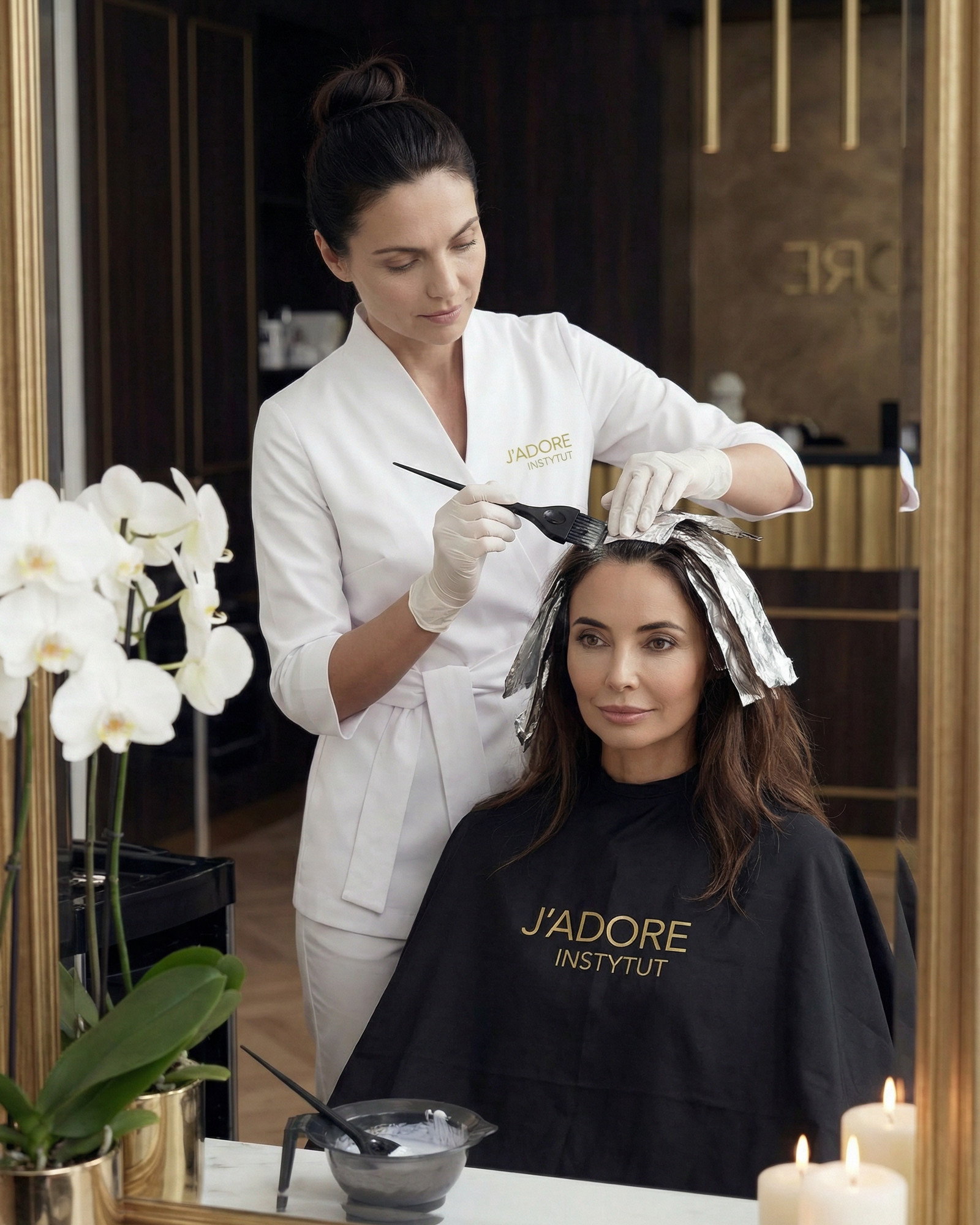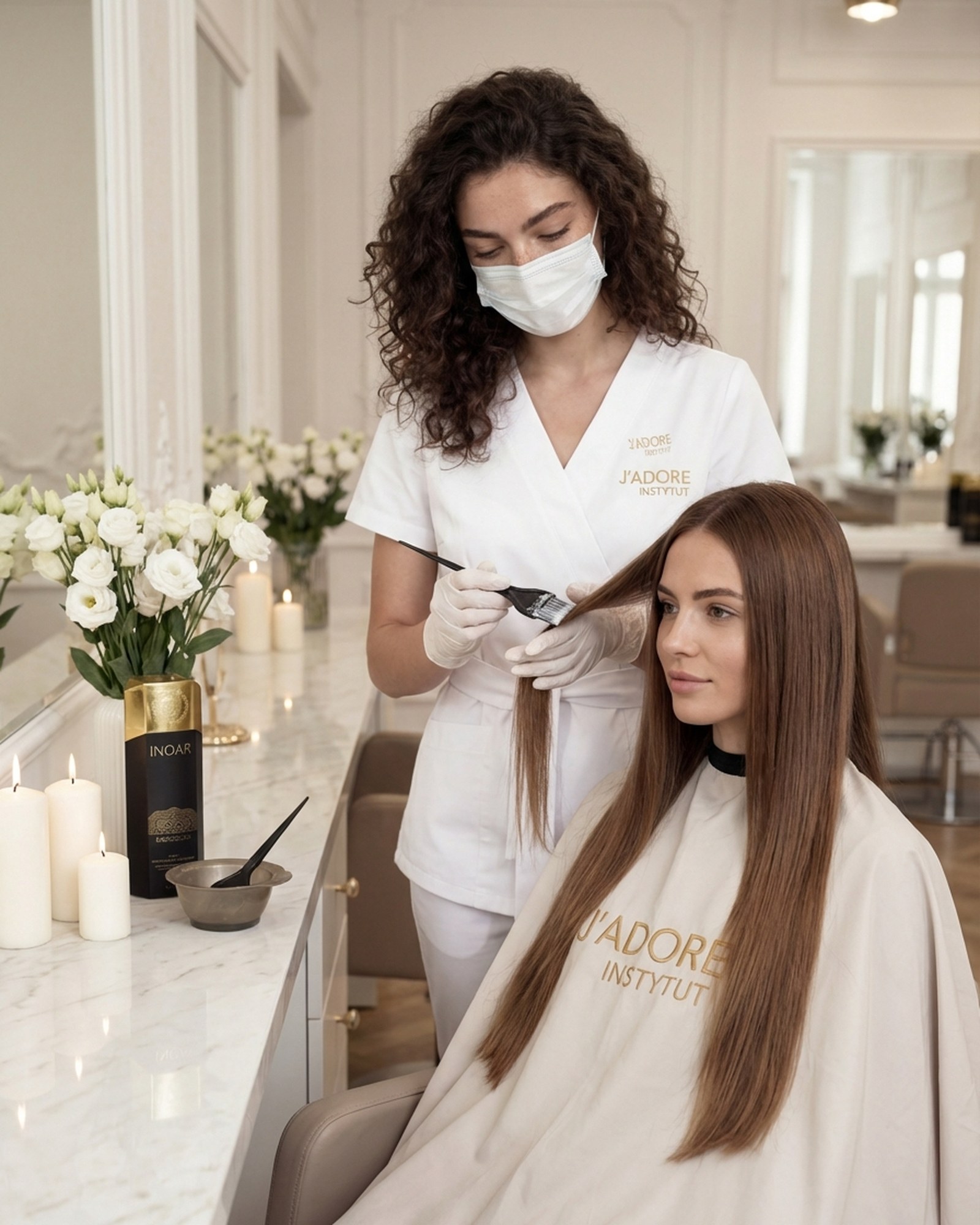
Hair weight determines whether a hairstyle falls into place on its own.
Many people view a haircut solely as shortening the length. In practice, however, the stylist’s scissors are a tool for managing hair mass. The weight of the strands determines whether the hairstyle keeps its shape or loses volume and clings to the head after a few hours.
We often observe this mechanism when working with different hair structures. Trimming a strand by just two centimetres can suddenly give it new bounce. This happens because every centimetre of length acts as a weight that pulls out the curl and smooths the natural texture. Removing excess ballast allows hair to regain its original form, making the hairstyle fall into place almost effortlessly.
A key moment of every visit is the analysis of the hair at the nape. This is where excess mass often accumulates, causing the hairstyle to lose its lightness. When the stylist shows how precise thinning of the nape changes the way hair falls, many people realise why their previous cut was difficult to manage daily.
- Hair weight determines whether strands fall smoothly or gain natural movement.
- Removing weight from specific areas makes it easier to style your hair at home.
- Shorter layers underneath act as a frame that supports the volume of the entire hairstyle.
Understanding how hair mass affects its behaviour allows for a conscious choice of shape. Instead of fighting your hair's nature, we design the cut to utilise its natural tendencies. Thanks to this, the hairstyle not only looks good right after leaving the salon but also keeps its character in the following weeks as the hair starts to grow out.
The consultation is the time to be honest about your morning habits.
A salon visit does not start with scissors, but with a conversation. This is the moment when an experienced hair stylist verifies if your expectations match your daily reality. You often arrive with inspiration that looks flawless in a photo but requires half an hour with a straightener or brush every morning. If your priority is leaving the house in five minutes, we must decide together if the chosen shape will become a source of frustration for you.
During the consultation, we check how your hair behaves in its natural environment. If you prefer to wash your hair quickly in the morning, we will suggest a cut that uses your hair's natural curl or volume instead of imposing a form that requires tedious styling. This is the key to ensuring your hairstyle looks good not just on the day of your visit, but for weeks to come.
A Pinterest hairstyle
- Requires daily work with thermal tools
- Often ignores your hair structure
- May be impractical for your lifestyle
Your new cut
- Matched to the time you have in the morning
- Considers natural structure and bounce
- Works for you, not against you
Regular trimming of the ends is the only way to maintain length.
Many people avoid the stylist's chair for fear of losing length, but paradoxically, less frequent visits often lead to the need for radical shortening. Regular trimming does not serve to make hair "grow back," but to protect the hair structure from further damage. A hair that has lost its integrity at the very bottom becomes prone to mechanical damage that does not stop at the split point.
- 01
Start of damage
The hair end splits due to friction, temperature, or chemical treatments.
- 02
Migration of damage
The split end starts "travelling" upwards, weakening the strand structure over an increasing length.
- 03
Necessity of cutting
The neglected strand breaks higher and higher, forcing the removal of a much larger portion of hair than during a regular refresh.
The decision to remove a centimetre of hair during a visit is a conscious choice that allows you to keep a healthy look for longer. If you allow damage to reach deep into the hair, in three months the only way to restore an aesthetic look will be to cut five centimetres, not one. A regular refresh allows you to maintain the cut line, which starts to lose its original shape and becomes harder to style a few weeks after the visit.
- Removing split ends prevents them from breaking further up the strand.
- Systematic trimming allows you to maintain the desired hairstyle shape, which does not become accidental.
- Healthy ends make hair look thicker and better cared for along its entire length.
- Regularity is an investment in length — instead of drastic changes, we perform only the necessary correction.
It is worth remembering that dull and split ends are visible even with the most careful styling. Instead of treating the visit as a loss of centimetres, it is better to see it as a way to maintain hair condition, which allows it to grow healthily. Thanks to this, the hairstyle keeps its character, and you do not have to worry that the ends will start looking neglected a few months after your last haircut.
A salon visit ends differently than home styling.
Leaving the salon, your hairstyle looks flawless. It is smoothed, styled "to the millimetre," and full of volume that cannot be achieved in a rush. This is the effect of the stylist's work, who has professional equipment and techniques that allow for precise lifting of strands at the roots. It is worth remembering, however, that this is an ideal version created in controlled conditions.
The real test for a new cut comes after the first wash at home. Then, your hair falls in its natural way, and you check how the hairstyle "works" daily. Often, it is after this first home ritual that the cut takes on its most natural character. If you feel the effect differs from the one in the chair, it does not mean the cut is poorly done — it is the moment you learn how your hair reacts to the new form.
- Why does hair style differently at home than in the salon?
In the salon, the stylist dries your hair with full control over the airflow direction and access to the roots. At home, we often lack a third hand or the time to give each strand as much attention as during professional styling.
Metamorphosis requires time and certainty, not haste.
The decision to radically change your image, such as going from long hair to a short bob or getting distinct bangs, can be emotional. From a stylist's perspective, it is safest to approach it with distance. Instead of acting on impulse or temporary inspiration, it is worth sleeping on the idea. Time allows for a cool assessment of whether the chosen shape truly fits your daily rhythm and if you are ready for the change in styling that is inevitable with shorter forms.
- Book a quiet afternoon for your metamorphosis to avoid rushing before other commitments.
- Discuss with your stylist whether the chosen hairstyle requires daily use of a hairdryer or brush.
- Remember that a radical cut is not just a change in length, but above all a new way for hair to fall around your face.
If your hair is weakened by previous chemical treatments or bleaching, a metamorphosis may need to be done in stages. A too-sudden cut on a damaged structure does not always bring the expected visual effect, which is why restoring hair condition becomes the priority. Planning together allows for a gradual approach to the dream shape without the risk of losing hair quality.
Staging changes
If hair is weakened, we first remove the most damaged parts and design the target shape after strengthening them.
Consultation before the cut
This is the moment for honesty: if you know you only have five minutes in the morning, we look for a form that styles itself almost automatically.
Scalp condition affects the comfort of the entire treatment.
Before the stylist reaches for the scissors, and even before the hair touches water, the state of the scalp is key. It is the foundation on which we design the hairstyle, which is why during the consultation we always check for any irritation, redness, or other changes requiring attention. Healthy skin means not only comfort during washing and massage, but above all, the safety of the treatment.
If inspection reveals that the skin is severely irritated, damaged, or itchy, the most reasonable step is to postpone the visit. In such a case, regeneration and calming the epidermis become the priority. Performing a haircut in a rush when the skin needs soothing could bring more discomfort than satisfaction with a new cut. It is worth remembering that a hairstyle looks best on a healthy base.
- Tell your stylist if you feel burning or itching of the scalp.
- Inform them about recent chemical treatments that could have affected its condition.
- Give yourself time for regeneration — healthier skin is a better base for any hairstyle.
Choosing products extends the freshness of your new cut.
A freshly executed cut is a project that requires appropriate support in daily care. Even the most precisely chosen hairstyle line will lose its character if overwhelmed by the wrong cosmetics. The key to maintaining the salon effect is minimalism and a conscious choice of preparations that support the hair structure instead of weighing it down.
- Choose a light oil that will protect the ends from splitting and add shine without causing a "stringy" effect.
- Apply a heat-protectant spray before every use of a hairdryer to protect the hair cuticle from high temperatures.
- Reach for a styling mist that will set the hairstyle shape without sticking strands together.
In the days between washes, hair often loses its natural lightness, which is especially visible with shorter forms. In such situations, it is worth reaching for proven solutions that restore volume at the roots without needing to wet the hair again.
Remember that styling products should be matched to your hair type. If your hair is thin and prone to falling flat quickly, avoid heavy masks or waxes that can negate the effect of layering. Instead, opt for light mists and products that highlight the natural movement of strands. Thanks to this, the hairstyle will keep its intended shape for many weeks, and you will avoid a daily battle with the mirror, enjoying a cut that actually works for you.