When to start — and why earlier than you think
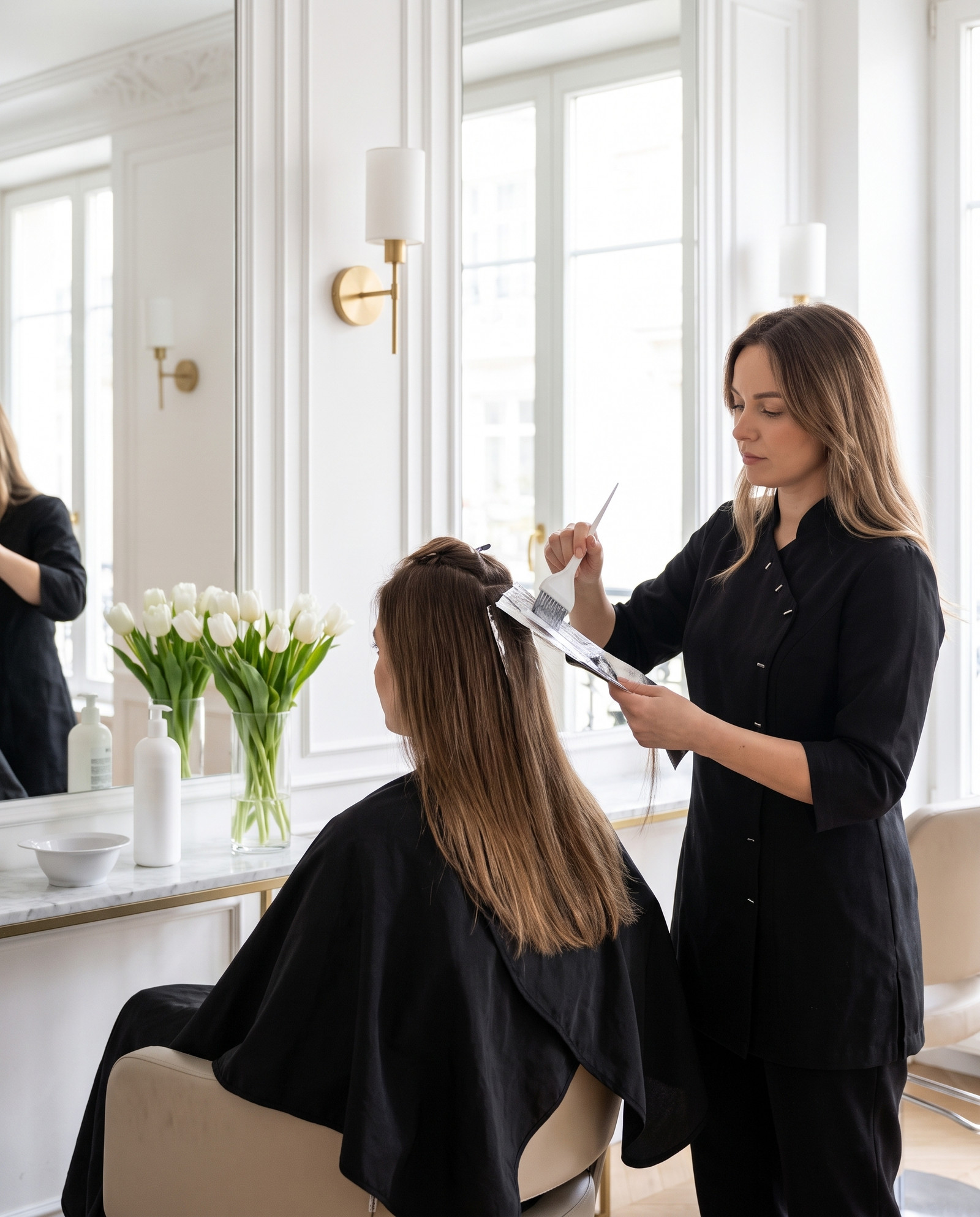
The most common mistake: putting off the hairstyle question until "closer to the wedding". If you want freedom of choice and time for adjustments, planning should begin 6–9 months before the ceremony date. Sounds like a lot? It's less than you think once you add up trials, care treatments and colour corrections.
The timeline may look different if your hair is particularly short, or if you're planning extensions or advanced colouring techniques — in that case, timing matters even more. The earlier you talk to your hairdresser, the more options you have.
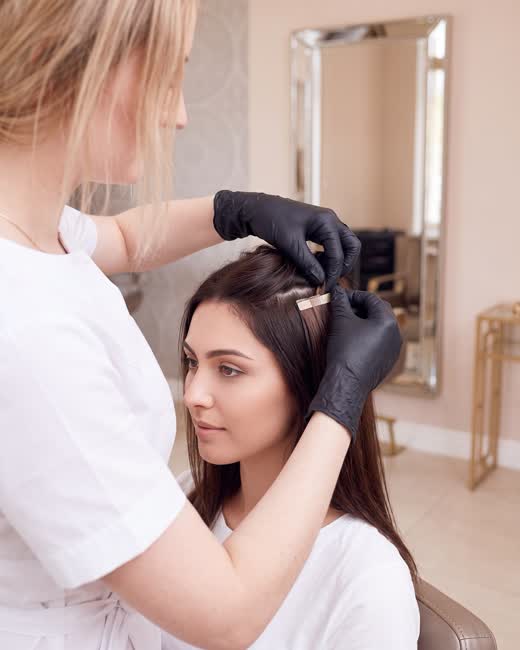
The first hairstyle trial — what to look out for
The trial is one of the most important steps on this list. It's the moment when everything you've seen on your inspiration board meets the reality of your hair, your face shape and the actual day. Treat the trial as a full appointment — not as a "test of an idea".
- 01
Bring references — but keep an open mind
Bring inspiration photos (at least 3–5), but say clearly: "this is a direction, not a literal copy". A good hairdresser will suggest a version tailored to your hair and features — that matters more than a faithful copy of an Instagram photo.
- 02
Bring your wedding accessories
Tiara, floral crown, veil, hairpins — bring all of it to the trial. The hairstyle needs to work with the accessories: something that looks great without a tiara can fall apart or lose its proportions once one is added.
- 03
Come with clean, unstyled hair
Wash your hair the day before, and don't apply any styling products in the morning. Your hairdresser should work with hair that's clean but not "freshly washed an hour ago" — the latter is harder to pin and hold.
- 04
Wear what you'll be wearing on the day
The neckline of your dress matters a great deal for the hairstyle. If you can, come in your dress, or in a top with a similar collar. Otherwise your hairdresser won't see the full picture at the trial.
- 05
Take photos and notes
Photograph the hairstyle from every angle, in the salon's light and in natural light. Note down what you liked and what you'd like to change — this is your working material for the next trial or the wedding day itself.
- 06
Judge it after 2–3 hours
Don't take the hairstyle down as soon as you leave the salon. Wear it for a few hours, eat something, check how it holds up and whether you feel like yourself in it. That's more telling than your first impression.
Comparison: classic updo vs loose hairstyle
One of the first choices to make — and often one of the hardest. Both styles have their place; the key is matching it to your everyday look, the conditions on the day, and how you want to feel.
Updo
A classic, elegant choice
- Shows off the neckline and neck
- Durable — usually holds all day without touch-ups
- Works well with a tiara, veil and heavier accessories
- Recommended for outdoor ceremonies (wind)
Loose hair / waves
A romantic, modern choice
- More relaxed and "alive" — moves with you while dancing
- Works well with lighter accessories (a delicate headband, a flower)
- Often more comfortable throughout the day
- Looks wonderful in outdoor photos
You don't have to choose one style for the whole day. Many brides opt for an updo during the ceremony and dinner, then let their hair down or switch to a looser style in the evening. Tell your hairdresser about this plan in advance — it can be built into the styling from the start.
Hair before the wedding — how to care for its condition
Healthy, nourished hair looks best. No hairspray or styling product can make up for dry, brittle ends or a dull, flat section of hair. That's why hair preparation starts months before, not in the week leading up to the wedding.
- Regular trims — every 6–8 weeks, to keep split ends from building up. It seems counterproductive if you're growing your hair out, but healthy hair genuinely gains length faster.
- Deep conditioning — use a nourishing mask once a week. Don't treat it like a rinse-out product (two minutes and wash out) — apply it to dry hair for 20–30 minutes before shampooing.
- Be careful with colour — if you're planning to dye your hair before the wedding, finish it at least 4–6 weeks in advance. Freshly coloured hair behaves differently in updos and has a different texture.
- Watch the heat — in the months before the wedding, cut back on daily use of straighteners and curling irons. If you must use them — always with heat protection.
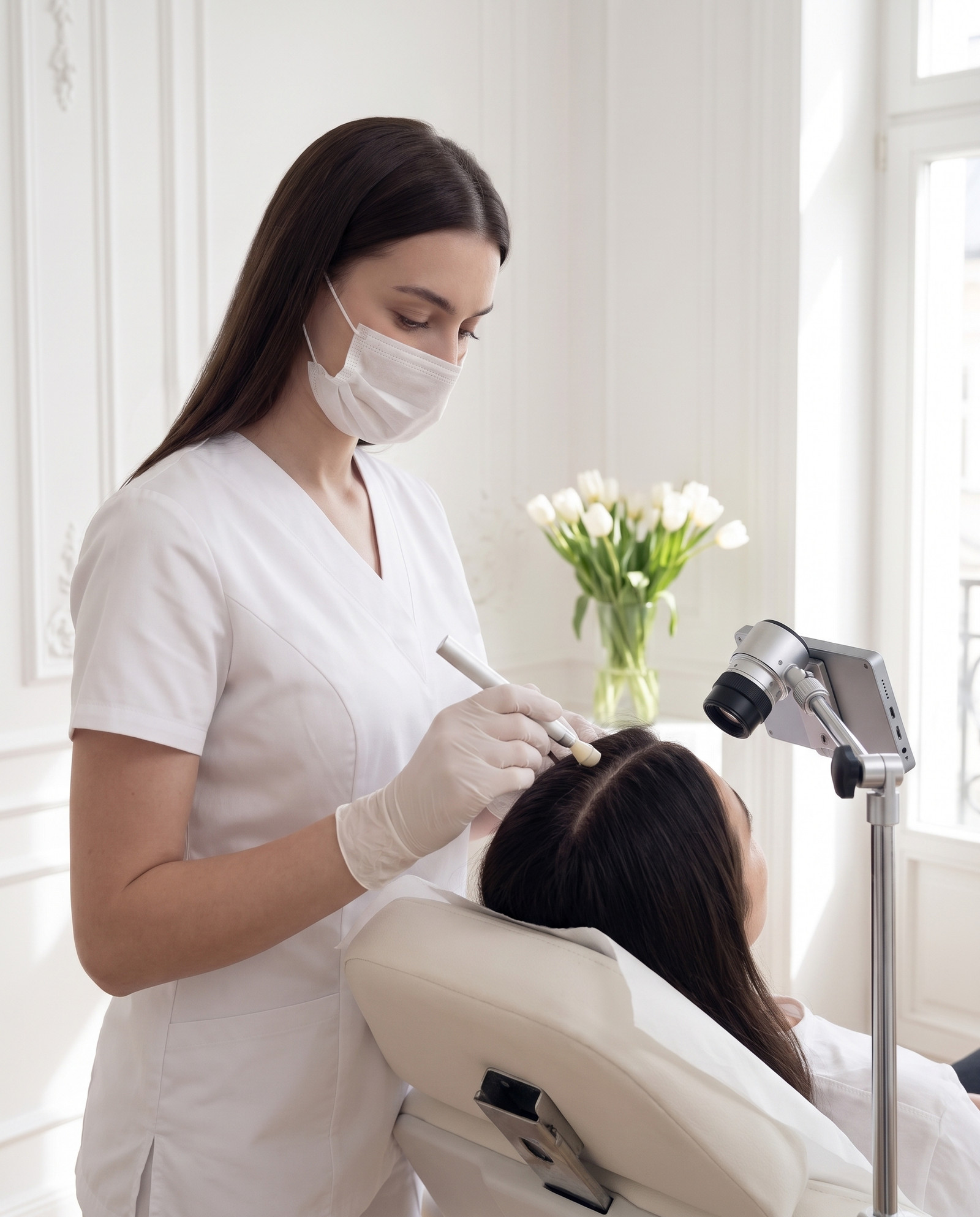
- The scalp is the foundation — healthy hair grows from a healthy scalp. If you're prone to excess oil, dandruff or visible greasiness — address it early; an overly oily scalp lets a hairstyle drop faster.
Keratin treatment
A great choice 6–8 weeks before the wedding — it smooths hair structure, reduces frizz and makes styling easier. Avoid doing it 2–3 weeks before, as the hair may still be "settling in".
Nourishing treatment / Olaplex series
A series of 3–4 treatments that rebuild bonds within the hair strand — recommended for coloured or mechanically damaged hair. First results are visible after 2–3 sessions.
Scalp care
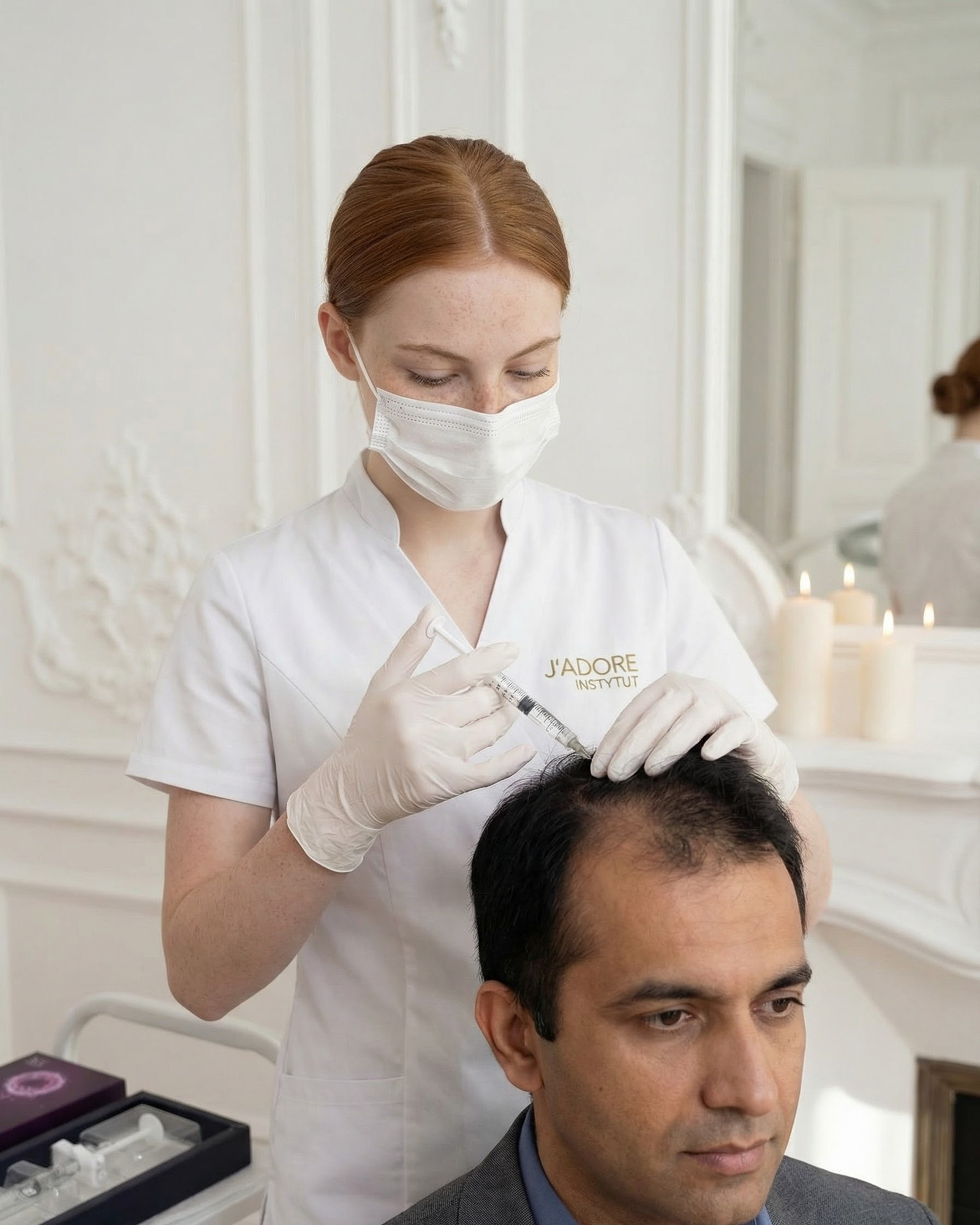
Often overlooked, yet essential — a healthy scalp means better density, less greasiness and a better foundation for your wedding style.
The wedding day — how to get through it without stress
The day itself isn't the time for decisions — it's the time to execute the plan you already have. The better prepared the schedule, the calmer the morning. A few things that really make a difference.
- 01
Washing your hair — the day before or the morning of?
It depends on your hair and the style you're going for. Most updos work better on hair washed the day before — it has more texture and "grip". For waves and curls — washing the morning of often works better. Discuss this with your hairdresser in advance and follow their advice, not your usual habits.
- 02
No new products in the morning
The wedding day is not the time to experiment with a new conditioner or serum you haven't tried before. Your hair might react differently than expected. Stick to the routine you know.
- 03
Eat breakfast
It sounds obvious, but many brides skip a meal "to save time". The result: nausea from stress, weakness and low energy at a critical moment. A light, balanced breakfast is essential.
- 04
A time buffer for the hairdresser
Plan your appointment so you have at least 30–45 minutes of "slack" between finishing and leaving for the ceremony. Hairstyles need a moment to "settle" — and you need a moment to breathe too.
- 05
Putting on your dress after your hair is done
If your dress goes on over your head, put it on before the hairdresser starts, or right after, before the hairspray goes on. If it fastens at the back, you can put it on afterwards without any issue. Discuss this with your team in advance.
When to see a specialist — and how to choose a wedding hairdresser
Not every hairdresser is a wedding hairdresser. Wedding styling requires experience with updos, an understanding of how hairstyles hold up over many hours, and the skill to adapt techniques to different hair types. A few simple criteria to guide your choice.
- A portfolio of real weddings — not just beautiful studio updos, but photos from actual ceremonies. Check how the hairstyles look after several hours (evening photos), not just at the start.
- A trial as standard practice — a hairdresser who does wedding styling without a prior trial is a red flag. A good specialist always insists on a trial.
- Clear communication — do they answer your questions precisely? Do they ask about your expectations and hair characteristics? Do they tell you plainly what's possible and what isn't?
- Availability on your day — check whether they take bookings for wedding days and whether they travel to clients or only work from the salon.
It's also worth remembering that hair care before the wedding is a separate matter — it doesn't have to be handled by the same hairdresser who styles your hair on the day. A good hair specialist or trichologist can assess your hair's condition in advance and suggest a treatment plan that will noticeably improve its condition by the time of your trial and the wedding itself.