What is a tension headache?
- Pressing pain — felt like a "band" or "helmet" around the head
- Usually bilateral, though it can start on one side, from the neck
- Mild to moderate intensity
- Gets worse with sitting, computer work and stress
- Often eases after muscle relaxation, a warm shower or massage
Trigger points — what they are and which muscles matter most
Trigger points are areas of overly tense muscle fibres. A key feature: pressure on them often triggers pain elsewhere in the body — for example, pressing the trapezius can cause pain in the temples.
- Trapezius — neck and shoulders
- Sternocleidomastoid (SCM) — side of the neck
- Suboccipital muscles — where the neck meets the head
- Masseter — jaw and temples (often linked to bruxism)
Neck and shoulder massage with trigger point release
A massage focused on releasing trigger points combines several techniques: ischemic compression (point pressure), MET (muscle energy technique) and deep tissue massage. This approach reaches the source of tension directly, rather than just easing its effects.
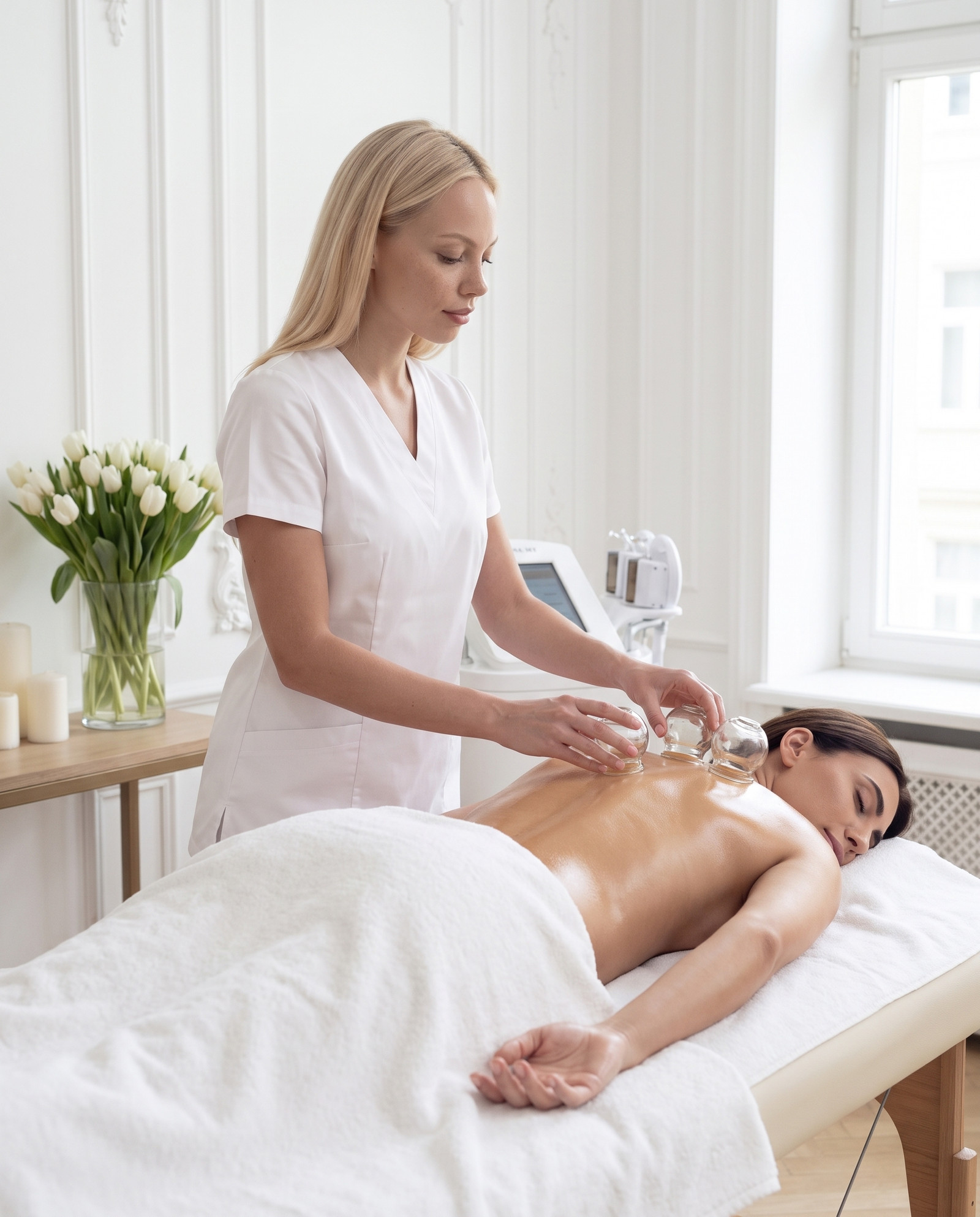
Cupping therapy — releasing fascia
Dynamic cupping massage over the trapezius releases fascia and improves microcirculation in tense areas. It's often used alongside classic massage — cupping reaches layers that manual kneading alone struggles to access.
Kinesiotaping — support between sessions
Applying kinesio-tape to the trapezius and neck gives gentle proprioceptive support and relieves the muscle. Kinesiotaping works between massage sessions — it extends the treatment's effect and can reduce recurring tension.

Botox in the trapezius — for chronic pain
For chronic tension headaches, an injection of botulinum toxin into the trapezius can give a relaxing effect that lasts several months. This is an option for people who get headaches very often, alongside bruxism or the characteristic stress-related "shoulders up by the ears".
Bruxism as a possible cause of headaches
If the pain appears in the morning after waking, or after long conversations and meals, it's worth considering bruxism (night-time teeth clenching or grinding) as an additional source of tension. In this case, a dental consultation helps — and in selected cases, a Botox injection into the masseter.