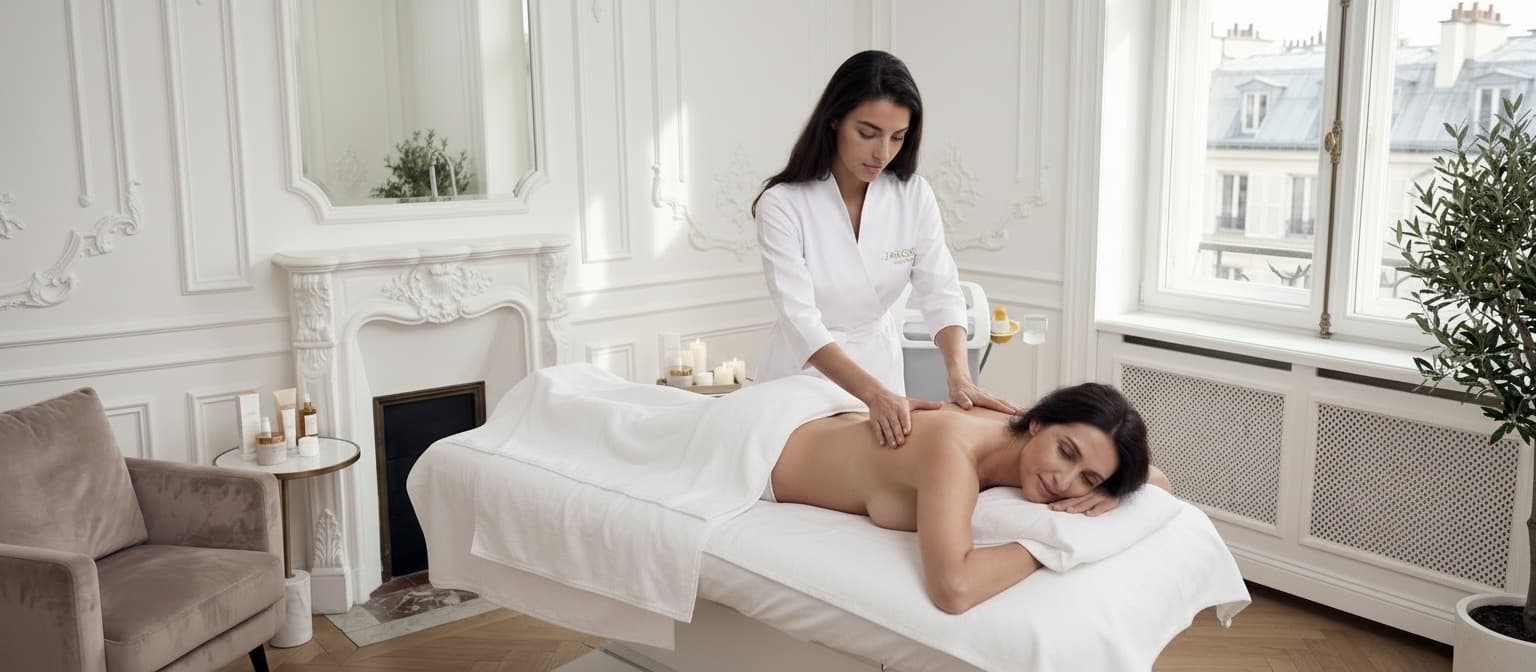
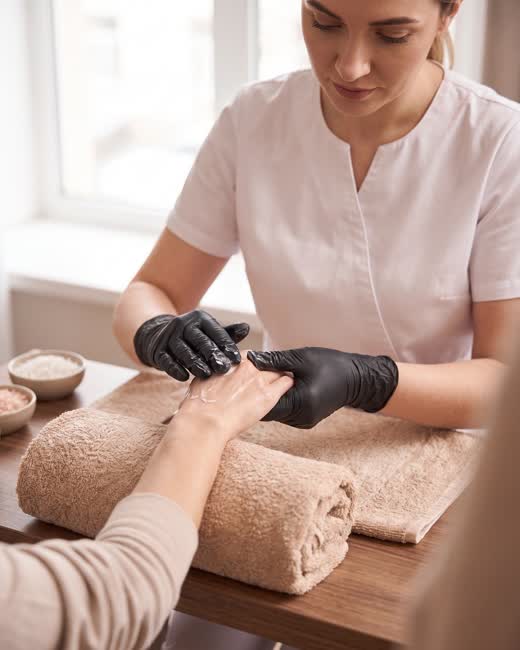
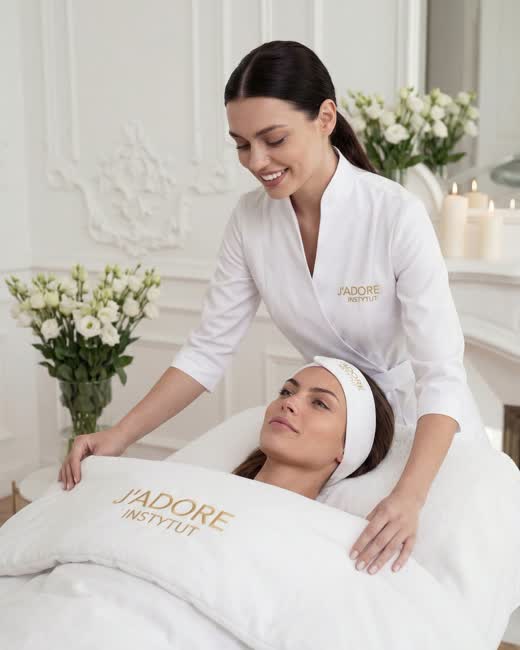
A treatment room at J'adore
MASSAGE & SPA (~30)
A tense neck after a day at the desk, a "board" between the shoulder blades, heavy legs, tension that won't shift even with sleep — this is the everyday reality we carry in our muscles. Classic massage is the oldest and most established form of hands-on bodywork — the foundation from which every other massage grows.
Using classic techniques (stroking, friction, kneading, tapping, vibration), the therapist relaxes tense fibres, gets circulation moving and switches the nervous system into rest mode — the same mode that kicks in when you truly slow down. This is a wellness service: pleasure and recovery, not skin intervention. At J'adore Instytut, massage is performed by a massage therapist / therapist. We work on a specific area (e.g. back-neck) or the whole body, and we tailor intensity to you. Below you'll find everything worth knowing before your first visit.
single visit or series
How it works
Classic massage is hands-on work using a few proven techniques: stroking (warms and calms), friction (releases fascia and minor knots), kneading (the core muscle work), and tapping and vibration (stimulate or soothe, depending on tempo). The therapist combines them into a routine tailored to your body — not a rigid formula.
The effect works on two levels. At the level of muscles and circulation — tense fibres relax, blood and lymph flow more freely, tissues get more oxygen, and the "stagnation" from long sitting eases off. At the level of the nervous system — rhythmic, predictable touch activates the parasympathetic branch ("rest and digest"), the same one that calms your heart rate and breathing. That's why after a good massage, you feel not just lighter through the back, but calmer in your head.
This is the foundation of every massage — both the lighter relaxation massage and the deeper sports massage grow from these classic techniques. It doesn't break the skin and needs no recovery time — it's pure regeneration and pleasure.
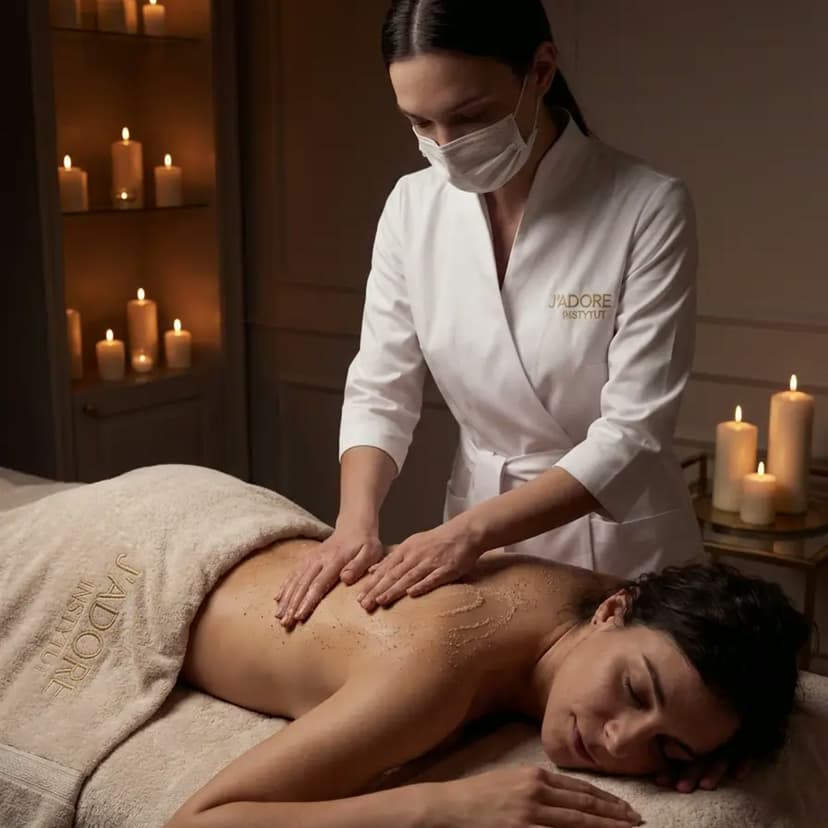
Ideal for
Good to know: we always stroke "towards the heart" — towards the lymph nodes — because this supports natural lymph drainage and venous circulation. It's not an aesthetic detail; it's a direction built into the body's physiology. Massaging "against the grain" of this logic would work against it.
Women's zone and men's zone
For women, the most common goal is relaxation and calm — the neck, shoulders and upper back, worn down by screen work, the phone and carrying things, plus a need for a genuine reset. Intensity is usually moderate, with the focus on comfort and an "hour for yourself". This is the classic classic massage for women.
What we work with
Men's muscles are usually larger and more tightly held — from strength training, heavy lifting, long hours behind the wheel or at a computer. That's why the work is often deeper and firmer on the back, neck and legs, closer to a sports register, but still within the scope of recovery. This is classic massage for men.
What we work with
Classic massage genuinely works for both zones — it mainly differs in intensity and emphasis (calm versus deeper work). If you're looking for something clearly lighter, see relaxation massage; for something firmer and more "therapeutic", see sports massage.
Safety
Classic massage is very safe, but as with any bodywork there are situations where it's best to postpone it, or check with a doctor first. The rule is simple: massage should help, not add strain to a body already dealing with something.
Warning sign: when NOT to book a massage (or to see a doctor first) · Postpone the massage if you have: a fever or a general infection, an acute inflammatory condition (a recent injury, a badly swollen, hot, painful area), wounds, open cuts or skin lesions at the treatment site. Consult a doctor first if you have: thrombosis or suspected thrombosis (pain, swelling, redness of the calf — this is an absolute red flag, massage is then prohibited), cancer, advanced vein/heart disease, recent surgery and undiagnosed swelling. Pregnancy: in the first trimester we skip classic massage; later we work cautiously and, on request, refer you for a prenatal massage. Have any doubts? Tell us before the session — if necessary we will reschedule or refer you to a doctor.
What to expect
The most common question at the start is: "will it hurt?" No. Good pressure can feel intense — you'll sense that "something's happening" — but pain makes the body defend itself and tense up, and then the muscle won't release. Say "firmer" or "lighter" as we go — the massage adapts to you, not the other way round.
Portfolio
A record of the work in our salons — the place where we publish treatment frames and, after photo sessions, results.
A record of results — in preparation. We publish photographs of our clients only with their consent.
What to expect
Straight after the massage, you'll usually feel lightness, warmth and a sleepy calm — a sign that your nervous system has slowed down. After a firmer, deeper session, muscles can feel "pleasantly sore" for a while, similar to a light workout — this is normal and passes within a day or two. What you do after the massage genuinely affects how long the relief lasts.
Massage gets circulation and lymph moving. A glass or two of water after your visit, plus staying hydrated through the day, supports "flushing" the tissues and reduces the risk of a "massage hangover".
If you can, don't plan anything strenuous straight after the massage. A calm evening lets the calming effect keep working — many people sleep noticeably better that night.
After a deeper session, put off heavy training for the day — your muscles have just rested, so give them a moment. A light walk is perfectly fine.
A very hot sauna straight after a firm massage can intensify tiredness. A lukewarm shower or a warm (not scalding) bath is fine.
After a massage, it's better to avoid alcohol — circulation is already stimulated, and the goal is to help your body recover, not add strain.
For chronic tension, one session brings relief — but it returns. Regular massage (a series) genuinely lowers the "baseline" tension level, and that's when the effect lasts.
When to postpone your massage
Some situations call for a temporary "stop" — in that case, we simply postpone the massage until they pass. Others need a conversation with a doctor first.
From the therapist's chair
The most commonly overlooked issue is pain and swelling in one calf. Clients often think "I've pulled something, massage will sort it out." This specific case must never be massaged — it could be a clot. In this situation, we don't massage and refer you to a doctor. Better to postpone by a few days than risk it.
This isn't a complete list — we'll discuss your health conditions, medications and situation individually before the session.
Classic massage
It's still hands-on massage, but the goal and intensity differ. Classic is the "middle ground" from which the other two grow — and they often complement each other:
relaxes and restores — the foundation
not just "stroking", but doesn't go as deep as sports massage
calms and eases tension
doesn't focus on "working through" hard, overloaded muscles
works therapeutically and deeply
not a session designed to make you sleepy — can be intense and demanding
Combine with
Classic massage pairs well with other restorative and skincare treatments. The therapist decides on the order and spacing, but the logic is simple — relaxation and circulation first, then everything else:
Put simply: want to rest and calm down → relaxation massage. Have specific, hard tension after training or overload → sports massage. Not sure, or want "a bit of everything" → classic massage is the safest choice and a great starting point.
Oils, variants and rituals
"Classic massage" isn't one fixed procedure. It varies by scope (partial versus full body), intensity, and the oil we choose to suit the effect and your skin. You don't pick a variant "off the shelf" — our therapist suggests one after a short conversation about what you need.
We focus on the single most tense area — a shorter session with a strong, targeted effect.
Dla kogoA tense neck and shoulders "from the desk", heavy legs, a quick mid-week reset.
Full work from feet to neck — even relaxation and deep calming of the nervous system.
Dla kogoGeneral exhaustion, stress, a "day for yourself", recovery after an intense period.
A slower pace and more flowing touch, closer to a relaxation massage — without giving up work on tension.
Dla kogoWhen you want both to relax your muscles and to truly rest — for example in the evening, before bed.
Fact: And the oils? Neutral, unscented oil always works well and is safe for sensitive skin. Warming oil supports work on very tight muscles, while a subtly aromatic oil deepens the sense of calm. We always choose the scent and type of oil to suit you — if you have any allergies or sensitivities, tell us before the session.
Price list
Checking free hours…
From the magazine
Editorial pieces on how this treatment works in practice — what happens during the session, how to prepare, where the limits are and what the first days after look like.
See also
The result lastsrelief straightaway; a series builds the effect for chronic tensionJ’adore Instytut
Please note. Classic massage is a wellness/relaxation service; it does not replace diagnosis or medical treatment. If you have a chronic condition, are pregnant, or have any doubts, consult your doctor. This text is for information only. The specific details and choice of variant (scope, intensity) are set by our specialist during your visit.
Home care
Cosmetics matched to what your skin needs after a treatment — so the clinic effect lasts longer.
 body careSkeyndorCannabis Massage Cream – Spa SensesView in the shop(opens in a new tab)
 soothing body skinDiego Dalla PalmaSENSITIVE Lipid-Balancing Body Cream 350 mlView in the shop(opens in a new tab)
 body careMesoesteticBodyshock Essential CreamView in the shop(opens in a new tab)
 soothing body skinestGenLive Balancing BalmView in the shop(opens in a new tab)
 body careDermalogicaBody Hydrating Cream 295 mlView in the shop(opens in a new tab)
 body careDermoMedicaActive Antioxidant Body Lotion 200 mlView in the shop(opens in a new tab)
 body careDiego Dalla PalmaSENSITIVE Delicate Cleansing Oil for Body 350 mlView in the shop(opens in a new tab)
 body careSkeyndorOrchid and Wild Roses body lotion – Spa SensesView in the shop(opens in a new tab)