Dry vs dehydrated — the fundamental difference
Dry skin is a skin type. It permanently produces too little sebum. The result: tightness, flaking, no radiance. Dehydrated skin is a state — a temporary lack of water in the epidermis. It can affect any skin type, including combination and oily skin.
- Dry skin — a permanent (genetic) type, feels tight all the time, needs oils and occlusive creams
- Dehydrated skin — a temporary state, feels tight when under-hydrated, fine lines appear with expression
- The oily-and-dehydrated paradox — oiliness can be a compensatory response from skin that lacks water
What causes skin dehydration?
Dehydration rarely has a single cause. Usually it's a combination of factors — environmental, skincare-related and lifestyle.
- Overly aggressive cleansing — detergents strip the lipid barrier, and water escapes from the epidermis
- Alcohol in cosmetics — damages the epidermal barrier
- Air conditioning and heating — dry air increases trans-epidermal water loss (TEWL)
- Insufficient water intake — internal dehydration shows on the skin
- Acids without an adequate hydrating base — AHAs/BHAs can strip the barrier if not paired with proper hydration
- Retinol without an adequate base — it speeds up epidermal renewal, and the skin can't keep up with hydration
- Autumn and winter — low temperatures and heating are a classic drying combination
What does dehydrated skin look like?
Dehydrated skin gives fairly characteristic signals — worth knowing, as they're easy to mistake for signs of ageing.
- Fine expression lines that become clearly visible when you stretch the skin
- A grey, dull skin tone — no radiance despite skincare
- A feeling of tightness, especially in the evening
- Make-up "settles" into lines and doesn't last the whole day
- Skin that feels oily and tight at the same time — the dehydration paradox
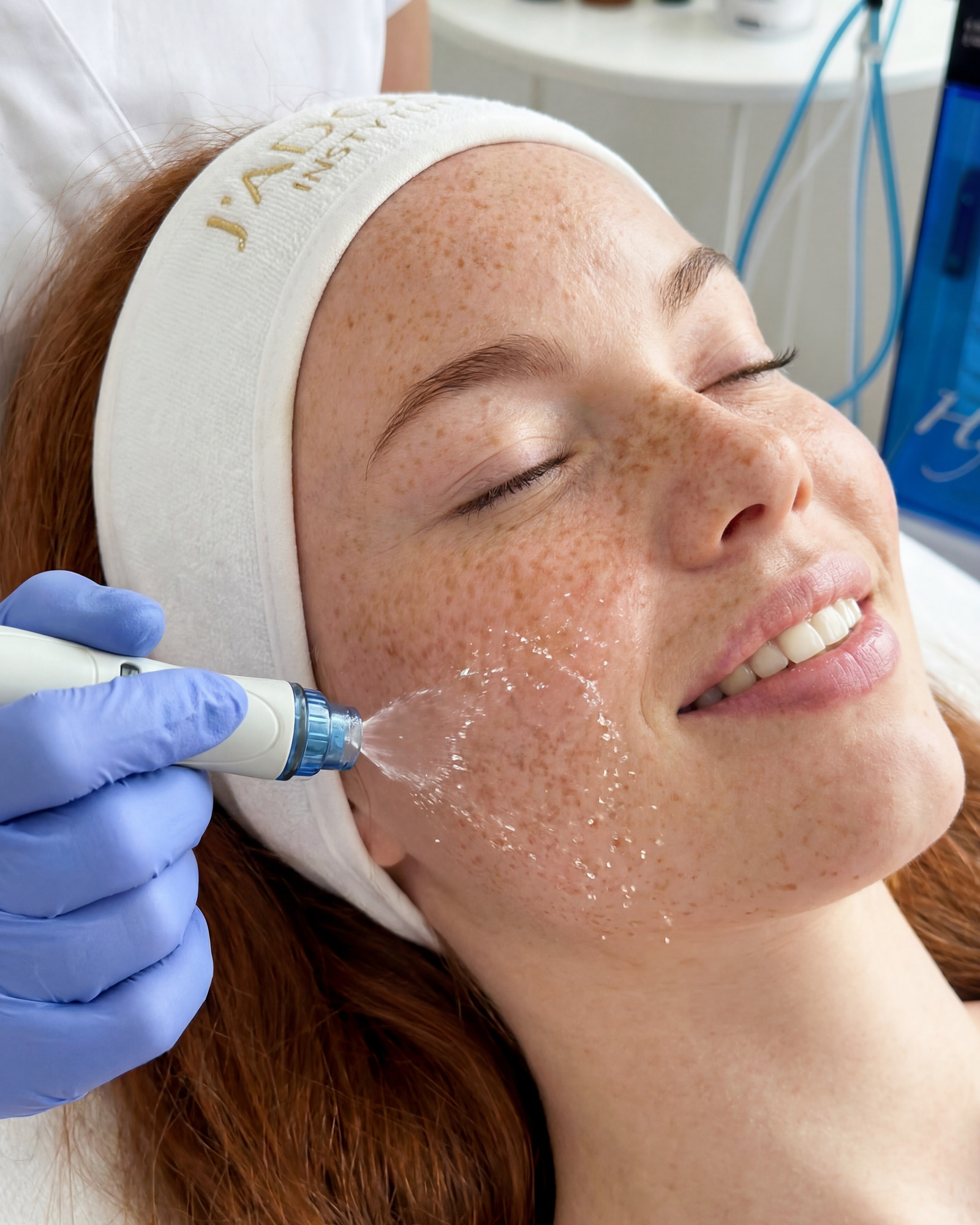
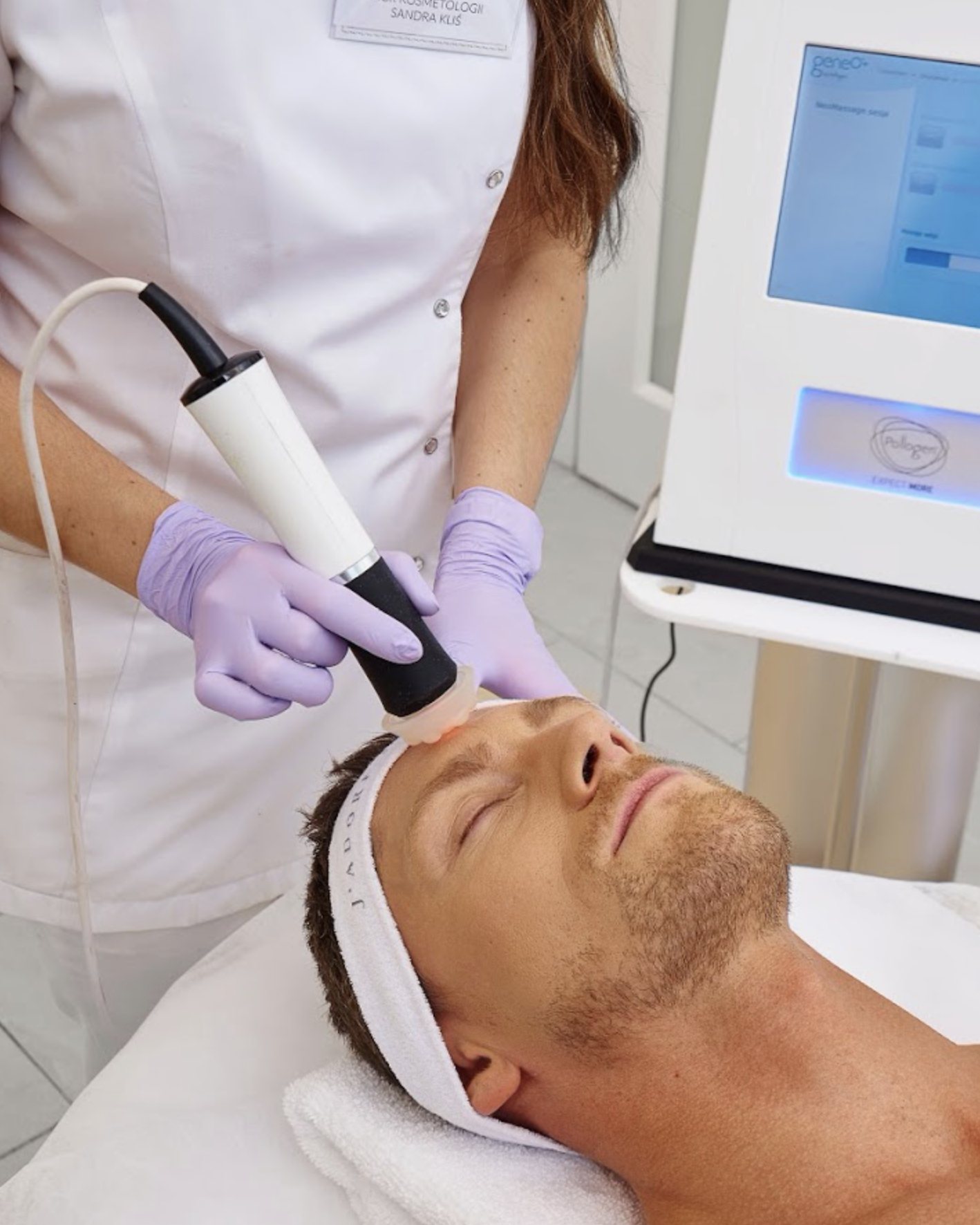
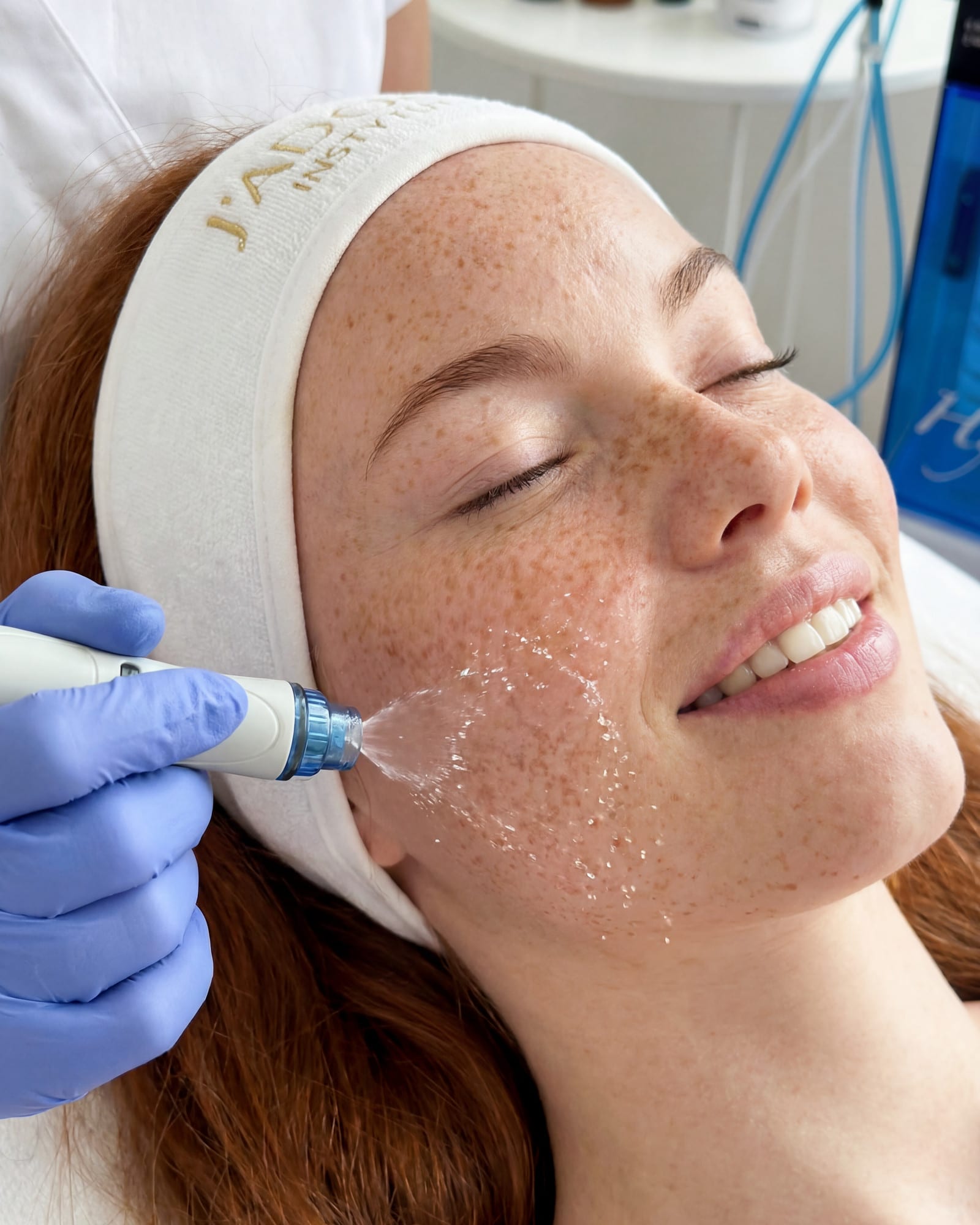
Treatments at J'ADORE for dehydrated skin
When home skincare isn't enough, professional treatments can deliver hydration deeper and more effectively than products applied to the surface alone.
Home care — how to hydrate effectively
The key rule for caring for dehydrated skin at home is layering — from lighter hydrating formulas through to occlusives that lock in water.
- 1. Hydrating toner with hyaluronic acid or glycerin — apply to slightly damp skin
- 2. HA serum (different molecular weights) — surface and deeper hydration
- 3. Occlusive cream with ceramides, shea butter or squalane — seals in the hydrating layer
Active ingredients worth looking for in cosmetics:
- Hyaluronic acid — different molecular weights (low = deeper, high = surface level)
- Glycerin 5–10% — a humectant that binds water
- Panthenol (B5) — strengthens the barrier and hydrates
- Ceramides — rebuild the lipid barrier
- Niacinamide 5% — strengthens the barrier, reduces water loss
- Squalane — a light occlusive that doesn't clog pores
When does dehydrated skin need a doctor?
In most cases, skin dehydration is a skincare and environmental issue — it responds to changed habits and the right treatments. Still, there are signs worth discussing with a doctor.
- Dehydration and dryness that resist treatment — this can point to hypothyroidism or coeliac disease
- Intense itching across the whole body with no visible changes — worth ruling out internal conditions
- Skin that keeps "cracking" despite hydration — possible atopic dermatitis requiring dermatological care