
Where does this rule come from — and is it absolute
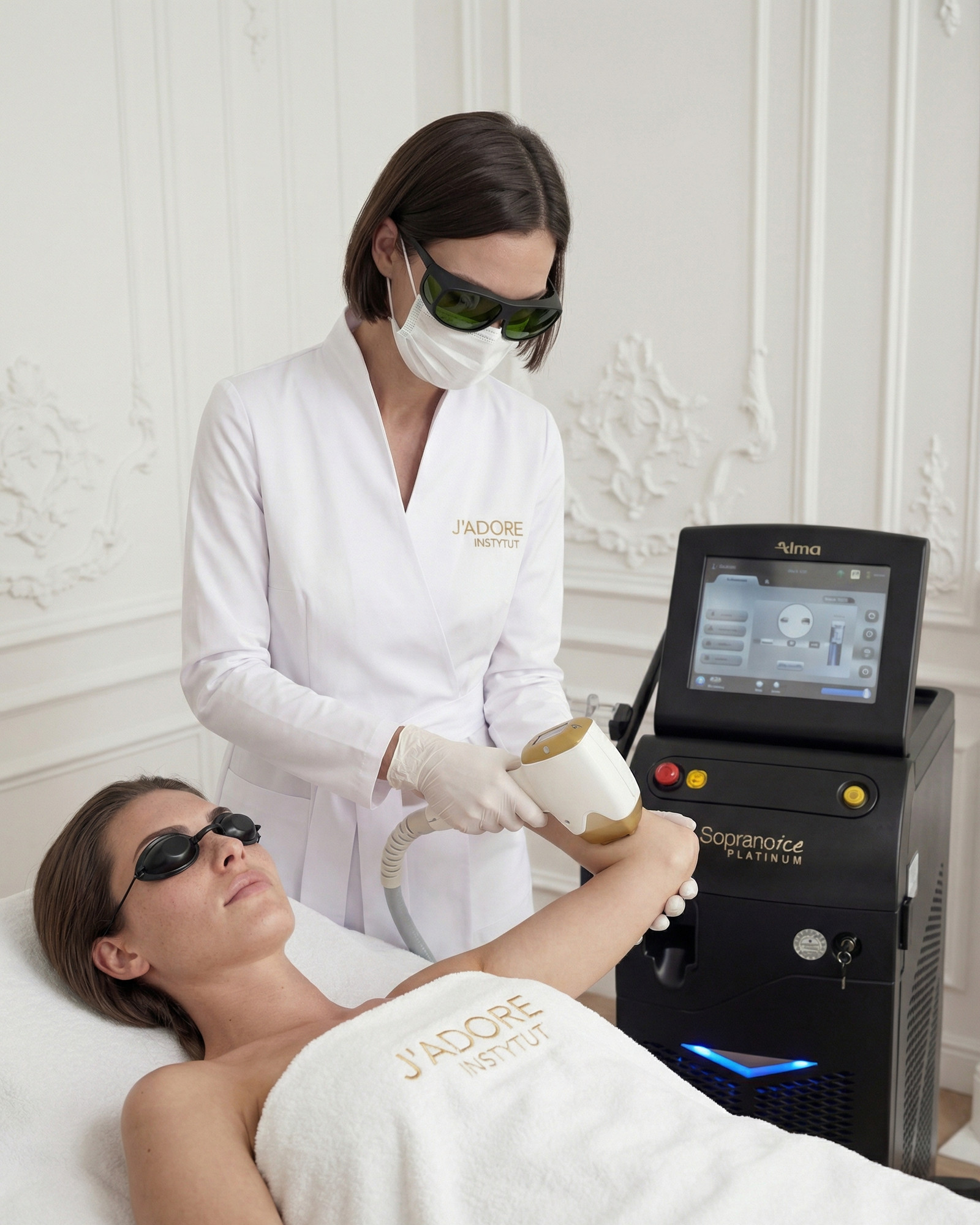
The rule against laser hair removal on tanned skin isn't an old wives' tale. It has solid grounding in the physics of light. Lasers work through selective photothermolysis: the laser targets melanin in the hair follicle, absorbs it as energy and destroys the structure responsible for hair growth. The problem is that melanin is exactly the same pigment that gives skin its brown colour after tanning. On tanned skin, the laser "sees" two targets instead of one — the hair follicle and the entire skin surface — and risks delivering energy where it shouldn't.
That said, the rule isn't absolute in the sense of "never in summer, full stop". What matters is the degree of tan, your skin phototype and the type of device used. Someone with phototype I–II who avoids the sun in summer and uses sun protection can usually continue their series without interruption — their skin doesn't change enough to alter the risk profile. The situation is different for someone with phototype III–IV who has just come back from a week at the beach. Here the difference is real, and the protocol calls for waiting.
The 5 myths we hear most often
Myth 1: "I have to skip my whole series for summer". Not true — and this is one of the most common reasons people abandon a series halfway through and lose the results of earlier sessions. If you're not tanning intensively over summer (avoiding the beach at midday, using SPF 50+), regular visits are possible. The key question isn't "is it summer", but "what is the current state of your skin".
Myth 2: "Self-tanner is a safe alternative — I can apply it and still get laser treatment". This is one of the more dangerous myths. Self-tanner changes skin colour through a chemical reaction (DHA reacting with keratin) — and a laser can't tell the difference between a sun tan and a self-tanner. If the skin looks darker, the risk profile is similar. Self-tanner needs to be completely gone from the skin before the treatment — it fades within a few days, but that requires exfoliation and waiting.
Myth 3: "Summer is a great time for laser hair removal because your legs are on show and you can see the results straight away". The logic actually runs the other way. In summer you have the least room to manoeuvre after a treatment — skin is sensitive, needs sun protection for several days, and avoiding UV exposure is harder. A laser hair removal series works best from autumn to spring, precisely so you can enjoy the results already in place by the time summer arrives.
Myth 4: "One session on tanned skin won't do anything — my skin is already used to the sun". Skin that's used to sun exposure isn't skin that's resistant to laser treatment. It's skin with more melanin on the surface, which changes the parameters needed for a safe treatment. A specialist has to adjust the protocol, or judge that the risk is too high. "Used to the sun" doesn't mean "ready for laser without modifications".
Myth 5: "If my skin was pale after winter, nothing changes even if I get a summer tan". Your starting shade matters, but the real risk lies in the dynamic change from your baseline. Skin that was noticeably tanned a month ago, and has now started to fade a little, can still carry more melanin than its natural state. That assessment belongs to a specialist — not to "I reckon it's probably fine".
What you risk by ignoring the rule — no sugar-coating
We're being direct here, because this matters. Laser hair removal on skin that's too dark — freshly tanned, self-tanned, or with an intense tan — can trigger three types of complications. All of them are hard to "undo".
Burns or redness
Immediate effect
- Strong redness and burning sensation after the treatment
- In more serious cases, blisters or scabs
- Healing takes anywhere from a few days to a few weeks
Hyperpigmentation or depigmentation
Delayed effect
- Hyperpigmentation — dark patches after the treatment (often on the face, bikini area, underarms)
- Hypopigmentation — pale, discoloured patches (harder to correct)
- Can last for months; some cases are permanent
None of these complications are inevitable with the right protocol — but that's exactly why the protocol takes your skin's condition into account, not just your preference. A salon that doesn't ask about tanning and doesn't assess your skin before the treatment isn't following safety rules. That's a red flag, regardless of the price of the visit.
When it is possible — what needs to be true
Let's come back to the question most people ask: is laser hair removal even possible in summer? Yes — under certain conditions. This isn't a calendar-based rule, it's an assessment of your skin's condition. Someone who works in an office, wears long sleeves and consistently uses sun protection has the same skin in summer as in autumn. Their series can continue without a break.
- 01
Consultation and phototype assessment
At the start of your series, a specialist assesses your skin phototype (Fitzpatrick scale I–VI) and sets your baseline protocol. This becomes the reference point for every future visit.
- 02
Skin assessment before every visit
Before every treatment, a specialist compares your current skin condition with your baseline phototype. If you have a noticeable tan, your visit is postponed or the protocol is adjusted.
- 03
Post-treatment protection
After the treatment, your skin needs sun protection for at least a few days — SPF 50+ and avoiding direct exposure. This isn't a suggestion. It's a condition for a safe outcome.
- 04
Checking in between visits
If you've developed a noticeable tan between visits, it's worth mentioning in advance — rather than deciding on your own that "it's probably fine".

When to start your series so summer is already free
The opposite logic — "I'll start in summer because it's bothering me right now" — makes sense psychologically, but it's technically not the optimal time to start. If you start in July with a tan, your first visit may need to be postponed or the protocol adjusted, which delays results anyway. A winter break isn't a problem — it's simply part of a well-planned series.
It's also worth remembering that a laser hair removal series is an investment spread over time — and its success depends on consistency. Pausing a series because of a tan isn't the end of the world. But pushing ahead regardless of your skin's condition can cost you more than a single postponed session.
Chemical skin peel
Evens out skin tone and removes hyperpigmentation — useful if summer has left uneven tan marks. Worth doing before a planned laser series.
Deep hydration / skin barrier support
Well-prepared, hydrated skin copes better with laser energy and recovers faster after a treatment.
What about laser hair removal for darker phototypes — is it just not for me?
This question comes from people with phototype IV–VI or year-round darker skin tones — and the answer isn't "no". Laser hair removal is available across a wide range of skin phototypes, but it requires the right device and parameters. Older lasers had limitations on darker skin. Newer generations of devices offer protocols designed for higher phototypes, with different beam characteristics that minimise the risk to skin melanin.
This doesn't mean the rules about tanning no longer apply — quite the opposite. With higher phototypes, the safety margin is smaller, which makes an individual consultation even more important. But "I have dark skin" doesn't mean "laser hair removal is off the table for me". It means "I need a specialist experienced with my phototype and the right device".