A good salon asks you first
The first test begins before you even ask about the device. Laser hair removal requires matching the treatment to your skin, hair, and current situation. Therefore, the person performing the qualification should gather information that may affect the safety and success of the treatment. A consultation is not a ceremonial prelude to selling a package — it is a moment where you might also hear: "we need to postpone this" or "a different method would be better for this type of hair".
- Medications and substances that may sensitise the skin to light. Asking about "serious illnesses" is not enough; you need a conversation about current medications and your skincare routine.
- The condition of the skin in the area to be treated. Irritation, damage, active inflammation, or any lesion requiring assessment should not be ignored.
- Sun, sunbeds, and self-tanner. A recent change in skin colour matters for qualification and the selection of parameters.
- Previous hair removal methods. Waxing, tweezers, and epilators pull the hair from the follicle; the salon should explain how to prepare the area before your session.
- Colour, thickness, and distribution of hair. The laser uses hair pigment as a target, so very light, white, and grey hair require an honest conversation about limitations.
- Your goal. Full reduction, reducing density, or precise contouring of the hairline are different expectations that are worth defining before you start.
Who performs the treatment — and can they justify their decisions?
Laser hair removal is performed by a cosmetologist trained to work with a specific device. A training certificate is important, but also ask about their practice: what the qualification looks like, when the treatment is deferred, and on what basis the plan is changed.
Pay attention to the tone of the answers. A competent person can explain a decision in simple words without hiding behind "parameter secrecy". They do not need to give you technical settings for you to use yourself. However, they should be able to say what they are assessing and why that assessment matters.
The device matters, but its name is not enough
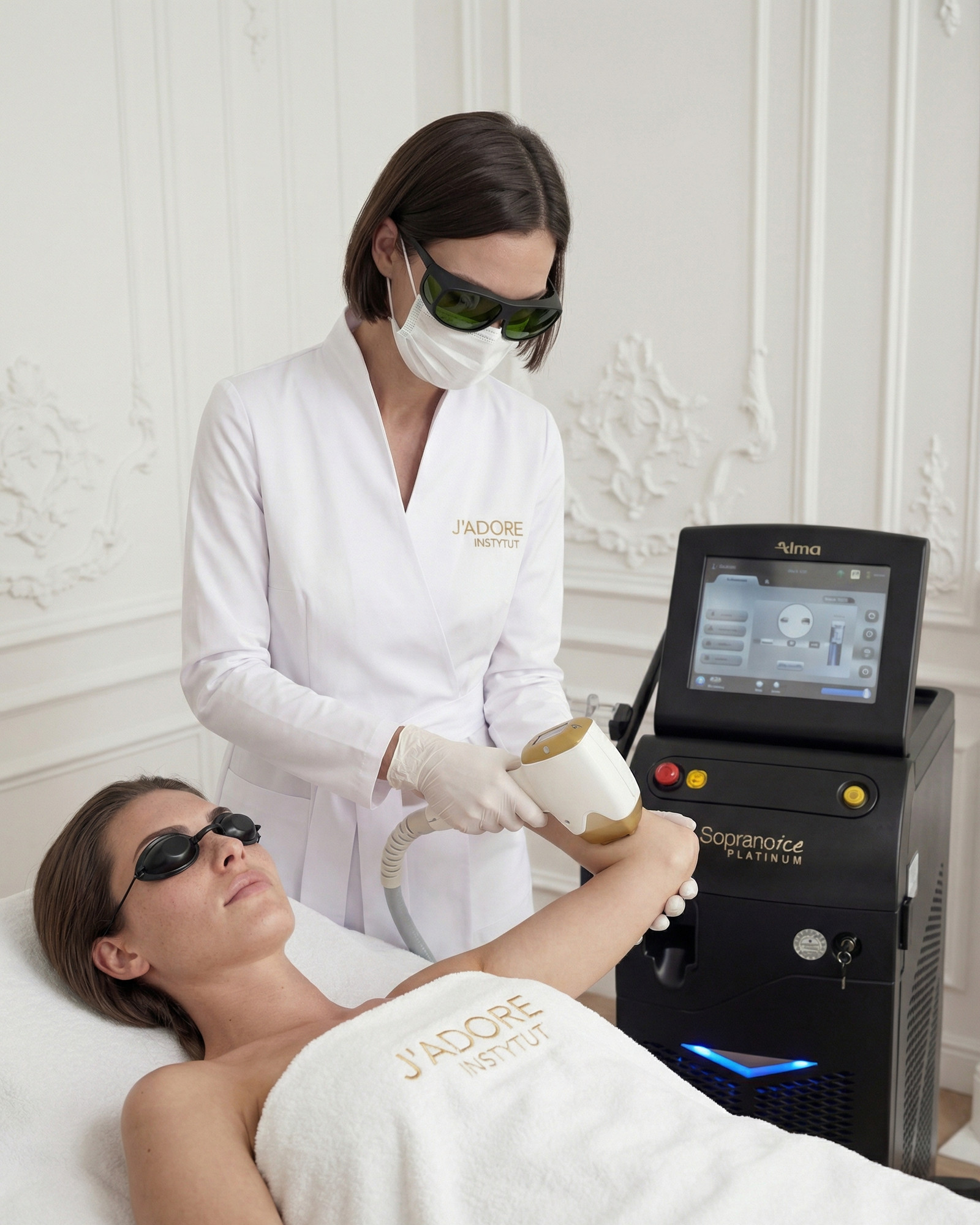
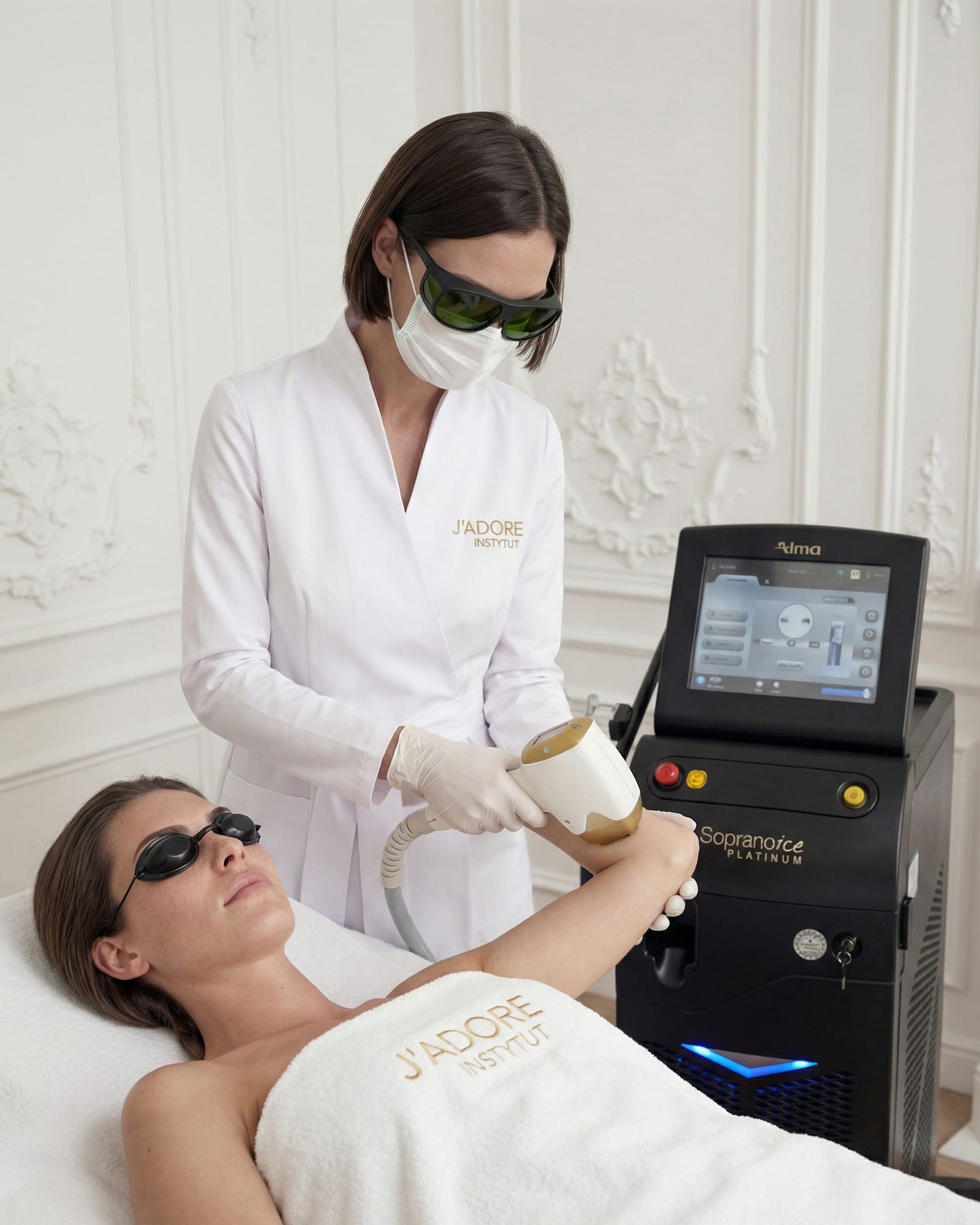
"The latest laser", "premium technology", and "medical laser" sound impressive but do not identify the equipment. Ask for the manufacturer, model, and type of technology. The salon should provide these without hesitation and explain how the device works and why it might be suitable for your skin phototype and hair.
At the same time, do not choose a place solely based on a popular machine name. The same equipment can be used carefully or schematically. The quality of the process is determined by: proper qualification, selection of settings, systematic treatment of the entire area, observation of reactions, and aftercare recommendations. The device is a tool — it does not replace the competence of the person operating it.
If you have very light or grey hair, ask directly if the laser has a sufficient target in them. An honest salon should not recommend further sessions just because the device is in the room. They should discuss the limitation and the possibility of using a method independent of hair colour, if available and appropriate.
Questions worth asking during a consultation
A good consultation should end not only with an appointment but also with an understanding of the process. The list below helps you check the most important areas. You do not have to ask everything word for word — treat it as a conversation map.
- Does my hair colour and thickness qualify for this method? Ask for an answer regarding a specific area, not a general declaration.
- What device will be used and why that one? The name should go hand in hand with a simple explanation of how it works.
- Do you perform a test on a small area before the first full session if the situation requires it? Ask how the salon decides on such a need.
- How do you determine the intervals between visits? The answer should refer to the area and the hair growth cycle, not a rigid calendar for everyone.
- How should I prepare my skin and hair? The salon should clearly distinguish between shaving and methods that pull the hair from the follicle.
- What should I report before my next visit? A new medication, irritation, tanning, or an unusual reaction cannot be discussed "only after the fact".
- How will you assess progress? Ask if the plan is verified and what a lack of expected response might mean.
- What effects can you not promise me? This question is a good way to check if the place can talk about limitations without a marketing veil.
- How should I proceed after the session? Aftercare recommendations should relate to your area and skin reaction, rather than ending with "please be careful".
Red flags before the first session
A single organisational imperfection does not have to disqualify a place. However, there are signals regarding the process itself that are not worth ignoring. In laser hair removal, the problem is especially certainty without qualification: promising a result before anyone has seen your hair and skin.
Presenting discomfort in extremes is also a red flag. "You won't feel a thing" and "it must hurt, otherwise it doesn't work" are equally poor messages. Sensations depend on the area, hair type, individual sensitivity, technology, and settings. The salon should tell you what to expect and how to react if the sensation becomes worrying.
How to recognise a good answer — not just a good slogan
All salon advertisements sound similar. You only hear the difference when you ask a question about a more difficult case: light hair, recent sun exposure, an irregular series, or a lack of change after a subsequent session. A good answer does not have to be long. It should be specific, conditional, and leave room for refusal.
An answer that builds trust
specifics and boundaries
- "First, we will examine your hair and skin."
- "This medication must be checked before the appointment."
- "With this hair colour, the results may be limited."
- "We will determine the interval for this specific area."
- "If your skin is freshly tanned, we may need to postpone."
- "After a follow-up assessment, we will decide if the plan makes sense."
An answer that gives you pause.
certainty without data
- "This works on everyone."
- "We do not need a consultation."
- "The name of the equipment does not matter."
- "We always perform them at the same intervals."
- "A tan makes no difference at all."
- "Buy a package now; we will discuss everything later."
Before you buy a series — check the organisation too.
A series is difficult to manage if subsequent visits constantly fall out of rhythm. In Warsaw, real travel time, opening hours and the possibility of continuing at your chosen location also count.
- Ask if the same person can conduct subsequent visits. If not, ask how the progress of the series is recorded.
- Check the rules for rescheduling when a temporary contraindication or recent sun exposure occurs.
- Read the package terms: validity, area scope and the procedure for changing the plan.
- Ensure that after your visit, you know where to report an unusual reaction and what information to provide before your next appointment.
- Choose an address and hours that allow you to maintain regularity without constantly shifting sessions.
Laser hair removal in Warsaw — two J'ADORE INSTYTUT locations.
In Warsaw, we perform laser hair removal at two Institutes. Żelazna: ul. Żelazna 59, 00-848 Warsaw; opening hours Mon–Sat 8–21 · Sun 11–19. Mińska: ul. Mińska 29A/46, 03-808 Warsaw; opening hours Mon–Sat 9–21.
Current information about the treatment in the city, the latest price list and a link to bookings can be found on the page Laser hair removal in Warsaw — locations and price list. Before starting a series, discuss the area, hair, skin condition, medications and recent sun exposure with your cosmetologist.
A minute before deciding: a checklist for a good salon.
- 01
The salon conducted an interview.
Questions were asked about medications, skin, tanning, previous hair removal and expectations.
- 02
You know the device and the practitioner.
You know who is performing the treatment, which model they are working on and why the technology is being considered in your case.
- 03
You have heard the limitations.
No one guarantees the same result for every person; hair pigment and situations requiring postponement were discussed.
- 04
You understand the plan.
You know how intervals are set, when progress is assessed and what might change further procedures.
- 05
There is no pressure.
You can calmly read the terms and make a decision after a consultation, without buying a promise under pressure.
If all points are met, you have the basis to consciously begin the process. If the answers still sound vague, ask for clarification or consult at a second place. It is about your skin, your time and your trust.