Where all the conflicting information comes from
Myths about hair removal in pregnancy come from several sources. First — fear of the unknown. Pregnancy naturally raises vigilance, and small things start to feel weighty. Second — caution applied in the wrong direction. Some gynaecological advice (avoiding hot baths, saunas, certain cosmetics) spills over onto anything involving heat or anything applied to the skin. Third — a lack of specific research. Wax used for hair removal hasn't been the subject of clinical studies in pregnant women — which gets read both as "no evidence of safety" and "no evidence of risk". Both readings are partly true.
The myths we hear most often
Myth 1: "Wax penetrates the skin and can harm the baby." Hair-removal wax — both hard wax (used with strips) and flexible peel-off wax — doesn't get absorbed into the bloodstream. It works only on the surface of the skin, binding the hair within the follicle. The substances we use in the salon don't cross the skin-blood barrier in amounts that would have any clinical relevance. This myth most likely comes from confusing wax with cosmetics containing active ingredients (such as retinol or acids in high concentrations) — and there, caution genuinely is warranted, but that's a different matter altogether.
Myth 2: "The pain of waxing triggers contractions." This is one of the more commonly repeated fears, and one of the least medically justified. The pain from waxing is a local, short-lived stimulus, and it doesn't translate into uterine contractile activity. The exception would be situations of extreme physical stress — waxing isn't one of them. Pregnant women regularly experience far more intense pain stimuli with no consequences for the pregnancy.
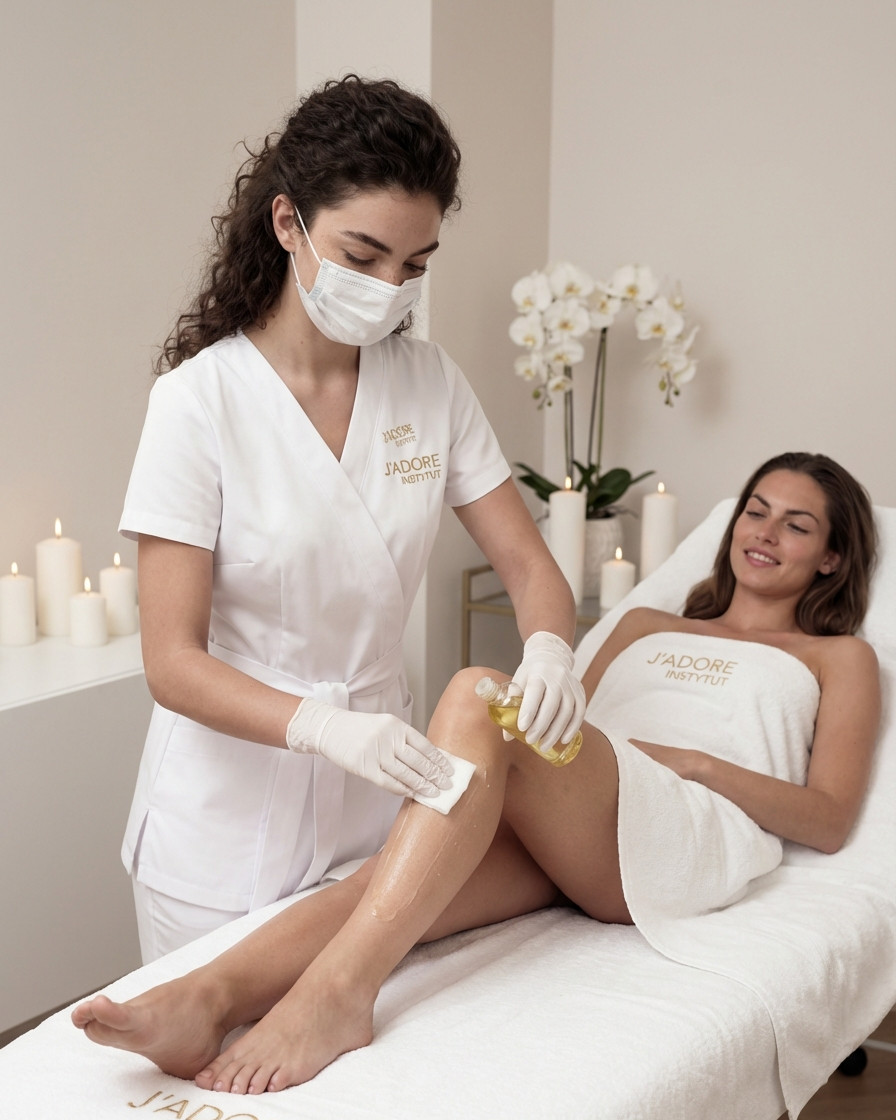
Myth 3: "Intimate areas are off-limits during pregnancy." Bikini and groin waxing is possible through most of pregnancy — with some caveats around technique and temperature, covered below. An advanced bump doesn't rule out the treatment; it simply calls for the right positioning and, importantly, an experienced specialist. Comfort is a separate matter: in the third trimester, many women skip intimate waxing not for medical reasons, but purely practical ones.
Myth 4: "Facial waxing is forbidden during pregnancy." Facial waxing — upper lip, brow area, cheeks — is one of the treatments that's easiest to continue throughout the whole pregnancy. Applied to a small area, with the wax kept at a low temperature, it carries no particular risks. It may be more painful than usual (skin sensitivity changes) and more likely to cause temporary redness — but that's a comfort issue, not a safety one.
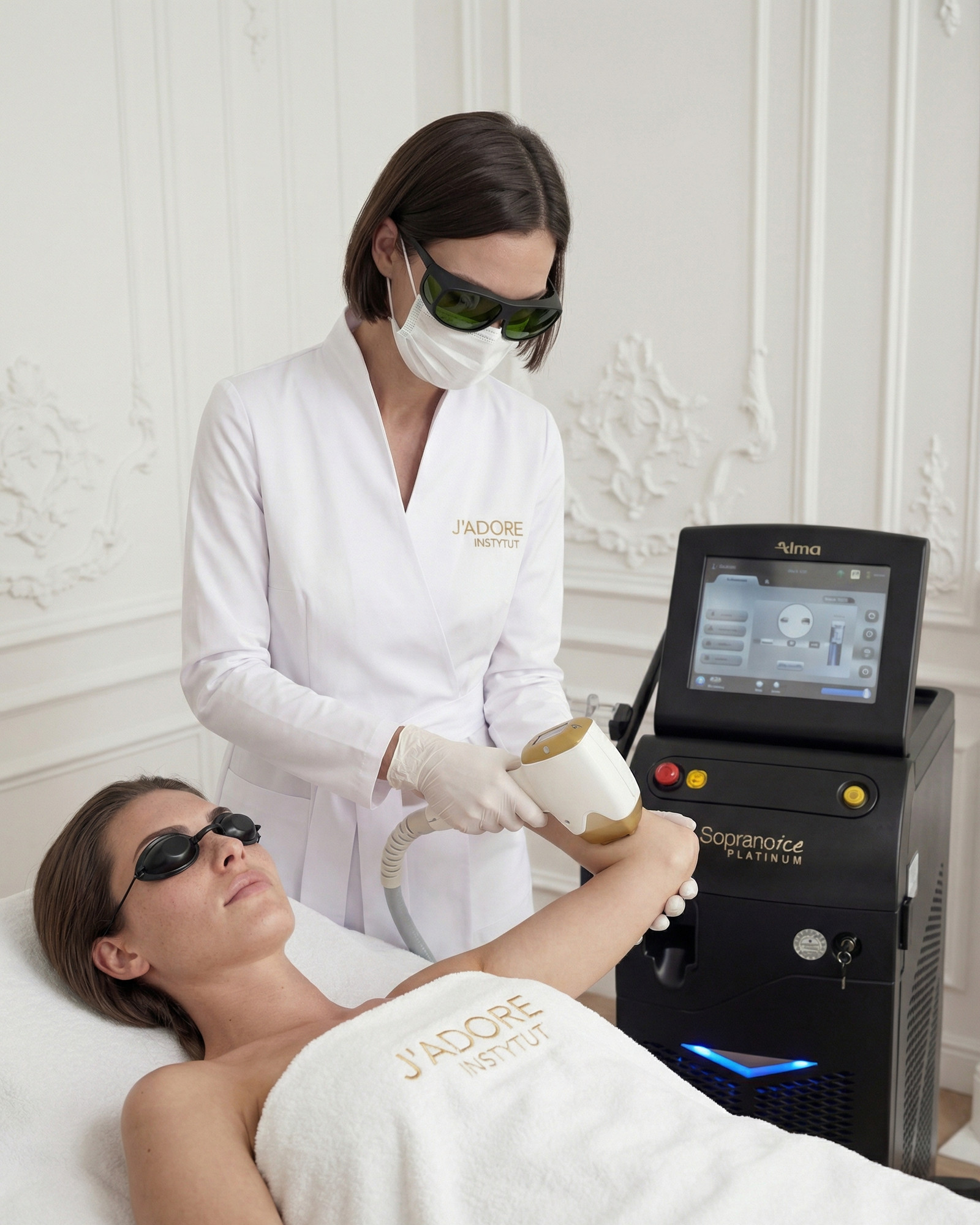
Myth 5: "Laser hair removal is a safer alternative during pregnancy." This is the opposite of true. Laser is strictly contraindicated in pregnancy — there's no research confirming its safety, and caution calls for avoiding any treatment whose effects aren't well documented. Wax, despite its reputation as the "riskier" option, is by comparison far better tolerated.
Myth 6: "Wax can only be used until the end of the second trimester." There's no medical cut-off marking a specific week of pregnancy as the "last safe" point for waxing. Practical limits mainly come from a growing bump (harder positioning), increased sensitivity in intimate areas, and — in some cases — a gynaecologist's individual advice for pregnancies with complications. In a healthy pregnancy with no special indications, waxing is possible in any trimester, as long as the conditions for a safe treatment are met.
What's genuinely worth avoiding — and why
If most of the myths don't hold up, what's left as real caution? A few things — but they're specific, and they have a reason behind them.
- Wax that's too hot — a pregnant woman's skin has more blood flow and is more prone to burns. Wax temperature in the salon should be checked with extra care. Hard wax applied with strips is easier to control here than some warm-wax methods.
- Waxing over varicose veins and spider veins — pregnancy makes these more likely to develop. Waxing directly over varicose veins or enlarged vessels can damage them, cause bleeding, or worsen symptoms. These areas should be avoided without exception.
- Applying hot wax to the abdomen — not because wax reaches the foetus, but because of the risk of overheating the skin above the uterus, and discomfort. The abdomen area is best skipped.
- Treatments without informing the specialist about the pregnancy — this is essential. An experienced hair-removal specialist will know how to adapt technique, positioning and temperature to the needs of a pregnant client. Not disclosing the pregnancy takes away that possibility.
- Waxing over skin with an active infection, eczema, or other skin lesions — a rule that always applies, but during pregnancy the skin is more prone to secondary infection, and any existing lesion needs extra caution.
What's worth knowing about specific areas
Face, legs, arms, groin — with few concerns
Waxing possible throughout the whole pregnancy
- Low-temperature wax — safe
- Increased pain sensitivity — normal
- Temporary redness — more common than before pregnancy
- Brows and facial areas — one of the easiest areas
Bikini, intimate areas — with extra care
Possible, but requires caution
- Skin with more blood flow, noticeably more sensitive
- Possible in the first and second trimesters
- Third trimester — often not feasible because of the bump
- The specialist needs to know about the pregnancy in advance
The key is communication — a specialist who knows they're working with a pregnant client will choose the right wax temperature, body positioning and removal technique. It isn't complicated, but it needs a conversation before the treatment, not after.
Three questions worth asking before your visit
Whatever trimester you're in, it's worth going through a short checklist before you book a waxing appointment.
- 01
Does the salon have experience with pregnant clients?
This isn't a question that should feel awkward to ask. A good salon knows the protocol for adapting the treatment — temperature, positioning, areas to avoid. No clear answer is also an answer.
- 02
Has your gynaecologist given any special advice?
In a healthy, uncomplicated pregnancy, waxing usually doesn't need a consultation before every visit. In a high-risk pregnancy or with special indications — ask your doctor.
- 03
How are you feeling that day?
Skin during pregnancy changes from day to day. If it feels unusually sensitive that day, or itching or redness of unknown origin has appeared — it's better to reschedule. No date is set in stone.
After birth — when you can go back to hair removal
This question comes up just as often as the ones about pregnancy itself. The answer is less obvious than it seems. Birth itself isn't the deadline — what matters more is the condition of the skin and your overall recovery. After an uncomplicated vaginal birth, most women can go back to leg or facial waxing relatively soon — as long as the skin has returned to its normal sensitivity. The perineal and intimate areas after a vaginal birth need longer — at least until any injuries have healed and postpartum bleeding has stopped.
After a caesarean section — the abdomen and bikini area should be avoided until the scar has fully healed and any irritation has settled. This usually takes a few weeks to a few months, depending on healing. A caesarean scar needs particular attention during waxing for a long time afterwards — wax on a fresh or not-yet-fully-healed scar is not acceptable.