Before we get into detail — a few things worth knowing from the start
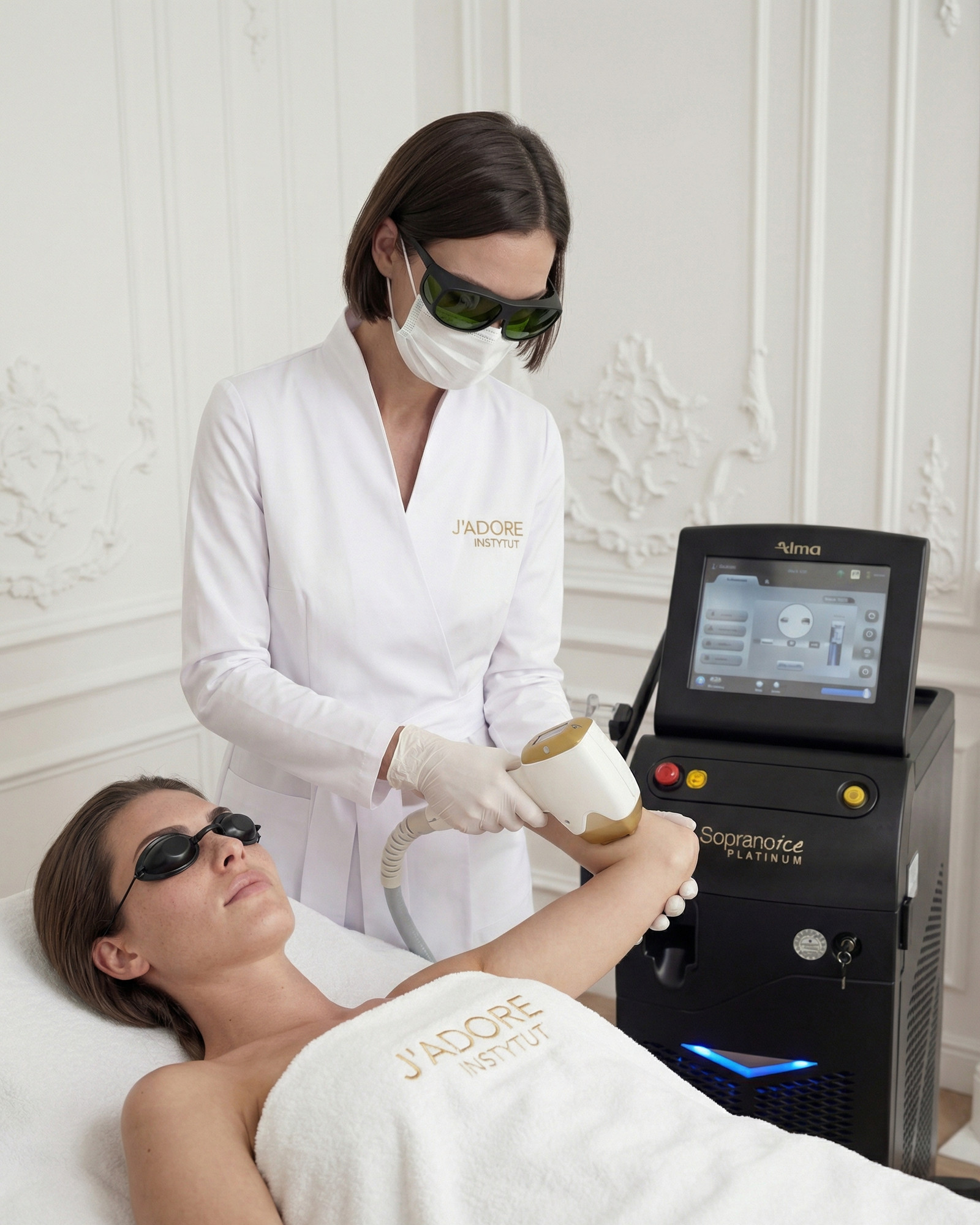
Laser hair removal works through selective photothermolysis. The laser targets melanin pigment in the hair follicle, affecting the hair without excessive damage to the surrounding skin. This is why the treatment works best on darker hair with lighter skin — though modern devices now suit a wider range of skin tones. Whether you're a good candidate is decided during consultation, not on a website.
Before we move on to individual zones, one important note: skin response is individual. What didn't hurt at all for a friend might feel more noticeable for you — and vice versa. Sensitivity is affected by your cycle phase, hair thickness, skin tone, and even hydration levels on the day. An experienced specialist adjusts the settings to you — not to an average protocol.
Zone by zone — what sets bikini, underarms and upper lip apart
Although the underlying mechanism is the same across all zones, each has its own character — different hair type, different skin sensitivity, and a different pace of results. It's worth knowing what to expect before you start.
Bikini
A zone with a wide range of needs
- Options range from the bikini line to full Brazilian — you decide how much
- Sensitive skin, often prone to irritation from shaving or waxing
- Hair is usually thicker and darker → good response to laser
- Sensations during the treatment can be more intense than in other zones
Underarms
One of the most popular zones
- Skin is thicker and less sensitive than the bikini area — often less discomfort
- Dark, coarse hair usually responds very well to laser
- Results appear relatively quickly — many people see visible reduction after just 3–4 sessions
- Aftercare: avoid alcohol-based antiperspirants for 24–48 hours
Upper lip
A hormonally variable zone — patience required
- Delicate facial skin — your specialist selects settings with extra care
- Fine facial hair is often lighter or thinner → the laser response may be slower
- Hormonal factors (such as PCOS or menopause) may call for more sessions
- Results last, but regrowth is possible with active hormonal changes
Preparing for laser hair removal — step by step
This stage has a real effect on comfort and results. Some rules sound obvious, but skipping them can genuinely change the outcome — or push your appointment back by several weeks. Let's go through them one by one.
- 01
Consultation — always the first step
Before booking your first session, go through a consultation. Your specialist checks your skin tone, assesses your hair, and asks about medications, supplements and health history. This is where you agree on the series plan, your expectations and any contraindications. There's no good plan without a consultation — it isn't a formality.
- 02
A few weeks beforehand — stop waxing, sugaring and epilating
The laser needs the hair follicle in place, with its root intact. Waxing and epilators pull the follicle out, so you'll need to avoid these methods for at least 4–6 weeks before your first session. Shaving is fine — it doesn't damage the follicle.
- 03
2–4 weeks beforehand — be careful with sun exposure
Tanned skin is an obstacle for the laser and increases the risk of reactions. Limit sun exposure and sunbeds for a few weeks before your appointment. If you've been on holiday with heavy sun exposure, tell your specialist — the treatment may need to be postponed.
- 04
The day before, or the morning of your session — shave the area
Shave the treatment area before your session — usually the day before or on the morning of your visit. This matters: the skin should be smooth, but the follicle intact. Your specialist will give you exact instructions after the consultation — follow them, as details can vary slightly by protocol.
- 05
On the day — clean skin, no creams or deodorants
Arrive with clean, dry skin and no products in the treatment area — no creams, oils, deodorants or antiperspirants. Product residue can affect the treatment. If you forget, the salon should be able to clean the area before starting.
- 06
The first 48 hours after — gentle care and protection
Straight after the session, your skin may be red and slightly swollen — this is normal and usually settles within a few hours to a day. For 24–48 hours: avoid hot baths, saunas, intense exercise and sun exposure. Use gentle products free from alcohol and acids. Sun protection is essential for the entire series — this isn't optional.
What not to do — common mistakes before and after
Mistakes in preparation and aftercare are one of the main reasons results take longer to appear, or why avoidable skin reactions occur. The list is short, but every point matters.
The most common mistake of all: giving up after 2–3 sessions because the result "is there, but not like in the adverts". Laser hair removal reveals its full potential only after the complete series — early results are a preview, not the final outcome. Patience and consistency make a real difference here.

How many sessions, and when can you talk about results?
This question comes up at every consultation, and there's no single answer for everyone — the outcome depends on the zone, hair thickness and colour, skin tone, hormonal balance and how regularly you attend. Still, we can tell you what most people can expect.
- Underarms — the zone that tends to respond fastest. Noticeable density reduction is often visible after just a few sessions; after the full series, many women find they no longer need to shave daily, or only very rarely.
- Bikini — needs more patience, especially for a full Brazilian. Hair is thicker and denser, skin more sensitive — results can build up more slowly, but they're often clear once they do.
- Upper lip — the most variable zone. Fine facial hair is often thinner and lighter, meaning a slower response. With a hormonal cause, such as PCOS, the series may need to be longer and may require maintenance sessions later on.
The term "permanent reduction", used in the context of laser hair removal, is precise: it means a significant, long-lasting reduction, not a hundred percent, permanent removal of every hair. For some people, results last for years without any need to return. For others, especially with active hormonal changes, new or regrowing hairs can appear — and that's normal. One to a few maintenance visits per year is entirely typical.
When to book a consultation and how to choose a salon
Laser hair removal isn't a treatment that "works itself" without the right settings and a specialist's trained eye. It's worth taking time to choose the right place — you'll carry the results of the series with you for years, so this isn't a decision based on price alone.
- Always start with a consultation, not a treatment session. A good salon won't book you in for laser without first assessing your skin and taking a health history.
- Ask about the type of laser and the range of skin tones it's suited for — this isn't secret knowledge, and a specialist should explain it without hesitation.
- Check whether the salon treats different skin types year-round, and whether it has protocols in place for unwanted reactions.
- Avoid places where no one asks about medications, pregnancy or skin history — that's a red flag. A good consultation is thorough and detailed.
- When choosing the bikini area: make sure the salon has real experience with that specific zone — not every laser salon specialises in a full Brazilian.
Bikini and underarm care — a soothing routine
During a laser series, skin can be more sensitive than usual. Soothing, hydrating treatments can reduce irritation and speed up recovery between sessions — especially in zones where the skin is delicate.
Hormonal balance and upper lip hair removal
When upper lip hair has a hormonal cause, it's worth combining hair removal with an endocrinology or gynaecology consultation — the laser removes existing hair, but new hair can appear while the hormonal trigger is still active. Understanding the cause helps you plan the series realistically.