Melanin — the target of laser precision
Let us start with pigment, because without it nothing else makes sense. Melanin is a natural pigment produced by cells called melanocytes. It determines the colour of your skin, hair and iris. In laser hair removal, what matters is its presence in the hair — specifically in its cortex and medulla — and the fact that dark melanin absorbs light energy at a specific wavelength.
Melanin is not a single chemical compound — it is a family of pigments. Two types are crucial for hair removal: eumelanin (brown-black, found in dark hair) and pheomelanin (yellow-red, found in red and light blonde hair). Eumelanin absorbs laser energy very effectively. Pheomelanin does so far less effectively because its absorption spectrum differs. This is why red hair is so challenging, despite having colour.
- Eumelanin (brown, black) — absorbs laser energy very effectively. Dark hair on light skin creates ideal conditions for laser treatment.
- Pheomelanin (red, light blonde) — absorbs energy far less effectively and within a different wavelength range. Red hair requires a particular approach.
- No melanin (grey hair) — absorbs nothing. The laser has no target and passes through the hair without a thermal effect.
How a laser works — selective photothermolysis
The laser hair removal mechanism has an elegant name: selective photothermolysis. “Photo” refers to light. “Thermolysis” refers to destruction through heat. “Selective” means that this destruction targets a specific structure rather than spreading across the entire area. This mechanism is key to understanding why laser treatment works where it does — and why it fails where it does not.
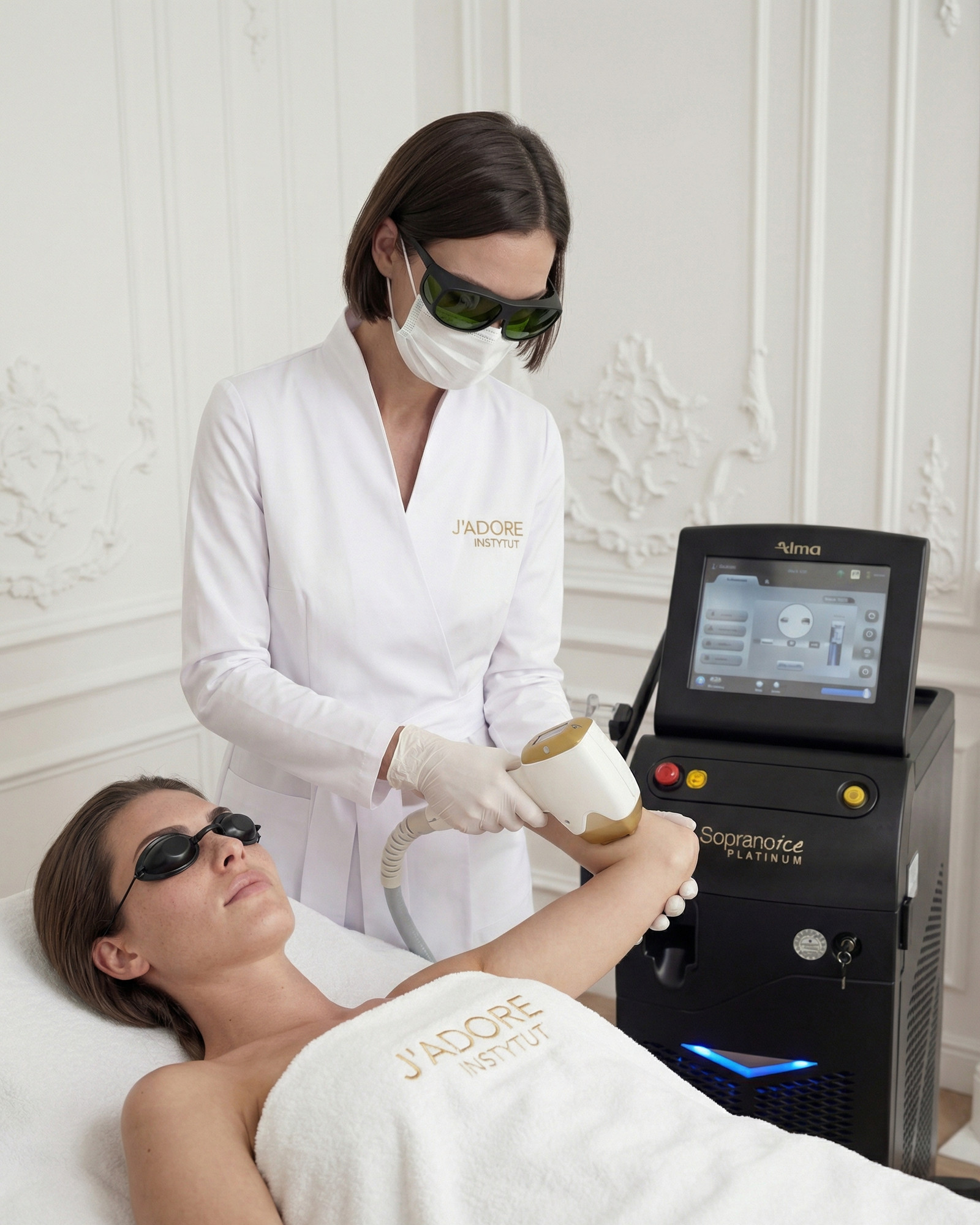
In practice it works like this: a laser pulse at a precisely selected wavelength reaches the skin. Light tissues allow it to pass through with little reaction. Dark melanin in the hair, however, absorbs the energy, converts it into heat, and this heat transfers to the surrounding hair follicle. It damages the follicle enough to disrupt or stop hair growth. With repeated treatments, when follicles are in their active growth phase, this can result in long-term hair reduction.
- 01
Light pulse
The laser emits a precisely selected wavelength and targets the treatment area.
- 02
Absorption by melanin
Dark melanin in the hair absorbs light energy — tissues without pigment allow it to pass through.
- 03
Conversion into heat
The absorbed energy turns into heat inside and around the hair — exactly where the follicle sits.
- 04
Follicle damage
The rise in temperature damages the follicle’s stem cells, disrupting or inhibiting further hair growth.
- 05
Selectivity — skin remains unharmed
The surrounding light skin absorbs minimal energy and remains virtually undamaged.
Grey hair — why the laser cannot see it
Grey hair is not simply pale blonde. It is pigment-free in an entirely different way from light blonde hair. When hair turns grey, something specific happens at a cellular level: melanocytes — the cells that produce melanin — gradually lose activity or stop functioning completely. The result is hair that grows without pigment from the outset. It is not slightly lighter — it is structurally devoid of melanin.
For a laser, grey hair is invisible — not because the laser is weak or imprecise, but because there is no physical mechanism that can transfer energy from the light pulse to the follicle. The pulse passes through the hair as if it were not there. There is no thermal reaction, no follicle damage and no result. This is not a matter of device settings or treatment intensity — it is a matter of physics that cannot be bypassed.
Dark hair
ideal conditions for laser treatment
- Rich eumelanin in the cortex and medulla
- Absorbs laser energy effectively
- Converts it into heat at the follicle
- The follicle undergoes thermal damage
Grey hair
beyond the laser’s reach
- Inactive melanocytes — no melanin production
- The inside of the hair is filled with microscopic air bubbles
- Laser energy passes through without absorption
- No thermal reaction — no effect on the follicle
What about light blonde, red and brown hair?
Grey hair is an extreme and fairly obvious case. In the treatment room, however, we see a whole range of colours that require separate discussion. Not every light hair is equally “difficult” for laser treatment — and not everyone with red hair is destined for failure.
- Light blonde — melanin is present, but the amount may be too low for the laser to work effectively on every hair. Results are often partial. Some hairs respond, while others do not. More sessions are often needed, and the final reduction may be less noticeable than with darker hair.
- Red hair — pheomelanin predominates, absorbing light energy within a different range. The standard wavelengths used by most lasers do not reach pheomelanin’s optimum range. Results can be unpredictable: some hairs respond, while others do not. Before starting a course of treatments, it is worth carrying out a test and assessing the skin’s response.
- Dark blonde and brown — here, the laser has a genuine target. There is enough eumelanin for selective photothermolysis to work. Results with dark blonde and brown hair are generally clearly better than with blonde hair.
- Grey or white — as described above: there is a structural lack of melanin. The laser cannot work, regardless of the device type or settings.
What can you do instead of laser hair removal
If laser hair removal is not suitable — because the hair is grey, too light or red — it does not mean there are no options. Existing hair removal and epilation methods address the issue differently. They do not rely on melanin as their target. Different methods vary in effectiveness, longevity and aftercare requirements.
Laser hair removal
requires melanin — for dark hair
- Targets melanin in the hair
- Ideal for dark hair on fair skin
- May provide long-lasting results after a series of sessions
Electrolysis
independent of hair colour
- Works mechanically — an electric current destroys the follicle
- Effective for all hair colours, including grey hair
- Permanent removal of individual hairs is possible
IPL (intense pulsed light)
similar limitations to laser hair removal
- Works on a similar principle — it requires melanin
- Less selective than laser hair removal, with a different emission spectrum
- Available for home use (IPL devices)
It is also worth remembering that hair colour can change with age. Hair on the body may turn grey, not only hair on the head. Someone who responded well to laser hair removal in the past may find later sessions less effective over time. Individual follicles may begin producing lighter or grey hair. This is not a laser fault — it is physiology.

Before a series of sessions — what to check
A consultation before laser hair removal has a specific purpose: to assess whether laser treatment makes sense for you and the chosen area. It is not a discussion about the schedule or number of appointments. Above all, it checks whether the mechanism behind the method has a realistic chance of working. It is worth approaching the consultation with a few questions.
- Hair colour in the treatment area — not the colour of hair on your head. Body hair can be surprisingly different. Some areas may be too light, while others may be ideal.
- Laser test — if the colour is uncertain, such as light blonde, red or mixed hair, good practice is to perform a test on a small area and observe it for several weeks. Only the test result provides a realistic answer about effectiveness.
- Hair thickness — finer hairs contain less melanin, even when they are dark. Thickness affects the amount of pigment available to the laser.
- History of greying — if hair in a given area has started to turn grey, laser effectiveness will gradually decrease. New hairs grow with less melanin.
- Tanned skin — this is a separate issue. Melanin in the skin competes with melanin in the hair for energy absorption. This may affect both treatment effectiveness and safety.
Combine hair removal with skin care
Laser hair removal is not a treatment that works in isolation. Your skin requires proper preparation and recovery before and after each session. Well-selected skincare treatments can improve skin comfort between sessions and the quality of the result after completing the series. Hydration and protection of sensitive skin are particularly important after the treatment.
Laser hair removal + body hydration
After each session, your skin needs recovery. Hydrating body treatments can soothe the reaction and improve comfort between sessions.
Laser hair removal + brow care
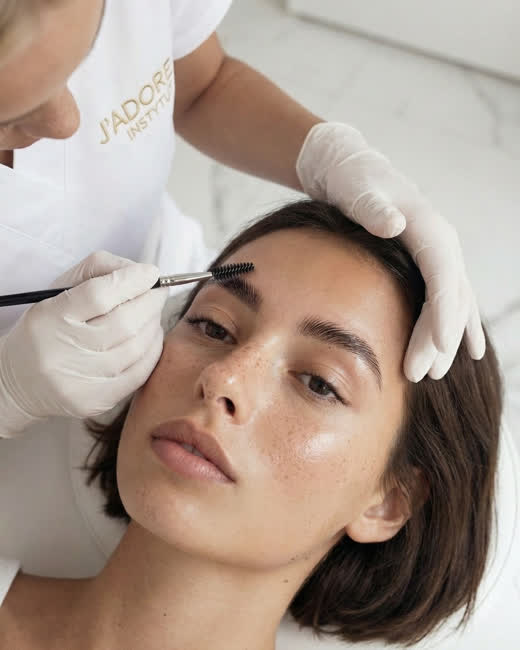
Brows can be contoured with laser treatment by removing unwanted hairs outside the brow arch. It is an ideal complement to brow shaping and henna.
Laser hair removal + enzyme body peel
A peel removes dead epidermal cells and supports skin healing after laser treatment, minimising the risk of ingrown hairs.