Why is there so much concern around one line?
The eye is an area where we are instinctively cautious — and understandably so. Its proximity to the cornea, conjunctiva and lacrimal sac makes safety questions more relevant than they are for brows or lips. The problem is that caution turns into fear when reliable information is lacking. Reliable information about eye PMU still reaches people with considerable delay. This is mainly because techniques, pigments and treatment protocols have changed faster than the internet has kept up with describing them.
Six myths — breaking them down
Myth 1: “You cannot have permanent eyeliner with contact lenses.” This is a myth in its purest form — because it confuses two different things: wearing contact lenses regularly and removing them for the treatment and healing period. Contact lenses must be removed before the treatment and not worn for a specified period afterwards (usually several weeks, until the eyelid epidermis has fully healed). This is a standard protocol that protects both your eye and the fresh pigment. Wearing contact lenses day to day is not a contraindication to the treatment — provided you follow the aftercare recommendations.
Myth 2: “I had a stye once — so I cannot have it.” A single episode of a stye in the past does not rule out the treatment. The contraindication is an active stye (or another active infection around the eye) at the time of your appointment — regardless of the technique, not only PMU. The rule is simple: we do not insert a needle into tissue with an active infection. If the stye has cleared, the area has returned to normal and there is no tendency for chronic recurrence — a consultation will usually confirm there is no obstacle.
Myth 3: “I have sensitive eyes — so they will water every time and the result will not last.” Watery eyes during the treatment are very common — it is a reflex, not a pathology. The eye responds to touch nearby and to the vibration of the PMU device. Tears that appear during the treatment do not “wash out” the pigment — correctly applied PMU reaches the dermis, not the surface. Eyelid sensitivity to external stimuli is a different mechanism from pigment longevity. For people naturally prone to watery eyes, there are several techniques — including special positioning, breaks and moisturising drops used after the treatment — and a good specialist knows them all.
Myth 4: “Permanent eyeliner is impossible if I am allergic to eye cosmetics.” Here, everything depends on what exactly you are allergic to. If you react to ingredients in decorative eyeliners (preservatives, carriers or latex in some applicators), this may have no connection with PMU pigments, which have a completely different composition. An allergy to mascara is not the same as an allergy to inorganic or plant-based pigments used in Permanent Makeup. An allergy test is always performed before the treatment — a patch test — and this, rather than a general history of cosmetic allergies, provides the answer.
Myth 5: “You cannot have eye PMU after laser vision correction (LASIK).” This depends solely on how much time has passed since the operation. PMU specialists and ophthalmologists generally recommend waiting at least one year after LASIK before planning any treatments in the immediate eye area. The cornea heals slowly and is more sensitive after surgery — so this rule is justified, and we follow it. Once the required time has passed and an ophthalmologist has confirmed full healing, the treatment is possible.
Myth 6: “Permanent eyeliner increases the risk of an eye infection — especially with contact lenses.” This is the most serious-sounding myth — and it deserves calm analysis. When performed correctly, the risk of infection is minimal — we use sterile single-use equipment, a disinfection protocol and a barrier between the treatment area and the eyeball itself. The risk increases when: (a) the specialist does not maintain sterility standards, (b) you do not follow aftercare recommendations (touching the area, wearing make-up, swimming or using contact lenses before healing). Contact lenses do not cause infection in themselves — but returning to them too soon after the treatment can transfer bacteria to the healing wound area. That is why there is a break — it is logistics, not a diagnosis.
When it is better to wait
Debunking myths does not mean everyone can come in tomorrow for eyeliner. There are several genuine, justified reasons to postpone your appointment — and it is worth knowing them so you do not confuse them with myths.
- An active stye, chalazion or conjunctivitis — wait until symptoms have completely resolved.
- Active herpes around the eye or on the lip — the virus may be transferred to the treatment area. If you have recurrent herpes, the specialist will discuss a preventive protocol with you.
- Recent eye surgery (LASIK, cataract surgery, retinal detachment surgery) — the required time after surgery is discussed during consultation; the minimum is usually several to a dozen months.
- Active chemotherapy or radiotherapy — tissue healing is impaired; the decision requires consultation with your oncologist.
- Pregnancy — caution is a general PMU principle here, not one specific to the eye area.
- Very dry eye requiring ongoing treatment with drops — this does not rule out the treatment, but requires discussion and possibly an adjustment to the appointment date.
Consultation — why choose one before deciding on the treatment
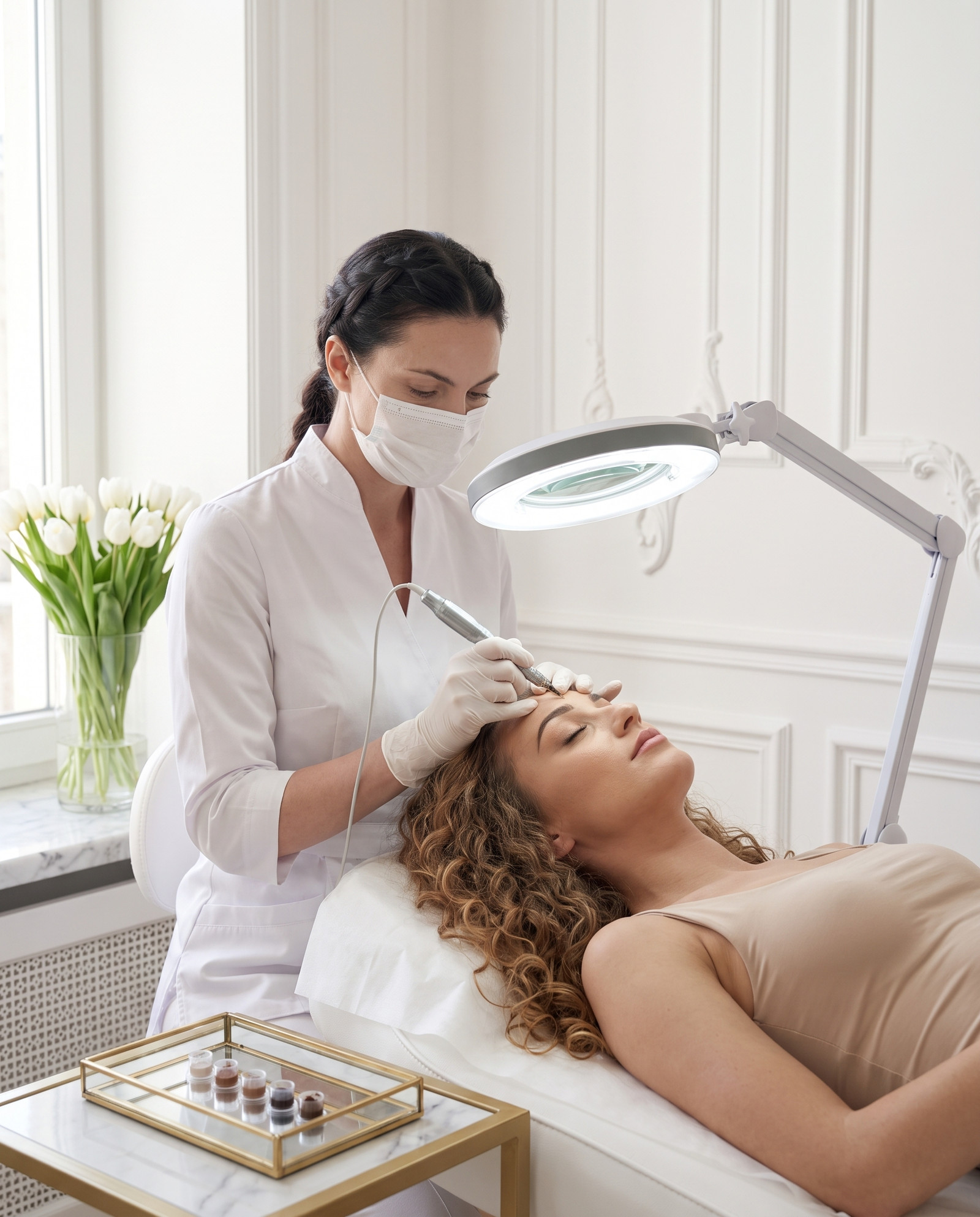
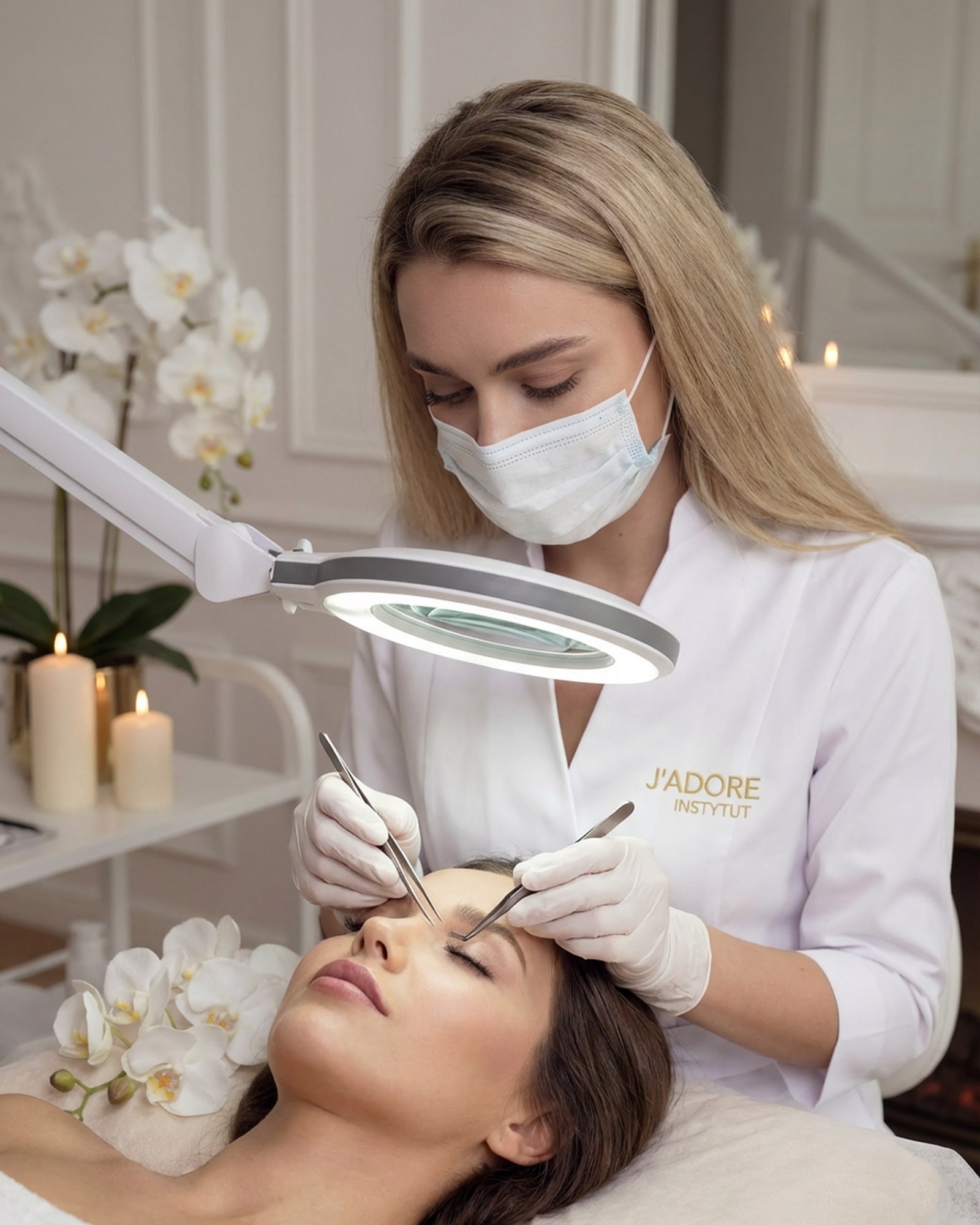
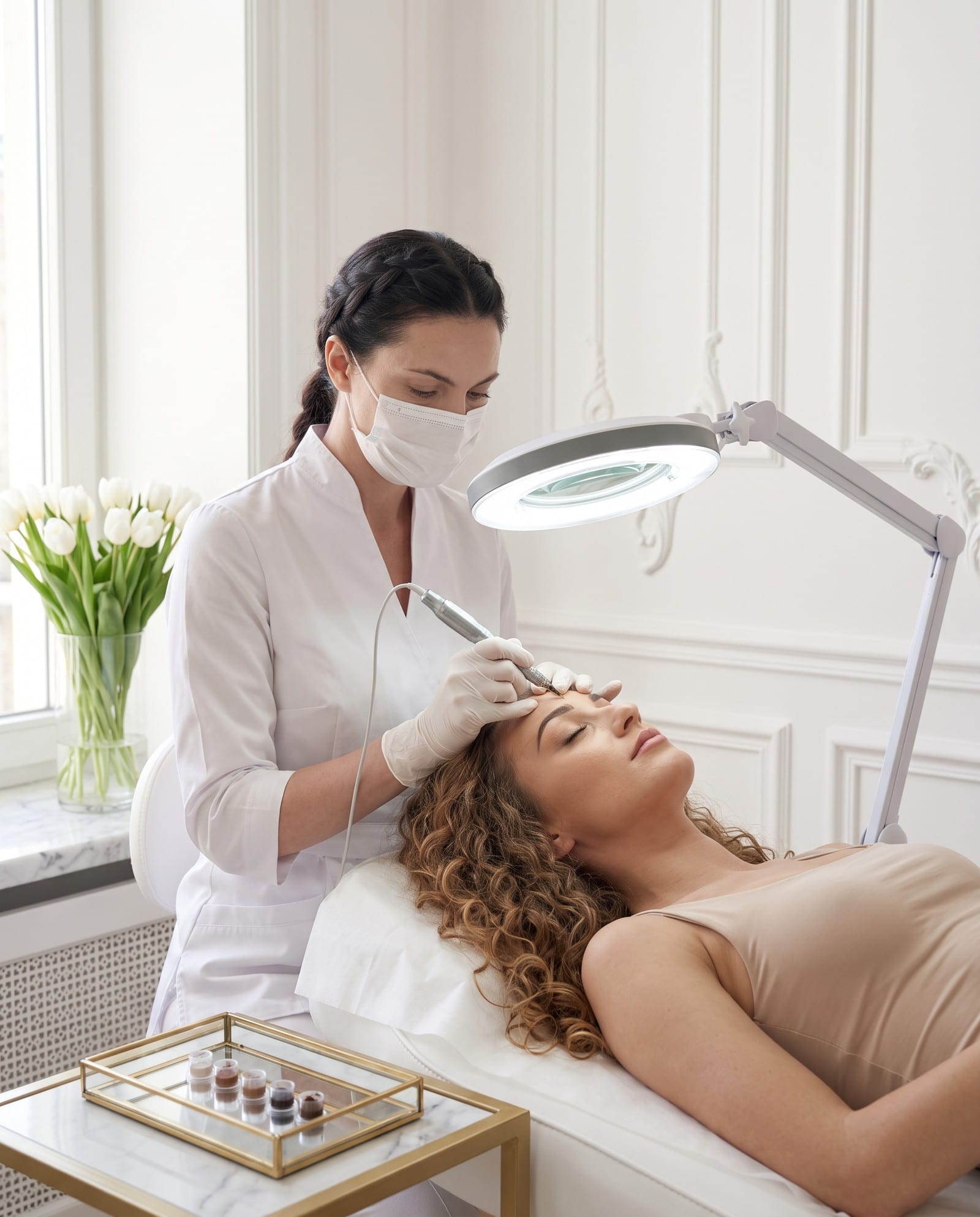
With permanent eyeliner, consultation is not a formality — it is the moment when we establish everything that will affect the result and safety. We assess the shape and tension of your eyelids (as a lax eyelid changes the line’s perspective), lash thickness, eye symmetry, and whether you wear contact lenses, experience inflammation in this area or have had eye surgery. Based on this information, we select the technique, line thickness and pigment shade, and set the timings — including when to stop wearing contact lenses before and after the treatment.
What distinguishes safe permanent eyeliner from a risky treatment
The safety of permanent eyeliner is not a feature of the treatment itself — it results from quality of execution and adherence to protocols. Three elements determine it more than anything else.
- 01
Single-use equipment and a sterile treatment area
Needles opened in your presence, single-use pigment caps, a sterile environment — this is the standard, not a distinguishing feature. A lack of sterility is the only situation in which the risk of eye infection genuinely increases.
- 02
The specialist’s experience in eye PMU
The eye area is more difficult than brows — it requires different precision, a different device speed, knowledge of eyelid anatomy and the ability to work with someone who blinks involuntarily. This is a matter of specialisation, not only general PMU skills.
- 03
Following your aftercare recommendations
Keeping your hands away from the eye area, avoiding make-up, not touching your contact lenses for the required period, and avoiding swimming pools and saunas in the weeks after the treatment — these are not whims. They are the only factors you can directly influence after leaving the salon.
It is also worth knowing that pigments for eye PMU differ from those used for brows — a good salon uses formulas dedicated to this area, tested for greater tissue sensitivity and proximity to the eyeball. During consultation, you can ask about the pigment composition and certificates — and you should.
Before you start looking for a salon — one question to begin with
Rather than asking “can I have permanent eyeliner with contact lenses / a stye / sensitive eyes?” — start with a consultation and describe your specific situation there. General answers, even well written ones, cannot replace an assessment by a specialist who sees your eyelids, knows your medical history and can suggest a technique tailored to your eye. Most concerns that reach the salon end with an explanation — not a refusal.