The biggest part of the work happens before the pencil
A reliable meeting starts by asking why you want PMU. Brows for someone who wears heavy makeup daily are designed differently than for someone who only wants to fill in gaps. Glasses, hair styling, facial expressions, muscle asymmetry, and how your face looks without makeup all matter. An inspiration photo provides a language for the conversation, but it is not a template to copy.
Then comes the skin analysis. Visible pores, seborrhoea, flaking, redness, scars, and active lesions influence the choice of technique or a change of date. The artist asks about medications, illnesses, previous reactions, and treatments. This part does not produce a striking photograph, but it protects you from using a hair-stroke method where lines might blur during healing. You pay for the selection of possibilities, not for the confirmation of a wish.
The interview should lead from general questions to details. Saying "I have sensitive skin" is not enough. We must determine if the reaction is temporary redness, recurring inflammation, contact allergy, or a damaged barrier after intense exfoliation. Similarly, "I take something for acne" could mean a cosmetic, a topical medication, or general therapy affecting healing. The specialist's time is used to translate colloquial terms into facts relevant to your future treatment.
A design on the face is a prototype, not finished PMU
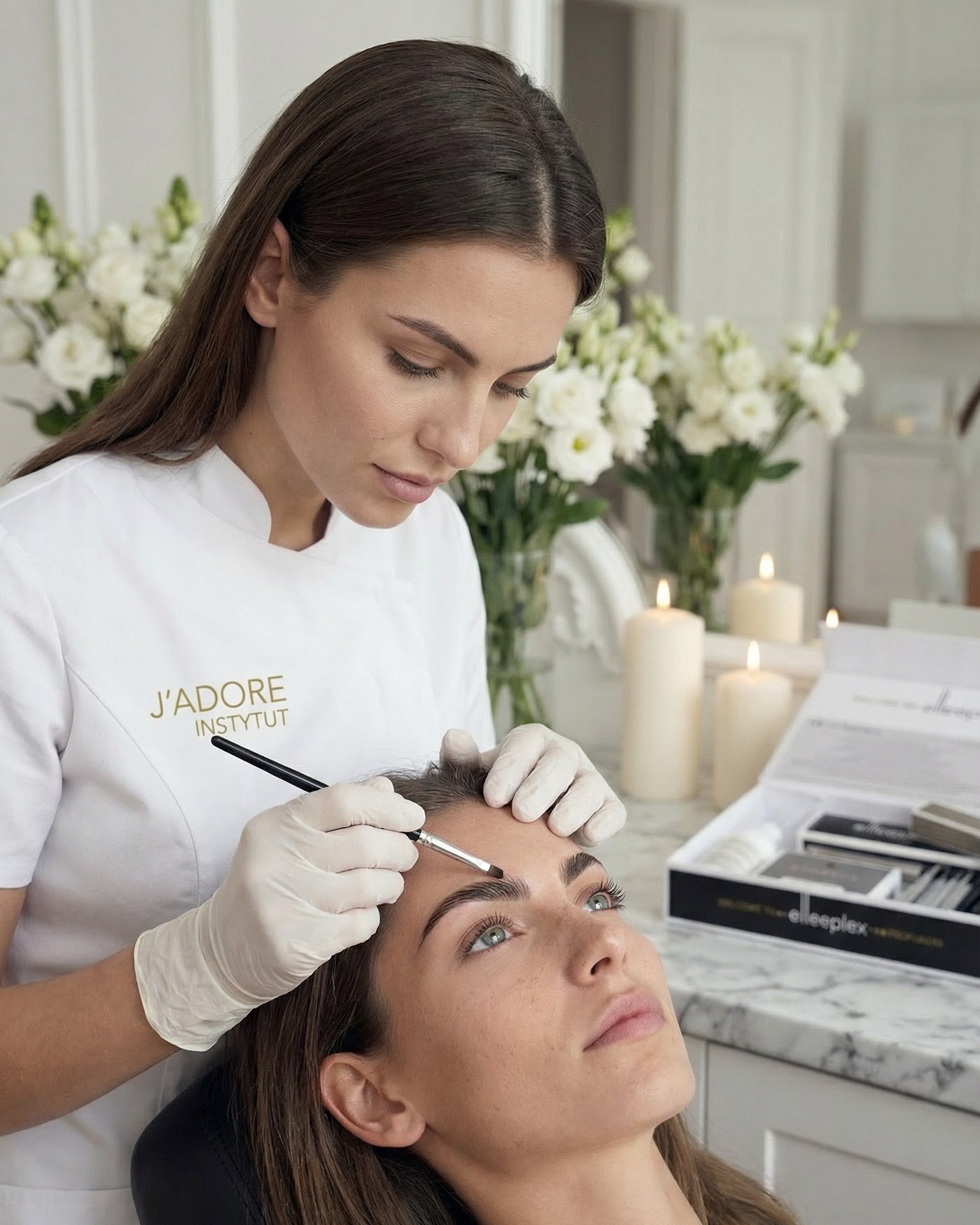
Mapping shows the length, width, and position of the planned shape. For brows, the artist marks reference points, observes natural hair growth, and checks the design on a relaxed face and during expression. For lips, she assesses the contour, asymmetry, and the vermilion border. For eyeliner, the eyelid position matters, not just the shape drawn on a closed eye. This work requires time and adjustments at the mirror.
The sketch does not exactly predict the fresh look or the colour after healing. The pencil sits on the surface, while pigment will work within the skin and change intensity during regeneration. A good design primarily answers questions about proportions and the character of the effect. If someone promises that the eyeliner from the consultation will be identical to the result after pigmentation, they are oversimplifying the biological healing stage.
It is also worth seeing the design in a photo taken with a standard camera from both sides. A mirror reverses the image, and habit can mask asymmetry that becomes immediately visible in a photograph. It is not about mathematically aligning the face — the left and right sides naturally differ. However, photography helps catch an accidentally extended tail or a head starting too close to the nose. Additional time is justified when it leads to a specific correction.
The cost increases when old pigment needs to be assessed
Assessing someone else's PMU requires experience with healed results, not just fresh work. It is important to recognise if the skin has room for more pigment and if the new design fits within the old form. If not, attempting to cover it usually leads to a wider and heavier shape. A longer consultation in such a case is not an artificial addition; it replaces a hasty decision with a staged plan.
Prepare as accurate a history as possible: when the previous work was done, how many times it was reinforced, whether it was lightened, and how the shade changed. Even an old photo without a filter can show a line that is not visible today under the hairs. A lack of this data does not rule out a meeting, but an honest person will point out greater uncertainty. The cost of an expert opinion also includes saying what cannot be determined during a single observation.
The artist's experience is shown by what she refuses to do
A portfolio full of even brows shows a steady hand, but it does not show the entire decision-making process. Ask about healed work on skin similar to yours and cases where the technique was changed. The specialist should be able to explain why she advises against delicate incisions for very oily skin, why she does not enlarge lips with pigment beyond the natural border, and why she postpones the treatment during active inflammation.
Ask for an example of an effect similar not only in terms of the zone but also the skin type and starting point. Perfect brows on dry skin do not address the concerns of someone with large pores. Correcting faded makeup does not say much to someone who has never had pigmentation. An honest portfolio contains different types of cases and allows you to see how the artist graduates density, leaves a natural start, and behaves when the result requires later refinement.
A low rate is sometimes possible when the consultation is a sales pitch
A short qualification before the actual pigmentation can be part of a well-organised service, provided it includes a full interview, design, and time to refuse. The problem begins when the meeting has one goal: to secure a deposit. A warning sign is proposing the same technique to every person, not asking about medications, and pushing for an immediate decision before you see the design.
You are not saving money if, after a few months, you have to lighten a shape that is too dark or look for someone else for a correction. It is also difficult to compare two offers without checking what they include. Ask if the design is created on the face, if the healing plan is discussed, if you will receive information about contraindications, and if the person consulting will perform the treatment later. The time booked in the calendar says very little.
Additional elements make sense only if they change the decision
Symmetry measurement, photographs, shade samples, and drawing several versions can expand the service. However, they are not automatic proof of quality. A ruler will not fix a design that ignores natural hair, and a large pigment card will not replace an understanding of skin undertones and the fading process. Each tool should answer a specific question: where to guide the form, how the colour will behave, or if an old trace limits the new plan.
Do not confuse the number of pigments viewed with the quality of selection. The specialist takes into account the complexion temperature, natural hair colour, target intensity, and how the mixture may change over time. She should also explain the difference between a fresh and a healed result. The most saturated sample on the card is not automatically the best. A sensible choice often starts calmer, because colour can be built up during a later correction, whereas excess requires patient lightening.
Before booking, ask for a precise scope of the meeting
Bring photos of your brows or lips from a few years ago if the appearance or pigmentation has changed. Write down medications and dermatological treatments. Show inspirations and images whose effect you do not want. You do not need to stop treatment or perform home tests before the consultation. Honesty shortens the path to a good design more than a perfectly prepared moodboard.
Also, check if the findings can be recorded: the planned zone, technique direction, information to confirm, and recommended date. Memory after a mirror talk is unreliable, especially when you view several variants. A short note is not a promise of an identical result, but it protects you from returning to square one during the next visit. If the skin condition changes, the plan should be re-verified instead of mechanically executed according to an old record.
A Krakow location does not replace a competence assessment
Access in the city centre, interior standard, and time buffer between clients influence the costs of running a salon. They are part of the comfort, but they do not in themselves prove the quality of the design. When looking for a consultation with a permanent makeup artist in Krakow, check primarily if the meeting is conducted by a qualified artist, if she views healed results, and if she can point out your skin's limitations.
At J’ADORE, the consultation is a diagnostic and design visit without needling. It can lead to PMU of brows, lips, eyeliner, freckles, or reconstruction, but it does not have to end in pigmentation. This is an important distinction: you pay for an accurate recommendation even when the recommendation is to wait, change the technique, or lighten old work.
Consider the logistics of the future treatment only after assessing the design. Returning to work, training, travel, and important events can affect the date, as proper pigmentation requires healing and a later follow-up. The consultation itself does not cause recovery, so it can be done earlier and without pressure. This buffer gives you time for recommended diagnostics, calming irritation, or testing the design with regular makeup instead of making a decision dictated by an approaching date.
The best expense ends with a plan you can repeat in your own words
After a good meeting, you know which zone is to be pigmented, why a specific technique was chosen, what to expect during healing, and when the idea needs to be re-evaluated. You also understand what cannot be achieved. If you leave only with a date and the phrase "it will be natural," the consultation has not provided enough content.
You should also be able to point out a contingency plan: what you will do if the old pigment turns out to be too saturated, the skin is not ready, or the healed colour settles unevenly. A lack of absolute certainty is normal when working with skin. It is important whether the uncertainty has been named and whether the answer to it does not boil down to adding an increasingly dark layer.
Therefore, evaluate the cost by the number of important unknowns that have been honestly resolved. The most valuable things are the decisions invisible on Instagram: refusing a shape that is too wide, changing the technique for seborrhoea, postponing the date for irritation, and refusing to cover dark pigment. Take one criterion from the consultation: whether the plan was created for your face and skin, or whether you were just fitted into a schedule slot.