What alopecia does to a man's face
Brows aren't a cosmetic detail — they're the frame of the face. They define emotional expression: focus, calm, seriousness. When they disappear, people start reading the face differently — often as more distant, less "engaged". Not because anything has actually changed in your emotions, but because the brain reads brows automatically, before it processes anything else consciously.
Alopecia areata attacks hair follicles unpredictably. It can affect a small patch on one brow, or erase both within a few weeks. Alopecia totalis or universalis, scalp psoriasis, chemotherapy, injury and scarring — the mechanisms differ, but the visual effect on the brows is often identical: absence or significant thinning. None of these causes is an "aesthetic whim" that can be dismissed.
Micropigmentation vs tattoo — why they're not the same
Men who hear "brow pigmentation" for the first time often picture a 1990s tattoo — a bold, dark, fixed line that turns grey-blue after a few years. That association is understandable — and completely out of date.
Old-style decorative tattoo
what to worry about
- pigment placed deep in the dermis
- lines, not hairs — a cosmetic look, not a natural one
- colour shift (bluish/greenish) after a few years
- hard to correct or remove
Modern micropigmentation
how it works today
- pigment placed in the shallow layer of the epidermis — natural fading without a colour shift
- the "hair-stroke" technique (microblading / nano-brows) — recreates individual hairs
- colour matched to your natural shade and skin tone
- results last several years and need refreshing — not "permanent"
The key difference is depth. Microneedling and modern pigmentation techniques work more shallowly than a classic tattoo. This means the colour fades over time — it doesn't shift in tone — and can be adjusted if your preferences change, or if your skin responds differently over the years. For men with alopecia, this matters: the condition itself can change, and so can your pigmentation needs.
What brow restoration involves
Your first visit is always a consultation — no needle, no pigment. Your specialist examines your skin and assesses its condition. (Inflammation from active alopecia areata can be a contraindication for the treatment.) She discusses your expectations and proposes a shape. If you have no brows at all, this stage matters even more: the brow shape needs to suit your face, not a generic template.
- 01
Consultation
Skin assessment, medical history, discussion of expectations. Brow shape designed to match your facial anatomy. Colour selection.
- 02
Treatment
Application of a local anaesthetic (numbing cream). Once it takes effect, the pigment is applied precisely, using the hair-stroke or shading technique — depending on preference and skin condition. Many people describe the sensation as similar to a light scratch.
- 03
Healing (10–14 days)
The colour is more intense in the first few days — this is normal. As the epidermis flakes, it reveals the final, softer shade. Avoid saunas, swimming pools and strong sun on the healing skin.
- 04
Follow-up visit (4–6 weeks)
A mandatory check-up after healing. Any colour gaps are touched up and the shape refined. The result is only complete after this visit.
- 05
Refresh sessions (every 12–18 months)
Pigment fades gradually, without changing tone. A refresh session maintains the result. Frequency depends on your skin type and sun exposure.
For men with alopecia who have no hairs left at all, we usually combine two techniques: fine strokes that imitate hairs, placed to follow a natural growth pattern for that face, plus light shading to fill in the space. The result is denser than strokes alone — but it doesn't look like a drawn line. It looks like brows.
Colour, shape, symmetry — a male point of view
Men usually have one key question here: will it look natural, or will it look like makeup? That depends on three variables: colour, stroke thickness and shape.
- Colour: matched to your natural hair shade, if you still have some brow hair, or to your skin tone and eye colour. For men, we tend to choose cooler, darker shades than for women — the effect is "heavier" and more natural for a male face.
- Thickness and shape: Men's brows are naturally thicker and less arched than women's. Your specialist designs the shape based on your facial anatomy — your brow bone, the distance between your eyes, and forehead proportions. The goal is brows that suit you, not a generic template.
- Symmetry: in nature, brows are never perfect mirror images — and that's a good thing. Too much geometric symmetry looks artificial. That's why we design them "as a pair", on your live face, not on paper.
Is this for me? Questions worth asking yourself before your visit
Micropigmentation isn't for everyone, and it isn't forever. Before deciding, it's worth answering a few questions:
- Is my alopecia in a stable phase? Active inflammation in the brow skin can hinder healing and reduce how long the colour lasts. It's worth waiting for remission, or agreeing the right timing with your doctor.
- Am I missing part of my brows, or all of them? The technique differs. Partial thinning needs matching to your existing hairs. Complete loss gives more freedom in the design.
- How quickly does my skin heal? If you're prone to scarring or keloids, make sure to tell your specialist before the treatment.
- Am I taking medication that affects clotting? Aspirin, NSAIDs and some supplements increase the risk of bleeding during the treatment. A short break, or a consultation with your doctor, may be needed.
If you have doubts, start with a consultation — with no obligation to proceed. It's the one visit that lets you decide with full information, not just what you've read online.
Combining with other treatments
Eyebrow micropigmentation is a standalone treatment — complete in itself. But with alopecia, especially when it also affects the scalp, men often consider a broader approach. Here are a few combinations that often go together:
Dermatological consultation
Before pigmentation, and alongside alopecia treatment — to establish the phase of the condition, the right treatment, and the moment when your skin is ready for the procedure.
Scalp mesotherapy (trichological)
For alopecia that also affects the scalp — stimulates hair follicles. It doesn't restore brows, but supports overall skin condition and may slow the progression of hair loss.
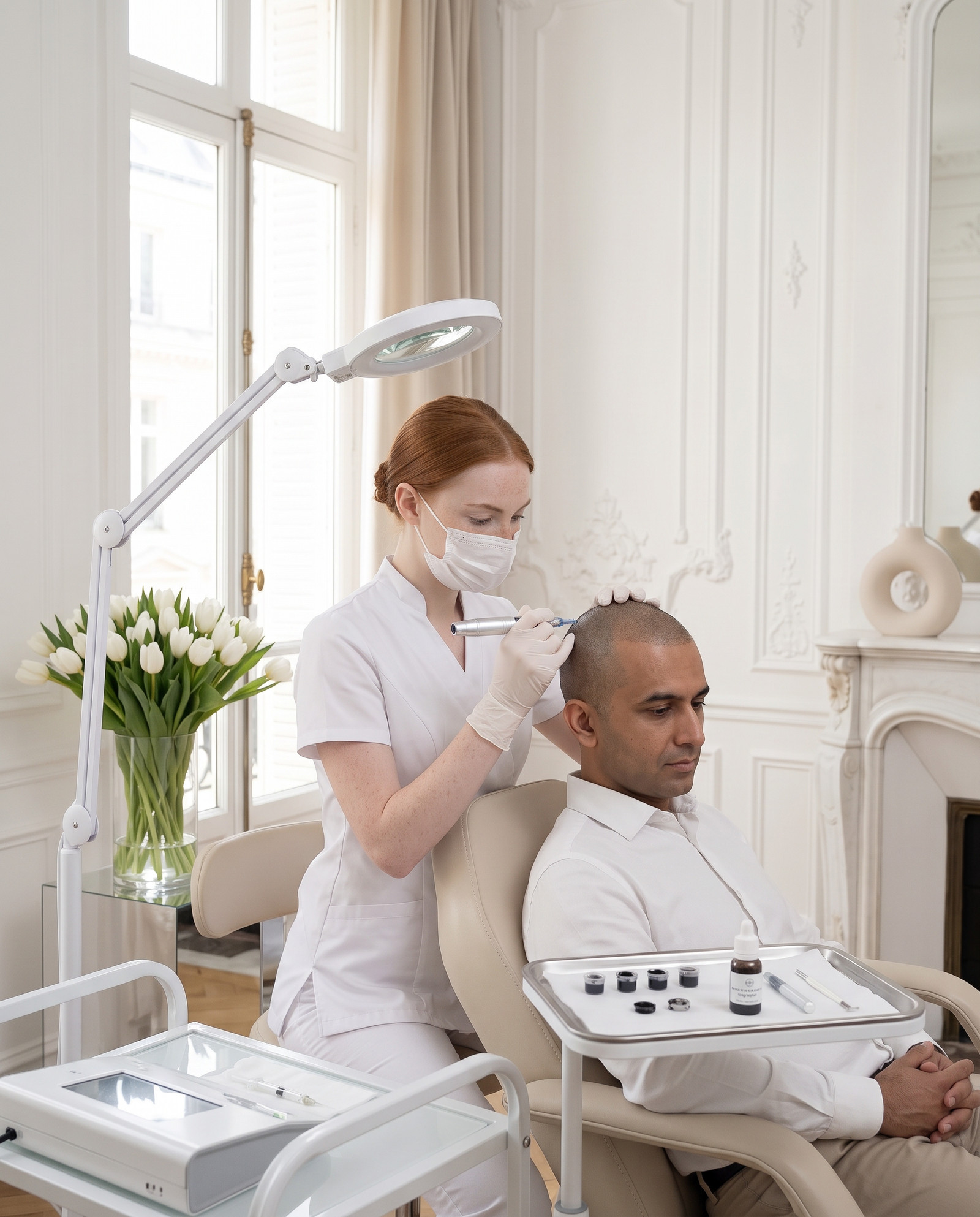
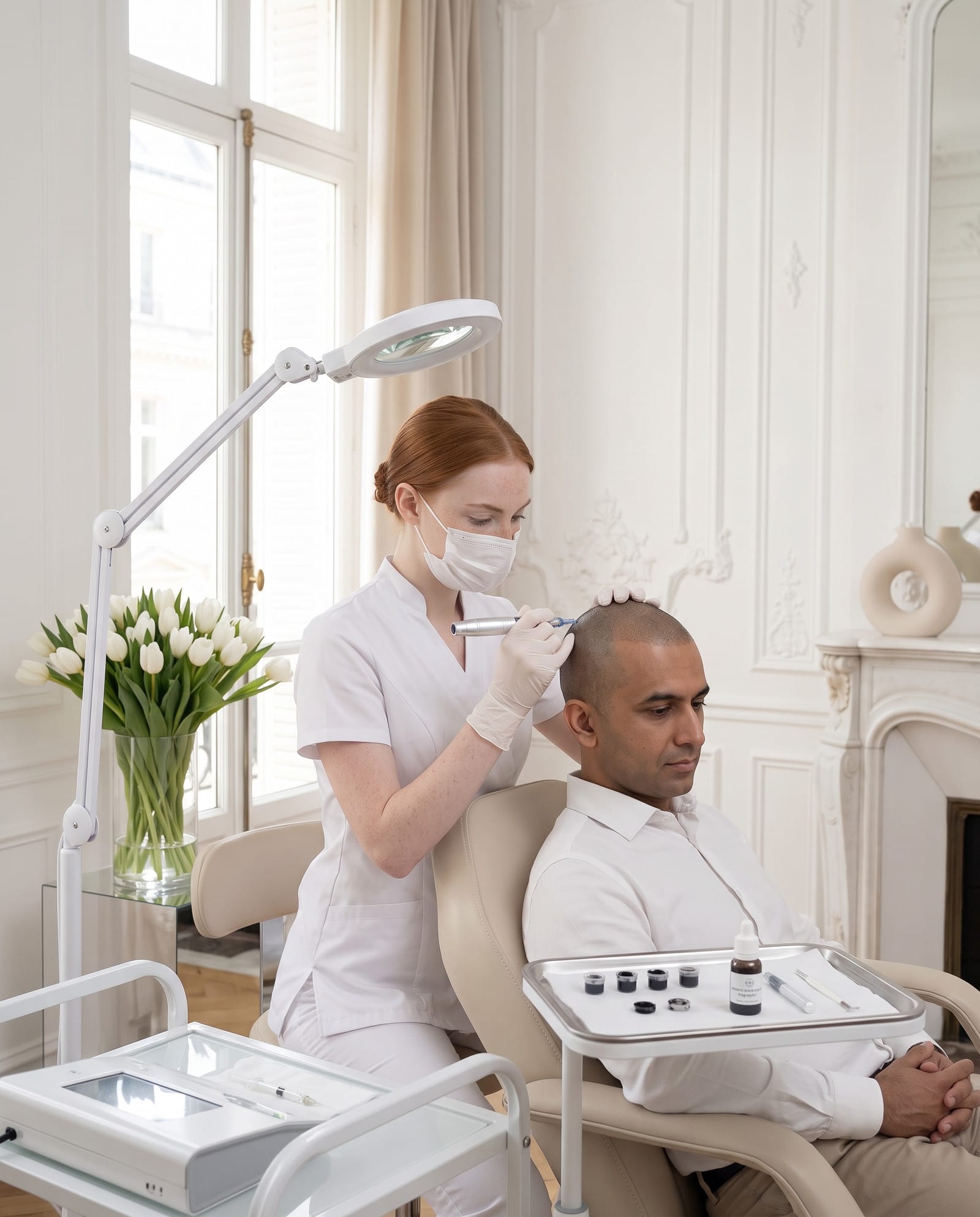
Scalp micropigmentation (SMP)
For advanced baldness — scalp micropigmentation recreates the optical effect of a shaved head with stubble. A different technique, the same effect: the face regains its frame.