A treatment room at J'adore
MICROPIGMENTATION (PMU)
Every morning brings the same battle with an eyeliner pencil: one eye comes out uneven, and after a few hours the line smudges under the eye anyway. Permanent eyeliner is a gentle deposit of pigment along the lash line, giving your eyes a defined, well-rested look — without daily makeup.
The result can be so subtle no one guesses it's permanent makeup (the most natural option is lash-line enhancement), or bold and clearly defined, if you love a strong line. The eye area is sensitive, so we work here with particular care: a qualified lineriste, sterile single-use needles and a colour matched to you. Below you'll find everything worth knowing before your first visit — including the honest truth about healing, touch-ups and fading.
Main session + mandatory touch-up after around 4–6 weeks
MICROPIGMENTATION (PMU)
Permanent eyeliner is micropigmentation of the lash line and eyelid — a qualified lineriste deposits a matched pigment colour into a very shallow layer of skin right at the base of the lashes. The result looks like a perfectly drawn line that never smudges, or — in its most subtle form — like naturally denser, darker lashes.
It's not a tattoo in the classic sense: PMU pigments differ from tattoo ink, we work more shallowly, and the result is designed to fade over time — which is a good thing, because eyeliner trends change, and your face changes over the years too. This means we can refresh the colour periodically and adjust the line to how you look now.
Did you know: the lash line is one of those places where even a millimetre noticeably changes the expression of the face. That is why a good lash artist first draws the line with makeup and shows it to you in the mirror — the pigment is only introduced once you have accepted the shape. Nothing happens "blind".
Four results
Permanent eyeliner isn't a single, fixed look. During consultation we match the intensity to your features, your lifestyle and how you normally do your makeup:
You can also combine zones — for example, lash-line enhancement on the lower lid with a subtle line on top. We decide together, during consultation, what suits your eye and eyelid best.
How it works
The actual work at the eye is quick and very shallow: a fine needle makes a series of micro-punctures, each depositing a small amount of pigment. The aim is for it to settle at the border between the epidermis and dermis — deep enough to survive everyday exfoliation, shallow enough not to spread into a blurred patch. The eyelid is one of the most demanding areas of the body, because the skin around the eye is among the thinnest anywhere and forgives the least. That's why the line is built up in layers, checking the result as we go, rather than in a single pass.
Over the first few days, your skin does its job: it seals the micro-wounds, forms a light scab and sheds some pigment along with it. Fresh epidermis then covers the colour with a milky haze for a few weeks, so the line looks lighter than its final result — the real effect only becomes visible once the epidermis clears. That pigment lost along the way is why a touch-up after around 4–6 weeks is standard, not a correction of a mistake. Later, over the following months, pigment particles are gradually dispersed by the skin and lightened by the sun — which is why the line fades and needs periodic refreshing.
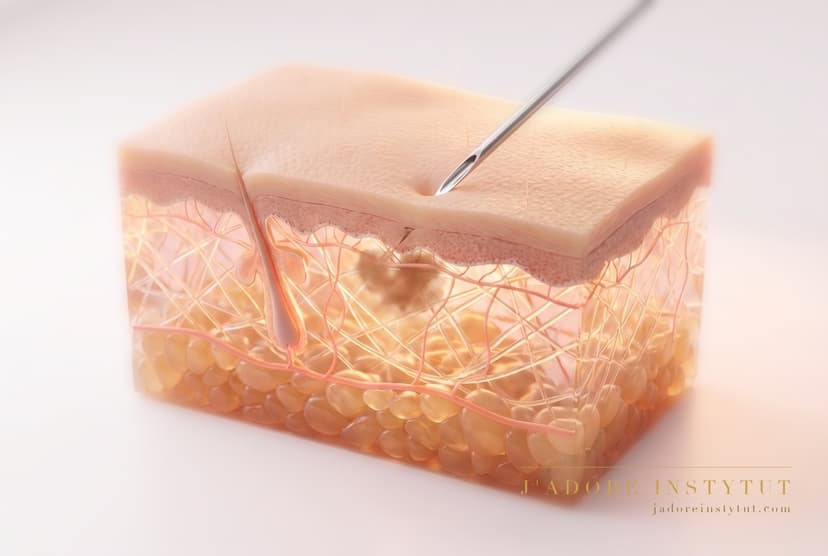
Good to know: how the line looks years later isn't down to a "heavier hand" — it's down to how deep the pigment sits. On skin as thin as the eyelid, going a little too deep can, over time, blur into a bluish shadow instead of staying a defined line — because the deeper the pigment sits, the more the surrounding tissue disperses it. It's a matter of anatomy, not pressure.
Ideal for
For her and for him
Permanent eyeliner for women is by far the most popular version of this treatment. From barely-visible lash enhancement, through subtle and classic lines, to smoky shading — we match the result to your features and how you do your makeup day to day. The most popular "first time" choice is a subtle definition that looks like denser lashes, not like makeup.
What we work with
Permanent eyeliner for men is a niche, but a real one — men choose almost exclusively discreet lash-line enhancement, with no visible line. The goal: a more defined, less tired look, with absolutely no makeup effect. A classic line or smoky shading is rare for men.
What we work with
Safety around the eye
The eye area is delicate and richly supplied with blood vessels, and the treatment itself breaks the skin — so a few things determine both the result and its safety here, worth asking about at any salon:
The eye line should be done by a qualified lineriste with specific experience in this area — it's one of the more demanding zones of PMU, where a steady hand and knowledge of eyelid anatomy really matter.
We use sterile, single-use needles and cartridges, opened in front of you, and pigments from legal, certified suppliers. This is an absolute baseline whenever the skin is broken, and especially so around the eye.
We choose pigment that fades nicely (a poorly chosen one can turn a cold, bluish shade over time). We draw the shape and you approve it in the mirror before anything is deposited.
The eye area is sensitive, so we apply a topical anaesthetic — most clients describe the treatment as noticeable but tolerable.
Red flag: when we do NOT perform (or postpone) an eye line · If you regularly get styes, chalazia or conjunctivitis — we first calm the eye down, sometimes after an ophthalmology consultation, because a treatment on inflamed tissue can make the problem worse. We don't fit contact lenses on the treatment day or during the first days of healing — come wearing glasses, and bring them with you. Also flag dry eye syndrome, recent eye surgery and a tendency to significant eyelid swelling — these don't always rule the treatment out, but they do change the plan.
MICROPIGMENTATION (PMU) · Permanent eyeliner
Contraindications
Permanent eyeliner breaks the skin, so some contraindications are permanent and others temporary — in the latter case, we simply postpone the treatment until the situation passes. We'll go through the full list individually during consultation.
If you regularly get styes, chalazia or conjunctivitis — treating near an affected eye can make the problem worse; sometimes we need an ophthalmologist's go-ahead first. We don't fit contact lenses on the treatment day or during the first days of healing — come wearing glasses.
This isn't a complete list — we'll discuss your health conditions, medication, allergies and any previous treatments around the eye during consultation, before setting a date.
What to expect
Most important: right after the treatment, the line looks darker, thicker and sharper than the final result. This is completely normal. Healing around the eye goes through several stages, and we only judge the true, final colour once healing and the touch-up are complete.
The most common call we get is: "the line has almost disappeared, did something go wrong?" No need to worry — that's the fading phase after the scabs come off, and practically every client goes through it. Pigment "comes back" over the following weeks. That's why we never judge the result after a few days — only once healing is complete, and ultimately after the touch-up.
Over time, the line fades naturally — that's not a flaw, it's a feature of PMU. For most people, results last from a year to around three years, depending on colour, skin type, sun exposure and aftercare. Once it starts fading, you simply book a refresh — quicker and simpler than the first treatment.
Portfolio
A record of the work in our salons — the place where we publish treatment frames and, after photo sessions, results.
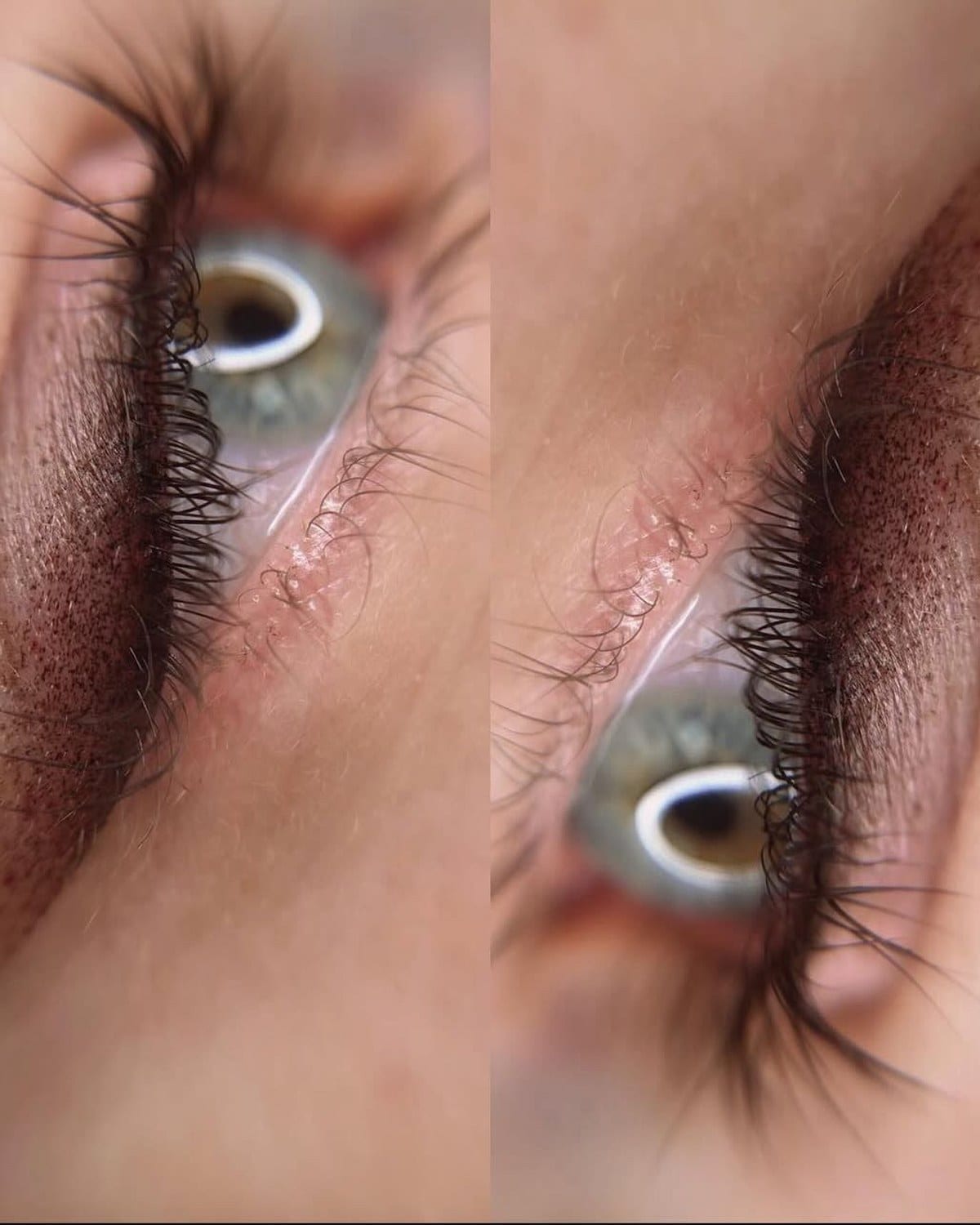
A record of results — in preparation. We publish photographs of our clients only with their consent.
Healing and aftercare
The first few days determine how well the pigment settles and how even the line ends up. There's one rule: keep the eye area dry, clean and untouched until it heals.
Don't rub, don't scratch, and don't pick at the scabs — this risks gaps in the line and pulling out pigment. Scabs must fall off on their own.
Wear glasses on the treatment day and during the first days of healing. Lenses come back only once you've healed and your lineriste gives the go-ahead.
Pencil, mascara, eyeshadow and eye makeup removal around the eye — only once healed. Before that, you risk infection and uneven colour.
Steam, chlorine and high heat soften scabs and encourage pigment to wash out. Skip these until healed.
Protect your eyes from the sun during healing (glasses). Afterwards, daily SPF around the eyes — UV fades colour fastest.
Apply a thin layer of the recommended balm gently, with a clean cotton pad or swab — not your finger. Otherwise: no wetting, no rubbing.
Permanent eyeliner
Permanent eyeliner, lash extensions/lifts and everyday pencil all solve a similar "problem", but in completely different ways — and they complement each other well:
Defines the lash line for years
Doesn't lengthen or curl the lashes themselves; requires healing and a touch-up
Works on the lashes themselves
Doesn't create a line at the lash base and doesn't replace eyeliner
Complete flexibility every day
Requires applying every morning; smudges and fades during the day
Eyeliner is rarely done in isolation from the rest of the face — it's usually part of a wider "wake up ready" plan. Your lineriste decides the order and spacing (especially when healing across several zones is involved) during consultation:
The best results often come from a combination: discreet, permanent lash-line enhancement plus lash lifts every few weeks. You always have the "base" of a defined eye, and the lashes add lightness and lift. These are two different tools for two different jobs.
Techniques and pigments
Under the umbrella term "permanent eyeliner" sit several techniques and pigment types. You don't pick these "off a shelf" — your lineriste selects them to match your eye shape, skin type, desired result and how the colour should fade over time.
Pigment deposited between the lashes, with no visible line — the most natural, least visually invasive result.
Dla kogoFirst-time treatments, men, anyone worried about a "made-up" look.
A clearly drawn line at the lashes, from thin to more defined, optionally with an extension at the corner.
Dla kogoAnyone who draws on eyeliner daily and wants a ready-made look.
A soft, smudged effect instead of a sharp line — closer to evening makeup.
Dla kogoAnyone who loves a sensual, hazy look.
Certified pigments chosen to fade to a warm, neutral tone — different from tattoo ink.
Dla kogoEvery variant; key to the colour ageing nicely.
Fact: Why does colour selection matter so much? A poorly chosen pigment around the eye can turn a cold, bluish shade over time. A good lineriste selects pigment "with fading in mind" — so that in a year the line still looks good, not just fresh straight after treatment.
Price list
Checking free hours…
From the magazine
Editorial pieces on how this treatment works in practice — what happens during the session, how to prepare, where the limits are and what the first days after look like.
See also
The result lastsUsually 1–3 years — fades naturally, we refresh it periodicallyJ’adore Instytut
Please note. Permanent makeup (PMU) is an aesthetic treatment that deposits pigment into the epidermis/skin; the result is long-lasting (typically several months to a few years, and requires periodic refreshing), fades naturally and is not permanent "forever". This is not a medical treatment. A touch-up/re-pigmentation session after around 4–6 weeks is standard. This text is for informational purposes. Indications, technique and colour selection, and contraindications are determined by a qualified lineriste during consultation.
Home care
Cosmetics matched to what your skin needs after a treatment — so the clinic effect lasts longer.
 eye areaMesoesteticAge Element Eye & Lip Contour Cream 20mlView in the shop(opens in a new tab)
 eye areaSelvert Thermal+ Pure Vitamin C Vitalizing Eye Contour CreamView in the shop(opens in a new tab)
 eye areaDiego Dalla PalmaSENSITIVE Soothing Eye Cream 15 mlView in the shop(opens in a new tab)
 eye areaMedik8Advanced Night Eye™ – Nourishing Night Cream for EyesView in the shop(opens in a new tab)
 eye areaMedik8Eyelift™ PeptidesView in the shop(opens in a new tab)
 eye areaSkeyndorCorrective Eye Contour Wrinkle FillerView in the shop(opens in a new tab)
 eye areaSkeyndorRedensifying Eye Contour Cream - EternalView in the shop(opens in a new tab)
 eye areaSelvert ThermalL'Esprit Derma Eye Bags & Dark Circles BalmView in the shop(opens in a new tab)