What you're actually seeing — and why it doesn't fade on its own
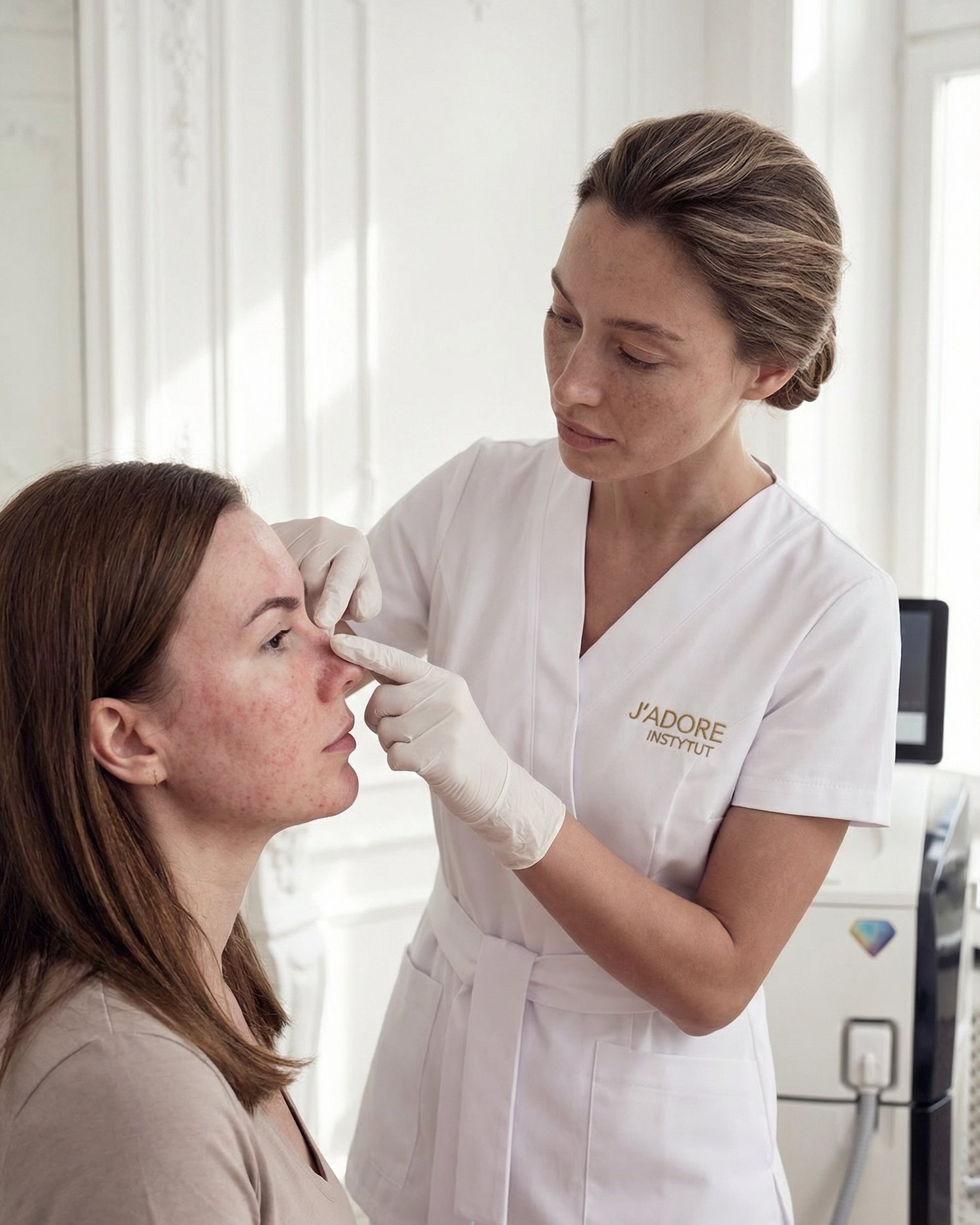
Before booking a treatment, it helps to understand what you're dealing with. Uneven skin tone in men is usually a combination of several things at once: sun-related hyperpigmentation, which skin accumulates over years (especially from your thirties onward), enlarged capillaries — especially on the nose and cheeks — and general redness from reactive skin or diffuse rosacea. Each of these has a different cause. But they share one thing: without active treatment, they don't go away. Skin doesn't "even itself out". SPF cream slows further damage, but it doesn't reverse what's already there.
Men's skin is thicker and better supplied with blood than women's, which can be an advantage — it ages more slowly. But that same thickness, combined with more active sebaceous glands, means hyperpigmentation and enlarged vessels sit deeper and respond less to cosmetics. This is where photorejuvenation comes in: it reaches layers no cream can access.
How photorejuvenation works — no technical spin
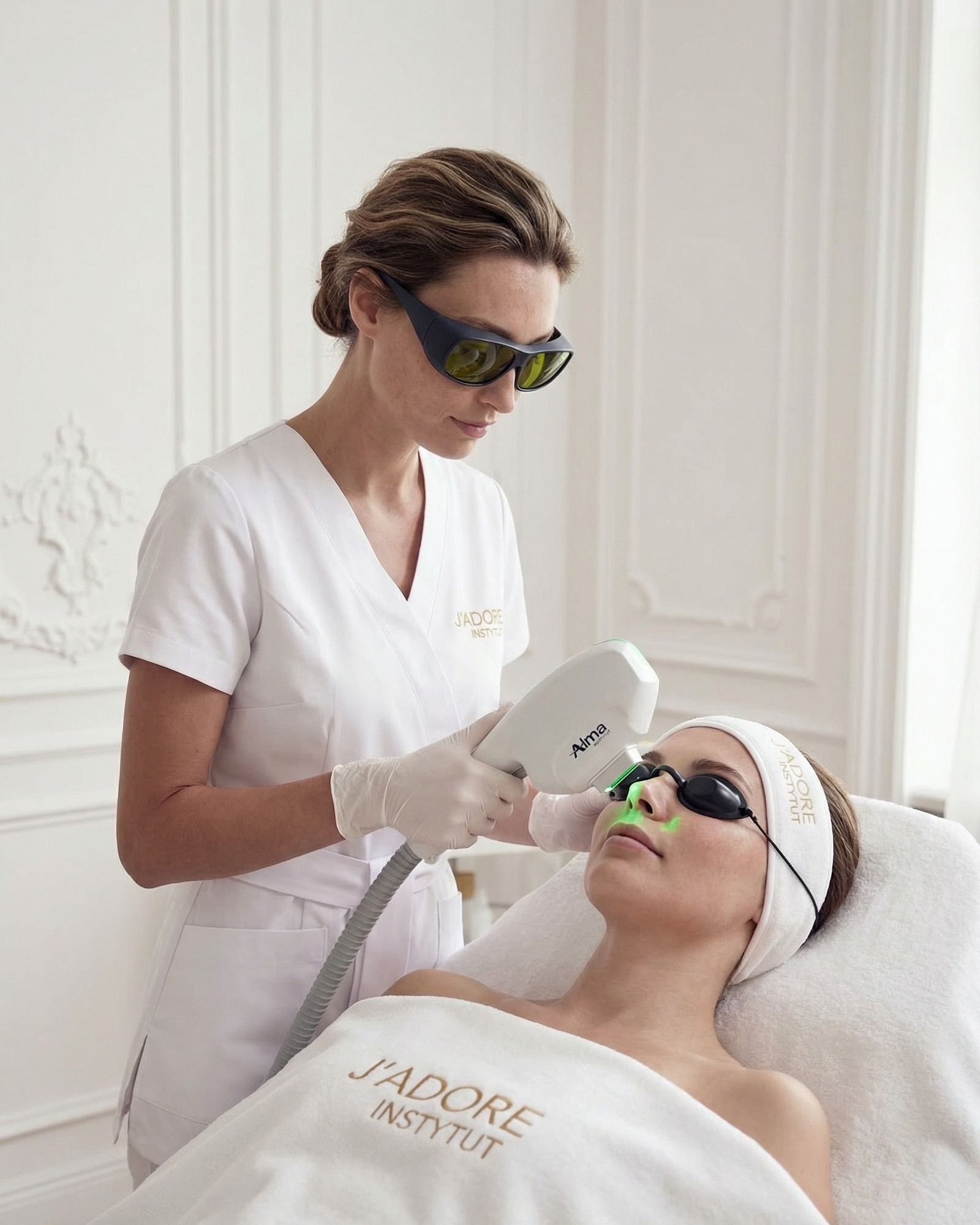
Photorejuvenation works by directing a light pulse at a specific target — pigment in hyperpigmentation, or haemoglobin in a blood vessel. Heat destroys the lesion from within, without damaging the surrounding skin. Hyperpigmentation gradually flakes off and fades. The vessel closes and gets reabsorbed. Results don't appear overnight — skin needs a few weeks to remodel — but progress is visible and measurable after each session.
Important: photorejuvenation isn't a "rejuvenating laser" in the sense that fractional or ablative lasers work. It doesn't change skin texture or the depth of wrinkles — it deals with colour and blood vessels. If your main concern is uneven skin tone, broken capillaries and dullness, this is the right tool. If you're looking for something for deep folds, your specialist will suggest a different approach.
What photorejuvenation does well
specific indications
- broken capillaries and enlarged blood vessels on the face
- sun-related and post-inflammatory hyperpigmentation
- uneven skin tone and redness
- mild rosacea and vascular reactivity
What NOT to do after the treatment
mistakes to avoid
- gym and sauna for 48 hours (heat intensifies the reaction)
- sun exposure without SPF for at least a week
- scratching or picking at flaking pigment
What to expect during your visit — and how long before no one can tell
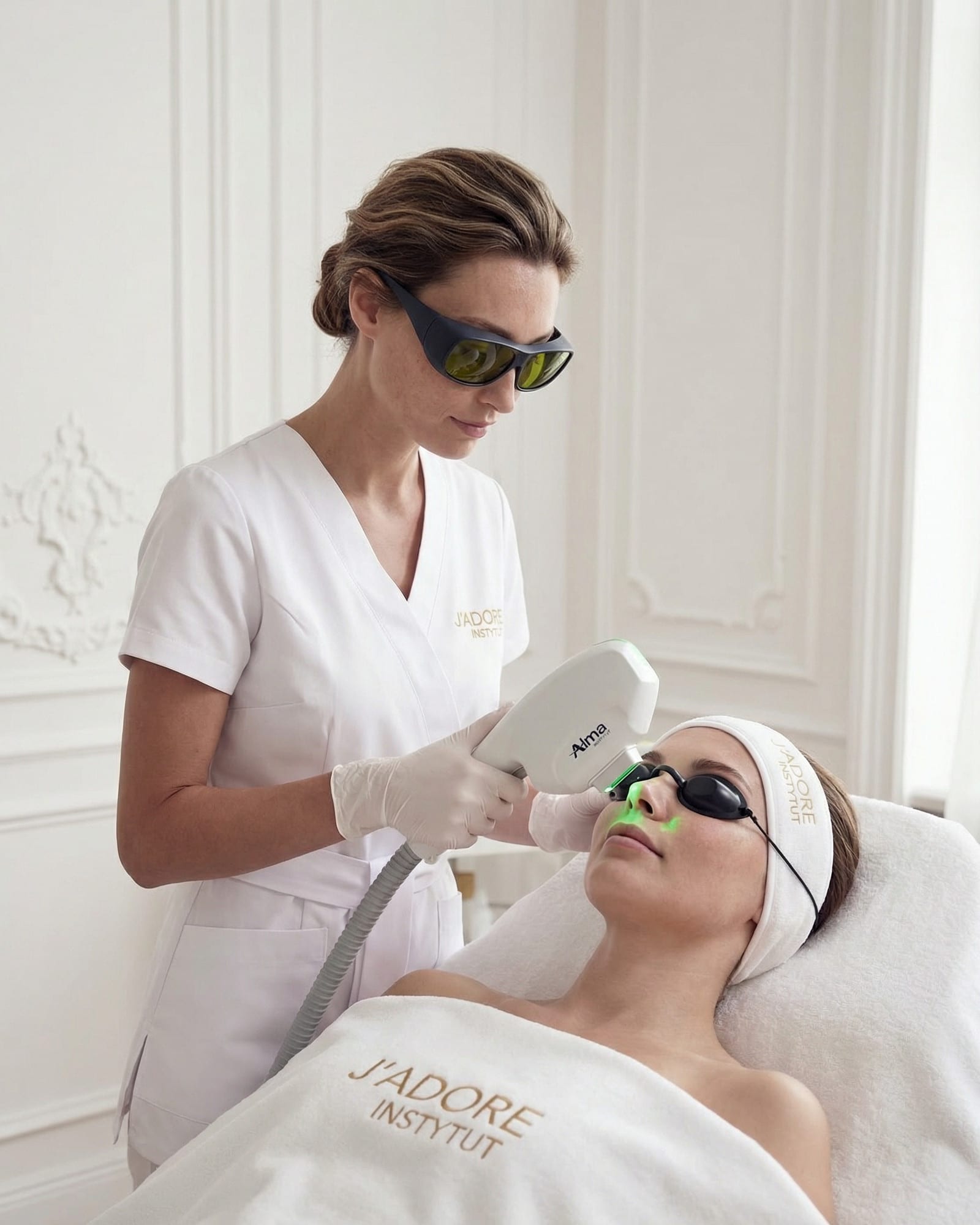
Before the treatment, there's a short consultation — your specialist examines the affected areas, assesses your skin type and sets out a plan. A contact gel is applied to the face, and the applicator moves across the skin. The sensation is often described as warm snapping — uncomfortable, but definitely tolerable. The whole treatment takes anywhere from ten to several dozen minutes, depending on the area.
When you leave the salon, your skin is slightly red — as if you'd spent half an hour in the wind. This is normal and fades within hours. Over the following days, hyperpigmentation gets temporarily darker — this is part of the process: pigment rises to the surface before it flakes off. Broken capillaries may look more intense for a few days. Most men return to work the next day without any issue.
- 01
Consultation
Assessment of the affected areas, skin type, and number of sessions needed. No pressure to decide.
- 02
Treatment
Contact gel, applicator over the affected area. Warmth, not pain.
- 03
A few days later
Mild redness. Hyperpigmentation may look temporarily darker — this is expected.
- 04
2–4 weeks
Pigment flakes off, capillaries get reabsorbed. Skin tone gradually evens out.
- 05
Next session
Depending on the changes and your goal — usually a few sessions, a few weeks apart.
Men and photorejuvenation — what's different
Thicker skin and stronger vascularity mean that men's response to the treatment can be more intense — both in terms of effectiveness and the temporary reaction. Vessel bruising and pigment flaking can be somewhat more visible. This doesn't mean something's gone wrong — quite the opposite: a strong reaction often signals a good result.
There are also areas specific to men. The nose and cheeks are classic spots for broken capillaries in men — especially those who spend a lot of time outdoors or have a tendency towards rosacea. The neck and décolletage are often overlooked, yet this is often where sun-related hyperpigmentation shows up most. A good specialist will assess the whole area, not just the face.
How photorejuvenation fits into a broader plan
Photorejuvenation targets specific pigment and vascular changes — but men's skin often needs more than one tool. Uneven skin tone is usually a cumulative result: years of sun exposure, a tendency towards reactivity, possibly past acne. A good plan often combines photorejuvenation with treatments that strengthen skin structure or reduce pores and dullness. This isn't a "beauty package" — it's a strategy as specific as a car repair plan: you fix the actual damage, not just polish the paintwork.
Chemical peels
These reinforce the tone-evening effect — they target shallow hyperpigmentation that a light pulse might miss. A good option for a separate session, or as skin preparation.
Mesotherapy / biorevitalisation
Hydration and structural support for skin after a series of photorejuvenation sessions. Skin responds better to active ingredients after laser treatment — a sensible combination within a plan spanning several months.
Cleansing and sebum regulation
Men's skin often produces excess sebum, which intensifies uneven skin tone. A treatment that regulates sebaceous gland activity can help maintain photorejuvenation results for longer.
When NOT to have photorejuvenation
A results-driven approach also means knowing when something isn't right for you. Photorejuvenation is not performed on freshly tanned skin — pigment in sun-exposed skin absorbs the light pulse differently, and the risk of adverse reactions rises. The same applies to active inflammatory conditions (acne flare-ups), moles, and certain medications (oral retinol, for example). During your consultation, your specialist will ask about these directly — not to put you off, but to choose the right timing.
- Active tan — wait at least 4 weeks after intense sun exposure.
- Darker skin phototypes — require extra caution and a customised protocol.
- Active inflammatory conditions — acute acne, rosacea flare-ups.
- Certain photosensitising medications — tell your specialist what you're taking.