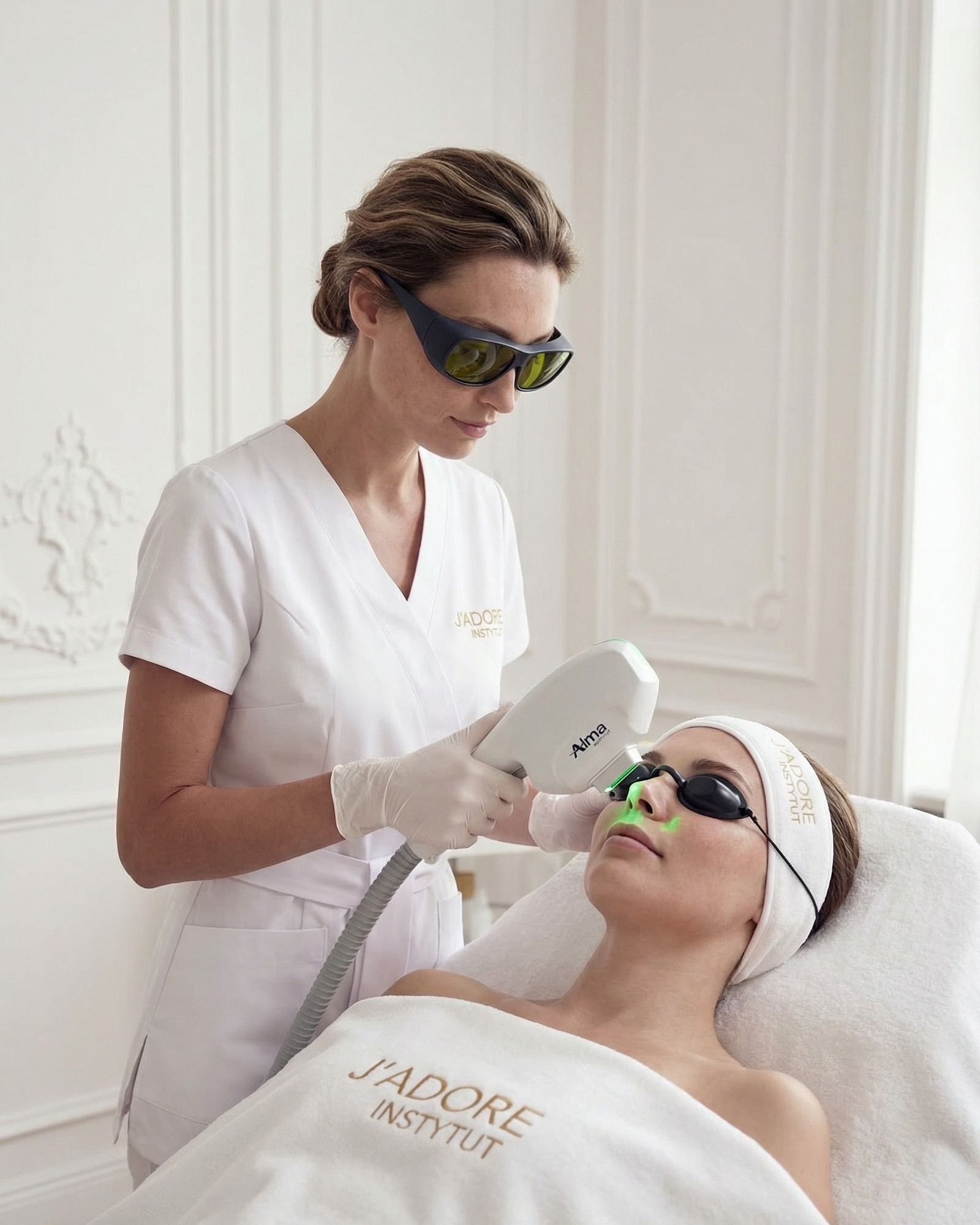
Two tools, two different logics
Before comparing them, it helps to understand what each device actually does. Nd:YAG is a laser — it emits a single, precisely defined wavelength that's particularly well absorbed by haemoglobin. This lets the energy target almost exclusively the vessel, without affecting surrounding tissue. IPL (Intense Pulsed Light) is different — it's broad-spectrum pulsed light that reaches haemoglobin, melanin and water at the same time. This is what makes IPL "broader" in effect: a single session can address broken capillaries, pigmentation and overall skin tone together.
Nd:YAG
precise vessel closure
- broken capillaries on the face and body
- spider veins, telangiectasia, vascular redness
- deeper-seated vascular changes
- darker or tanned skin — often the safer option
- can help with vascular pigmentation (redness)
IPL
multi-purpose skin evening
- fine capillaries and superficial redness
- sun-induced pigmentation, age spots, hormonal pigmentation (on lighter skin tones)
- even skin tone — "skin without a filter"
- comprehensive improvement: broken capillaries and pigmentation in one series
- photo-rejuvenation: improved texture and skin firmness

When to choose Nd:YAG, and when IPL — a simple decision map
Instead of a complicated table, here are a few questions to help steer your conversation with a cosmetologist or doctor:
- Do you have clear, visible broken capillaries — blue-red threads or spider veins on your cheeks, nose or legs? This is the classic territory for Nd:YAG, which can often close a specific vessel after just a few sessions.
- Do you have generalised redness, or skin that looks uneven in tone without one specific mark? IPL can work more broadly and even out the tone at the same time.
- Do you have sun-induced pigmentation or age spots (without dominant broken capillaries)? IPL is the more common choice here — it handles melanin in the superficial layers of lighter skin more effectively.
- Do you have darker skin, or have you recently been in the sun? Nd:YAG is usually the safer option — IPL carries a higher risk on darker skin tones.
- Do you have several concerns at once — broken capillaries, pigmentation and dullness? The specialist may suggest an IPL series, or a combination of methods spread over time.
What the results look like — realistic expectations
Both treatments can produce clear results — but a few rules help you avoid disappointment:
- Results build over time, not instantly. After Nd:YAG, the vessel may look more prominent for a few days before it fades. After IPL, pigmentation often darkens temporarily before flaking off and lightening.
- The number of sessions matters. For extensive vascular changes or deeper pigmentation, a series of treatments is usually needed — a single session may not be enough.
- Sun exposure is the main enemy of results. After both Nd:YAG and IPL, skin is sensitive to UV radiation. Sun protection before, during and for several weeks after the series isn't a suggestion — it's a condition for lasting results.
- Broken capillaries and pigmentation tend to recur. A laser can close a vessel or lighten pigmentation, but it doesn't change your skin's underlying predisposition. Sun protection and occasional maintenance sessions are often part of a long-term plan.
What you gain by combining both approaches
In practice, Nd:YAG and IPL rarely "compete" with each other in a cosmetology salon — more often, they complement one another as part of a planned series of treatments. The logic behind combining them is simple: Nd:YAG closes specific vessels with precision, and IPL, at a later stage, evens out overall skin tone and addresses pigmentation the earlier treatment didn't reach. The specialist always decides on the order and the intervals between sessions — choosing the right tools is one thing, but timing and spacing require separate expertise.
Nd:YAG + IPL series
First, closing clearly visible broken capillaries, then evening out skin tone. Recommended for skin with a dominant vascular problem alongside pigmentation.
IPL + needle mesotherapy
IPL evens out skin tone, while mesotherapy restores hydration and skin density. A visual and structural result in one plan.
Nd:YAG for broken capillaries + acid peels
Gentle peels after a completed laser series can support skin evening — but only once fully healed, and with the specialist's approval.