Three technologies, three different strategies
The simplest way to remember it: ClearLift tightens and rejuvenates skin "from below", fractional laser remodels it more intensely and deeply, IPL corrects what you see in colour. Each technology targets a different problem and triggers repair in a different way. That's exactly why they so often complement each other — and why they're so often confused.
ClearLift
tightens and rejuvenates without touching the epidermis
- loss of skin firmness and elasticity
- fine lines, laxity, dull-looking skin
- eye area, lips, neck, décolletage
- no recovery time after the treatment
- can be performed regularly, as a series
Fractional laser
intensively remodels deeper layers of the skin
- scars (acne scars, wound scars, stretch marks)
- deeper wrinkles and visible texture irregularities
- significant loss of density, "worn-out" skin
- results can be very noticeable after a few sessions
IPL (intense pulsed light)
eliminates visible changes in skin colour
- sun-induced pigmentation, age spots
- enlarged blood vessels, redness, rosacea
- uneven facial skin tone
- can also target hair (hair removal)
How to recognise what you need — a mirror test
Before a specialist assesses your skin, you can run a quick test yourself. It gives you a clear starting point for the conversation:
- You look closely, and the first thing you notice is colour: spots, redness, thread veins, uneven tone → direction: IPL.
- Colour is fine, but skin feels "tired" and less firm than a year ago — fine lines, no radiance → direction: ClearLift.
- A visible scar, a deeper wrinkle, texture irregularities, stretch marks — a problem you can see and touch → direction: fractional laser.
- You see both colour issues and laxity → this often means ClearLift + IPL, sequenced by a specialist.
Of course, mature or "tired" skin rarely has just one problem — that's why good treatment plans combine technologies. But naming the problem that bothers you most means your consultation starts with something specific, not with "I'd like to do something about this".
ClearLift up close — lifting with zero downtime
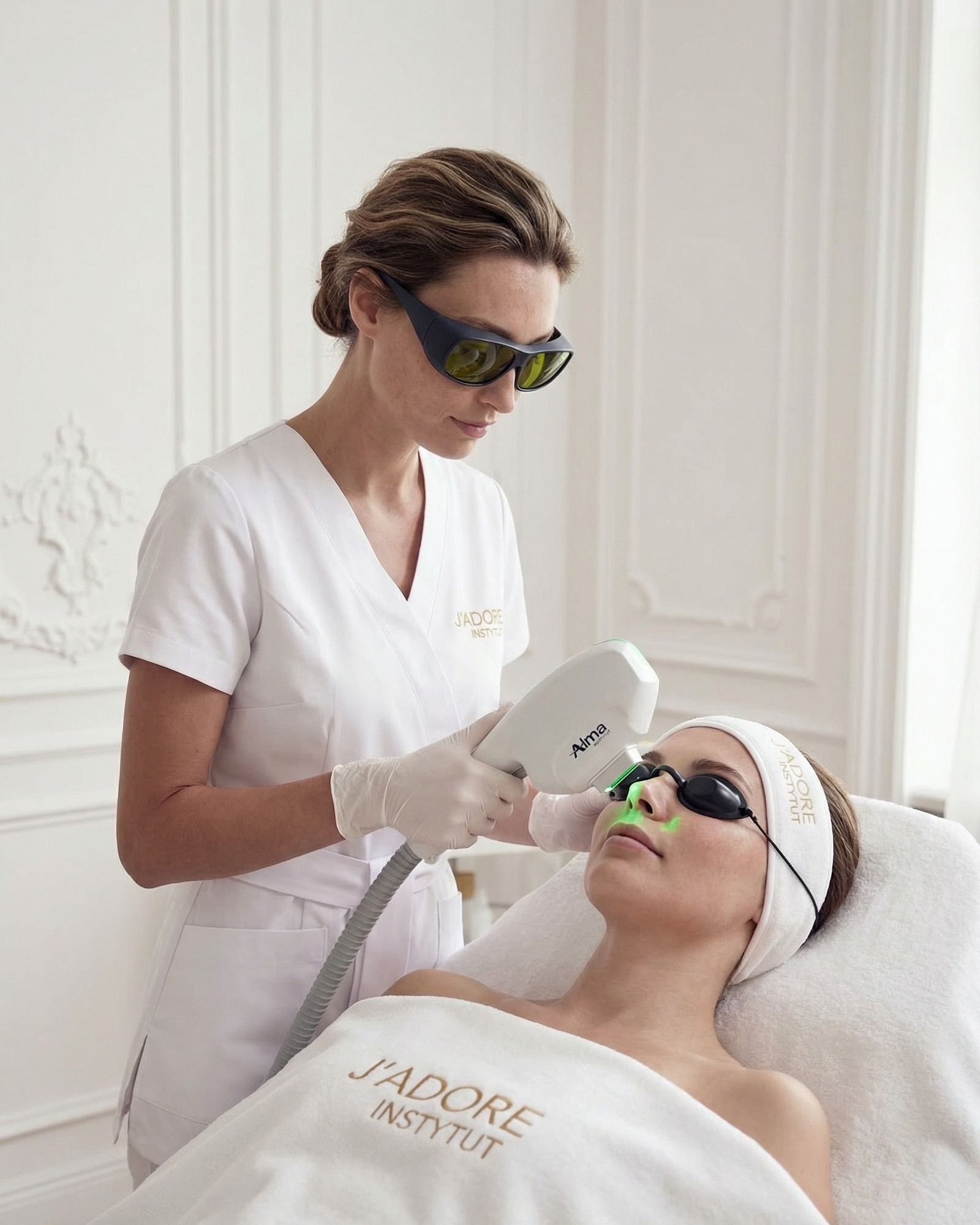
ClearLift is sometimes called the "lunchtime laser" — not because it's weaker, but because you can return to your daily routine straight after. Energy reaches deeper skin layers without touching the epidermis. For many people, skin gradually becomes firmer, more hydrated and more radiant. The effect is subtle after the first session and often builds with each one that follows.
Fractional laser up close — deep remodelling
Fractional laser suits skin that needs a deeper intervention. It works by creating micro-injuries in the skin, which trigger an intense repair process — collagen and elastin production, increased density and texture remodelling. For many people, results visible after a few sessions can be very pronounced, especially with acne scars, stretch marks and deeper wrinkles.
- 01
Preparation
Consultation, skin assessment, and often a few days of skin preparation (a cream with retinoid or acids) — depending on your indications and the chosen treatment parameters.
- 02
Treatment
The device fractionates the laser beam into thousands of micro-columns of energy. Some discomfort is possible, eased with numbing cream.
- 03
The first few days
Skin is red and may flake — this is a natural repair response, not a sign of a problem. It usually lasts a few days.
- 04
Result
Skin gradually becomes smoother and denser. Full results appear after several weeks, as collagen continues to mature.
IPL up close — tackling colour
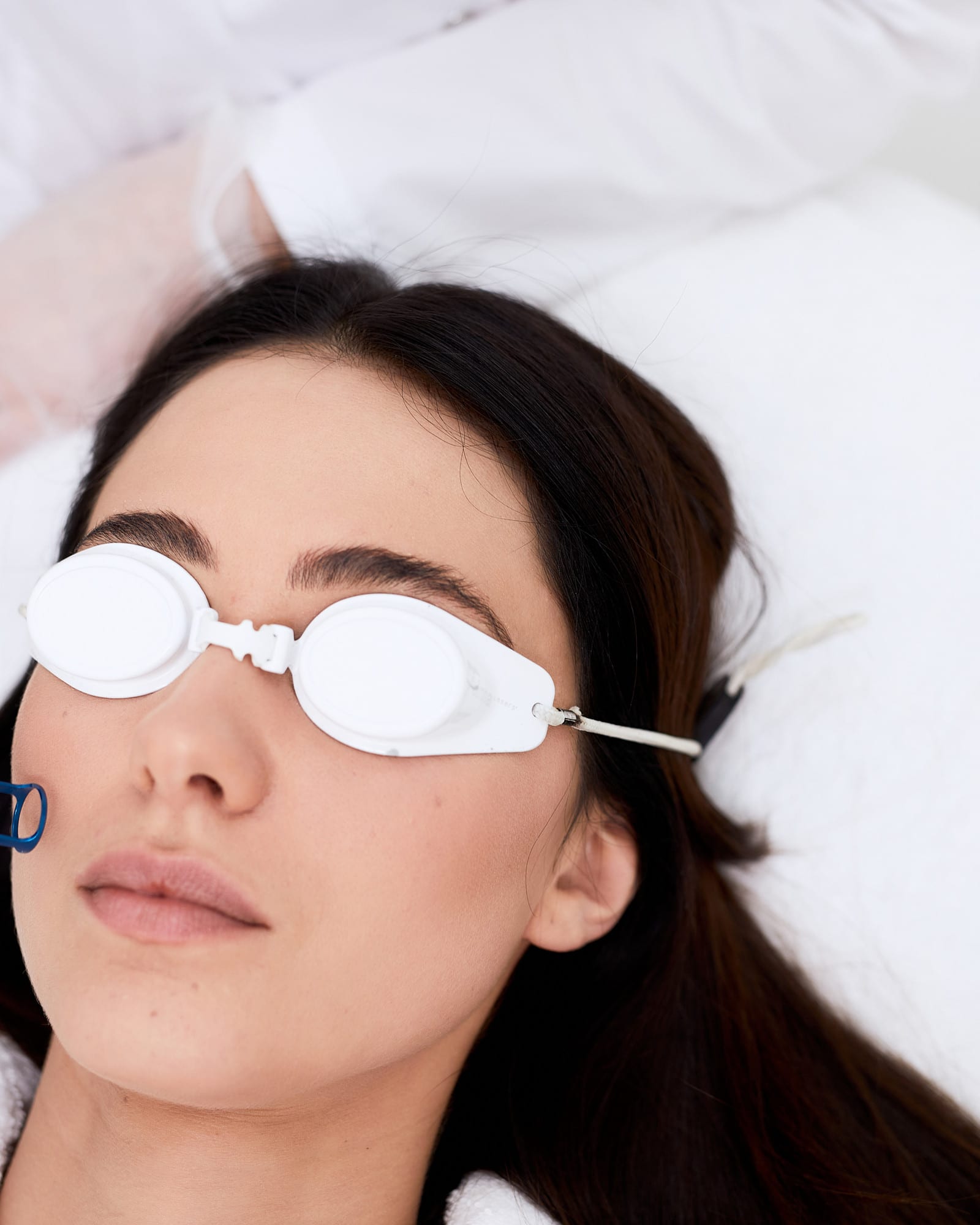
IPL (Intense Pulsed Light) is a technology that "seeks out colour". Absorbed by melanin or haemoglobin, it converts to heat and breaks down pigment structures or closes off blood vessels. For many people, a series of IPL sessions can noticeably even out skin tone, reduce thread veins and calm redness — the effect can be visible after the very first session.
When to combine them — the logic of a treatment plan
The best results — especially for mature or demanding skin — rarely come from a single treatment. More often, it's a sensible plan that addresses different layers of the problem. The logic is simple:
ClearLift + IPL
A classic pairing for skin that has lost firmness and has an uneven tone. ClearLift rejuvenates the structure, IPL clears the colour. Often planned within the same series, sometimes in the same session.
Fractional laser + IPL
For scars with post-inflammatory red marks — fractional laser repairs the texture, IPL fades the pigmentation and redness. Usually separate sessions, spaced appropriately apart.
ClearLift as a regular series
For people who want to maintain skin condition systematically — for example, once every 4–6 weeks as a recurring treatment. Gradual, cumulative results.
Fractional laser + home care
You can strengthen fractional laser results with good home care using retinoids or peptides — your specialist will advise what to introduce, and when, after the treatment.
A good treatment plan always starts with one question: what problem are we solving? Only the answer — texture or colour, laxity or scarring, maintenance or repair — determines which tool, or combination of tools, makes sense. If someone suggests a specific technology straight away, without this conversation, it's worth asking exactly which problem it's meant to address.