What exactly is brow lamination — so we can debunk myths fairly
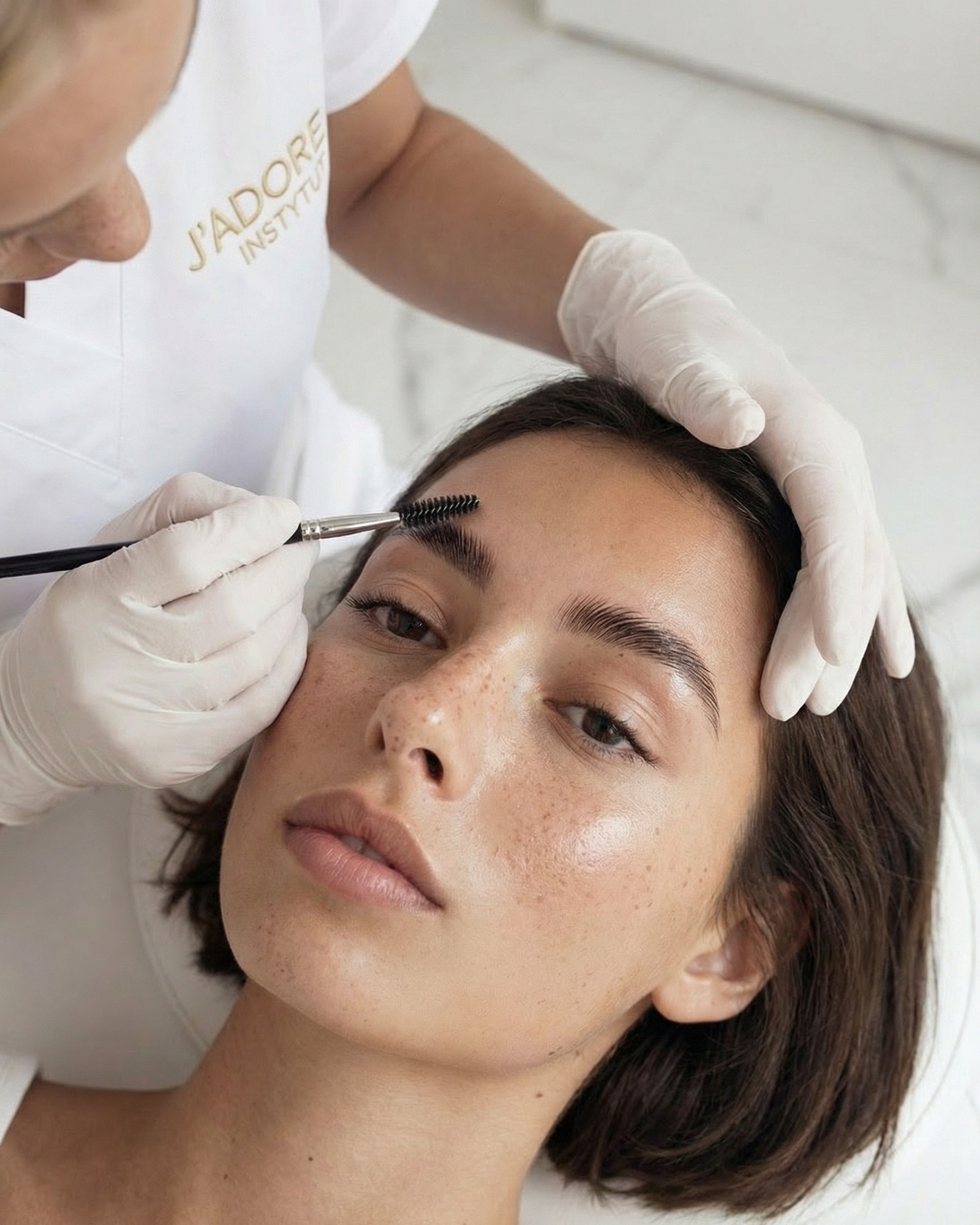
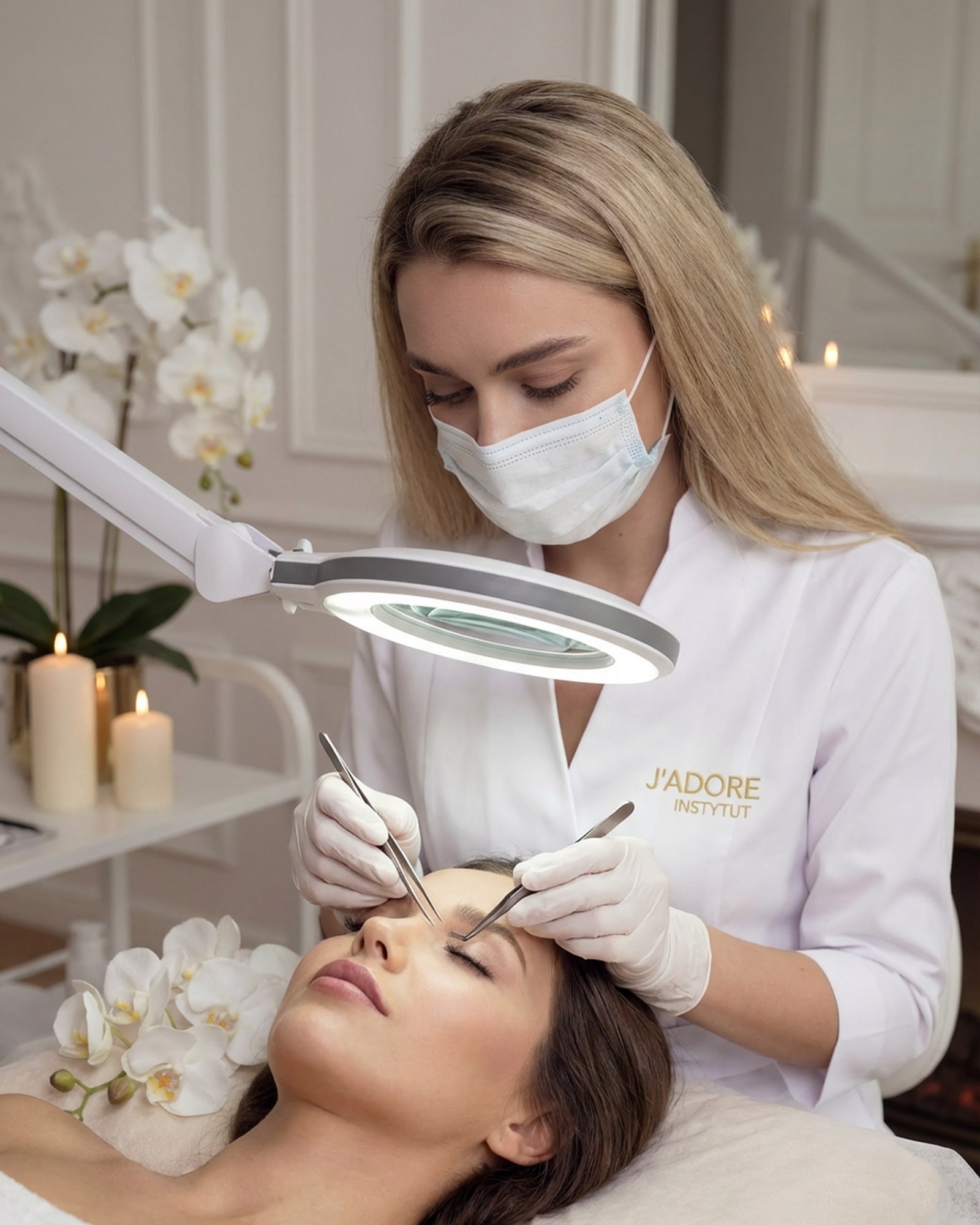
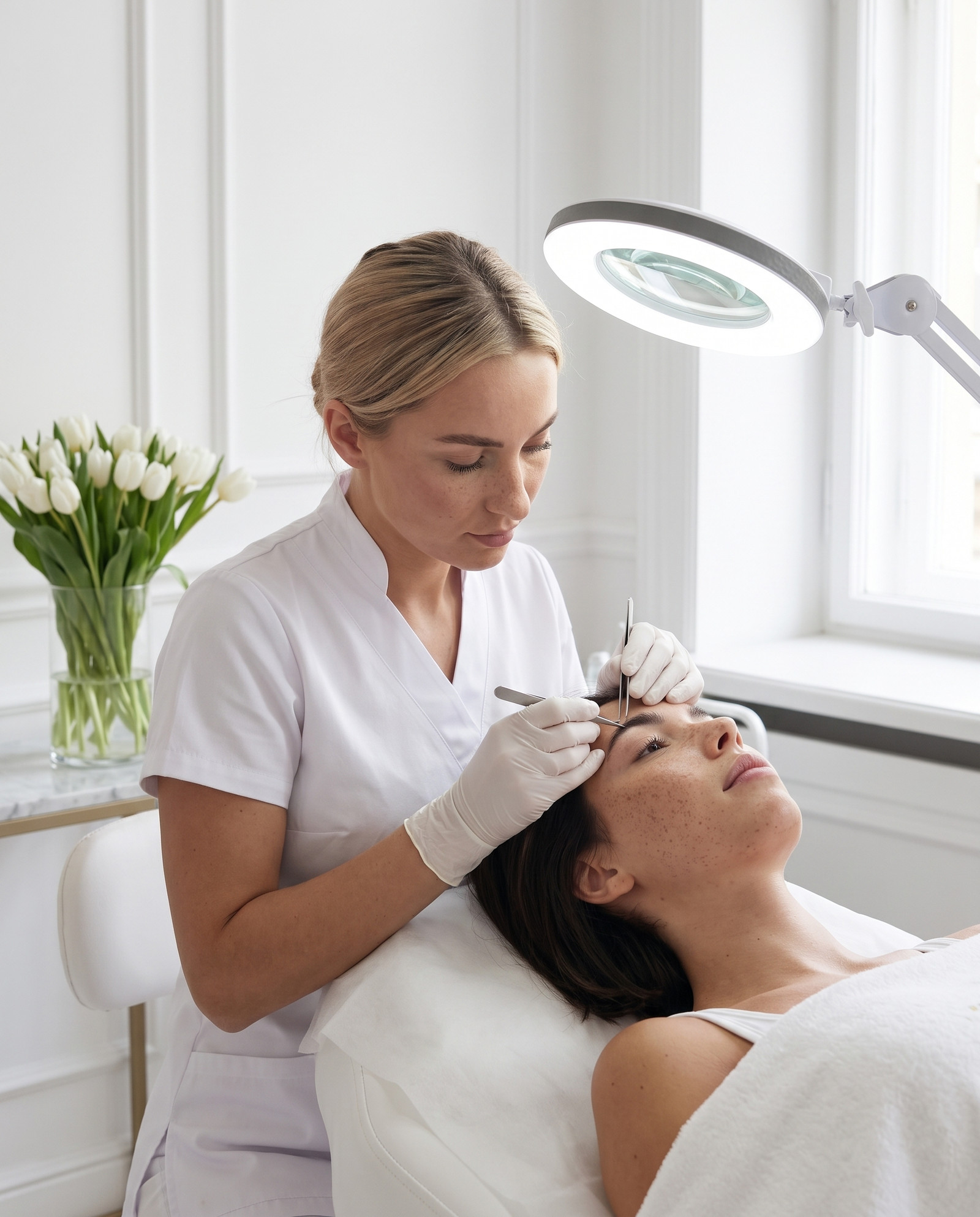
Brow lamination is a treatment that changes the hair structure from within — much like perming or straightening scalp hair. Products are applied in sequence. The first opens the cuticle and softens the inner structure. The second sets the new shape, while the third closes the cuticle and restores the hair. The result is a brow hair that “remembers” its direction: upwards, sideways or downwards — depending on how it is positioned during the treatment.
This is an important starting point: lamination uses chemicals that affect the hair structure, rather than simply colouring brows with gel. That is why asking “can it cause harm?” makes sense — as it does with any treatment that chemically modifies tissue. The answer is yes, but only in specific situations. These can be identified in advance and avoided.
Myths that cause harm — in both directions
Myth 1: “Lamination damages brow hairs forever.” This is the most common concern we hear before a first treatment. Lamination changes the hair structure — but does it damage it? Only when the product is too strong, left on for too long or applied to already weakened brow hairs. Correctly performed lamination on healthy brows does not cause permanent damage — the hair continues to grow, and the effect simply fades after a few weeks. Problems arise when someone has lamination every three weeks for a year on brow hairs that have not had time to recover. Lamination itself is not damaging them — excessive frequency is.
Myth 2: “You can have it every month because it fades quickly.” This is the other extreme. It can be more harmful than the first because it exposes brow hairs to real damage without any warning signs. The effect of lamination usually lasts several weeks. But the fact that it has visually “faded” does not mean the hair has fully rebuilt its structure. As with a perm, lamination is performed with the understanding that hair needs a break between treatments. Too short an interval means applying chemicals to hair that has not had time to recover.
Myth 3: “The result is the same regardless of who performs it.” Lamination may seem simple — apply, wait, remove. In reality, three factors distinguish a good treatment from a poor one: product processing time (minutes matter, and every brow is different), the quality and chemical composition of the products (products vary significantly, and not all account for the delicate skin around the eyes) and the initial assessment (weakened, sparse or previously coloured hairs require a different approach from healthy ones). A technician who skips this final step performs lamination “blind”.
Myth 4: “Lamination has no contraindications.” It does — and overlooking them is the quickest route to irritation or damage. The list is not long, but it is worth knowing before you book.
Who genuinely needs to be cautious — a straightforward list
There are situations where lamination is not prohibited — but requires assessment by a specialist before the treatment, not afterwards. Below are the genuine concerns we identify:
- Very sparse or weakened brows — hairs that break or fall out with gentle touch are unlikely to tolerate the treatment without worsening the problem.
- Previously coloured or henna-tinted brows — colouring changes the hair structure. Lamination on previously processed hair creates a double chemical burden.
- Active irritation, eczema or psoriasis around the brows — lamination products are not neutral to the skin. With a damaged barrier, they may trigger a stronger reaction.
- Allergy to ingredients in lamination products — this particularly applies to people with sensitivity to cysteamine or other keratin-reducing substances. A patch test before the treatment is standard, not optional.
- Pregnancy and breastfeeding — the precautionary principle applies here. There are no studies confirming the safety of these chemicals during this period, so most specialists advise against it.
- Another chemical brow treatment performed very recently — colouring, henna or lifting. Each of these procedures “processes” the brow hair. Too little time between them creates a real risk of dryness or breakage.
Dryness — what it looks like, why it occurs and what to do
Dryness in brow hairs after lamination is the most common genuine side effect — and also the one most often overlooked. After the treatment, hairs may feel rough, brittle, dull and more difficult to style than before. This signals that the chemicals have removed more moisture and lipids than the nourishing product applied during the third stage could restore.
Dryness does not hurt or look dramatic — so many people do not recognise it, or assume that “this is how it should be”. It is not. Well-performed lamination leaves brow hairs soft and glossy, not dry and brittle. If your brows feel as though they “crunch” when touched after the treatment, it suggests that either the chemicals were too strong or the nourishing stage was too short.
How often is too often — and where the monthly lamination myth came from
Frequency is one area where online advice is particularly chaotic. You may find recommendations to repeat the treatment every four weeks — and others saying that once a quarter is the minimum interval. What is the reality?
Each brow hair has its own natural cycle — it grows, matures and falls out. Lamination changes its shape chemically, but does not stop this cycle. The treatment effect visually fades with the natural replacement of brow hairs — older laminated hairs gradually grow out, while new hairs grow in without the lamination effect. This process usually takes six to ten weeks — and this is the natural interval between treatments.
Lamination too often (under 6 weeks)
Risk — not a recommendation
- Hair exposed to chemicals before it has had time to recover
- Increasing dryness with every subsequent session
- Possible weakening and brittleness of brow hairs after several months
- Risk of irritation to the skin around the eyes through frequent contact with products
Optimal interval (8–10+ weeks)
An approach that delivers long-term results
- The hair has time to recover naturally between treatments
- The result of each subsequent lamination may be comparable or better
- The skin around the eyes is not excessively exposed to chemicals
- It is easier to assess how your brows respond to the treatment — and select the next protocol

Lamination and brow lifting — a difference worth knowing
“Brow lifting” is also offered in salons, and some people treat it as a synonym for lamination. They are not the same. Lamination focuses on the brow hair — its direction and shape. Lifting (brow lamination in the narrower sense, or other restorative and shaping treatments) may involve a broader protocol: follicle nourishment, line styling and colour enhancement. Differences in products, protocols and results can be significant. The same term does not always mean the same thing in different salons. Before the treatment, it is always worth asking which specific protocol is used and what to expect.
When lamination is a great idea — to end fairly
This article has focused on limitations — because they are discussed too rarely. But for the full picture: brow lamination is a safe treatment for the vast majority of people and delivers clear, lasting results. It works best for brows that are full but unruly — growing in different directions, difficult to style or “escaping” after using cosmetics. It also creates the appearance of fuller brows without make-up. For many people — both women and men — this is why they return regularly.
The key is simple: a thorough consultation, accurate assessment and the right interval between treatments. If your specialist asks when you last tinted your brows, whether your skin is allergy-prone and how long it has been since your previous lamination, it is not procedure for procedure’s sake. This information determines whether the treatment will be safe and effective.