The Korean 10-step skincare routine — does it really work in the Polish climate?
K-beauty, the Polish way — fewer steps, the same result.
7 min read10:06 of audiowritten for women
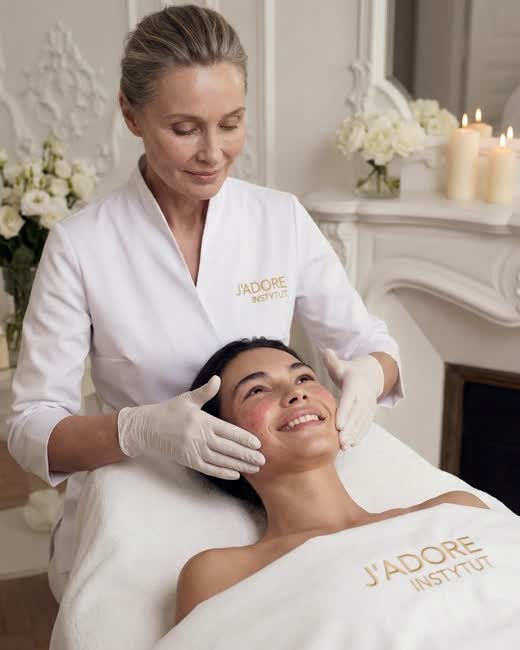
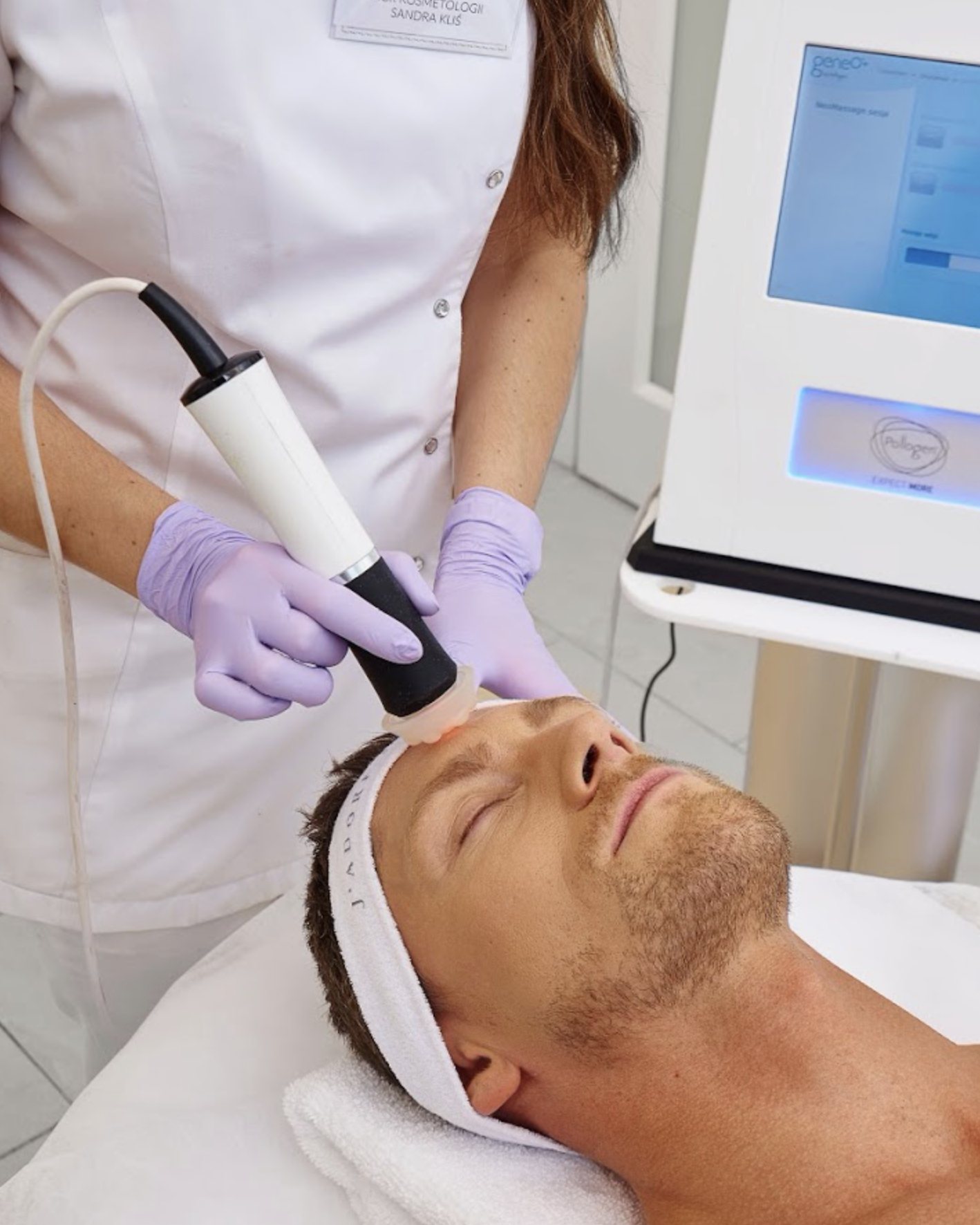
Illustrative photo. It shows an example of how the treatment is performed.
You are listening0:00 of 10:06
Listen to the article
read by Leda · 10:06
0:0010:06
7 min readread by Leda10 March 2026
Korean skincare philosophy isn't a passing trend. It treats skin as a long-term investment. The trouble starts when a 10-step ritual from Seoul lands in a Polish flat with dry air and central heating on full. We look at which steps make sense in our climate — and which ones you can skip without worry.
01
Where the 10 steps come from
K-beauty (Korean beauty) isn't a TikTok trend. It's a skincare philosophy that's been part of South Korean culture for decades. Korean women treat their skin as a long-term investment — not "fix it when there's a problem", but "look after it daily so problems never arise". There's real wisdom in that.
The trouble starts when this philosophy lands on Instagram and turns into a dogma: 10 steps, or you're lazy. The truth is, even in Korea, not every woman does 10 steps daily. It's a bit like Japanese sushi — in Tokyo, people eat it 2–3 times a month, not for lunch every day.
02
The legendary 10 steps — what are they, exactly?
For the record, here's the full list of the Korean ritual:
Cleansing oil — dissolves SPF, makeup and sebum
Foam or gel cleanser — removes any remaining residue
Toner — restores pH and hydrates
Essence — light hydration, preps the skin
Serum/ampoule — concentrated active ingredients
Ampoule (optional) — even more concentrated ingredients
Sheet mask — intensive hydration/nourishment
Eye cream — care for the eye area
Moisturiser — seals in hydration
SPF (morning) — sun protection
It looks beautiful in an infographic. In practice? Steps 5 and 6 are often the same thing in two bottles. And in a Polish flat in winter, not all these layers make sense.
03
Polish reality vs the Korean ideal
Before we decide which steps to keep, here are a few facts about our climate that change the rules of the game.
The key difference? Indoor humidity. In Korea, humidity is high enough that light layers — toner, essence, serum — have moisture in the air to draw on. In a Polish flat in winter, with humidity around 20%, applying hyaluronic acid without an occlusive layer is like putting a sponge in an oven. Instead of hydrating, it can pull water out of the skin.
That's why many women in Poland who tried K-beauty in winter felt the opposite effect: dryness, flaking, irritation. Not because K-beauty doesn't work. Because it doesn't work the same way in every climate.
04
What to keep — the Polish version of K-beauty
05
What to skip — overkill in our climate
06
The Polish version of K-beauty: 5 steps, zero compromise
A K-beauty-inspired routine, adapted to the Polish climate. Fewer steps, the same result — if the products are well chosen.
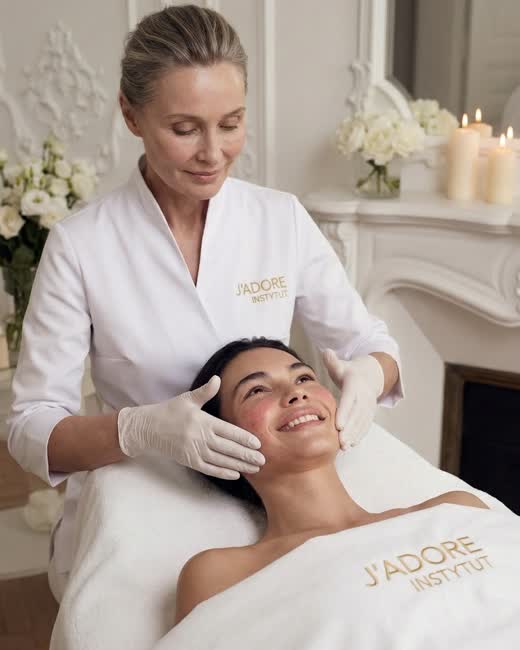
Illustrative photo. It shows an example of how the treatment is performed.
07
K-beauty meets the beauty salon
The Korean ideal of skin has a name: "chok chok" (촉촉) — literally "juicy, soft, plump with moisture". It's the kind of skin that looks like dew on a flower petal.
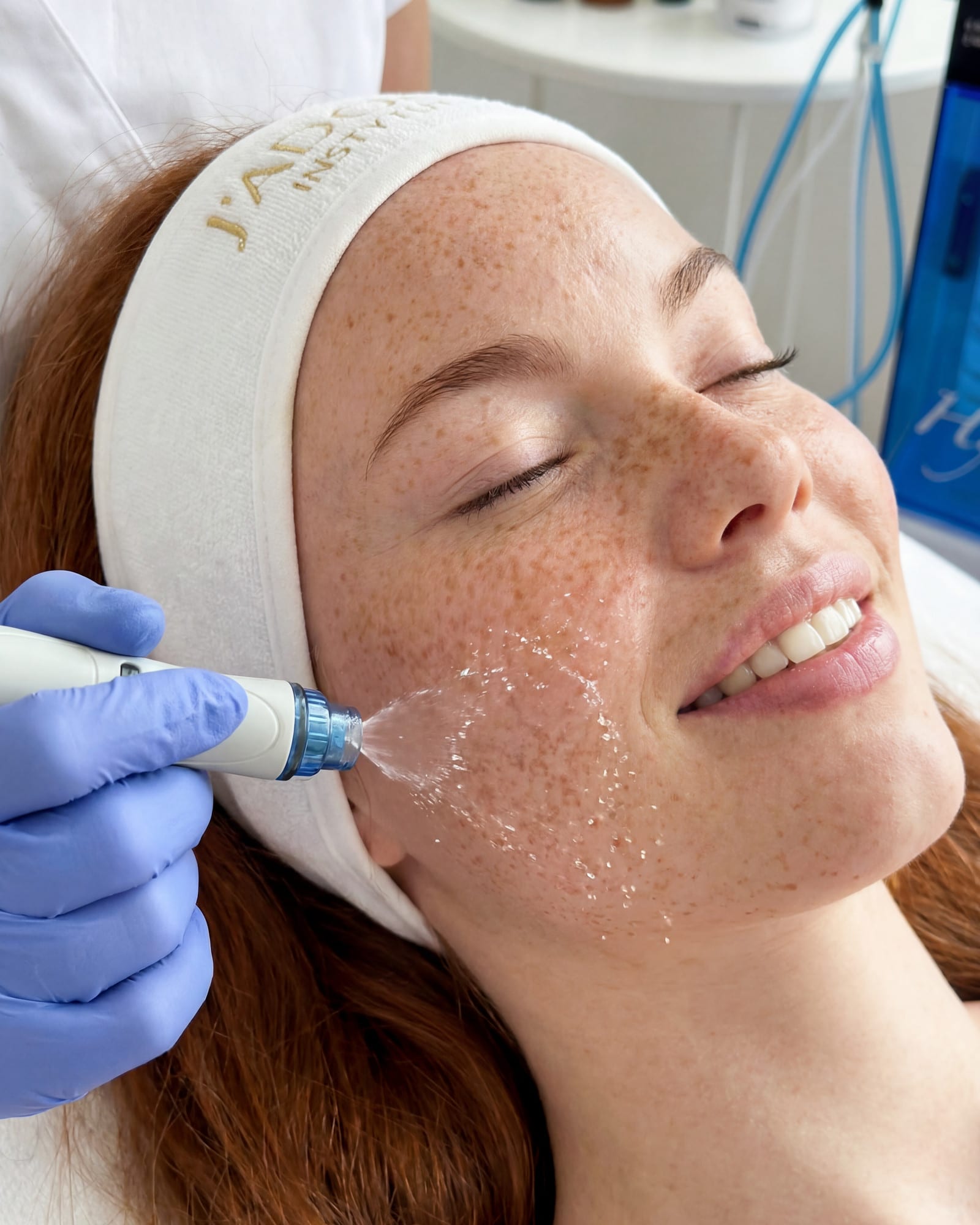
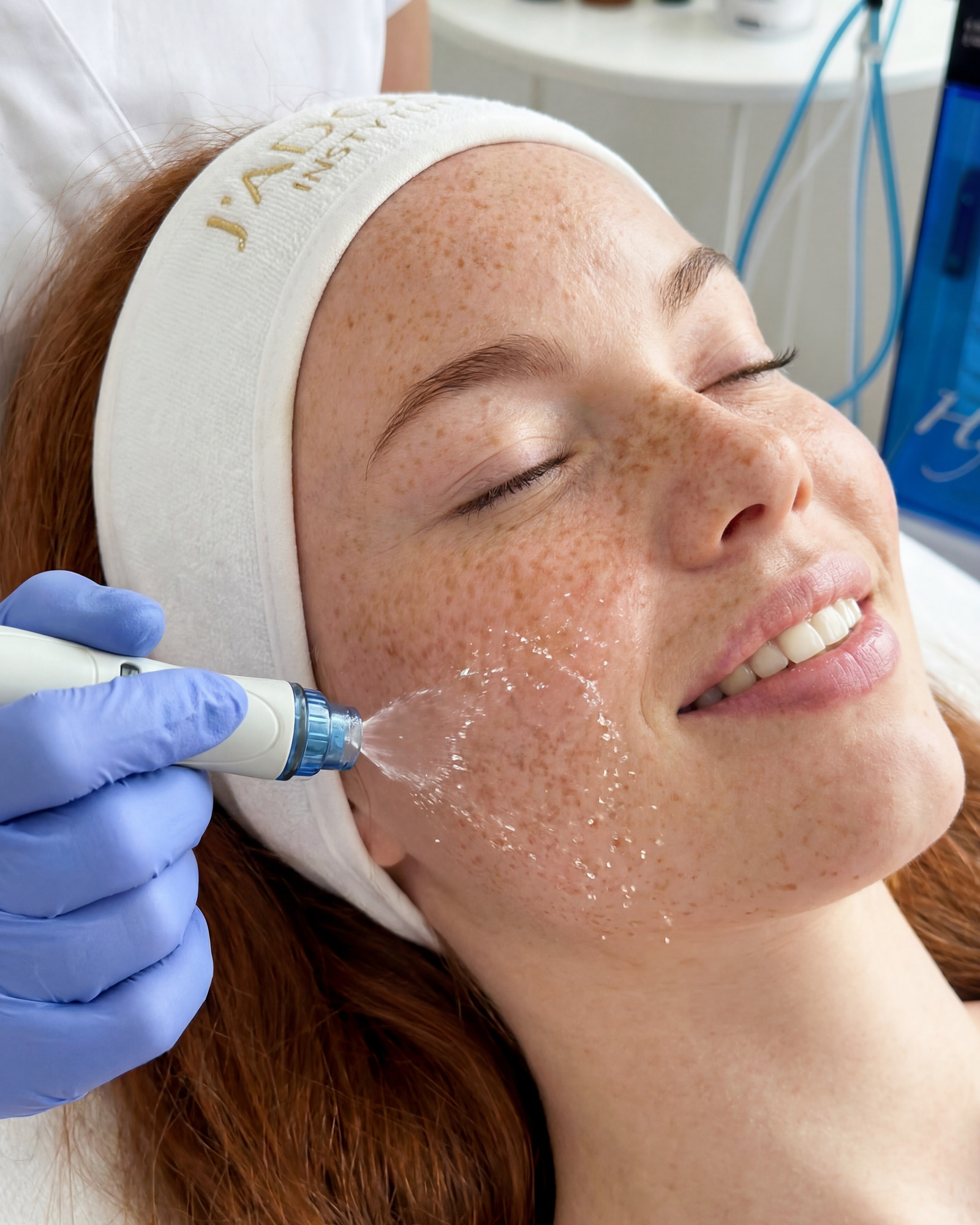
What do they have done? HydraFacial (or its Korean equivalent, Aqua Peel), LED therapy, microcurrent stimulation, hydrating needle-free mesotherapy. These treatments are available at any good salon in Poland.
08
Bloom Skin — the new K-beauty trend for 2026
Forget glass skin (2019) and dolphin skin (2023). In 2026, the Korean internet is talking about Bloom Skin — "blooming skin".
Bloom skin is easier to achieve than glass skin. You need hydrated skin (a routine plus hydrating treatments), good microcirculation, a healthy lipid barrier (ceramides, niacinamide, no over-exfoliation), and a touch of colour.
09
What you can do — summary
Double cleansing in the evening — oil plus gel. One of the best habits you can adopt.
Limit your routine to 5 steps — more isn't better in the Polish climate.
A hydrating toner instead of an astringent one — one word, two different worlds.
Niacinamide serum — one product, many benefits.
SPF every day — the one K-beauty obsession worth having.
Sheet masks, twice a week max — daily is too much.