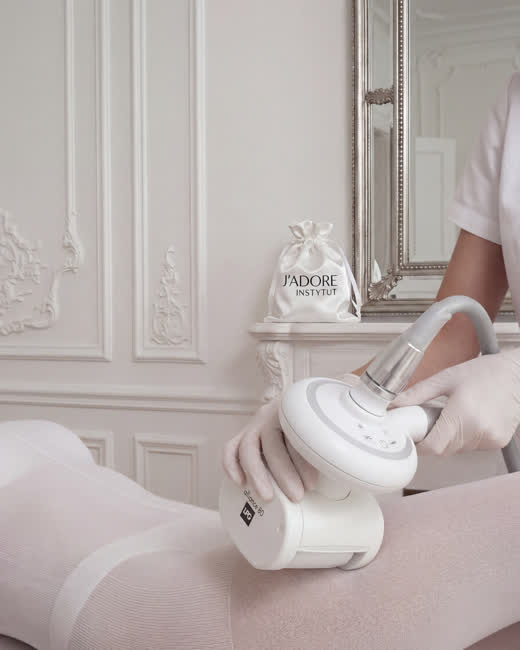
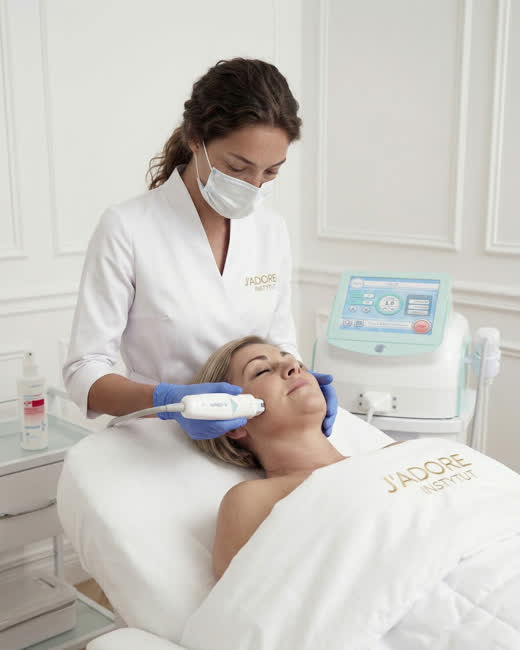
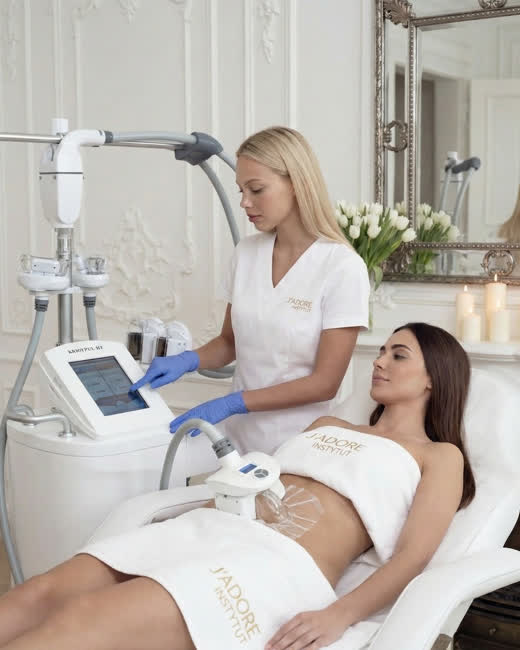
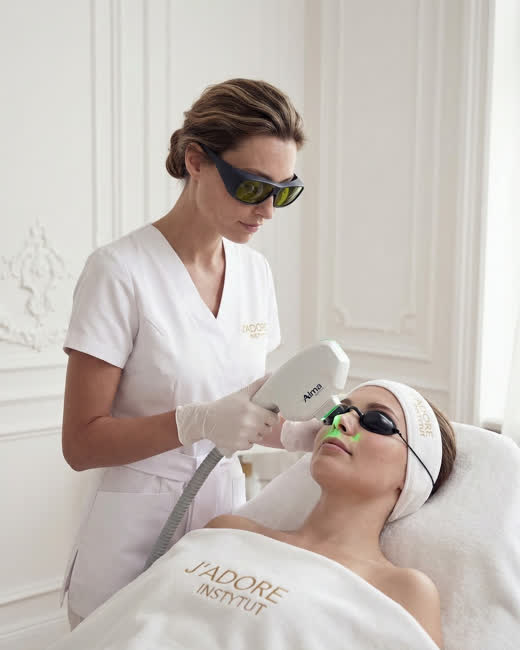
A treatment room at J'adore
LASER THERAPY / HIGH-TECH / REMOVAL
Fractional iPixel laser (Er:YAG 2940 nm) is one of the ablative technologies used for scars, stretch marks and uneven skin texture. A fractional CO2 laser 10600 nm is also available at J'adore Instytut.
The choice of technology and parameters requires a consultation and skin assessment. Skin reaction is individual, and time for regeneration should be planned after the treatment.
the number of treatments and intervals is determined by a specialist after assessing the skin
How it works
The fractional ablative laser creates a grid of microscopic columns in which ablation occurs, meaning the evaporation of a fragment of tissue. Between them, areas not subjected to ablation remain. The treatment range and parameters are selected by a specialist after assessing the skin.
An ablative treatment disrupts the skin's surface, so it requires time to heal. The technologies described are iPixel Er:YAG 2940 nm and CO2 10600 nm. They differ in wavelength and mode of action; the choice is made by a specialist during consultation.
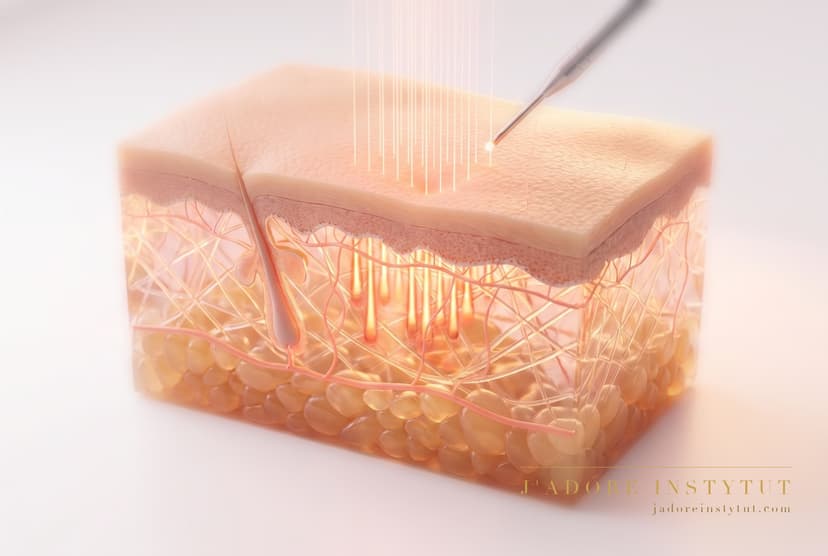
Before your visit: the name “fractional laser” does not refer to a single device or set of parameters. During the consultation, it is worth asking about the chosen technology and the recovery plan.
Ideal for
Whether Er:YAG or CO2 is the better choice — or indeed whether an ablative laser is right at all, versus a gentler option — depends on the type and depth of the problem, your skin tone, and how many days of recovery you can allow. We make this decision together during consultation.
Female and male treatment areas
During consultations for women, we discuss acne scars, stretch marks and skin texture. The specialist selects the method after assessing the skin and establishes a regeneration plan.
What we work with
In men, acne scars from adolescence and stretch marks from rapid muscle gain (gym training, weight fluctuations) dominate. Skin can be thicker and more oily, which a specialist factors into choosing settings. This is ablative fractional laser for men — with an emphasis on a realistic recovery plan built around work and training.
What we work with
Before your consultation: make a note of when the scars or stretch marks appeared and what treatments have been performed in this area. This information forms part of the consultation.
Safety
With ablative lasers — more so than with gentler treatments — three things matter, and they're worth asking about at any salon:
This is a procedure that penetrates the skin — at J'adore it's performed by a doctor or experienced cosmetologist, who assesses your skin tone and scar type and selects the technology and settings. This isn't "one setting for everyone".
With darker skin tones, the risk of post-inflammatory hyperpigmentation (PIH) increases — which is why a specialist more often chooses the gentler Er:YAG and more cautious settings. Recent tanning is a reason to postpone the treatment.
After the treatment, use the recommended skincare and sun protection. The specialist will discuss when you can return to your daily activities.
Red flag: ablative laser "right away", without consultation, on tanned skin · If someone offers a strong ablative laser without assessing your skin tone, without asking about cold sores or medications, on freshly tanned skin, or "on the spot" before a sunny trip — that's a warning sign. With this class of laser, skipping proper qualification is a real risk of pigmentation, scarring and complications. A good salon will always start with a consultation — and sometimes advise against the treatment at that particular time.
Contraindications
Some contraindications are permanent, others temporary — in the latter case, we simply postpone the treatment until the situation passes. With ablative lasers, tanning and cold sores are especially important.
From the specialist's chair
The most commonly overlooked issue: cold sores. Clients think "I only get them on my lips, and we're treating my cheeks — it shouldn't matter". With ablative laser, it does matter — the treatment can reactivate the virus, even outside the treated area. For recurrent cases, we add antiviral prophylaxis, and postpone the treatment by a few days during an active outbreak.
This isn't a complete list — we'll go through your medications, health conditions, skin tone and previous treatments individually at consultation. After ablative laser, SPF 50+ is essential for weeks.

The visit

Consultation and qualification
a specialist assesses your skin, scar or stretch mark type, skin tone and expectations, rules out contraindications, and selects the technology (Er:YAG or CO2) and series plan.

Skin preparation
cleansing, followed usually by numbing cream on the area (it needs time to take effect). With stronger settings, comfort is a priority.

The treatment
the handpiece moves systematically over the area; you'll feel warmth and stinging, eased by anaesthesia and cooling. Duration depends on the size of the area.

Finishing
a soothing, regenerating product, written aftercare instructions, and a discussion of what to expect in the coming days.

Subsequent appointments
their number and intervals are determined by the specialist based on skin assessment and the healing process.
Skin after the treatment
The ablative laser disrupts the surface of the skin. After the treatment, erythema, swelling, peeling and microcrusts may occur. The skin's reaction is individual, which is why we discuss the regeneration plan before the visit.
The healing process depends on the skin, the area and the treatment parameters. If you notice any concerning reactions, contact the clinic.
Portfolio
A record of the work in our salons — the place where we publish treatment frames and, after photo sessions, results.
A record of results — in preparation. We publish photographs of our clients only with their consent.
The possibilities and limitations of the treatment are discussed during the consultation. The skin's reaction is individual. The further plan depends on the specialist's assessment and the healing process.
After the treatment
The first days after ablative laser are when your skin rebuilds its barrier. The rule is simple: don't irritate, don't overheat, don't expose to sun — and stay strict on SPF.
This is the most important rule. After ablative laser, skin is highly sensitive to UV — sun and sunbeds risk pigmentation. SPF 50+ daily for weeks, and direct exposure avoided. Sunbeds are off the table.
High temperature, chlorine and moisture irritate recovering skin and increase the risk of infection. Hold off until fully healed — a specialist will confirm the timing.
Sweat and increased circulation don't help healing, and friction can irritate the area. With a stronger technology, the break is longer — the specialist will set specifics.
Makeup on the treated area only once skin has healed (don't cover micro-crusts). Men: no shaving the treated area until healed.
Retinol, AHA/BHA acids and strong vitamin C are off-limits during recovery — they irritate. Return to them once your specialist gives the go-ahead. In the meantime: panthenol, ceramides, hydration.
The most common mistake: picking at scabs "for smoothness". This is a direct route to pigmentation and scarring. Let flaking fall away on its own — it's a sign your skin is rebuilding.
From the specialist's chair
Sun protection and skincare should be planned before the treatment. Inform the specialist about any planned holiday or sun exposure so that the appointment date can be discussed.
Fractional ablative laser iPixel (Er:YAG + CO2)
Ablative laser, non-ablative laser and microneedling are different methods of working with the skin. The choice depends on the assessment of changes, contraindications and the possibility of planning regeneration.
ablation in microscopic columns
requires planning for healing and sun protection
treatment without ablation of the skin surface
the choice of method requires a consultation
mechanical microneedling or with RF energy
qualification takes into account the type and depth of the lesions

Combine with
Planning other treatments alongside the ablative laser requires a consultation. The specialist takes into account the healing process as well as previous and planned appointments.
During the consultation, we assess the skin and discuss any previous treatments. Only then can we propose a method and a schedule of visits, taking into account healing time.
Er:YAG or CO2
Behind the term "ablative fractional laser" at J'adore lie two different devices. You don't choose them off a shelf — a specialist selects them based on the type of scar or stretch mark, your skin tone, and how many days of recovery you can allow.
Erbium laser with a wavelength of 2940 nm, absorbed by water in the skin. Operating parameters and recovery time are discussed by a specialist.
Dla kogoUsed for scars, stretch marks and uneven skin texture; individual qualification required.
CO2 laser with a wavelength of 10600 nm. The operating parameters and recovery time are discussed by a specialist after assessing the skin.
Dla kogoUsed for scars, stretch marks and photoageing; individual qualification required.
During the consultation, non-ablative laser, ClearLift or microneedling can also be discussed. The methods differ in how they work and in the healing process. Their selection requires an assessment of the skin and contraindications.
Fact: Where do price differences come from? Mainly from the surface area treated (a small scar versus the whole face or an abdomen covered in stretch marks), the number of sessions in the series, and the chosen technology (Er:YAG vs CO2) and depth of treatment. That's why we don't quote a single price — we set the real cost and series plan during consultation, after assessing your concern.
Price list
Checking free hours…
From the magazine
Editorial pieces on how this treatment works in practice — what happens during the session, how to prepare, where the limits are and what the first days after look like.
See also
The result laststhe skin's reaction and the further visit plan are individualJ’adore Instytut
Medical information. Ablative fractional laser is a medical/paramedical procedure that penetrates the skin. The text above is for informational purposes and does not constitute medical advice. Indications, technology choice (Er:YAG vs CO2), settings, number of sessions and contraindications are determined by a specialist during an individual consultation. Results vary.
Home care
Cosmetics matched to what your skin needs after a treatment — so the clinic effect lasts longer.
 post-treatment regenerationCell Fusion CDermagenis pH Biome SerumView in the shop(opens in a new tab)
 sun protectionDermaQuestSunArmor SPF50 30 mlView in the shop(opens in a new tab)
 sensitive skinSesdermaSERENITY mask 50 mlView in the shop(opens in a new tab)
 post-treatment regenerationMedMelanoSkinbiotic Elixir Probiotic Repair Serum 50 mlView in the shop(opens in a new tab)
 sun protectionSkeyndorProtective cream SPF 50+ – Age Photo DefenseView in the shop(opens in a new tab)
 post-treatment regenerationVagheggiEmozioni Plus — Anti-Stress Face Mask 75mlView in the shop(opens in a new tab)
 sun protectionCell Fusion CAquatica Sunscreen 100 SPF 50+/PA++++View in the shop(opens in a new tab)
 post-treatment regenerationMesoesteticMesohyal Post-Procedure Gel CreamView in the shop(opens in a new tab)