What sun, caps and swimming pools do to hair
Put simply, hair is compressed keratin — a protein built from amino acid chains linked by various types of bonds. These bonds are responsible for hair's elasticity, tensile strength and appearance. The trouble starts when they take hits from several directions at once.
- UV radiation degrades keratin and breaks down melanin — hair loses colour (visible as a rusty, sun-bleached tone) and elasticity. This damage doesn't "just go away" on its own.
- Sea salt and chlorine dry out the hair shaft and lift the cuticle, leaving hair rough, tangle-prone and brittle.
- Sweat trapped under a cap — worn for long periods, whether for training, everyday city life or riding a motorbike — acidifies the environment and speeds up keratin degradation. The result: tired, flat hair with a stubborn cap line.
- Mechanical friction from hoods, helmets and caps micro-damages the outer cuticle layer — hence the characteristic "frizz" without volume or shine.
Molecular hair repair — what it actually is
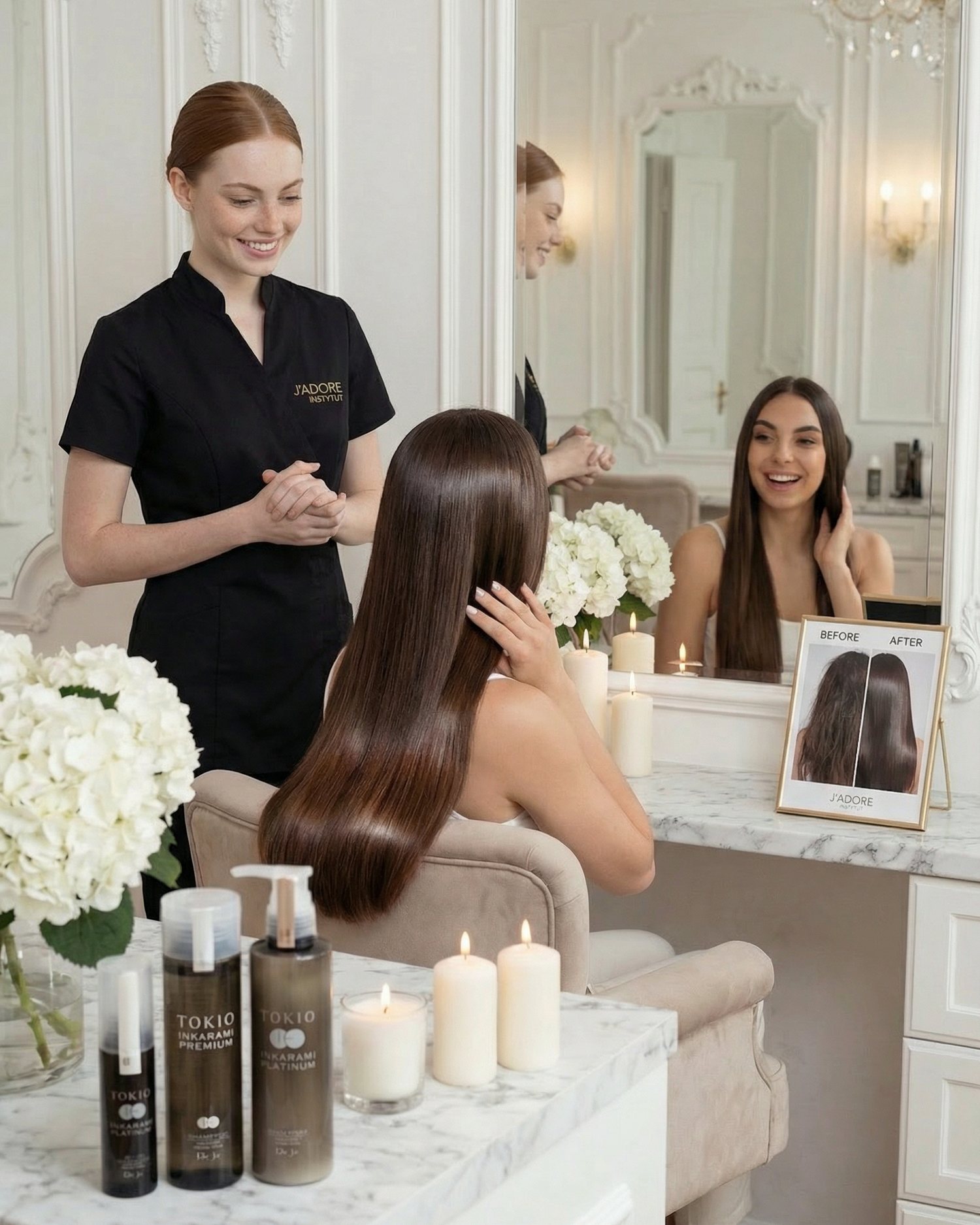
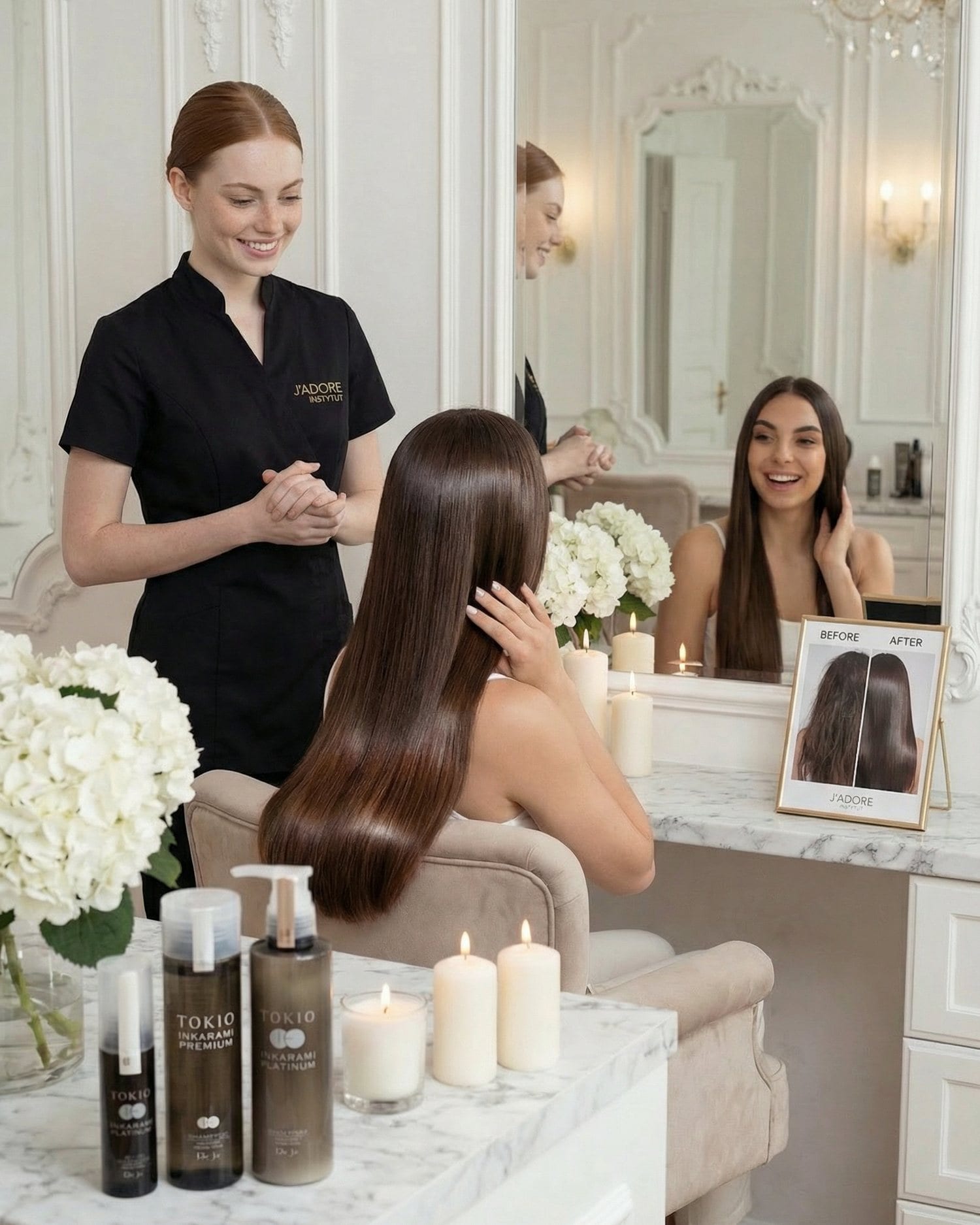
Molecular repair is a category of hairdressing treatments that, instead of coating hair from the outside, penetrate the cortex and repair damaged bonds. Different products take different routes — some deliver amino acids directly into the hair structure, some rebuild polymer protein networks, some combine both approaches. The result is similar either way: hair regains elasticity, breaks less, lies flatter and responds to styling again.
Moisturising mask / conditioner
what it does
- works on the surface of the cuticle
- smooths the outer layer
- visible immediately, but short-lived
- doesn't repair structural damage
Molecular repair
what it does
- penetrates the hair cortex
- rebuilds damaged protein bonds
- results build over several days after the treatment
- lasting improvement in elasticity and strength
Here's the key distinction: moisturising tells hair "you look nice". Molecular repair tells it "you're stronger now". For men with shorter cuts, the difference shows up clearly in texture and styling — hair that has regained its bounce holds a style, instead of flattening and losing shape through the day.
When repair genuinely makes sense
Molecular repair isn't a preventive treatment for healthy hair. It works best once the damage has already happened — and you feel it more than you see it. Typical signs:
- Hair breaks or snaps when combing, brushing or putting on a cap.
- It's lost its bounce — when stretched, it doesn't spring back into shape; it stays stretched or breaks.
- Styling has stopped "holding" — a style that used to shape easily no longer responds to products.
- Dry ends that won't respond to moisture — a mask smooths them briefly, but the problem returns after washing.
- A visible "straw-like" texture or dull, faded colour, even if you haven't dyed your hair.
If you recognise at least two of these signs after the summer season, repair is probably the right step — more so than another conditioner off the shelf. If your hair is healthy and just slightly drier, a better home-care routine is enough.
What the treatment involves — no surprises
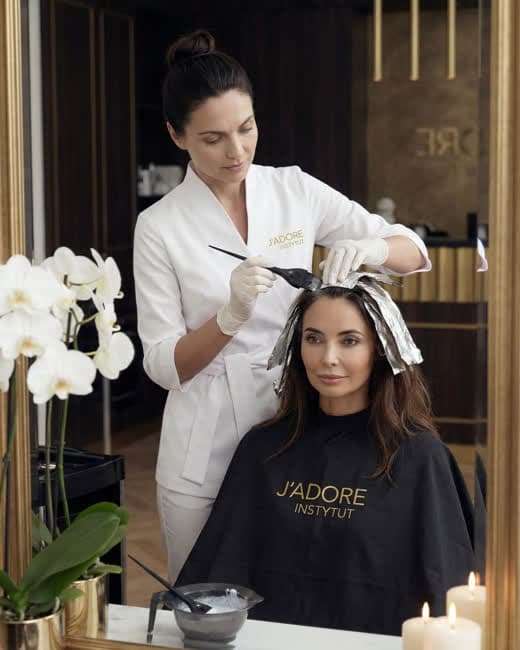
Molecular repair is a hairdressing treatment, not a cosmetic one. We perform it on washed hair, and the exact protocol varies depending on the product and your hair's condition. The common thread is several application stages with processing time — the treatment takes longer than a haircut, but you leave with different hair than you came in with.
- 01
Assessment and wash
We assess the condition of your hair — thickness, porosity, degree of damage, and any chemical history such as colouring or bleaching. Hair is washed with a cleansing product that removes product build-up and prepares the shaft to absorb active ingredients.
- 02
Application of the repair product
We apply the molecular product to wet or lightly towel-dried hair. It's applied precisely and needs time to penetrate the cortex — we control exposure time under a thermal cap or with the use of heat.
- 03
Sealing and setting
Some protocols require a sealing step — a product that "locks in" the repaired bonds and seals the cuticle. This is the point where hair gains shine and smoothness.
- 04
Final styling
Drying, any finishing styling and a check of the result. We advise which products to use at home to maintain the effect, and how long to wait before washing again.
Caps and training — how not to undo the results
Repair restores strength to hair, but it doesn't make it immune to further damage. If you keep wearing a cap for hours every day, train under a helmet, or spend time in direct sun, you can steadily undo the treatment's results. A few practical changes:
- A breathable cap (merino wool, technical sports fabrics) instead of cotton — less sweat trapped against the hair shaft.
- UV hair oil or protective spray before spending longer periods in the sun — available over the counter, it works like a filter.
- Washing after training should happen quickly — don't leave sweat sitting on your hair for hours. If you don't have time for a full wash, rinse with clean water.
- Sea salt and chlorine — after swimming in the sea or a pool, rinse your hair with fresh water as soon as possible. A few minutes under the shower makes a difference.
- Styling products with UV filters — if you use wax, cream or paste, look for ones with added UV protection. You don't need to change everything at once.
How many times, and how often
It depends on your hair's starting condition and how aggressively external factors act on it. For a man with natural, undyed hair, one treatment after the holiday season may be enough for several months. With a more intensive routine — regular swimming, sport, long hours in a cap — we may recommend repeating the treatment every few weeks, until your hair's condition returns to normal.
Important: repair complements, rather than replaces, regular home care. If you go back to no care at all after the treatment, the effect will fade faster than it should. We'll recommend products to use between visits — usually one or two steps, not a full ten-step routine.