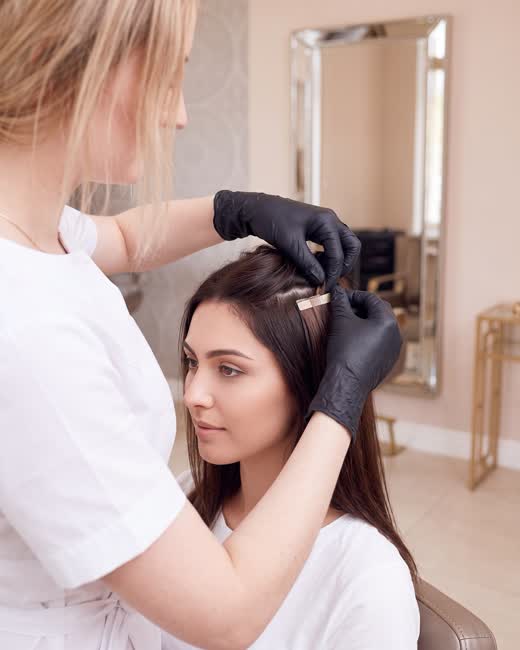
What is really inside the hair
To understand why Hair Botox works — and why it stops working — start with the structure of the hair shaft. Hair is not a uniform rod. It is a layered structure, rather like a pencil: the medulla, cortex and outer protective layer. Each layer has a different role. Each also responds differently to damage.
- Medulla — the innermost part, not always present in every hair. It is not crucial to appearance or strength, although it is more pronounced in thick hair.
- Cortex — this is the heart of the hair. It is where everything that matters visually and mechanically takes place. The cortex is filled with proteins, mainly keratin, arranged in long chains. They determine elasticity, strength and, indirectly, how the hair reflects light. Damage at this level is more serious. No shampoo can wash it away.
- Cuticle — the outer, transparent layer made up of thin overlapping scales, like roof tiles. When they lie flat and adhere to the hair shaft, the hair shines because light reflects evenly from its smooth surface. When they lift, separate or break away, the hair becomes dull, rough to the touch, difficult to comb and porous. It is the condition of the cuticle that largely determines what you see in the mirror.
What Hair Botox really is and what it does inside the hair shaft
The name “Botox” in a hair context is a marketing shorthand — it has nothing to do with the botulinum toxin known from dentistry or aesthetic medicine. Hair Botox is an intensive protein treatment with a smoothing component. Its main purpose is to replenish gaps in the hair structure and — most importantly — align and seal the cuticle.
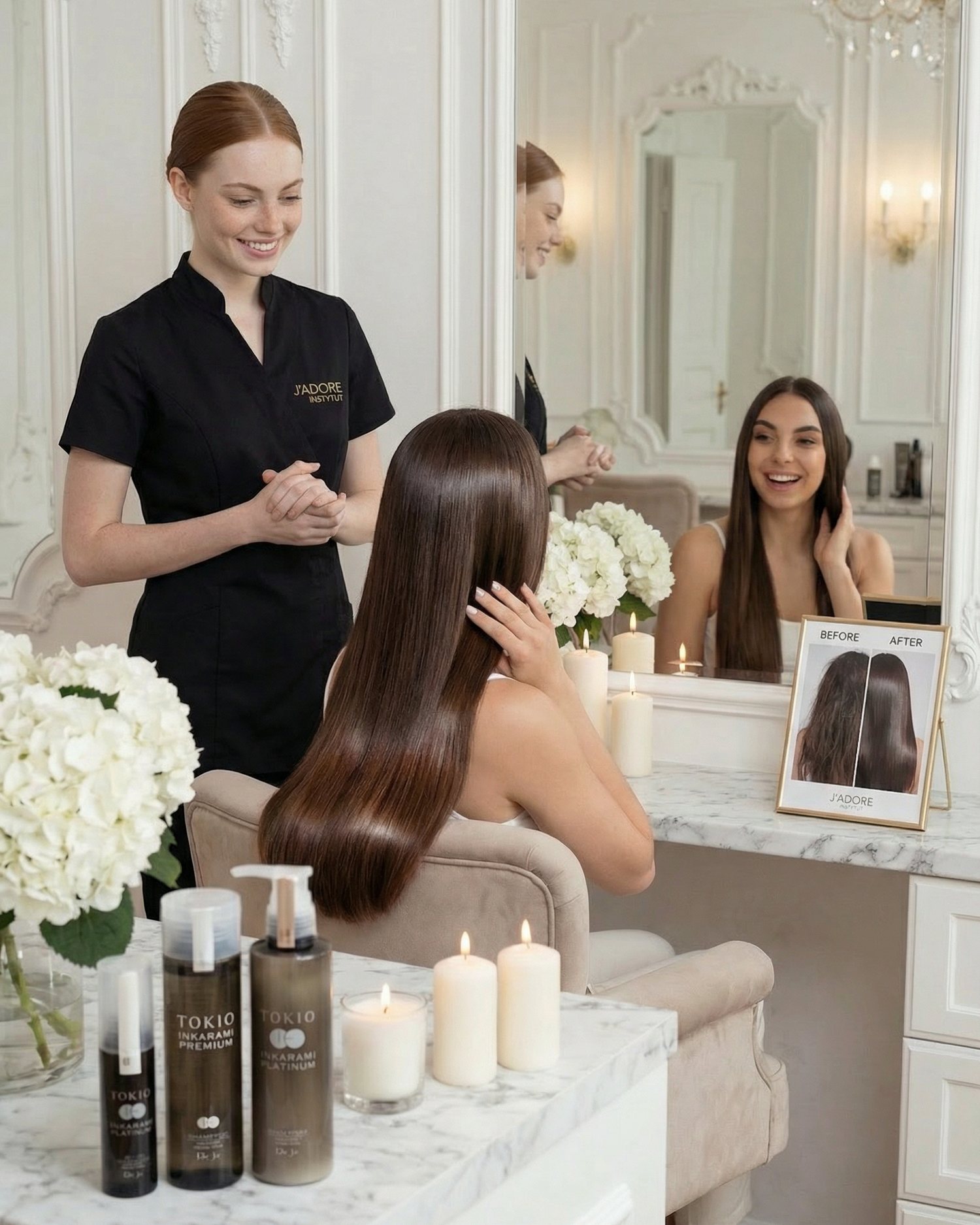
The product applied during treatment enters the hair shaft with heat. The cuticle opens during application, then is sealed with a straightener. Active ingredients — usually a blend of proteins, amino acids, keratin hydrolysates and smoothing agents — fill micropores and gaps in the cortex. They then “settle” within the cuticle structure, helping it lie flatter against the hair surface. The result is smoothness, radiance and improved manageability. The surface becomes more even, so light reflects from it uniformly.
- 01
Application
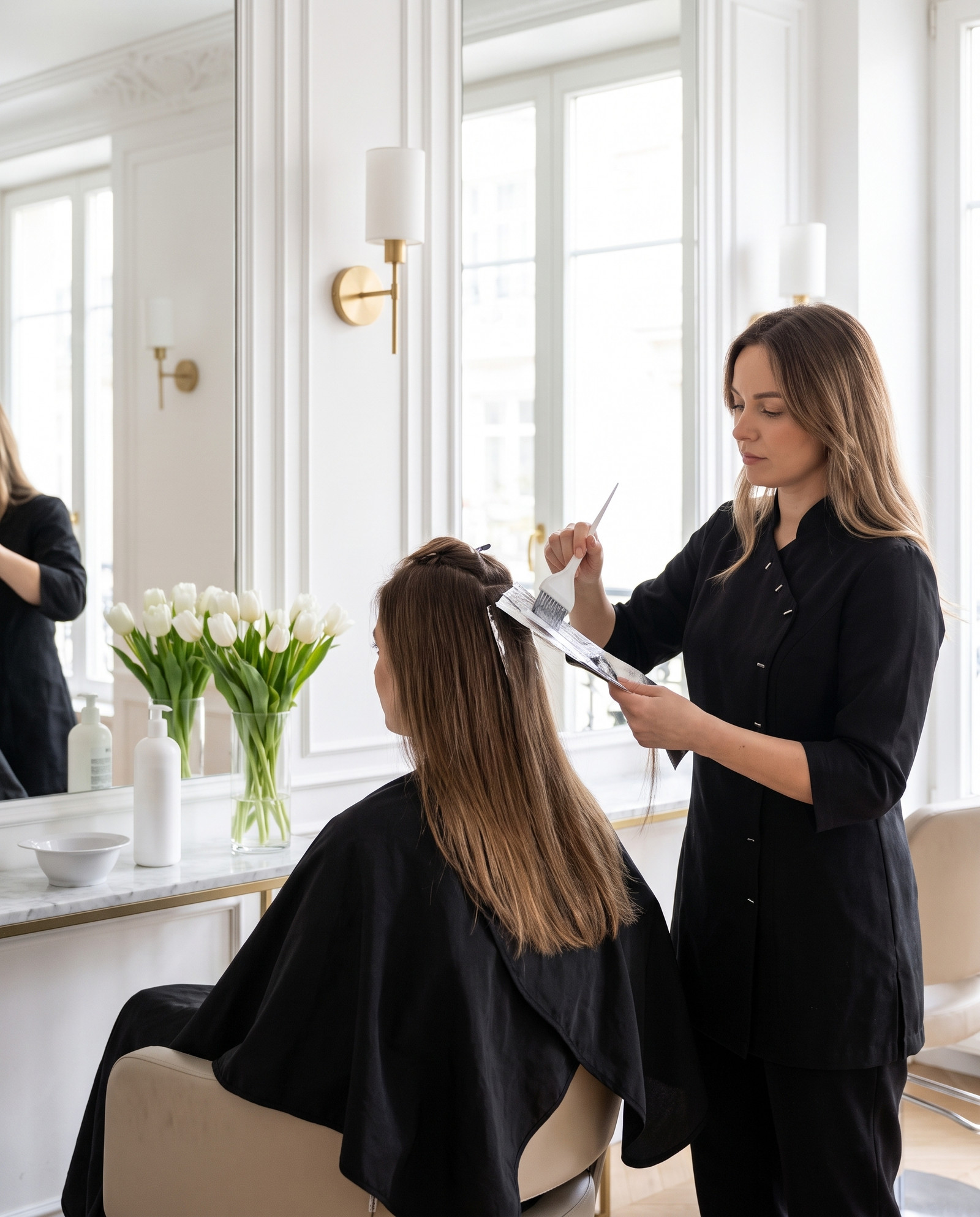
The product is applied section by section to cleansed, damp hair — each strand is evenly saturated from roots to ends.
- 02
Absorption under foil
The hair is wrapped and heat helps open the cuticle, allowing ingredients into the hair shaft structure. This is where the product begins its real work.
- 03
Sealing with a straightener
High temperature seals the result — the ingredients “melt” into the cuticle, while the cuticle itself is pressed against the surface. This is where radiance begins.
- 04
Washing and finishing
Excess product is rinsed away. The smoothing and radiance are visible immediately, then fully stabilise over several hours.
Why the result fades — and when it happens too quickly
The Botox result is not permanent. This is not a flaw in the product, but a result of the natural properties of the hair shaft and daily life. Hair is constantly exposed to factors that gradually break down what the treatment has built. Knowing these mechanisms can slow the process significantly.
What shortens the result
factors that accelerate degradation
- Shampoo with sulphates (SLS/SLES) — aggressively rinses proteins from the hair shaft
- Hot water when washing — opens the cuticle and rinses out ingredients
- Frequent washing without heat protection — a double burden
- Chlorine in swimming pools — breaks down the cuticle seal
- No heat protection before using a straightener — repeated damage
- Sunlight (UV) — photodegradation of proteins in the cortex
What prolongs the result
factors that slow degradation
- Sulphate-free shampoo — does not rinse out proteins
- Lukewarm water when washing — the cuticle does not open abruptly
- Heat protection every time before using a straightener or hairdryer
- A protein mask or conditioner once a week — replenishes gaps
- Oil or serum on the ends — seals the outer layer
- Avoiding swimming pools or using a swimming cap + serum before swimming
There is another factor that is rarely discussed: the hair’s initial porosity. Very damaged hair — heavily bleached, repeatedly coloured and with a damaged cuticle structure — tends to “release” treatment ingredients more quickly. Its cuticle remains permanently lifted and more permeable. With the same aftercare habits, the Botox result may last less time than it does for someone with hair in better condition. This is not bad news. It simply means that a series of treatments may be worth planning more frequently, at least at the beginning of the restoration process.
Myths about Botox that complicate aftercare
Several simplifications have grown around Hair Botox. They make people either expect too much or care for their hair after treatment exactly as they did before — and then feel disappointed. It is worth addressing them directly.
- “Botox repairs hair once and for all.” It does not — it fills gaps and smooths the cuticle, but this work is reversible. Hair does not regenerate like skin after a cut. Every millimetre of new hair shaft that grows out is in the condition determined by how the scalp is treated. The rest is aftercare and repeated treatments.
- “Hair does not need conditioner after Botox.” The treatment result is not a replacement for daily aftercare, but reinforcement for its foundations. Conditioner is still needed after every wash. This time, it helps maintain the result rather than simply provide temporary softness.
- “The more expensive the product, the longer it lasts.” The price and quality of the product matter, but the result largely depends on application skill, the sealing technique with a straightener and — above all — your home aftercare. Even the best product “releases” its ingredients within a few weeks if you wash your hair daily with a sulphate shampoo in hot water.
- “Botox damages hair.” When performed properly and not too frequently, it is one of the gentler salon treatments. It does not permanently alter the chemical structure of cortex proteins, unlike strong bleaches or perms. It can be used on sensitive hair, after chemotherapy or after temporary hair loss, if the hairdresser assesses this individually.
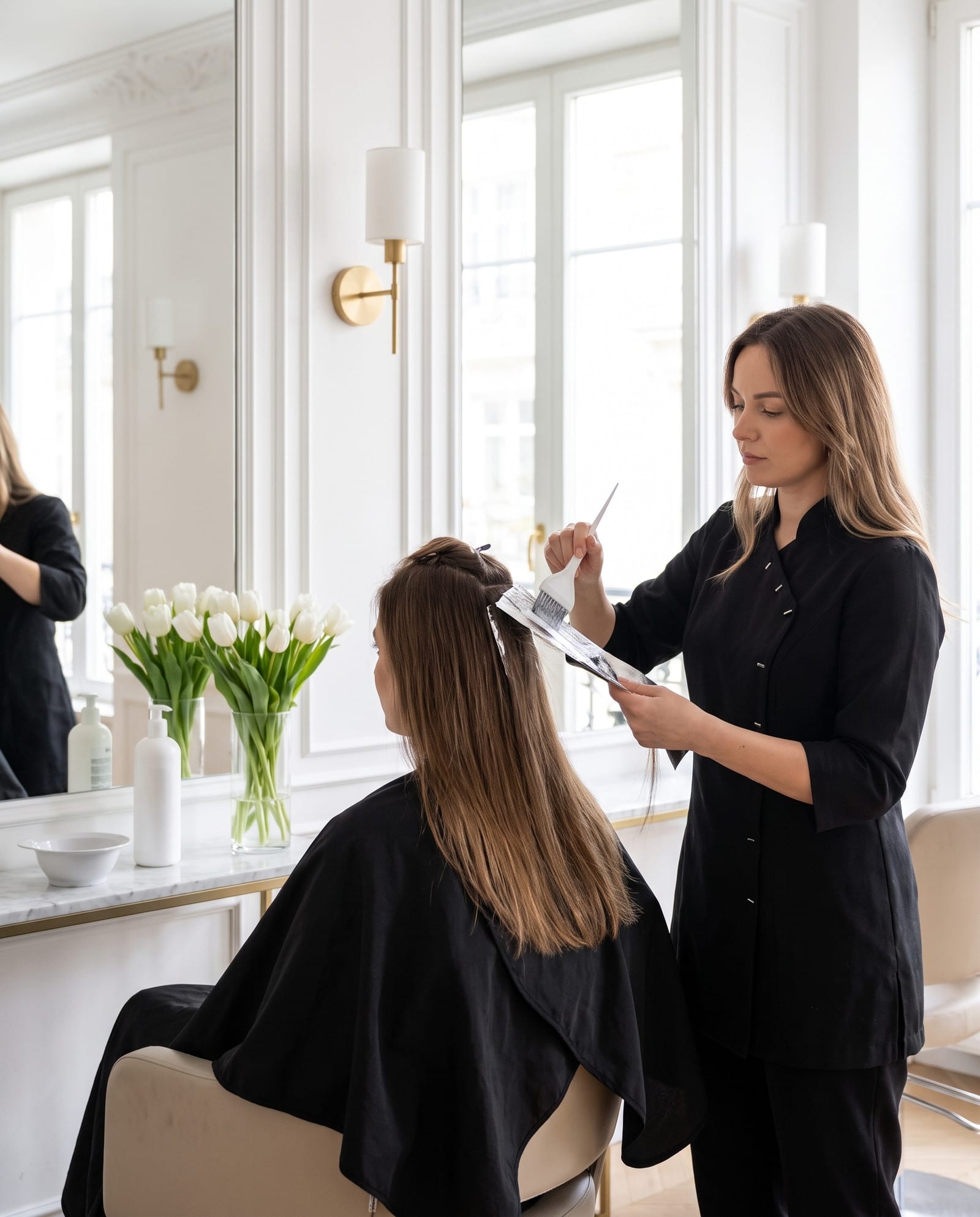
How to build an aftercare routine that keeps your hair radiant
Aftercare following Botox is not a list of restrictions. It is more of a change in priorities: moving from products that “clean thoroughly” to products that “clean thoroughly without causing damage”. The difference may seem minor, but it can have a surprisingly large effect on how long the treatment lasts.
Botox + keratin straightening
When long-lasting volume reduction and smoother curls are the priority — Botox rebuilds the hair, while keratin straightening maintains the effect for longer. They are usually performed at different times, not in one session.
Botox + scalp ampoules
When hair is weakened near the follicle — Botox works on the shaft, while ampoules stimulate the follicle and support growth. A comprehensive approach for hair after hair loss or chemotherapy.
Botox + argan oil finish
In the salon — the treatment is finished with lightweight argan oil applied along the hair shaft as a “seal” for the effect. Popular for very porous hair, where the cuticles do not close as easily on their own.
When Botox is not enough — and what to do instead
Hair Botox works remarkably well on hair with a good foundation that has lost radiance and manageability — through colouring, heat, water and time. However, there are situations where the treatment alone will not solve the problem, and expectations may not be met.
- Hair with very high mechanical porosity — broken ends and cuticles so damaged that they cannot retain any ingredients for long. In this case, the most honest conversation in the salon may be about a haircut and rebuilding healthy hair from scratch. A series of Botox treatments every 6–8 weeks can support the process, but it is not a miracle.
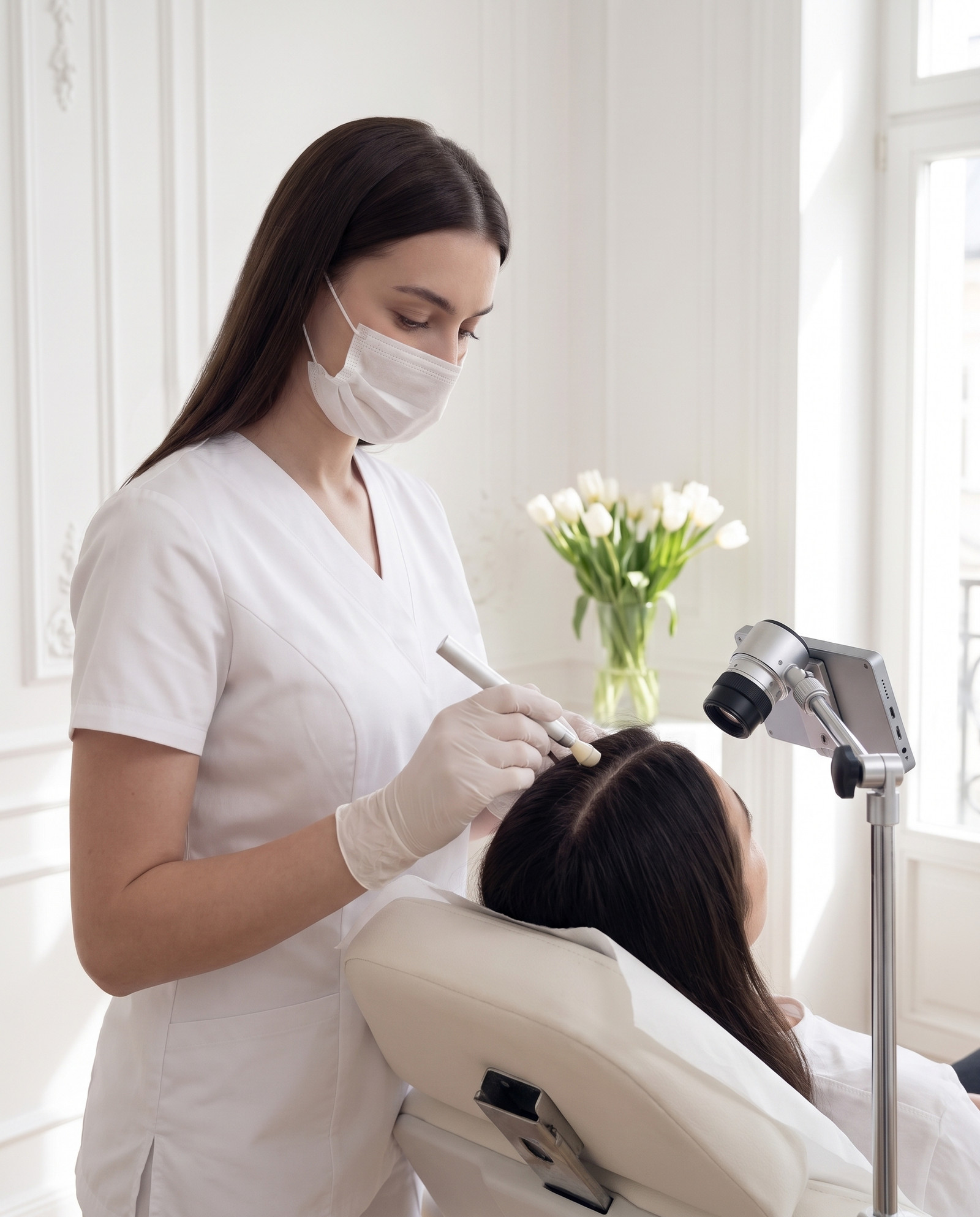
- Scalp concerns — dandruff, seborrhoea, hair loss or inflammation. Botox works on the hair shaft, not the follicle or scalp. If the issue lies at the root, literally, treatments targeted at the scalp are needed — ampoules, scalp peels or stimulating therapy.
- Strongly wavy or curly hair that is meant to be permanently straight — Botox will reduce frizz and make styling easier, but it will not permanently change the shape of the hair shaft. If long-lasting straightening without a flat iron is the goal — other treatments are needed.
- “One-off” expectations — if someone has Botox once and expects a lasting effect without any aftercare, without changing their shampoo or returning to the salon — disappointment is almost certain. This is a treatment series, not a permanent solution.
A good consultation before Botox is not a formality. It is a conversation about the condition of your hair, your goal and what can realistically be achieved. This depends on its structure, colouring history and your lifestyle. Different people with similar-looking hair may need entirely different plans. This is what distinguishes a well-performed treatment from one where expectations do not match reality.