What keratin is and what it actually does
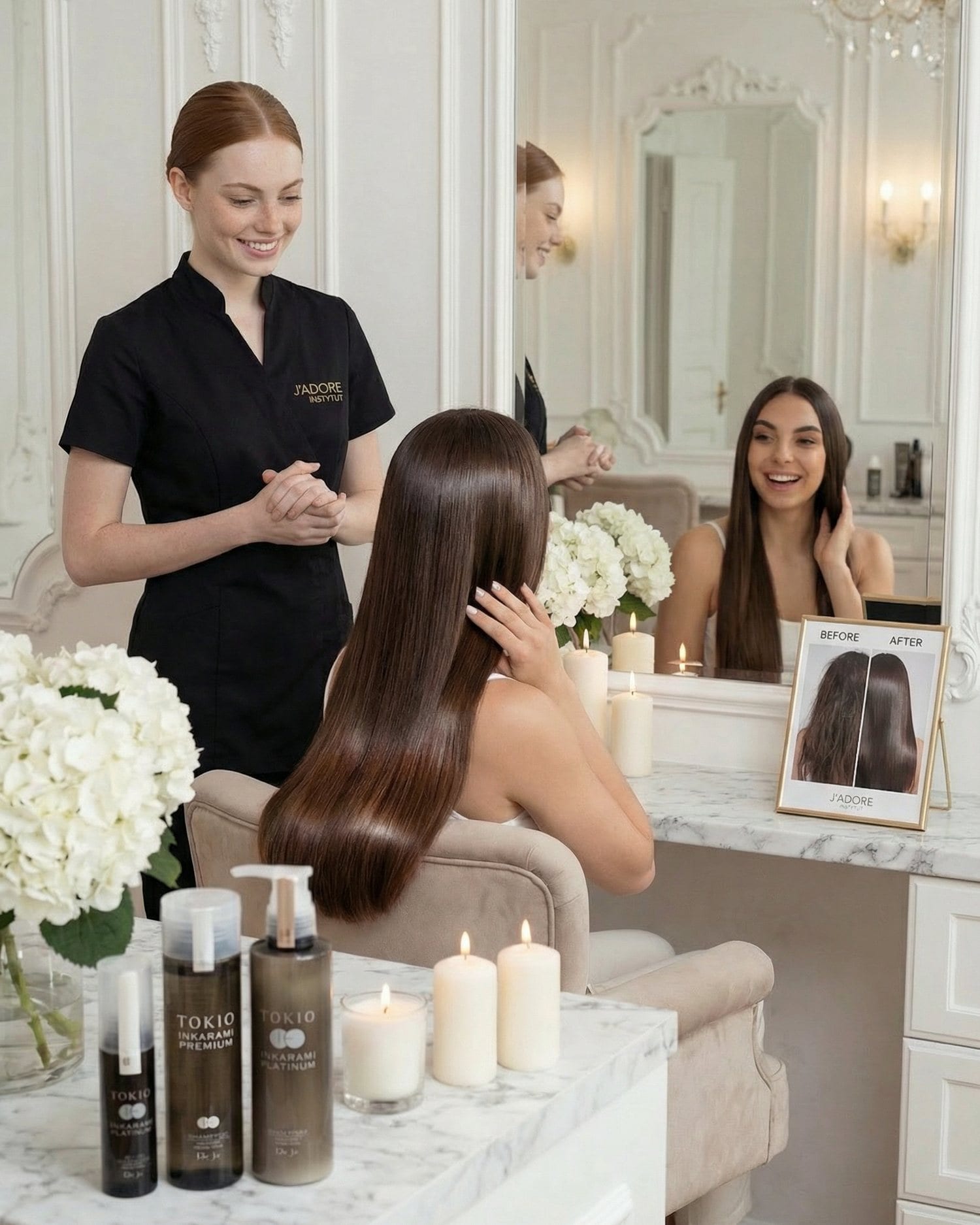
Hair is made of keratin — a protein that gives it structure and resilience. Under the influence of moisture, heat, sun and daily styling, this structure degrades: the scales on the hair surface lift up. This lets the hair absorb moisture from the air and swell. That's what causes the frizz. Keratin straightening delivers amino acids and proteins into the hair. These fill in the gaps, smooth the scale and seal it flat — so the hair stops reacting so strongly to moisture.
The result doesn't have to be hair that's completely glass-smooth — and that's exactly why this treatment makes sense for men. It can be dosed. With dense, springy curly hair, reducing volume and controlling frizz is often enough. With waves, the goal is to stop uncontrolled frizzing while keeping natural movement. With straight hair that resists styling, the aim is better manageability without changing the hair's character.
Who really benefits from this treatment
Keratin isn't for everyone — but if you recognise even one of the scenarios below, you probably already know what we mean:
- Dense, springy or curly hair that frizzes with moisture — your hairstyle looks different 20 minutes after styling than it did straight out from under the dryer.
- Hair that's heavy work to style — lots of paste, lots of time, and the result still doesn't hold all day.
- Waves or curly strands that won't sit evenly — part goes one way, part the other, and no product controls it.
- Hair after years of alternating shaving — regrowing dense hair that's uneven and hard to manage.
- High stress or hormonal changes — hair can become drier and coarser than it was before.
Without keratin
daily reality
- heavy daily styling just to "tame" the frizz
- result varies with the weather
- long drying and straightening
- products only mask the problem, they don't solve it
After keratin
change in daily routine
- less time on your morning routine
- hair reacts predictably to moisture and heat
- styling products work more effectively
- your hairstyle holds its shape for weeks
What the treatment involves — step by step
This isn't a "quick trim" appointment. Keratin straightening takes time and follows a specific protocol — that's what makes the product work. Here's what to expect:
- 01
Consultation and hair analysis
The hairdresser assesses your hair's structure, thickness, damage level and degree of curl. This determines the product used and the processing time.
- 02
Washing with a specialist shampoo
Cleansing the hair of styling products, silicones and sebum — the keratin product needs to penetrate straight into the hair structure, not through layers of product.
- 03
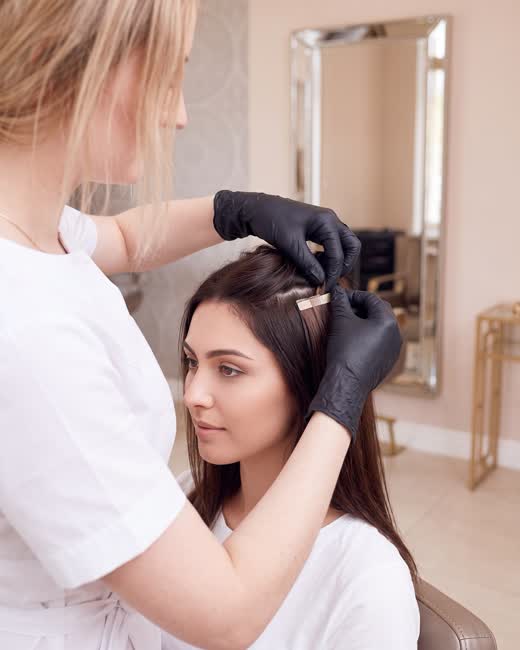
Application of the keratin product
The product is applied to dry or slightly damp hair, section by section. Absorption time depends on the product and hair structure.
- 04
Heat sealing with a straightener
The hairdresser runs a straightener through the hair at high temperature — heat "seals" the keratin inside the hair structure. This is a key step.
- 05
Result and aftercare instructions
After the treatment, the hairdresser shows you the result and talks through care in the first few days — this largely determines how long the effect lasts.
What happens after the treatment — the first few days
The first few days after the treatment determine whether the result lasts several weeks or disappears after the first wash. The rules are simple, but firm:
- Don't get your hair wet for a few dozen hours after the treatment — keratin needs time to fully set.
- Don't tie or bend your hair for the first few days — an elastic band on freshly sealed hair leaves a lasting mark.
- Use a sulfate-free shampoo — regular shampoos wash the product out too aggressively; dedicated sulfate-free shampoos can extend the effect several times over.
- Avoid pools and saunas for the first few days — chlorine and high temperatures speed up the product washing out.
Keratin and short hair — does it make sense
A common belief: "keratin is for women with long hair". In practice, this has nothing to do with reality. Keratin straightening works on hair structure, not hair length. With short, dense hair that frizzes at the temples or "stands up" at the crown, the result can be just as noticeable as with long hair.
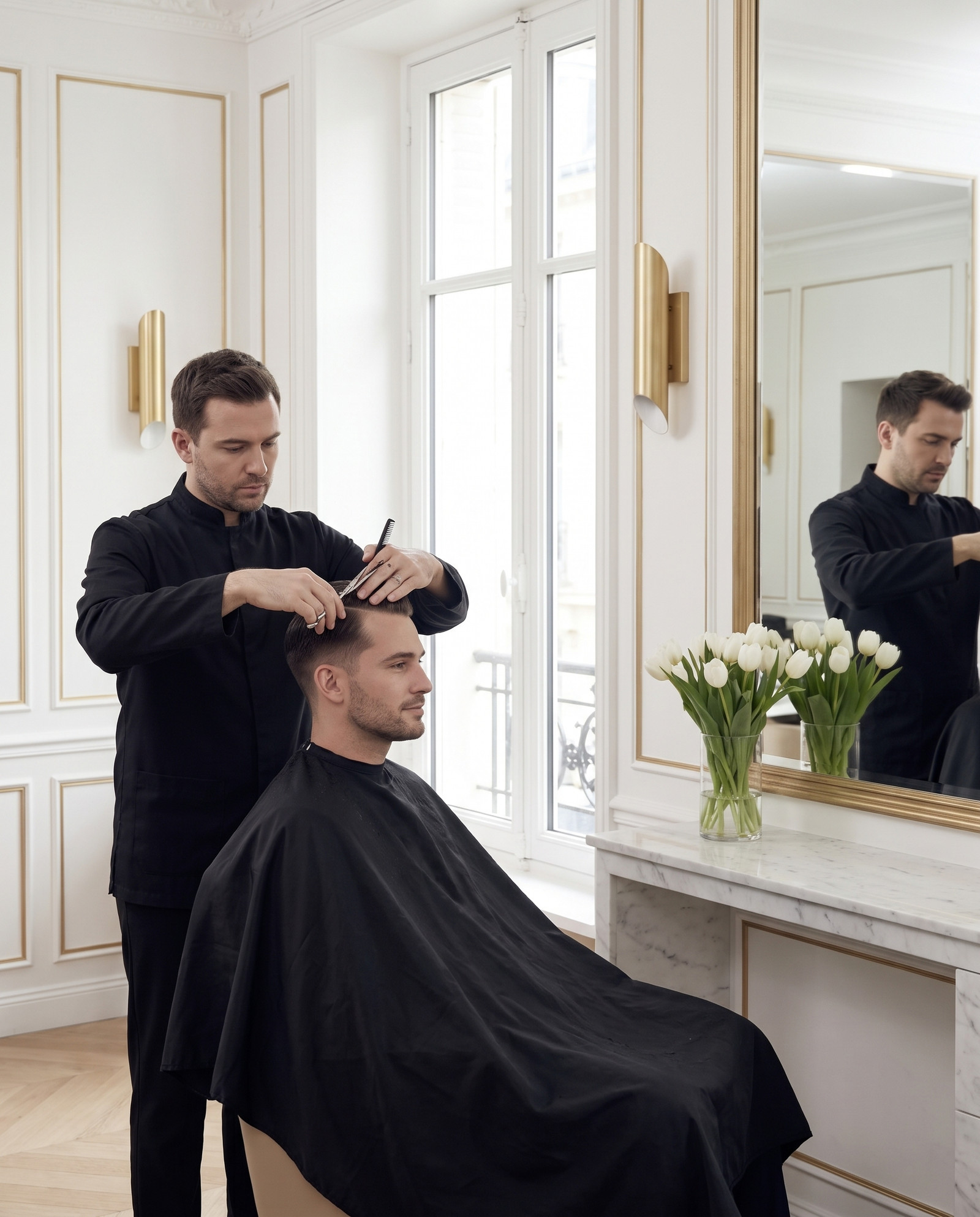
Short hair has one advantage: less hair mass means a faster treatment. With an undercut or fade, the hairdresser only works on the sections at the crown and back, where the hair is longer. Time and cost are proportionally lower. If you have a typical "city" cut with a longer top and shorter sides, that's the most common case men bring to a keratin treatment.
Keratin and colouring or other chemical treatments
If you've coloured your hair, used bleach or had a perm, it's worth mentioning this to your hairdresser before the treatment. Chemical treatments change the hair structure and can affect how the keratin product is absorbed and how long the result lasts.
Keratin is usually possible on coloured hair, and in many cases it actually helps — it evens out and smooths hair after chemical processing. However, order matters: if you're planning both colouring and keratin, the hairdresser should decide which comes first, because the order affects how long both effects last.
Aftercare after keratin — what to do to make it last
Long-term care isn't a complicated ritual. It comes down to a few simple rules:
- Sulfate-free shampoo — a single swap with the biggest impact on how long results last. Sulfates are detergents that wash the product out very effectively.
- Wash your hair with cooler water — hot water opens the hair's scale and speeds up keratin washing out.
- Don't wash your hair every day — not if you don't have to. Every wash shortens the effect slightly; twice a week is a good balance for dense hair.
- Limit intensive pool swimming — chlorine is harsh on keratin products. A swimming cap or conditioner applied before getting in the water helps.
- Avoid products containing alcohol — denatured alcohol in gels and sprays dries hair out and speeds up the effect's decline.
Haircut + keratin
The most common combination — keratin on freshly cut hair. Cutting removes split ends and unevenness, and the keratin product "seals" the result. Together, the hairstyle looks consistent and neat for weeks.
Keratin + scalp care
With dense hair, the scalp often produces more sebum — which shortens the keratin effect. Regular scalp care (exfoliation, balancing toner) helps maintain the result without excess oiliness.
Colouring + keratin
With colouring (lightening, grey coverage), keratin can even out and smooth hair after chemical processing. The hairdresser determines the order of the treatments — it depends on hair condition and the products used.