What nanoplastia actually is
Nanoplastia is a keratin treatment — but not the kind from 2010, when hairdressers had to open a window because of the strong smell. Classic Brazilian straightening used formaldehyde, which worked, but also irritated eyes and mucous membranes and raised legitimate concerns. Nanoplastia uses alternative active ingredients — mainly amino acids and hydrolysed keratin — that penetrate the hair structure and smooth it from within, without forming a coating layer on the outside.
The result? Your hair stays your hair — just better behaved. Curly hair gets a gentler curl, frizzy hair loses volume, dry hair becomes soft and shiny. Don't expect to leave the salon with smooth, straight hair if nature gave you natural curls. Nanoplastia reduces, it doesn't eliminate — and that's its greatest strength.
Why this makes sense for men
Women have used keratin straightening for years — the market was built around them, and so was the literature. Men picked up on the idea more slowly, because classic marketing didn't speak to them. Yet the problem is identical: curly, frizzy hair behaves the same way regardless of the owner's gender. Only the context in which it becomes a nuisance differs.
- Frizz and volume. Hair after a shower can look like it's been near a balloon. Any humid air makes things worse. Nanoplastia fills the hair structure — it stops reacting so dramatically to moisture.
- Cowlicks and coils. Curls that grow sideways, not down. Nanoplastia won't straighten them completely, but it will change their behaviour: they become more defined and predictable.
- Morning time. If styling takes more than two minutes and the result is still hit-or-miss without specific products, that's a sign your hair is working against you. After nanoplastia, your style often falls into place with far less effort.
- Dry, brittle ends. The keratin in nanoplastia regenerates and seals the hair — this matters especially for men with longer hair who neglect their haircare routine.
Formaldehyde — where the reputation came from, and why nanoplastia doesn't share it
For years, keratin treatments were synonymous with formaldehyde. Why? Because that's how the first formulas worked — formaldehyde cross-links the keratin bonds, stabilising them permanently. The effect was dramatic, but the substance raises concerns — hence the bans, regulations and justified caution. Nanoplastia is the market's answer to this problem: different active ingredients, a similar mechanism of action, without the irritant and without needing to open every window in the room.
Classic keratin treatments (Brazilian)
older type of treatment
- formaldehyde or formaldehyde-releasing agents
- very strong straightening, even on curls
- strong smell during application
- longer-lasting results
Nanoplastia
modern variant
- no formaldehyde — amino acids, hydrolysed keratin
- smoothing and frizz reduction, not full straightening
- neutral or mild smell
- safe for coloured and sensitive hair
What the treatment looks like — step by step
There's no drama and no complicated preparation involved. Just come in with clean, dry or slightly damp hair. Your hairdresser takes care of the rest.
- 01
Washing and hair analysis
Your hair is washed with a special cleansing shampoo that removes all product residue. Your hairdresser assesses the structure, porosity and condition of your hair.
- 02
Product application
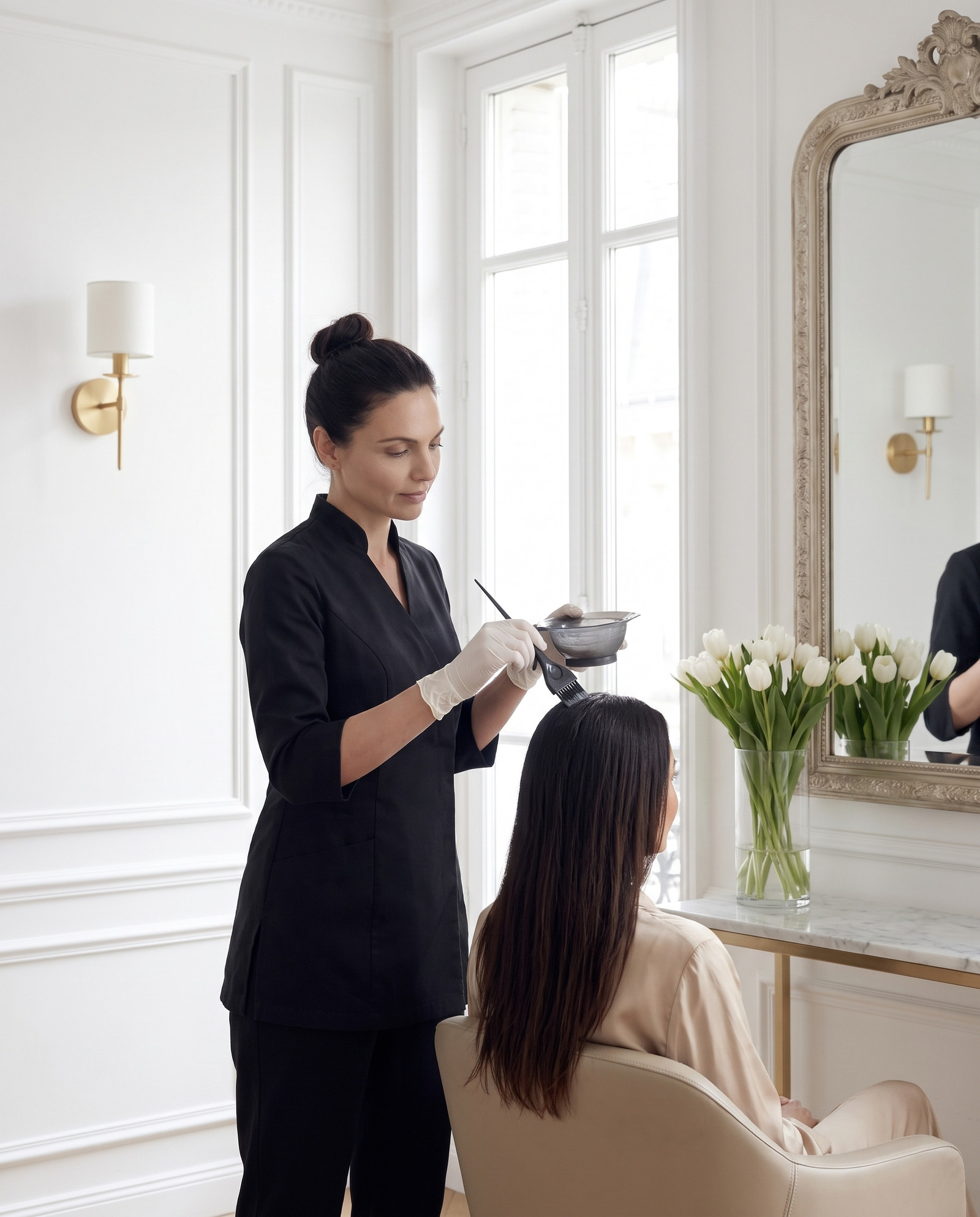
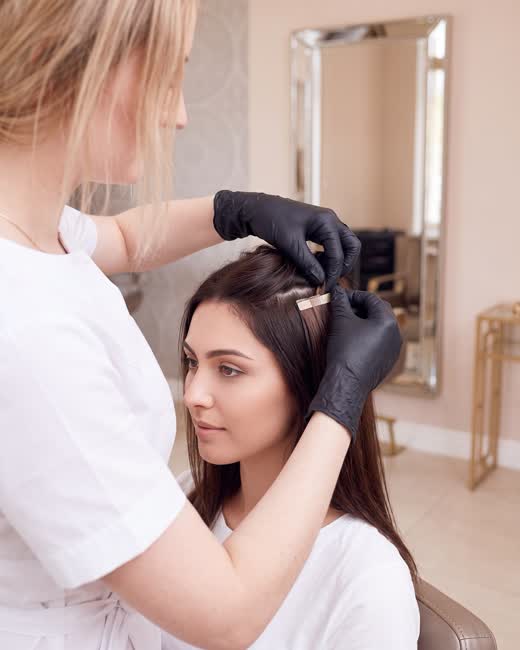
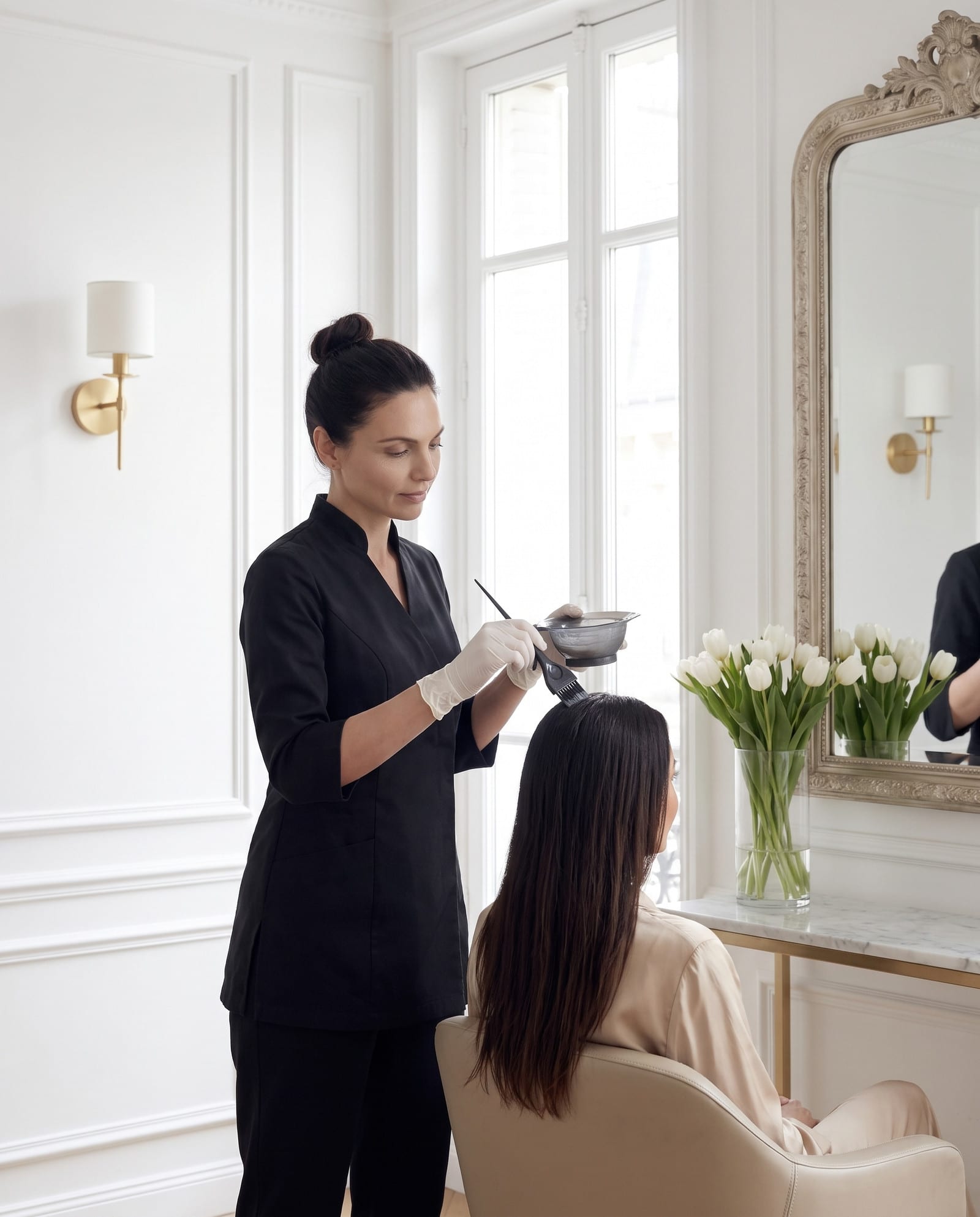
The keratin product is applied to dry or slightly damp hair, section by section. It penetrates the hair structure — it doesn't just coat the surface.
- 03
Processing time
The product needs time to work — it stays on your hair for a set period. This stage is passive: you sit and wait.
- 04
Heat sealing
Your hairdresser uses a straightener to seal in the effect. Heat "locks" the product into the hair structure — this is a key step for long-lasting results.
- 05
Result
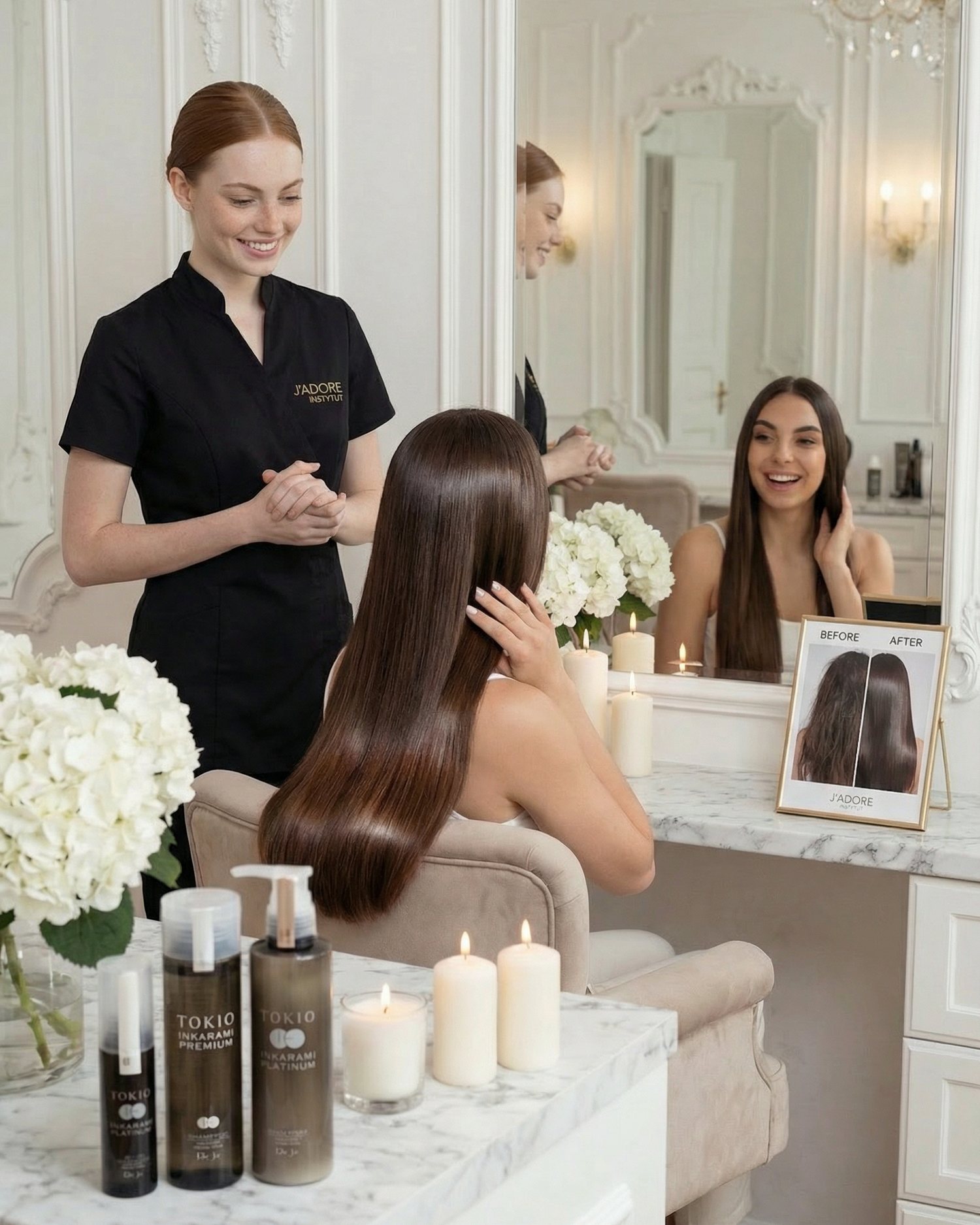
You leave with a finished, styled look. The effect is immediate — hair is soft, shiny, and behaves differently than before the treatment.
How long it lasts, and what to realistically expect
The results of nanoplastia are visible immediately and last for several weeks — for many people, several months. How long results last depends on a few factors: your hair's natural structure (thicker, more porous hair tends to hold results for a shorter time), how often you wash it, the products you use, and exposure to chlorine or seawater.
Hair grows out naturally — nanoplastia doesn't permanently change its structure, so new growth will have its own natural texture. This is not a permanent treatment and doesn't commit you to anything forever. If you decide you'd rather go back to how things were, simply don't repeat the treatment.
When nanoplastia makes sense — and when it doesn't
Nanoplastia isn't for everyone — and it's worth knowing when it actually solves a problem, and when it's simply unnecessary.
Good candidate
when the treatment makes sense
- curly, wavy or frizzy hair that's difficult to style
- hair that reacts to humidity (frizzes, curls up)
- length of more than a few centimetres — the treatment needs hair to work with
- wanting to cut down on morning styling time
Unnecessary investment
when it's best to skip it
- very short hair — under 2–3 cm, results are marginal
- naturally straight hair with no tendency to frizz
- expecting curls to be fully straightened — nanoplastia doesn't do this
The best starting point is a conversation with your hairdresser before the treatment. A few minutes assessing your hair and discussing expectations prevents disappointment on either side.
Nanoplastia and style — what changes in your daily routine
Nanoplastia often cuts several minutes off your morning routine — and that's its main practical value for men. It's not about looking different. It's about no longer fighting with your own hair every morning, and leaving the house with a style that behaves predictably.
If you already use styling products — gels, pastes, pomades — nanoplastia doesn't rule them out. You can still achieve the same look using smaller amounts. Or skip products altogether, if the natural fall of your hair works for you.
Men's haircuts
Nanoplastia before or after a haircut — you get the best results when hair is at the right length. It's worth coordinating both visits.
Colouring
If you're colouring or bleaching your hair, always do colour first, then keratin — this order protects the results of both treatments.