What actually damages men's hair
Short hair doesn't mean healthy hair. The damage cycle in men differs from women's, but it's just as real. The most common culprit: regular grey coverage — a monthly root touch-up is a permanent chemical assault on keratin structure. Add daily blow-drying without heat protection, summer sun on your head, and — for anyone who swims — pool chlorine. The effect doesn't show up straight away. For a few months the hair looks fine, then it suddenly starts breaking, losing bounce and fading in colour.
The damage mechanism is specific: aggressive processes — oxidation from colouring, high heat, UV — break bonds inside the keratin. The hair becomes porous, brittle, and absorbs moisture and oil unevenly. That's what causes the "straw" effect once it dries. No nourishing shampoo repairs structure from the inside — it cleanses and coats, but the broken bonds stay broken.
Is this even for men?
The question we hear most from men: "isn't this a thing for girls?". No — Olaplex works on keratin, and keratin has no gender. The technology is identical, the treatment process is identical, the result is identical. The only real difference is what you bring to it: short, often coloured hair, heavy blow-dryer use, regular pool water — that's indication enough.
Standard conditioner
what it does
- coats the outer layer of the hair cuticle
- smooths for a few hours
- improves detangling and shine
- doesn't repair anything structurally
Olaplex (treatment)
what it repairs
- rebuilds bonds inside the keratin
- reduces porosity and breakage
- can reverse damage caused by colouring
- results build up over several visits
What the treatment actually involves — no mythologising
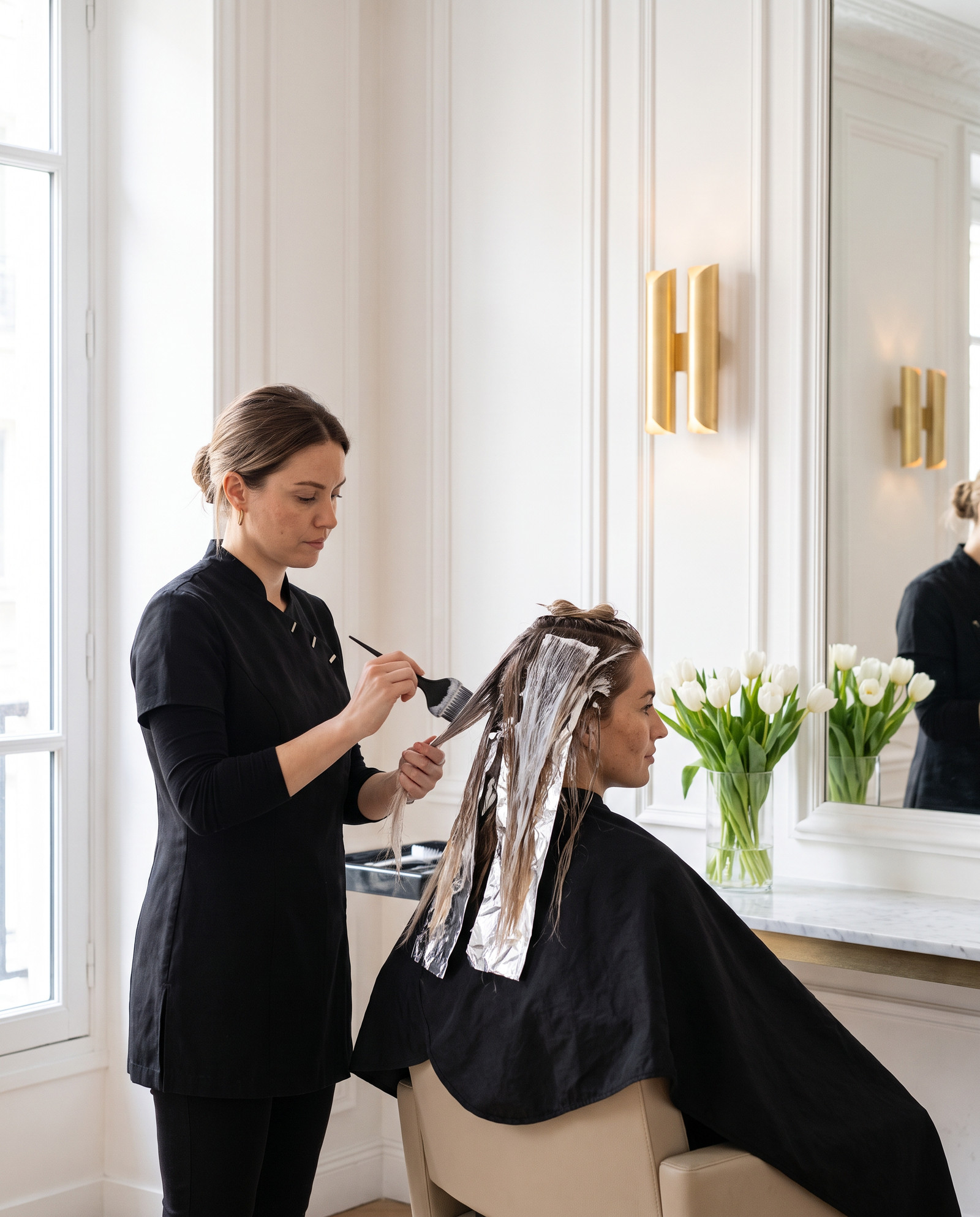
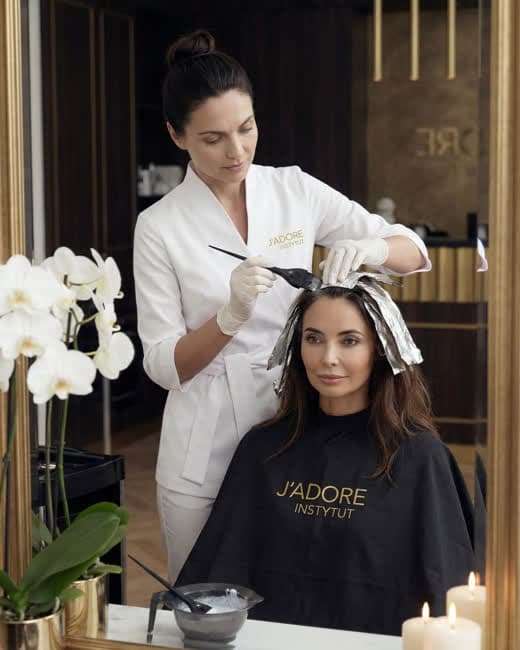
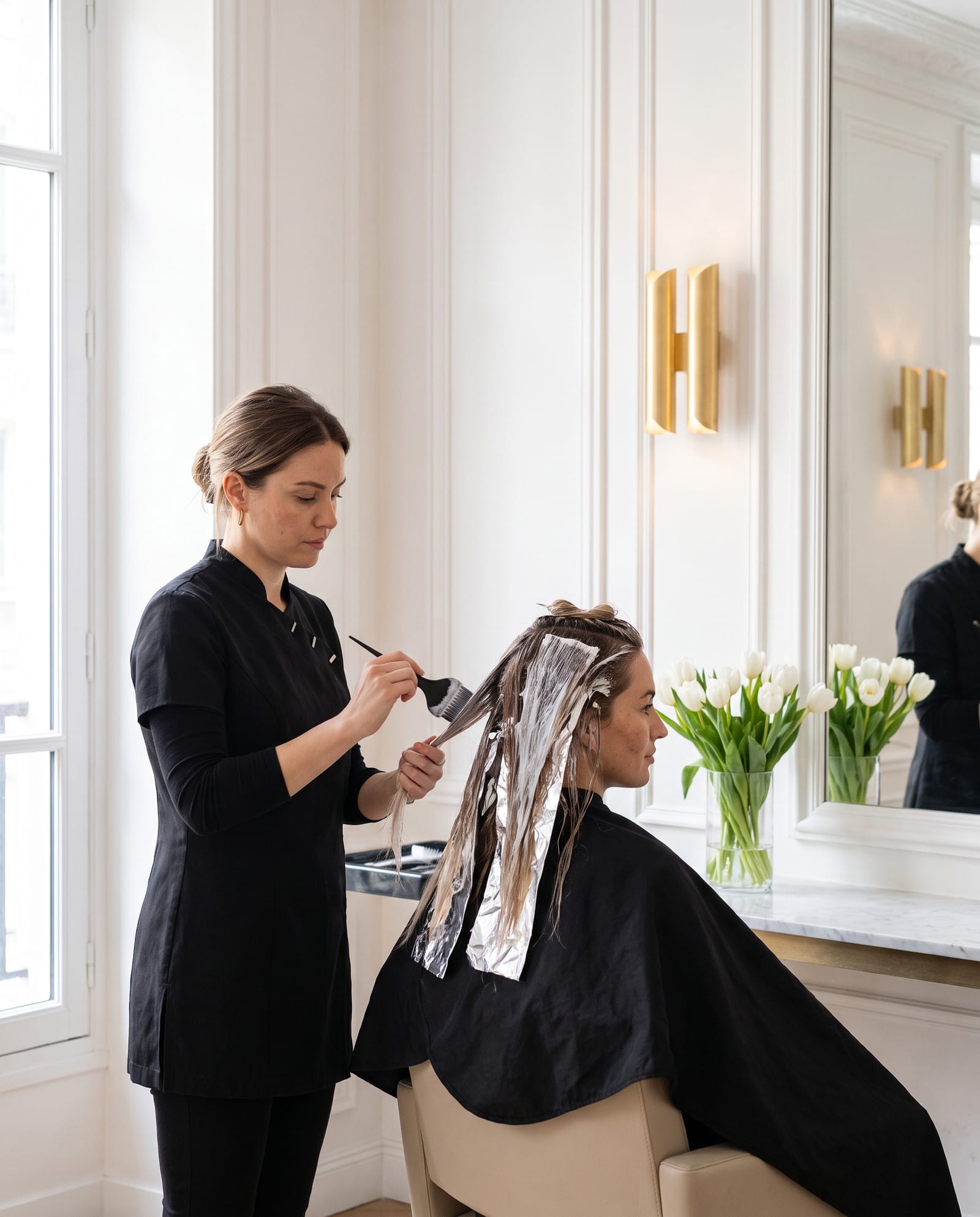
Olaplex isn't a relaxation session with music and candles. It's a technical protocol: apply the product to clean hair, let it work, rinse it out, optionally apply a take-home product. You can do it as a standalone treatment, or combine it with colouring — in which case the active ingredient is applied together with the dye and limits damage during the colouring process itself, not just afterwards. That's the key difference compared with most treatments, which only address damage once it's already there.
- 01
Hair assessment
Your hairdresser checks the level of damage, porosity and chemical history. Based on this, they choose the right version of the protocol — a more intensive one for heavily damaged hair, or a maintenance version for less compromised structure.
- 02
Applying the active ingredient
The product is applied to the whole head of hair, or just to the damaged sections. With colouring, it goes directly into the dye mix. As a standalone treatment, it's applied to clean hair before or after washing.
- 03
Development time
The active ingredient needs time to penetrate and form new bonds. The hair is kept warm — with a towel or a heat source — which speeds up penetration. This isn't about comfort. It's about reaction kinetics.
- 04
Rinsing and finishing
After rinsing, hair is dried and styled. The result is visible immediately — a different feel, less static, a different kind of shine. Full results build up after 2–3 visits.
There's no downtime. You leave with normal-looking hair — no "I've just been to the salon" effect. Nobody will know you've had a treatment just by looking at you. You'll feel the difference yourself, running your hair between your fingers.
When Olaplex makes sense — and when it doesn't
Not every man needs Olaplex. If your hair is short, uncoloured, rarely blow-dried and doesn't see much summer sun, there's probably no indication for it. Olaplex won't visibly "upgrade" healthy hair. It makes sense when there's something to repair.
- Regular grey coverage or lightening — every root touch-up is a chemical load on the structure. Building Olaplex into the colouring process limits the damage and helps colour last longer.
- Hair that breaks easily, or feels rubbery when wet — a sign of broken internal bonds, exactly what this treatment targets.
- A season of sun, pool or sea — UV and chlorine gradually degrade keratin. This is a common indication after summer.
- Regular blow-drying or straightening without heat protection — heat build-up is one of the biggest causes of degradation.
- Fine hair losing volume after colouring — rebuilding the structure often restores bounce and visual density.
Results after the treatment — in practical terms
After the first session, most men describe it the same way: "my hair feels lighter, and it's stopped breaking when I comb it." Or: "colour lasts noticeably longer after dyeing." That's a good sign — if you feel a change in the structure after one visit, the treatment is doing something. If nothing changed in grip or shine, your hair probably didn't have much structural damage to begin with.
One session is a starting point, not a solution. For heavily damaged hair after months of colouring, results build up gradually — typically over a series of two to four sessions a few weeks apart, followed by home-care maintenance. It's also worth asking your hairdresser about building the active ingredient into future colouring sessions — it's a cheaper and more effective approach than treating damage after it's already done.
Combinations that make sense
Olaplex works best not as a one-off visit, but as a regular part of your hair care and colouring routine. Here are a few combinations that tend to work well in practice:
Olaplex + grey coverage
The active ingredient, applied together with the dye, protects the structure during the oxidation process — colour comes out more vibrant, and hair is less prone to breakage than after standard colouring.
Olaplex + keratin smoothing
Applied before a keratin treatment, Olaplex strengthens the bonds first. The smoothing treatment then works on a stronger structure, and the result lasts longer.
Olaplex + scalp therapy
For dandruff or an oily scalp, Olaplex can be combined with scalp-care treatments — each works on a different layer, and there's no conflict between them.