Dryness vs dehydration — two different problems, two different solutions
The simplest rule is this: dry skin is a type, dehydration is a condition. Skin type is largely genetic and stays fairly constant throughout life. Skin condition changes — with the season, diet, stress, environment, poor skincare, even overly aggressive treatments. That's why dehydration can affect any skin: dry, normal, combination, even clearly oily skin.
Dry skin
skin type — a matter of structure
- Few sebaceous glands → low sebum
- Weaker lipid barrier — skin loses water quickly
- A feeling of tightness all the time, regardless of season
- Wrinkles and lines appear earlier than in other skin types
- Prone to irritation, redness, flaking
Dehydrated skin
skin condition — a matter of hydration
- A shortage of water in the epidermis, not a shortage of oil
- Can be oily AND dehydrated at the same time
- Tightness after cleansing that fades once you apply cream
- A fine "paper-like" texture of lines, dull colour
- Changeable state: can improve within a few days
Where dehydration comes from — and why it's hard to spot
Epidermal dehydration results from damage to, or weakening of, the hydrolipidic barrier — the thin layer on the skin's surface that acts like a protective film. It keeps water in and keeps irritants out. When the barrier works properly, skin retains moisture naturally. When it's damaged, water escapes — no matter how much cream you apply.
- Overly aggressive cleansing — alkaline soaps, foaming cleansers with too many detergents, toners with ethyl alcohol. Any cleanse that leaves your skin "squeaky clean" is a sign the barrier has just taken a hit.
- Wrong layering order in your routine — applying active ingredients (vitamin C, acids, retinol) without adequate hydration underneath and sealing on top.
- Air conditioning and heating — dry air literally draws water out of the skin. Autumn and winter are peak dehydration seasons for clients who work in offices.
- Peels used too often or too intensively — exfoliation removes dead skin, but overuse starts stripping living cells too and damages barrier integrity.
- Diet and hydration — a shortage of omega fatty acids and too little water during the day show up on your skin faster than you'd expect.
A home test — working out which one you have
You don't have a dermatology lamp or a skin analyser at home. But you can run a simple test in front of the mirror. It takes a few minutes and gives fairly reliable clues:
- Cleanse your face with a gentle cleanser and wait 20–30 minutes — without applying anything. If after that time your skin looks shiny, with visibly enlarged pores, but also feels tight or looks dull — that's classic dehydration on oily or combination skin.
- Tightness that disappears after applying cream = dehydration. Tightness that stays regardless of cream, or returns within hours = dry type (a lipid barrier problem).
- A "paper-like" fine texture of lines on the cheeks or under the eyes, visible when you gently stretch the skin — one of the most characteristic signs of dehydration, often mistaken for early wrinkles.
- Colour: grey, dull, "tired"-looking regardless of how well you slept — well-hydrated skin has a different glow. Dehydrated skin looks faded.
- Reaction to pure acids or vitamin C: if every active product stings or burns immediately, the barrier is damaged. Healthy skin tolerates well-formulated acid products without discomfort.
How to hydrate — and what actually works for what
For dehydrated skin, layering is key: deliver water first, then lock it in. For dry skin, the priority is rebuilding the lipid barrier. Often, both strategies are needed together.
- Hyaluronic acid: binds water in the epidermis and works best with adequate facial hydration — apply it to slightly damp skin, or straight after your toner. Low-molecular-weight hyaluronic acid penetrates deeper; high-molecular-weight works on the surface and forms a light protective layer.
- Ceramides and cholesterol: rebuild the lipid barrier. Essential for both dry skin and dehydration involving barrier damage. Look for them in creams designed for sensitive skin and post-treatment care.
- Panthenol and urea: soothing, and they bind water in the epidermis. Urea at low concentrations (up to 5%) hydrates well without exfoliating — safe to use on dehydrated skin.
- Glycerin: a cheap, underrated humectant — it draws water from the surrounding air and from deeper skin layers. Effective, but works best as part of a formula alongside ceramides or oils.
When skincare alone isn't enough — the salon
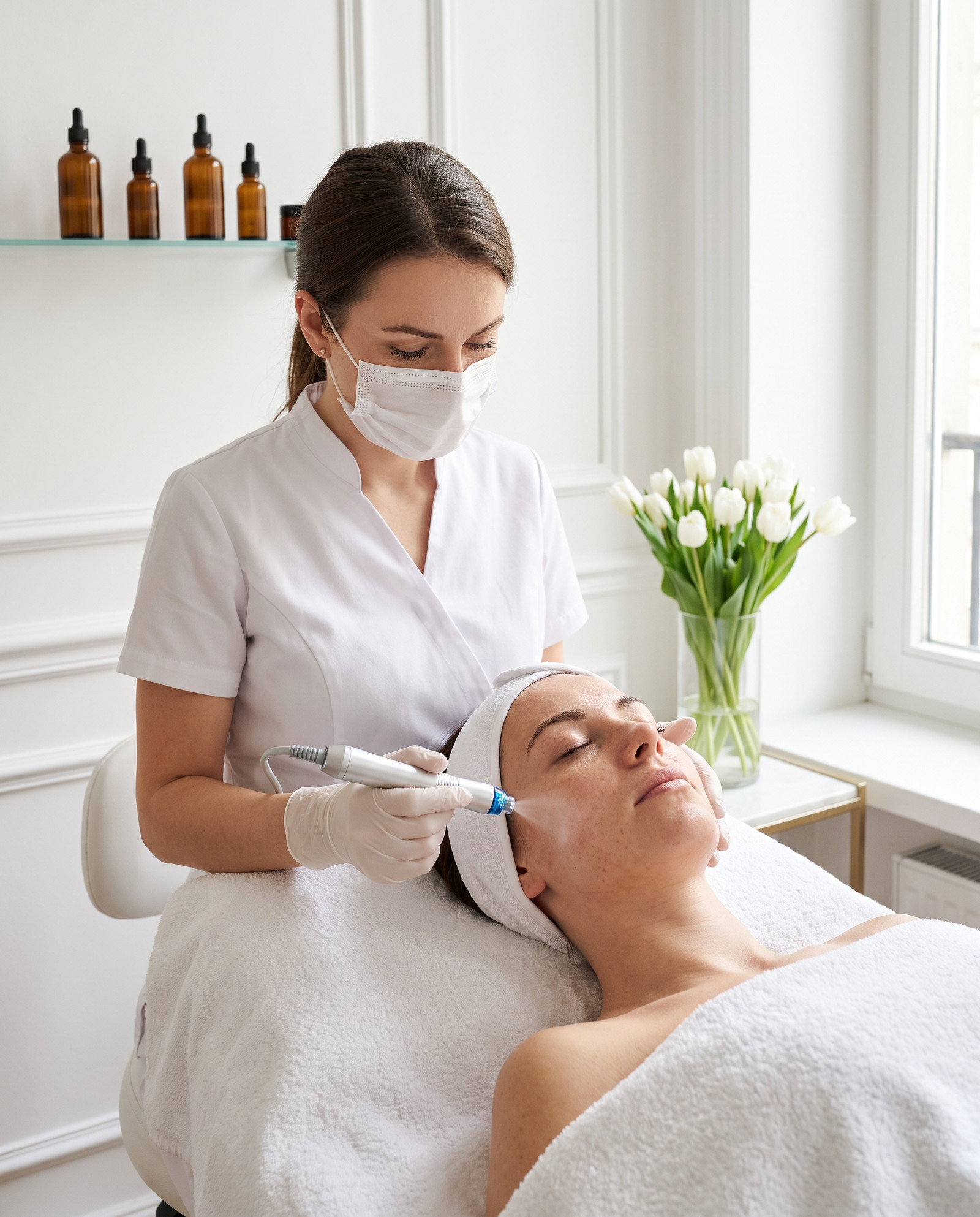
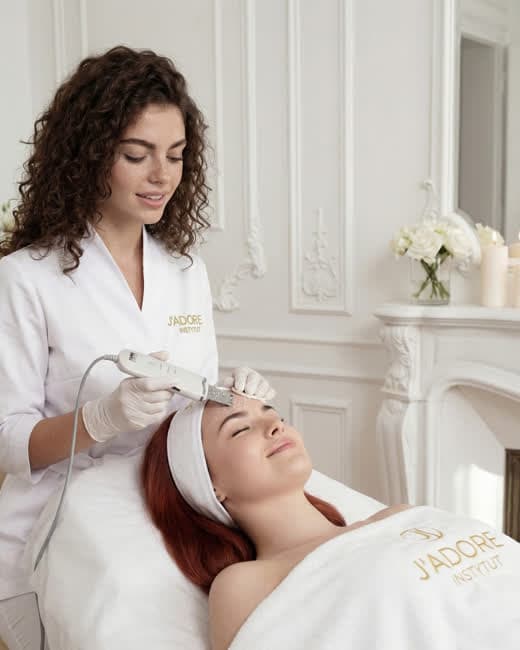
Cosmetics can keep skin in good condition and prevent dehydration, but when the barrier is significantly damaged and the epidermis is chronically short of water, you need stronger tools. Salon treatments work on a different level to home skincare: they deliver active ingredients directly where they're needed, at concentrations creams from the pharmacy simply can't match.
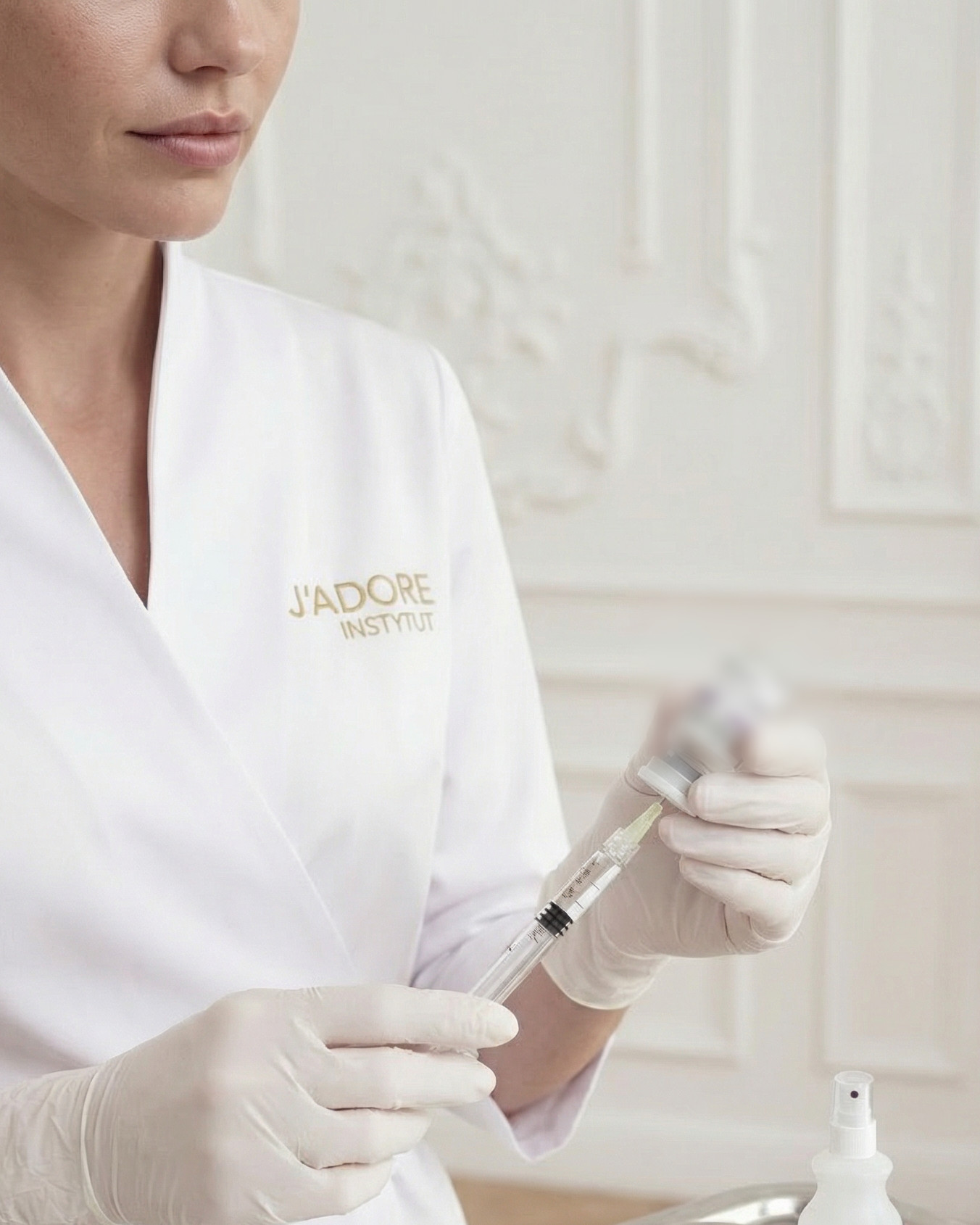
Mesotherapy + hyaluronic acid
delivers hyaluronic acid directly into the dermis. The hydrating effect lasts significantly longer than with creams, because the ingredient doesn't need to "fight through" the epidermal barrier.
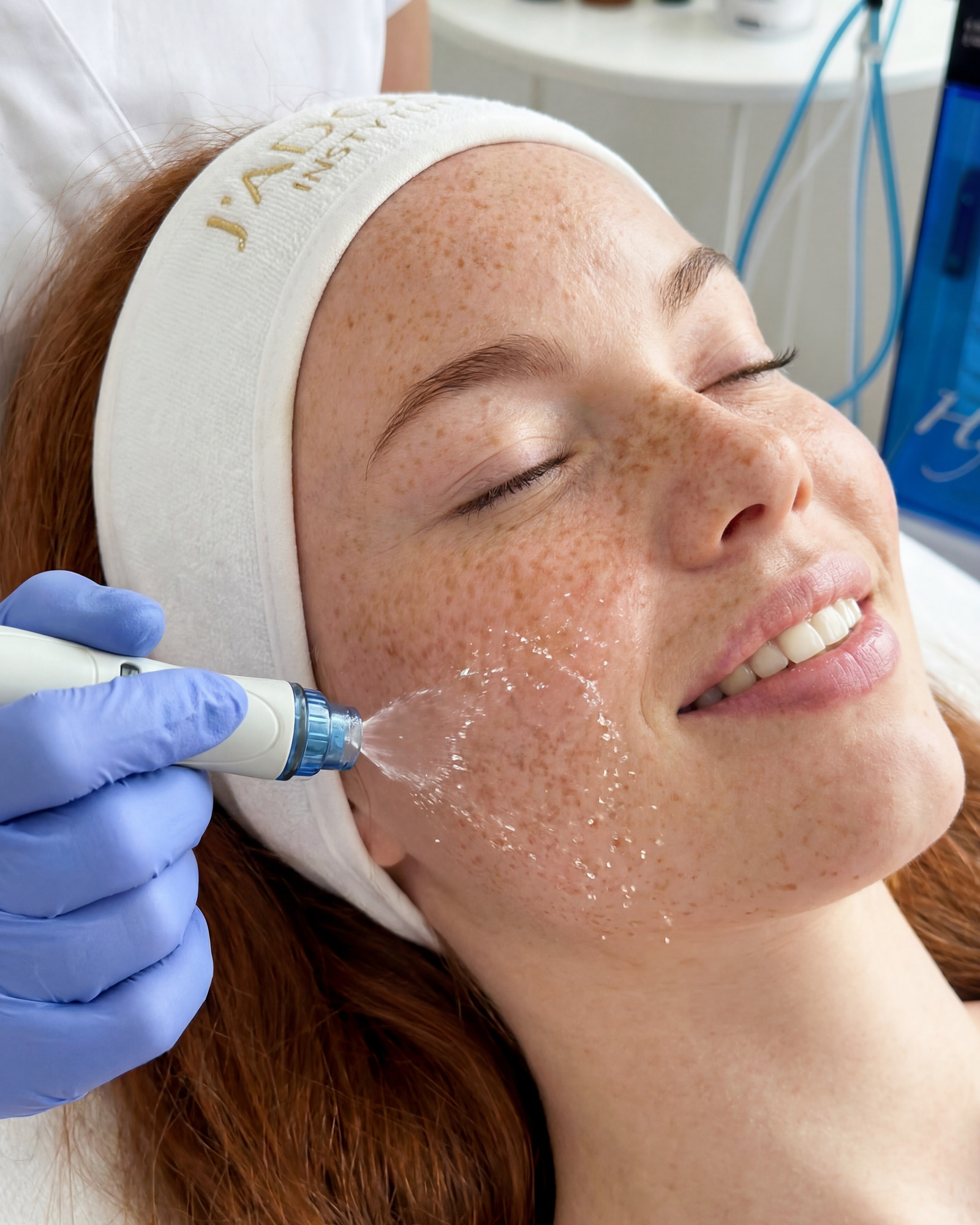
Hydrafacial
multi-step cleansing combined with saturating the skin in hydrating serum. Ideal for dehydrated skin with congested pores — the classic oily-plus-dehydrated combination.
Hydrating treatment (dedicated protocol)
a series of sessions tailored to your barrier condition and level of dehydration. Can combine several methods in a single protocol.
Biostimulators
for when the issue goes beyond hydration to skin quality and density. They stimulate your own collagen and hyaluronic acid production — results build over several weeks.
An important rule: before any more intensive treatment (peel, laser, mesotherapy), skin needs to be properly hydrated. Performing active treatments on chronically dehydrated skin without first restoring the barrier invites irritation and a longer recovery. A good specialist always starts by assessing skin condition, not with a ready-made procedure.