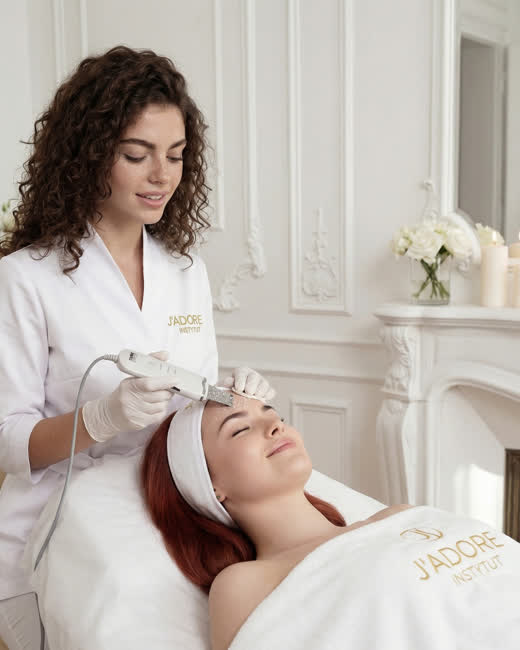
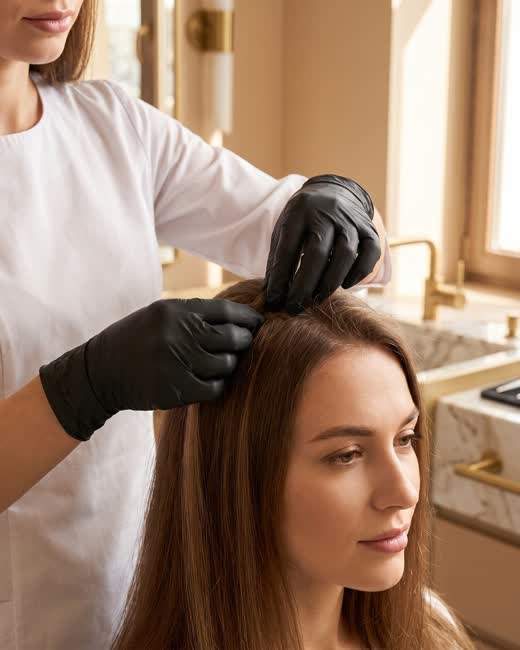
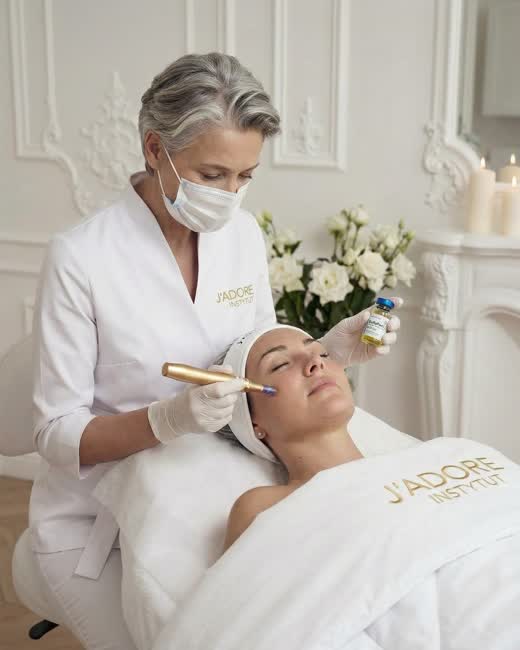
A treatment room at J'adore
FACIAL COSMETOLOGY
Skin that tightens after washing, looks grey and dull, "drinks" cream and still feels rough to the touch — this isn't always about the wrong product. Most often it's dehydration: the skin lacks water and a barrier strong enough to hold it in.
Importantly, this also applies to oily skin (sebum is a lipid, not water). A hydrating course is not a single treatment — it's a planned series that hydrates the skin on several levels at once: on the surface, deeper down, and by rebuilding the epidermal barrier. At J'adore Instytut, this course is run by an experienced cosmetologist. It's a beauty treatment, non-invasive — needle-free at its base level. Below you'll find everything worth knowing before your first visit.
Series of 3–4 treatments every 1–2 weeks; maintenance once a month
How it works
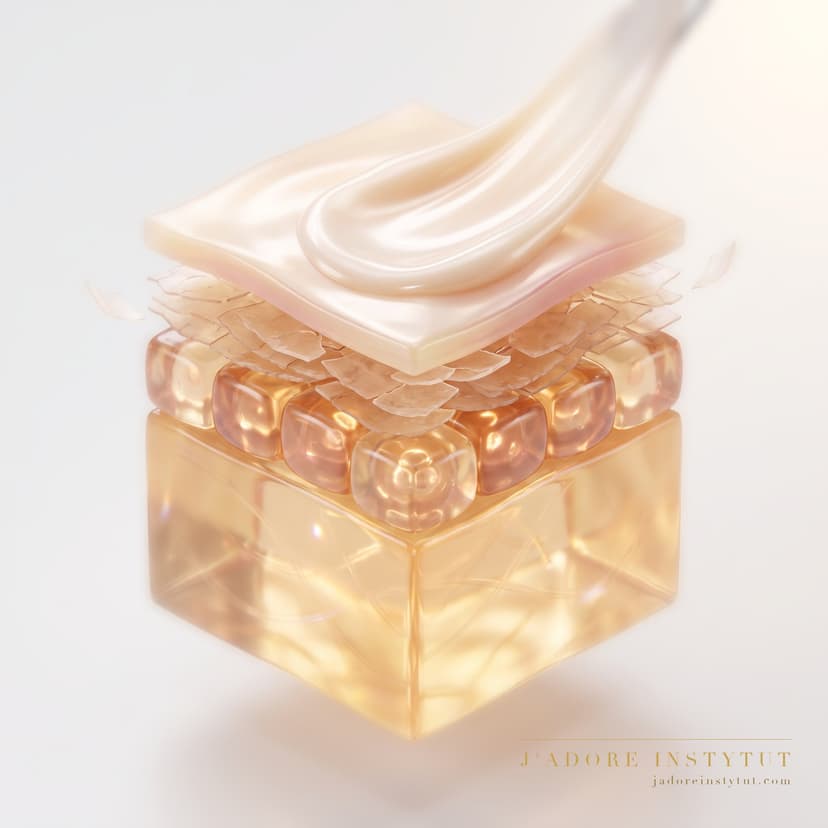
Dehydrated skin doesn't need "more oil" — it needs water, and a barrier capable of holding that water in. That's why this course doesn't rely on one strong product. It works on three levels at once: the surface level (cleansing and infusing hydrating ingredients into the epidermis), the deep level (delivering hyaluronic acid and water-binding substances further down, where cream can't reach), and the barrier level (rebuilding the lipid layer so the skin stops losing water through evaporation).
That's why we call it a course, not a single "treatment". It's a series of planned sessions, each one building on the last. One session gives a quick glow; only the full series delivers lasting hydration, a smoother texture, and skin that copes better with dry air on its own. This is a beauty treatment — and that's exactly how we approach it.
Ideal for
Female and male treatment focus
The most common goal is radiance, smoothness and comfort — regaining that luminous, "well-rested" complexion and a better base for makeup. Skin can be thinner and more reactive, so we choose gentler formulas and often add a soothing step. This is the classic hydrating course for women.
What we work with
For men, the most common scenario is dehydration alongside excess oil: the skin is shiny in the T-zone, while also feeling tight and dull. Shaving and air conditioning add to this by weakening the barrier further. The goal: calmer, less tight skin without a "done" look — this is the hydrating course for men.
What we work with
Interesting fact: there's a phenomenon known as the "dehydration paradox" — skin can be oily and dehydrated at the same time. The more aggressively you wash away the oil, the more water it loses, and the more sebum it produces in response. The solution isn't a stronger gel — it's hydration and barrier repair.
Safety
With the hydrating course, the result depends not on a "miracle product" but on an accurate diagnosis and consistency. It's worth asking about this at any salon:
At J'adore, the course is run by a cosmetologist, who first assesses hydration levels and barrier condition — only then chooses the series variant. Without a proper assessment, it's easy to "hydrate" skin that actually has a different problem.
Lasting hydration builds session by session. Selling one treatment as "miracle hydration for six months" is a warning sign.
We use reputable lines and capsules matched to your skin type (for example, the hydrating variant), not "one serum for everyone".
Warning sign: "miracle, lasting hydration from one treatment — at a bargain price" · A suspiciously low price and a promise of "months of results from one visit" are classic warning signs. Real, lasting hydration builds through a series and home care. Also be wary of non-genuine products and unqualified practitioners — you have every right to ask who's performing the treatment, which product lines they use, and whether it's preceded by a skin assessment. A good salon will answer without hesitation.
Contraindications
Some contraindications are permanent, and some are temporary — in that case we simply postpone the treatment until the situation passes.
From the cosmetologist's chair
The thing people forget most often is cold sores. Clients often think: "I only have it on my lip, and the course is for my whole face — it shouldn't matter." It does matter — an active virus carries a risk of spreading, regardless of location. It's better to postpone by a few days.
This isn't a complete list — we'll go through your medication, skin conditions and previous treatments individually during your consultation, after a skin assessment.

The visit
The course is a series of sessions spread over time, not a single visit. A typical course looks like this:

Consultation & skin assessment
the cosmetologist evaluates hydration levels and barrier condition, rules out contraindications and chooses a variant: basic or intensive.

Session 1 — surface hydration
cleansing and exfoliation, plus an infusion of hydrating serum (e.g. HydraFacial or Geneo with a Hydrate capsule). Skin feels softer and more radiant immediately.

Next session — deep hydration
delivering hyaluronic acid and water-binding substances deeper into the skin; in the intensive variant, we add biorevitalisation (e.g. Profhilo / mesotherapy).
Closing session — barrier repair + radiance
growth/nourishing factors plus LED light, which calms the skin and enhances the effect of the whole series.
Home care and maintenance
simple rules (HA on damp skin, ceramides, SPF) plus a single treatment once a month keep the results going for weeks.
What to expect
The key point: you'll see the glow right away, but that's not the end of it. The first effect — softness, radiance, a "well-rested" complexion — shows after the very first session. Deep, lasting hydration and barrier repair build across the whole series and over the days that follow it.
The most common misunderstanding: "I had one treatment and after two weeks it's tight again." That's completely normal — a single session resets the skin, but lasting hydration is built by the series. That's why we plan 3–4 sessions from the start, not one "rescue" treatment.
Portfolio
A record of the work in our salons — the place where we publish treatment frames and, after photo sessions, results.
A record of results — in preparation. We publish photographs of our clients only with their consent.
The result doesn't disappear suddenly — it fades gradually, and the pace depends on home care and the season. In winter, and with frequent air conditioning, it's worth maintaining it with a single treatment once a month.
The course and your lifestyle
There's no real "downtime" after hydration, but for the first few days we make sure freshly exfoliated skin isn't further irritated or dried out. The rule is simple: don't take away from your skin what we've just given it.
After hydration, skin makes an excellent makeup base. After the mesotherapy variant, give it a few hours; in other cases, you can usually apply makeup the same day or the next.
UV degrades hyaluronic acid in the skin and weakens the barrier — avoid intense sun exposure for a few days after the session, and use SPF 50+ every day so you don't undo the effects of the course.
High temperatures dilate blood vessels and can increase redness after exfoliation. Sauna, hammam, hot bath — best to wait 1–2 days.
Chlorinated water can dry out and irritate freshly exfoliated skin. Wait a day or two before swimming, especially after the mesotherapy variant.
Skip acids and mechanical scrubs at home for a few days to a week — the skin has already been exfoliated in the salon, and doubling up will only irritate it.
Retinol can be drying — during a hydrating course, reintroduce it carefully and only a few days after the session, ideally after checking with your cosmetologist.
Hydrating programme
These methods are often confused, yet they do different things and often complement each other. The simplest way to think of them is as three levels of skin work:
cleanses and hydrates the surface
doesn't deliver acid to the dermis, doesn't give months of lasting results
delivers water deeper
this isn't a cleansing treatment — it won't replace exfoliation and surface infusion
improves skin quality and condition
doesn't fill in a fold locally, and doesn't "sweep out" blackheads like a cleansing treatment does
Combine with
The hydrating course combines easily with other treatments — it's often the base that improves comfort and the results of what follows. The cosmetologist decides the order and intervals during your consultation, but the general logic stays the same:
I sometimes hear: "I just want HydraFacial, so my skin stops feeling tight for good." HydraFacial brightens and hydrates the surface beautifully, but if the real problem is deep dehydration and a weak barrier, the surface step alone won't be enough. That's why we combine levels — it's why we call it a course.
Variants and products
Behind the term "hydrating course" are several different tools — they differ in technology and in the level of skin they work on. You don't choose them "off the shelf" — the cosmetologist selects them based on your skin condition, the season and your goals. We often combine several into one series.
Cleansing and exfoliation in one, with immediate infusion of hyaluronic acid serum. Painless, with no downtime.
Dla kogoStarting the series and a quick glow; grey, dull skin; a base for makeup.
Oxygenating exfoliation with a hydrating capsule — combines gentle exfoliation with skin oxygenation (the Bohr effect) and delivery of active ingredients.
Dla kogoIntensive surface hydration with oxygenation; dry, dehydrated skin.
An in-salon, multi-step hydrating course with a plant-based bio-extract; a non-invasive spa ritual with massage, no needles.
Dla kogoDehydrated skin that responds well to a "ritual"; hydration without needles; maintaining results.
The barrier-repair step: growth factors support epidermal regeneration, while LED light calms the skin and enhances the effect.
Dla kogoClosing the series; sealing the barrier; reactive skin after a season of stress.
Deep hydration — hyaluronic acid delivered beneath the skin, where cream can't reach. This is already an invasive element, added deliberately to the series.
Dla kogoSkin that needs deep, longer-lasting hydration; results last longer.
Fact: Where do the differences come from? From the level each method works on (epidermal surface vs. dermis), the technology (hydro-exfoliation vs. oxygenation vs. injection), and how long the result lasts. That's why "which course is best" is the wrong question — the best approach is a well-structured series, not a single, strongest treatment. That's a job for the cosmetologist, after a skin assessment.
Price list
Checking free hours…
From the magazine
Editorial pieces on how this treatment works in practice — what happens during the session, how to prepare, where the limits are and what the first days after look like.
See also
The result lastsRadiance from the first session; deep hydration lasts for weeks after the seriesJ’adore Instytut
The text above is for informational purposes only and does not replace a consultation. The hydrating course is a beauty treatment (non-invasive — needle-free at its base level), carried out by a cosmetologist. The choice of treatment and variant, the number of sessions in the series, and any contraindications are decided by a cosmetologist/specialist during an individual consultation, following a skin assessment.
Home care
Cosmetics matched to what your skin needs after a treatment — so the clinic effect lasts longer.
 hydrationSesdermaMANDELAC Moisturizing CreamView in the shop(opens in a new tab)
 post-treatment regenerationCell Fusion CDermagenis pH Biome SerumView in the shop(opens in a new tab)
 sun protectionDermaQuestSunArmor SPF50 30 mlView in the shop(opens in a new tab)
 hydrationMedidermaHylanses Md Ha Advance Concentrate SerumView in the shop(opens in a new tab)
 post-treatment regenerationVagheggiEmozioni Plus — Anti-Stress Face Mask 75mlView in the shop(opens in a new tab)
 sun protectionSkeyndorProtective cream SPF 50+ – Age Photo DefenseView in the shop(opens in a new tab)
 hydrationMedik8Lipid-balance Cleansing Oil™View in the shop(opens in a new tab)
 hydrationSelvert ThermalThe Essential Care Daily Moisturising CreamView in the shop(opens in a new tab)