Why does one virus cause so much confusion?
Most people know just one thing about cold sores: "a blister pops up now and then, and it goes away on its own." For most of life, that's enough. The problem starts in the aesthetic medicine clinic — because an injectable treatment around the lips is a completely different situation from everyday immunity. Many patients don't connect their past cold sore episodes with an upcoming treatment. Others assume that if they haven't had one in years, there's "no problem." This is the most common mistake — and the biggest source of disappointment after treatment.
Six myths, one by one
Myth 1: "I haven't had a cold sore in years, so I don't have the virus." Unfortunately, no. Going symptom-free for a long time only means the virus is inactive — not that it's gone. A flare-up can happen for the first time after a decade of calm, and an injectable treatment can be exactly the trigger: mechanical tissue trauma, short-term stress, and a dip in immunity at the injection site. A history of past episodes, even distant ones, is crucial information. Your doctor asks for a reason — answer honestly.
Myth 2: "The treatment is completely safe as long as there's no active lesion." True — but only with the right precautions in place. "No blister" alone isn't a green light. Anyone with a history of HSV needs antiviral prophylaxis — medication taken for a few days before the treatment and a few days after. Skipping this step for someone with a confirmed history is a risk a responsible doctor eliminates, not one they overlook.
Myth 3: "I only have HSV-2, so it doesn't apply to my lips." HSV-1 and HSV-2 are two different strains, but the split "HSV-1 = lips, HSV-2 = genital area" is an oversimplification — both types can occur at different sites. If you have a confirmed infection with either one, tell your doctor. They'll assess, based on your history and any tests needed, what approach is appropriate.
Myth 4: "If I have a cold sore, I just need to wait for the blister to go away." This is one of the costlier mistakes. An active lesion — a red blister, an erosion, a scab — is an absolute contraindication: it's a contagious period, the skin barrier is broken, and there's a risk of spreading the virus with the needle. But new skin forming over the area doesn't mean the active phase is over. The standard guidance is a minimum of 2 weeks after full healing — and your doctor decides the timing, not you looking in the mirror. Treating too early risks a flare-up far more severe than the original lesion.
Myth 5: "Drug prophylaxis is overkill — I'll manage without it." Prophylaxis is recommended for anyone with a history of HSV — not because doctors enjoy prescribing medication, but because clinical data confirm it works. Aciclovir or valaciclovir taken before and after the treatment significantly lower the risk of reactivation — without it, a lip treatment could trigger lesions not just on the lips, but around them and inside the mouth. This isn't a risk worth ignoring for convenience.
Myth 6: "If everyone does this without asking any questions, there's really nothing to discuss." The problem is that not everyone asks — and they should. Screening for HSV before a filler treatment is part of good medical practice, not a bureaucratic formality. A salon that skips this saves time during the consultation but exposes you to a risk that five minutes of conversation could have removed. If your salon doesn't ask — ask yourself.
Red flag — when treatment really isn't allowed
How to prepare properly — step by step
Good preparation for lip filler with a history of HSV really comes down to four simple rules. First — tell your doctor the truth. Don't downplay old episodes, and don't skip the question on the form. A cold sore from ten years ago matters just as much as one from last month — the virus is still there. Second — book your consultation in advance. Antiviral prophylaxis usually starts 1–2 days before the treatment; booking on impulse for "tomorrow" can make proper preparation impossible. Third — don't schedule the treatment during or right after a stressful week. A body under heavy psychological load is more prone to reactivation — that's not a myth, it's physiology. If a hard week is coming up, consider moving the date. Fourth — watch your lips for a few days after the treatment. Early signs — tingling, itching, redness around the mouth — can mean prophylaxis needs to be extended or intensified. Contact the salon — don't wait for the lesion to fully develop.
The treatment is possible — with the right preparation
A history of cold sores isn't a verdict, and it isn't a permanent ban. A good doctor treats it as a starting point for proper preparation — not as an excuse to say no. The vast majority of people with HSV-1 can safely have lip filler, provided the treatment is planned in advance, preceded by prophylaxis, and carried out with no active lesions. Timing and honesty are what matter most — your doctor takes care of the rest.
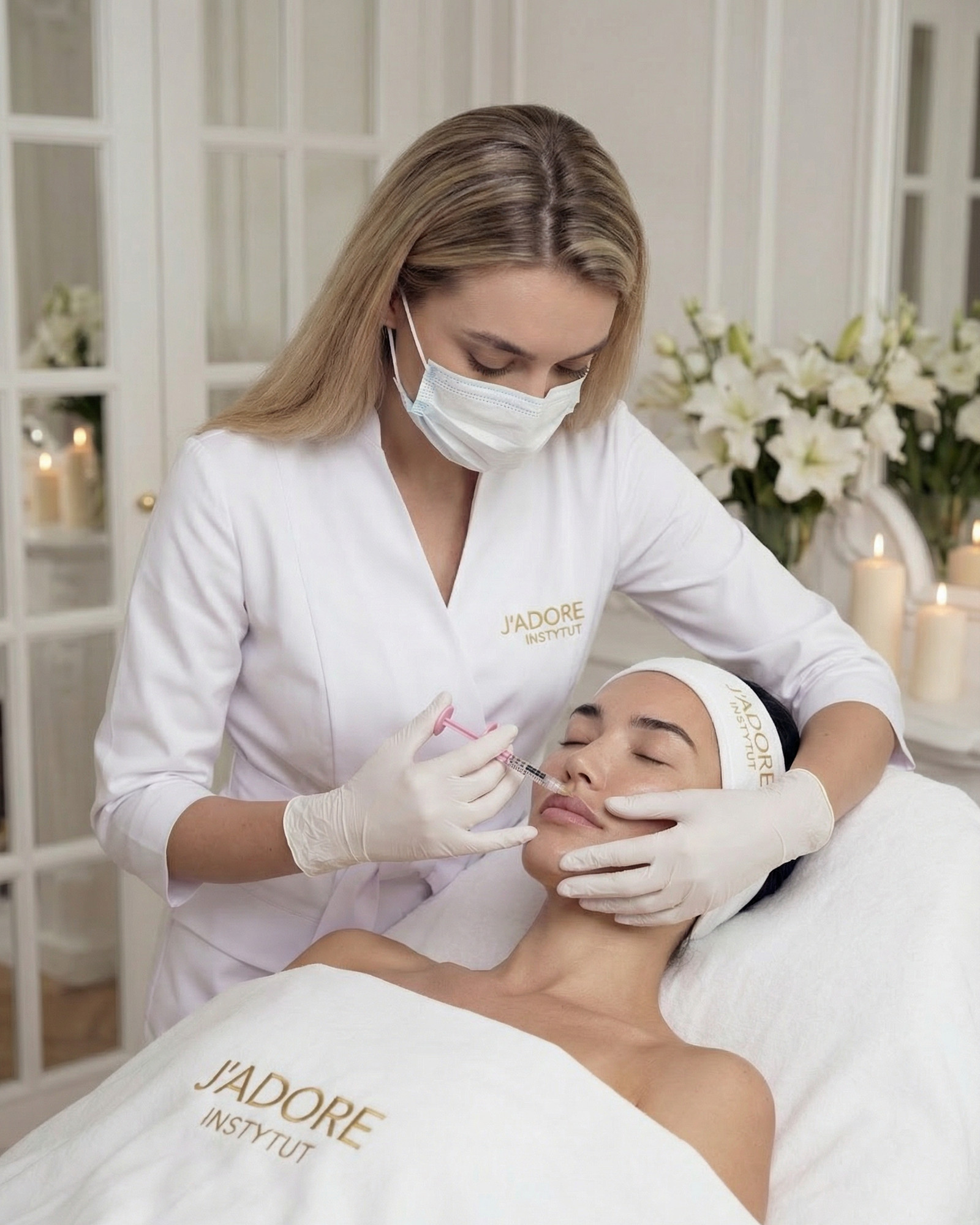
If you have any doubts, start with a consultation. This is your chance to ask everything — about the risks, the prophylaxis, the waiting period, and what to expect after the treatment. The decision to go ahead is yours; your doctor's job is to give you the full picture. At J'adore, every lip filler treatment starts with exactly this conversation — because a treatment is only good if it's safe.