

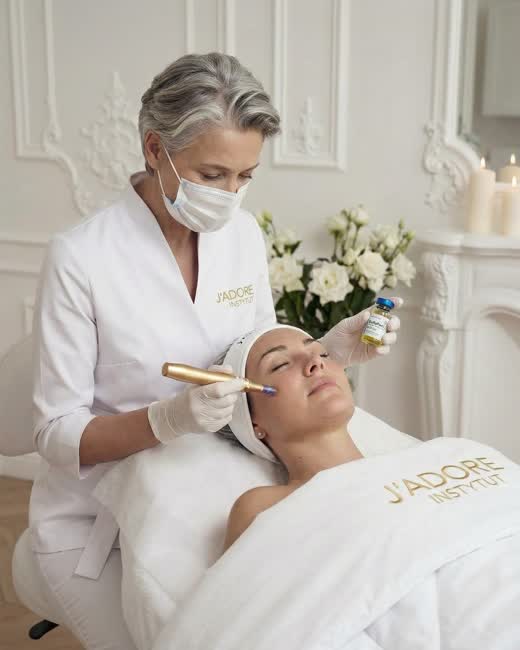
Arginine: what it is and what it actually does
Arginine is an amino acid — a protein building block the body can produce itself, though in smaller amounts with age. In the skin it plays several roles at once: it takes part in nitric oxide synthesis (which dilates blood vessels and improves microcirculation), supports collagen repair, and acts as a natural component of NMF — the skin's natural moisturising factor.
The key word here is "can" — results depend on concentration, penetration depth and baseline skin condition. An arginine peel works more gently than classic acids, because it doesn't aggressively exfoliate the epidermis, but supports its regeneration from within. It's a completely different approach.
Arginine peel vs acid peel — two different tools
The most common mistake when choosing a peel is treating them as interchangeable. Arginine peels and acid peels work at different levels and have different indications. Here's how they compare:
Arginine peel
regeneration and hydration
- Supports collagen and elastin synthesis
- Improves microcirculation and radiance
- Hydrates — replenishes NMF
- Gentle on sensitive and reactive skin
- Suitable all year round — no photosensitivity
- Results build gradually and accumulate
Acid peel (AHA/BHA/PHA)
exfoliation and evening
- Intensively exfoliates dead epidermal layers
- Targets hyperpigmentation and acne scars
- Stimulates cell renewal — a faster, more pronounced effect
- Depth can be tailored to the problem
- Effective for acne (BHA) and hyperpigmentation (AHA)
In other words: if the problem is grey, fatigued, dull skin prone to dryness, an arginine peel is often the better fit. If your priority is hyperpigmentation, acne scars or visible skin texture irregularities, you reach for acids. It isn't a question of "better or worse" — it's about matching the tool to the task.
Does an arginine peel really firm the skin?
This is the question we hear most often — and it deserves an honest answer. "Firming" is a catch-all term: it can mean better skin tone, a thicker and more elastic structure, reduced laxity, or simply skin that looks fresher.
- Improved firmness through hydration — well-hydrated skin looks and feels more resilient. Arginine, by replenishing NMF, often delivers this effect after just a few sessions.
- Support for collagen synthesis — with regular treatments, skin can gradually become denser. This effect shows up over a series, not after a single session.
- Improved microcirculation — nitric oxide "nourishes" skin from within, which for many people translates into radiance and a more even skin tone.
- Deep structural firming — this is where arginine alone isn't enough. Working with muscle-fascial tension and deeper layers requires other methods.
Who an arginine peel suits — and who might be more disappointed
This treatment works best for a specific skin profile. Knowing this in advance helps you avoid disappointment — not because "something went wrong", but because a different tool would have suited the problem better.
- Dry, dehydrated skin lacking radiance — this is where an arginine peel works best. Hydration and improved microcirculation are noticeable after just one session.
- Sensitive, reactive skin — if acids cause irritation, an arginine peel can be a great alternative all year round, including summer.
- Skin after intensive treatments — as a gentle regeneration step after laser therapy or deeper peels.
- Mature skin looking for collagen support — a series delivers a cumulative effect that supports the dermis.
- Oily skin with active comedones — BHA works better here. An arginine peel won't clear pores as effectively.
- Deep hyperpigmentation or acne scars — this task calls for stronger acids or a combination of methods.
When to combine an arginine peel with other methods
An arginine peel usually delivers the best results not as a standalone treatment, but as part of a sequence or a complement to deeper therapy. Here's the logic behind combining treatments:
Arginine peel + acid peel (alternating series)
Acid exfoliates deeply and evens out the skin, while arginine regenerates and hydrates in the weeks in between. Skin recovers faster, and the skin barrier isn't overtaxed.
Arginine peel + needle or needle-free mesotherapy
The peel prepares the epidermis, and mesotherapy delivers active ingredients deeper. This combination is often used for mature skin — a synergy of hydration and collagen support.
Arginine peel + Japanese face massage or fascial therapy
Arginine improves surface circulation, while massage supports drainage and fascial tension. The radiance and "refreshed features" effect is then more noticeable.
Arginine peel as a summer protocol
In summer, when AHA and strong BHA carry a risk of photosensitivity, arginine is often the first choice for maintaining results all year round.
Whatever the combination, a series plan matters more than a single session — the results of arginine peels build up with regularity. One treatment can refresh and hydrate the skin, but a genuine change in skin quality only shows after four to six sessions.
- 01
First treatments (1–2 sessions)
Hydration, improved radiance, smoother texture. Results are visible immediately after the treatment and for a few days afterwards.
- 02
Midway through the series (3–4 sessions)
Cumulative effects: better skin elasticity, a more even skin tone, and the first signs of collagen support.
- 03
After the full series (6+ sessions)
Denser skin, a clear improvement in hydration and radiance, and possibly better surface firmness. Results last with maintenance sessions.


