What DNA Recovery is — and why "biological" matters
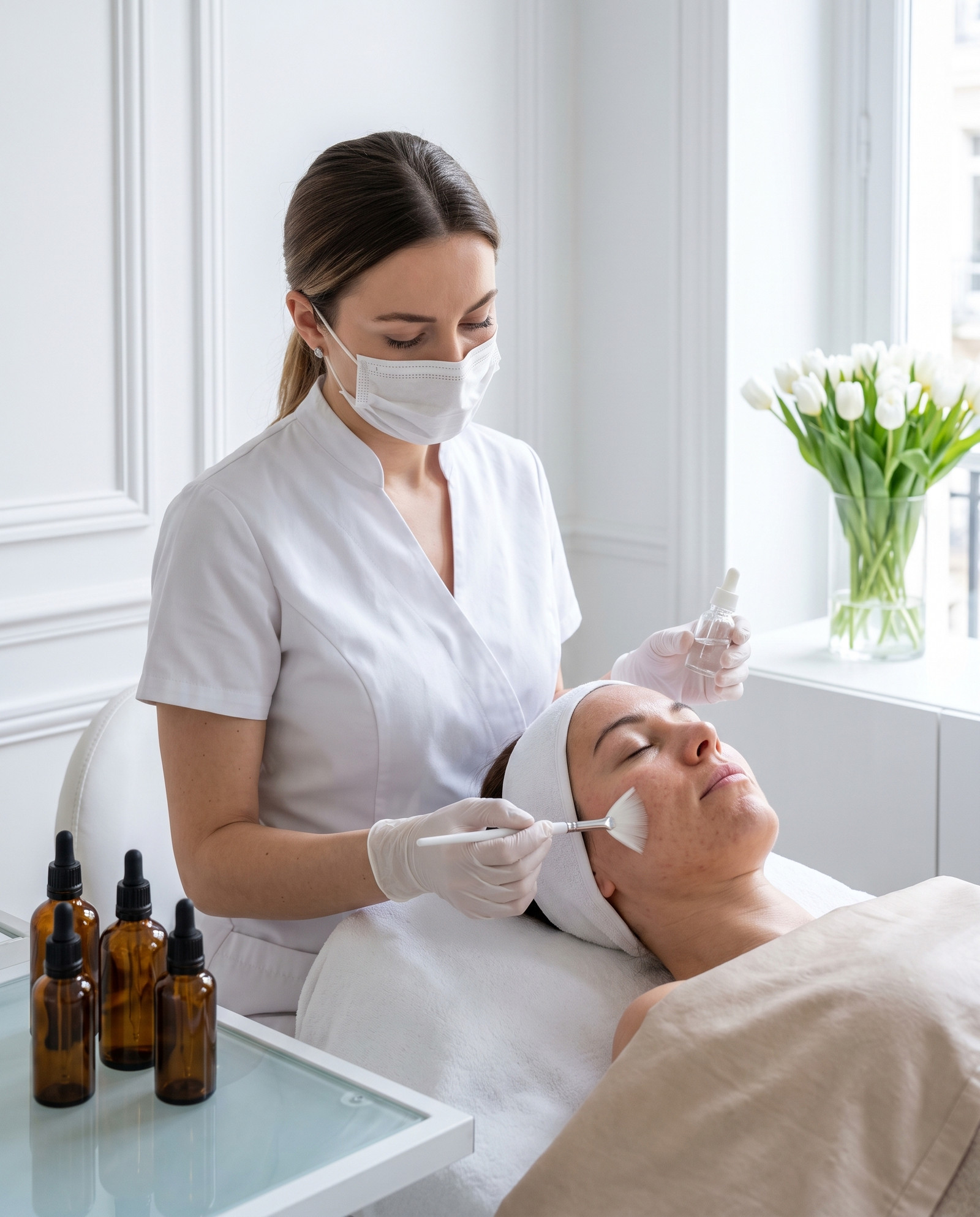
"Peel" is a word that brings to mind gritty pharmacy scrubs or a harsh acid that leaves your face flaking for a week. DNA Recovery is neither. It's an enzymatic, biological peel — it works through enzymes that selectively break down dead epidermal cells while delivering ingredients that rebuild the skin barrier. Nothing here is peeled mechanically or "burned off" with acid.
The key part of the name is DNA — the formula contains ingredients that support the skin's natural cell-repair processes. This isn't a marketing slogan. It's a description of the mechanism: the treatment works at the level where skin repairs itself after damage — from shaving, sun exposure, pollution, lack of sleep. For men, whose skin faces the daily stress of shaving and rarely gets proper care, this level matters even more.
Men's skin — why bother doing anything about it
Arguments like "because that's what you're supposed to do" or "my partner told me to" don't land with men walking through our doors for the first time. So here's the specifics — what happens to men's skin if you leave it alone:
- Thickening of the epidermis. Men's skin produces more dead cells and clears them more slowly. Result: a grey, dull tone, skin that looks "matte like paper".
- Ingrown hairs after shaving. A thickened epidermis blocks hair follicles — the hair has nowhere to go and grows inward. Result: red bumps, irritation, scarring.
- Dry skin despite active sebaceous glands. A paradox: skin looks shiny but is actually dehydrated. A lack of hydration in the deeper layers combined with excess surface oil — a combination that slows healing.
- Wrinkles from tension and dehydration. Dehydrated skin contracts faster. "Tired eye" wrinkles are often a sign of low hydration, not age.
What DNA Recovery does — results after one session and after a series
Let's be clear about one thing: a single session is a starting point, not the finish line. Skin that has gone years without any real repair doesn't rebuild itself in an hour. But the first results show up quickly — and that matters, because men's patience for cosmetic processes tends to run short.
- 01
After the first session
Skin feels smoother to the touch. Tone often evens out within the first 24 hours — less greyness, better "light" on the face. Mild redness around shaved areas can appear — it fades within a few hours.
- 02
After 2–3 sessions
Dehydration drops noticeably — skin stops "pulling" after washing. Ingrown hairs become less frequent, since the epidermis is thinner and more permeable. Dehydration-related lines are less pronounced.
- 03
After the full series (4–6 sessions)
The skin barrier is rebuilt. Skin responds better to home care — creams stop "not sinking in", products work more effectively. Overall condition is noticeably better — even without a professional assessment, you'll see the difference in the mirror.
DNA Recovery vs other methods — which to choose
Men with skin concerns usually ask: "won't a good cream do the job?" or "what about that dermabrasion my mate had done?" Here's the short answer:
DNA Recovery
biological regenerating peel
- works enzymatically — no damage
- zero downtime, walk out looking normal
- rebuilds the barrier + hydration
- ideal as a foundation for regular skincare
- good for sensitivity and shaving-related issues
Aggressive peels / dermabrasion
mechanical or chemical exfoliation
- fast, visible exfoliation effect
- better for deep pigmentation and scarring
- potential for strong regeneration after damage
DNA Recovery is work on the fundamentals — consistency delivers lasting results. It won't fix deep acne scars or advanced pigmentation, but it's an excellent foundation and often a prerequisite for more serious treatments. Well-hydrated skin with a rebuilt barrier responds better to lasers, acids and medical treatments.
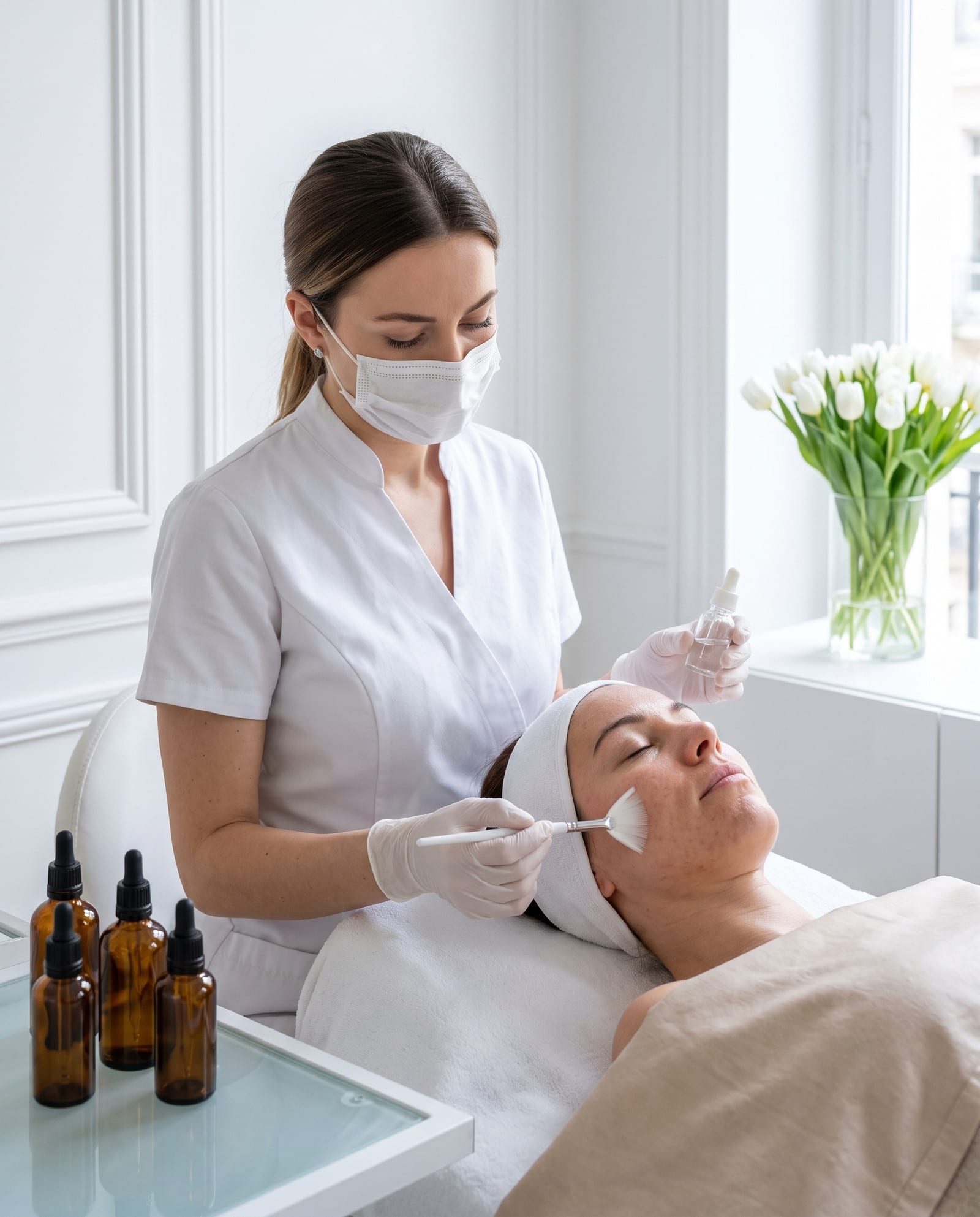
What the treatment involves and what comes after
The main question men ask before their first visit to a cosmetology salon: "will this look weird once I leave?" The answer is no. DNA Recovery is one of the treatments with no visible marks straight afterwards. Mild redness in shaved areas is possible — it fades quickly, and no one at work will notice.
Applying the enzymatic formula takes just a moment. Your skin may tingle slightly or feel warm while it works — that's normal. The whole thing takes a short time, no heated stones or relaxation music involved, unless that's what you're after. Afterwards, your cosmetologist may apply a moisturiser or a soothing mask, depending on your skin's condition.
- First 24 hours: avoid the gym and sauna — sweat combined with the formula can irritate skin during the repair phase.
- Shaving: wait at least 24 hours. If your skin feels sensitive after the treatment, push shaving back to 48 hours.
- SPF cream: for a few days, skin is more sensitive to the sun — don't go out without protection. Men tend to skip this, but here it genuinely matters.
- Home care: your cosmetologist will recommend specific products based on your skin's post-treatment condition — follow the advice, because results from the salon depend on what you do at home too.
Who DNA Recovery makes sense for — and who it's less suited to
Not every treatment suits everyone. DNA Recovery makes the most sense for men who:
- Have dry or dehydrated skin that doesn't respond well to cream — whatever they apply barely absorbs or fades fast
- Shave regularly and get irritation — red bumps, ingrown hairs, a "roughness" after shaving that never quite clears
- Notice a greyish tone or tired-looking skin with no clear reason — good sleep, healthy eating, and the face still looks under-slept
- Want to prepare their skin before a more serious treatment (laser, acids, mesotherapy) — DNA Recovery is a solid foundation
- Are looking for results without downtime — they can't afford a few days with a flaking face
DNA Recovery is a beauty treatment, not a medical one — it doesn't treat active inflammation, acute acne or diagnosed dermatological conditions. If you have active acne, psoriasis or another diagnosed skin condition, consult a dermatologist before booking. Your cosmetologist will assess during consultation whether the treatment is right for you.