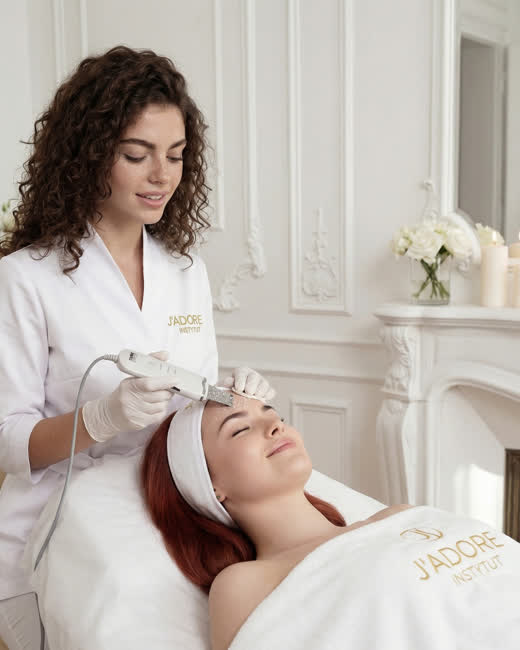
Your skin peels — and that's part of the plan
Before we get to regeneration, it helps to understand what "exfoliation" actually means. The epidermis — the outermost layer of skin — is a living factory. New cells are constantly forming at the base. Over several weeks, they slowly migrate towards the surface, mature and harden, eventually becoming a flat, dead layer. The epidermis sheds this layer — and immediately replaces it with a new one. This cycle runs continuously, throughout your life, without you noticing.
The problem is that with age, certain skin conditions, or exposure to sun and stress, this cycle slows down and becomes irregular. Old cells linger too long on the surface — skin looks grey, rough, dull. Pores appear larger because they fill with excess keratinised material. Cosmetic products penetrate less effectively through a thick, uneven layer. This is where a peel comes in: it shortens the time dead cells stay on the surface and restores the cycle's proper rhythm.
But exfoliation alone — however well performed — is still just housekeeping. It removes the old. It doesn't build anything new. This is where the difference lies between a "cosmetic" peel and a regenerating one: what it triggers after exfoliation.
What happens in the skin right after a peel — the repair mechanism
When a regenerating peel removes the outer layer of skin — in a controlled way, at the right depth — the skin reads this as an alarm signal. Not as damage in the sense of a wound, but as information: "the protective layer is thinner, rebuilding is needed." And it responds immediately.
- 01
Inflammatory response (first hours)
The skin directs blood and inflammatory mediators to the treated area. This isn't a side effect — it's a deliberate, biological repair protocol. The redness and warmth after a peel are literally the skin "calling for help."
- 02
Fibroblast activation (first days)
Fibroblasts — the cells responsible for producing collagen and elastin — are stimulated into action. Driven by inflammatory mediators and the mechanical impulse itself, they start synthesising the fibres that build skin from within, more intensively.
- 03
New epidermis (first weeks)
A new layer of cells appears on the skin's surface — younger, denser, more evenly arranged. This is the visible part of regeneration: improved texture, radiance, smoother fine lines.
- 04
Dermal remodelling (weeks to months)
In the deeper layers, slower but more important work continues: remodelling the collagen network. This stage is less dramatic at first glance, but it accounts for improvements in density, elasticity and skin thickness — results that develop over several months.
Peel depth — a matter of precision, not intensity
One of the biggest misconceptions about peels is the belief that "stronger means better." That deeper always means more regeneration. This intuition leads people astray — and often to results nobody wanted.
In practice, peels are classified as superficial, medium and deep — not because they differ in ambition, but because they address entirely different problems. A superficial peel works on the epidermis: it brightens, evens out skin tone, and refreshes dull or congested skin. A medium or deep peel reaches the dermis — and there it triggers more intensive remodelling, but also requires longer healing and far more careful qualification.
Superficial peel
works on the epidermis
- Evens out skin tone and radiance
- Reduces greyness and dullness
- Cleanses pores and reduces blackheads
- Short recovery time after the treatment
Medium and deep peel
works on the dermis
- Intensive fibroblast stimulation and collagen production
- Reduces deeper wrinkles and scars
- Significant remodelling of skin structure
- Results develop over several months
Acids, enzymes, microdermabrasion — how the tools differ
"Peel" is really a family of methods that share a common goal — controlled exfoliation plus stimulation — but differ in mechanism. Understanding these differences helps you have a more meaningful conversation with your cosmetologist about what you're looking for, and why not every option suits every problem.
- Acids (AHA, BHA, PHA and others). These work chemically — loosening the bonds between dead epidermal cells or penetrating deeper to stimulate renewal. AHAs (such as glycolic or lactic acid) work mainly on the surface and brighten. BHA (salicylic acid) is lipophilic and penetrates pores — hence its effectiveness for acne-prone skin. PHAs are gentler and particularly well tolerated by sensitive skin. Choosing the right acid and concentration is a matter of specific goals, not fashion.
- Enzymes (such as papain, bromelain). These work like biological scissors — breaking down dead protein material without touching living cells. This makes enzymatic peels generally gentler, with a lower risk of reaction in sensitive or vascular skin. The effects are more subtle, but the irritation risk is lower — which is why enzymatic peels are often the first step for skin that has previously reacted badly to acids.
- Microdermabrasion. Mechanical abrasion of the epidermis's surface — using crystals or diamond tips. A direct physical effect, with no chemical reaction. It works well for evening out texture, reducing the appearance of pores and brightening the skin. Combined with other methods (such as an infusion of active ingredients straight afterwards), it can be more effective than either method alone.
- Medical peels (TCA, phenol and others). These belong strictly to treatments performed by a doctor or under close medical supervision. They reach deeper, trigger more intensive remodelling and require a longer recovery period. Their results can be dramatic — but so can the consequences of poor selection.
What a regenerating peel really improves — and what's a myth
The effects of regenerating peels are often described in terms that are hard to verify — "refreshes", "regenerates", "rejuvenates". Let's be more specific: what actually changes after regularly performed peels, and what can't be changed — at least not this way.
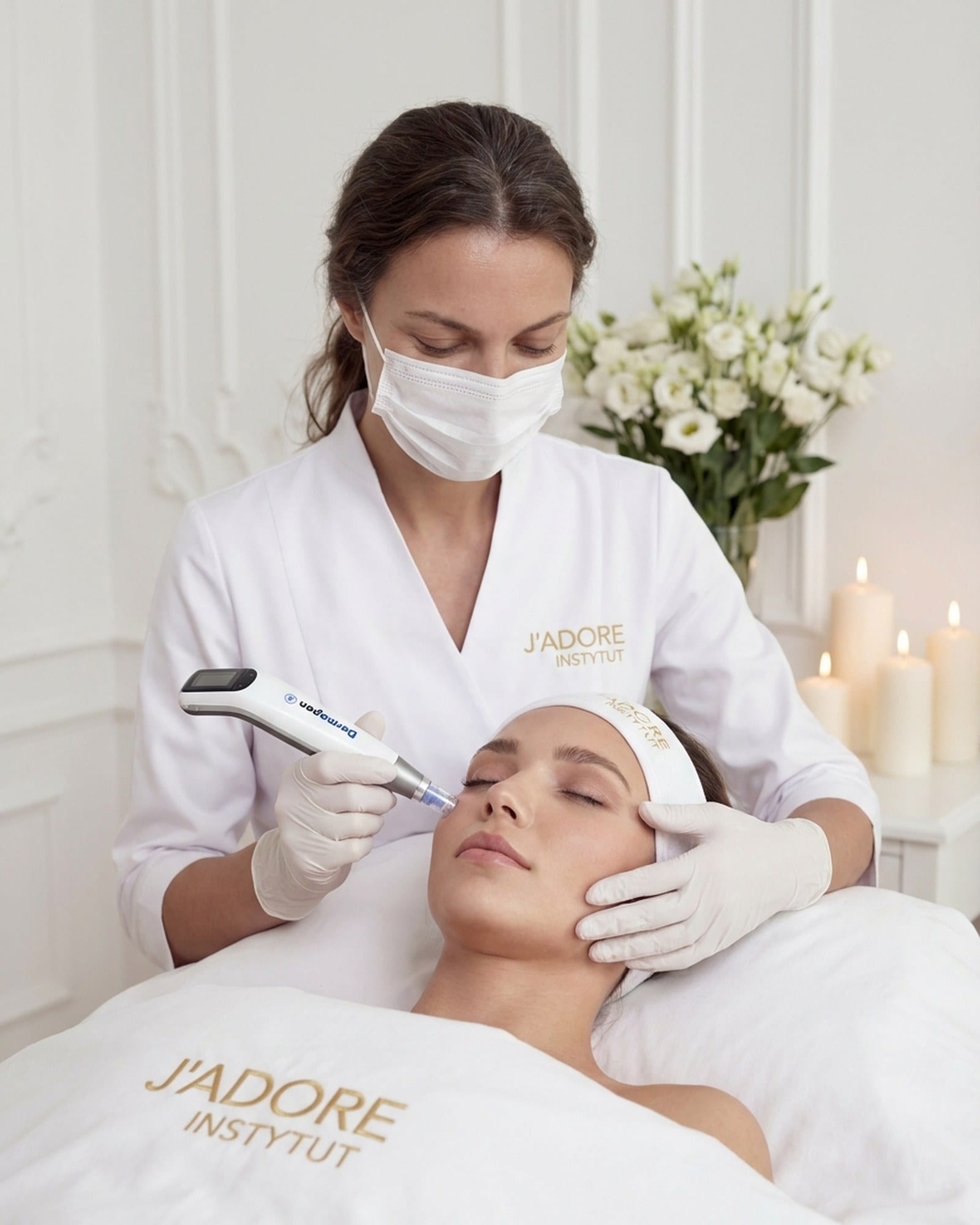
When a peel can cause harm — and why qualification matters
A regenerating peel is a safe treatment — provided someone has first considered whether this particular peel, for this particular skin, at this particular moment is a good idea. This isn't a formality. It's the core difference between a salon treatment and a home exfoliating cream.
- Active inflammatory conditions (inflammatory acne, cold sores). A peel applied over active lesions can spread and worsen them. Before the treatment, a specialist always checks the condition of your skin — if there's active breakout, the treatment is postponed.
- Darker skin phototypes. Phototypes IV–VI are significantly more prone to post-inflammatory hyperpigmentation (PIH) after deeper peels. This calls for particular care in choosing the acid type and depth — protocols differ from those used for lighter skin.
- Photosensitising medications and retinol. Certain medications (such as antibiotics, acne treatments, some blood pressure medications) or intensive retinol-based skincare can increase skin sensitivity to exfoliation. A thorough pre-treatment consultation is protection, not bureaucracy.
- Summer season and strong sun exposure. Freshly exfoliated skin is particularly vulnerable to sun-induced pigmentation. That's why intensive peel series are often scheduled for autumn and winter — when the sun isn't as intense.
After the treatment — what your skin needs for regeneration to work
The treatment itself is only half the work. The other half is what happens over the following days — and how your skin is treated during that time. The regeneration triggered by a peel can be supported or hindered, depending on how you care for your skin right after leaving the salon.
- Hydration — priority number one. Regenerating skin loses water faster than usual — the barrier is temporarily weakened. A simple, fuss-free, intensely hydrating cream helps your skin get through this stage without irritation.
- SPF — mandatory, no exceptions. Fresh after a peel, your skin is exceptionally prone to sun-induced pigmentation. SPF 50 every morning — even on cloudy days — isn't optional. It's a safety requirement.
- Touching or exfoliating "to speed things up" — stop. Exfoliating pads, cleansers with tiny grains, mechanical rubbing with a towel — all of this in the week after a peel can ruin your results and cause irritation. Your skin will manage the peeling on its own — it doesn't need "help".
- Hot pools, saunas and the gym — wait a few days. Excess heat and sweat in the first days after treatment can worsen inflammation and delay healing. Your cosmetologist will tell you exactly how long to wait.
Regenerating peel and other treatments — why it pays to think about skin holistically
A regenerating peel works best as part of a broader plan, not as a single treatment that does everything. Skin changes on multiple levels — and no single treatment addresses every layer at once. That's why the sensible approach to salon skincare isn't "which treatment is best", but "how different treatments complement each other".
Peel + deep hydration (biostimulators / hyaluronic acid)
A peel works on the surface — removing, evening out, stimulating. But skin after a series of peels can also become dehydrated and need "replenishing" in the deeper layers. Deep hydrating treatments in the dermis complement this effect and help peel results last longer.
Peel + energy-based treatments (laser, RF, HIFU)
A peel prepares the epidermis: once exfoliated, energy-based treatments penetrate deeper and work more effectively. At the same time, energy stimulates collagen in layers a peel can't reach — the effects of both methods add up, rather than repeat.
Peel + mesotherapy
Exfoliated, freshly renewed skin absorbs active ingredients better than skin with a thick layer of dead cells. That's why mesotherapy performed after a peel is often more effective than the same mesotherapy on "unprepared" skin.
Peel + home skincare routine
The salon triggers regeneration. Home care sustains it. Post-treatment skincare — chosen carefully: a gentle recovery phase, followed by gradually reintroducing active ingredients — determines how long results last. It's a partnership, not an alternative.
It's worth knowing that good treatment combinations aren't "more for more" — they're a more precise match for a specific skin concern. For one person, a series of peels alone might be the best option. For another, a peel might be preparation for something deeper. A consultation decides this — not an article.