Where flaking comes from — and when it doesn't happen
Trichloroacetic acid works through controlled damage to the epidermis and the upper layers of the dermis. The deeper it penetrates, the stronger the reaction — and the more intense the flaking, which is simply the skin's repair mechanism as it replaces damaged tissue with new tissue. Flaking isn't a side effect. It's proof the process has taken place.
"No-downtime" versions of TCA work differently: lower acid concentration, shorter exposure time, often additional buffering agents or a multi-step skin-priming protocol before the treatment. The result is a reaction limited to the epidermis, which doesn't cross the threshold that triggers visible flaking. Skin may be red for a day or two — and that's it. Nothing flakes, and you're back at work the next day.
Both approaches are genuine. Neither is a "con". But they refer to completely different depths of action — and that's exactly what determines what you can expect from the treatment.
Classic TCA vs no-downtime — what you gain, and what you trade
TCA peel with flaking
deep skin remodelling
- visible improvement in hyperpigmentation, scars and texture
- results last longer — remodelling happens in deeper layers
- can significantly improve uneven texture and acne marks
- many people see a clear change in skin quality after just 1–2 sessions
No-downtime TCA
regular care with visible results
- can be used as a series year-round, including autumn and winter
- no flaking — a routine with no downtime
- visible even skin tone and hydration for many people
- a good starting point for sensitive skin or those new to peels
The most common mistake is expecting deep-peel results from a no-downtime version. And the opposite — dismissing a series of gentle protocols because "it's not a real TCA peel". Both have their place. The only real question is: what does your skin need right now?
When to choose which version — a decision map
There's no single right answer — there are a few questions that point to one. Before you book a consultation, it's worth being clear on three things:
- What problem are you addressing? Deep sun-induced pigmentation, acne scars, noticeable texture irregularities — these call for a stronger protocol. Mild pigmentation, dullness, general skin fatigue — often a gentler series is enough.
- What does your calendar look like over the next two weeks? If you have an important event in 5 days, the version with flaking is a bad idea. If you have some free time and a calm week ahead, that's exactly when to plan a deeper intervention.
- How does your skin react to acids? Skin that has never had contact with peels should start with lower concentrations. Not because it's "weak" — but because its barrier and hydration need to be in good condition first.
It's also worth knowing that these two versions don't exclude each other — they can be stages of the same plan. A series of gentle protocols in summer to prepare and even out the skin, followed by a deeper intervention in autumn, is one commonly used approach.
TCA vs other peels — where to look for alternatives
TCA isn't the only option. For those looking for a middle ground — deeper than a mandelic or glycolic acid peel, but without TCA-level flaking — there are a few worthwhile paths to consider:
Jessner peel
a blend of acids, controlled depth
- a combination of lactic acid, salicylic acid and resorcinol
- flaking may or may not be visible — it depends on the number of layers applied
- often used as pre-treatment before TCA, or on its own
PRX-T33 peel
biorevitalisation without flaking
- contains TCA, but combined with H₂O₂ — the mechanism of action differs from a classic peel
- doesn't cause flaking with standard use
- applied and massaged in — not left on the skin
- a "glow" and hydration effect is often visible immediately
When it's worth combining with other treatments
A TCA peel — in any version — rarely stands alone in a skincare plan. The best results are often built through a sequence, combining it with treatments that work in a complementary way:
Needle mesotherapy
Complements the peel's effect from a hydration and nourishment angle. Often used a few weeks after the peel — once the new skin is stable but still receptive.
Microneedling
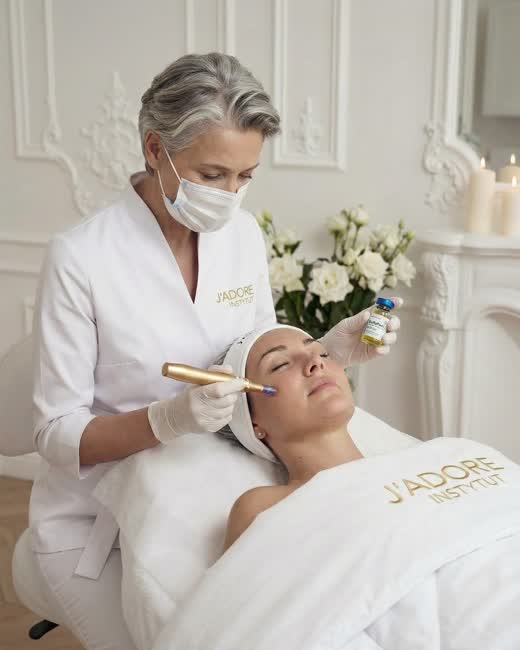
Combined with a series of no-downtime peels, it can produce results similar to a stronger protocol — especially when working on texture and scars.
Fractional laser
For people with more demanding scars or deeper pigmentation, a TCA peel often precedes or complements a course of laser sessions — preparing the skin or sustaining results.
In-salon hydrating care
Right after a deeper peel, skin needs barrier support. Follow-up treatments with hyaluronic acid or mask-based regenerative protocols shorten recovery time.
Combinations are never random — a good salon arranges them into a coherent plan, not a series of disconnected treatments. That's exactly why your first visit starts not with a treatment, but with a conversation about your skin, what it needs, and how much recovery time you can allow.