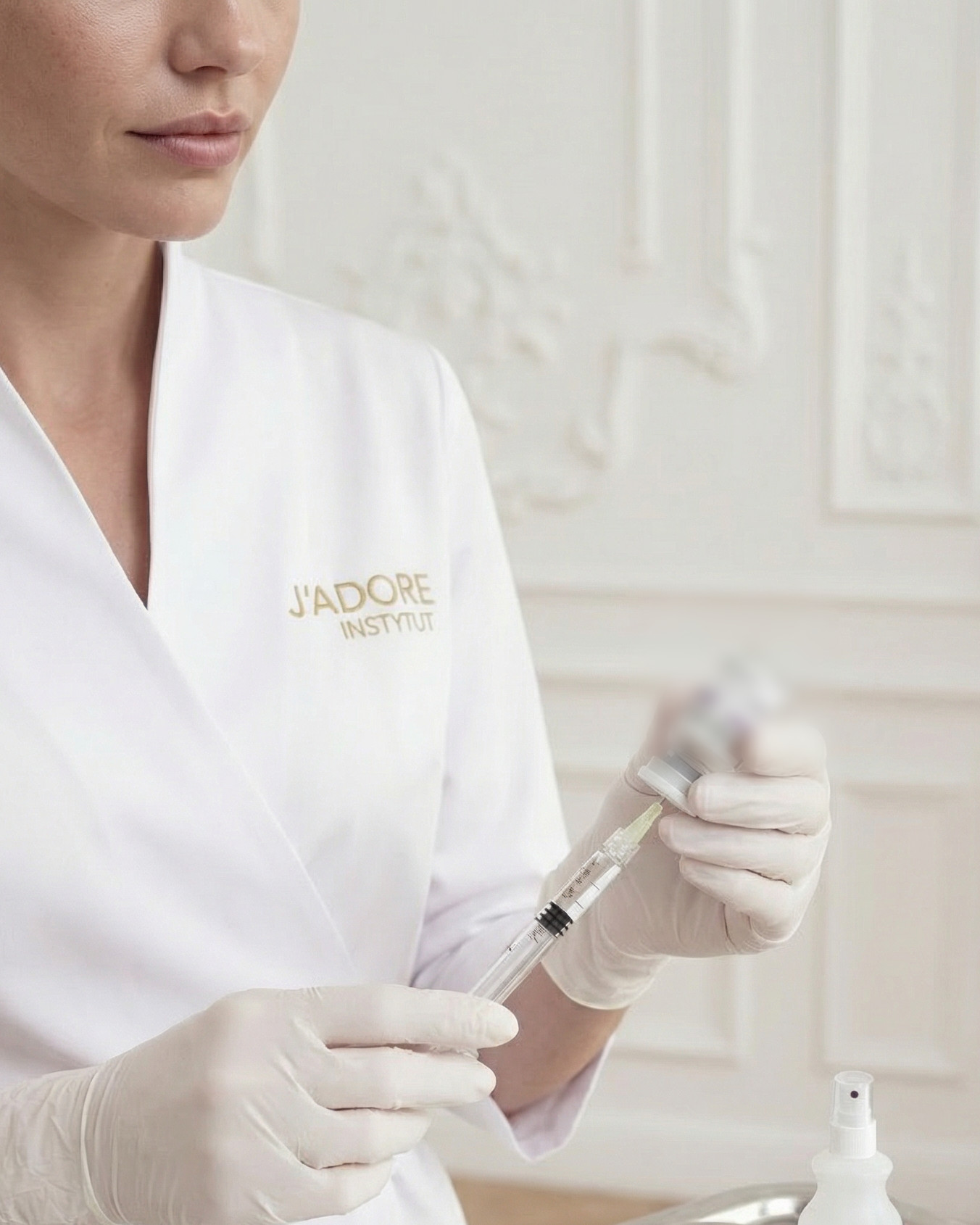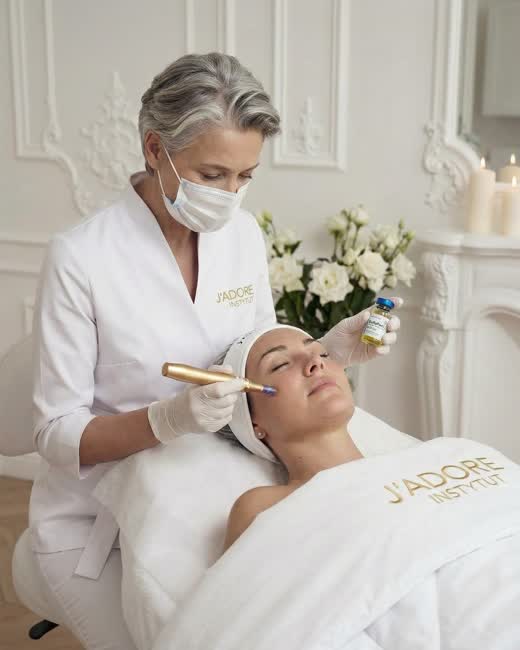
Retinol at the clinic isn't the same as retinol in a cream
Most men who hear "retinol" think of a night cream from the shop — something you apply and wait for. A clinic treatment uses entirely different concentrations and a different mechanism altogether. A chemical retinol peel delivers the active substance deep into the epidermis under controlled clinical conditions — performed by a specialist, with proper skin preparation and monitoring of the reaction.
Retinol is a derivative of vitamin A. In the skin it works on several fronts: it speeds up epidermal cell turnover, stimulates collagen production, fades hyperpigmentation and — crucially for many men — improves skin surface texture. For remodelling acne scars, it's one of the more active ingredients available in cosmetology. It won't work miracles in a single visit, but after a series it can significantly smooth and even out terrain that's looked like a battlefield for years.
Acne scars — does a retinol peel actually work?
An honest question deserves an honest answer: it depends on scar depth. A retinol peel works well on so-called superficial scars — post-acne pigmentation (those dark marks that linger for months), textural unevenness and shallower indentations. For deep atrophic scars — the "pits" left by severe cystic acne — retinol alone isn't enough, but it can be part of a protocol combined with other methods.
Works well on
the most common results men see after a series
- Post-acne pigmentation (brown marks left by acne)
- Uneven, rough skin texture
- Shallow indentations and acne scars
- Grey, lacklustre skin
- Excess keratinisation of hair follicles
Needs additional support for
when peels alone aren't enough
- Deep atrophic scars (pits from cystic acne)
- Keloid scars (consultation required)
- Very dark hormonal pigmentation
- Active inflammatory acne (peel not indicated)
What the treatment involves — straight talk
No sugar-coating: this isn't a relaxation massage. It's an active treatment that causes a mild stinging sensation — intensity depends on the concentration and your skin. Most men describe it as "a bit warm and tingling," not painful. It's fairly quick — afterwards, the skin looks red, sometimes slightly swollen. That's a normal reaction.
- 01
Consultation
Skin assessment, and a review of your acne history, scars, and any products or medication you use. Key point: oral and topical retinoids require a break before the treatment.
- 02
Skin preparation
In the weeks before the treatment, we often use products that thin the epidermis and normalise sebum production — so the peel works evenly, not just on thicker areas.
- 03
Treatment
Application of the product, controlled exposure time, neutralisation. The specialist monitors your skin's reaction — concentration and timing are adjusted individually.
- 04
Exfoliation
Within 2–5 days after the treatment, the epidermis may flake — from light peeling to visible shedding, depending on the depth of the peel.
- 05
Recovery and results
The skin is pink, more sensitive and tans more easily — SPF is mandatory for several weeks after the treatment. Results build up over the weeks following the series.
Thick, oily skin — why retinol specifically
Most men dealing with congested skin, enlarged pores and excess oil respond well to retinoids precisely because they act at the level of the sebaceous gland — regulating its activity and reducing sebum production. This isn't a temporary effect like ordinary mechanical exfoliation. Retinol rebuilds tissue — more slowly, but more permanently.
After a series, men often describe it like this: "my skin is less oily, my pores look smaller, my complexion is more matte." This isn't an illusion or a temporary dehydration effect — it's the result of genuine remodelling of the upper skin layers and reduced sebaceous gland activity. For many, it lasts several months after the series ends.
How many sessions, and when do results show?
There's no single answer to this — anyone who tells you otherwise either doesn't know what they're talking about or is selling you a story. Results from chemical peels depend on your starting skin condition, the depth of the peel, and how consistently you follow the series. For post-acne pigmentation, initial changes can appear after just 2–3 sessions. For pronounced textural scarring — full assessment comes 3–6 months after the series ends.
- A basic series is usually several treatments spaced apart — the specialist sets the frequency based on how your skin responds
- Results build over weeks after the treatment — collagen and new cells mature; they don't form instantly
- Maintenance — after finishing the series, some men have one session every few months to maintain results
- Flaking isn't the result — intense peeling after the treatment is a reaction, not a goal in itself; a stronger peel doesn't always mean a better outcome
Retinol peel and other methods — what to combine it with
A retinol peel rarely works as a stand-alone treatment — especially for scars. A well-chosen combination can achieve results neither method could reach alone. The key lies in the sequence and the right timing between sessions.
Needle mesotherapy
Delivers active substances directly into the dermis — complementing the peel's action in deeper layers and stimulating fibroblasts from within.
Microneedling (Dermapen)
Micro-injuries to the skin activate collagen production — combined with a retinol peel, this can give more noticeable smoothing of acne scars.
Platelet-rich plasma (PRP)
Biological growth factors speed up regeneration and improve skin quality — especially useful for extensive scarring and loss of skin density.
Salicylic acid peel
For oily, acne-prone skin — salicylic acid works inside the pores, retinol on the surface. Combining them in a protocol can give a synergistic effect on uneven texture.