What is Retix C and why is it not an ‘ordinary peel’?
The word ‘peel’ may bring to mind something less serious — a scrub that removes dead epidermal cells and nothing more. Retix C works differently. It is a retinoid peel with a high concentration of stabilised vitamin C. These active ingredients work at different skin levels and reinforce one another.
Retinoids — vitamin A derivatives — are among the best-researched dermatological ingredients. They accelerate cell renewal, stimulate collagen production and inhibit enzymes that degrade the skin matrix. Retinoids work in home skincare, but slowly. Their concentration is higher in salon peels, with deeper penetration. This supports real remodelling of skin structure, not just epidermal hydration.
Vitamin C in the Retix C formula has a different role. It inhibits melanogenesis, or the formation of hyperpigmentation, neutralises free radicals and supports collagen synthesis. Together, these ingredients can target several concerns at once — texture, hyperpigmentation and skin resilience.
Three concerns men most often come in with
This treatment is not for everyone and does not do everything. However, it works particularly well in several situations typical of male skin:
- Acne scars. Skin affected by acne can retain atrophic changes — small depressions, unevenness and areas where collagen is weaker or irregular. Retinoids can stimulate its reconstruction, while vitamin C supports even scar pigmentation. For many people, texture becomes visibly more even after just a few sessions.
- Photoageing — hyperpigmentation and shallow wrinkles. Years spent in the sun without SPF leave their mark: uneven tone, solar lentigines and fine lines. The brightening action of vitamin C combined with retinoid-driven cell renewal often reduces the visibility of these changes.
- Dull, tired-looking skin. If your skin looks ‘less fresh’ than it did a few years ago — you have lost radiance, your features appear flatter and you describe your complexion as ‘sallow’ — a retinoid peel can often reset this effect by accelerating the epidermal renewal cycle.
Peel vs laser — when each option makes sense
Men who have already read about resurfacing often ask the same question: ‘How does it differ from a laser? When should I choose one or the other?’ It is a sensible question. The answer directly affects the outcome and recovery time.
Retix C (retinoid peel)
when it makes sense
- uneven texture and hyperpigmentation — without deep tissue loss
- photoageing and dull skin — a ‘reset’ for skin tone
- preventive maintenance of skin quality after 30
- a series of treatments spaced over time, with gradual results
- no downtime — you can return to work the same day
Fractional laser / laser resurfacing
when it is worth considering
- deeper texture irregularities and visible atrophic scars
- more noticeable results after one or several sessions
- can be combined with a peel as preparation or follow-up
In practice, peel and laser treatments do not exclude one another. They are often used sequentially: a peel to prepare the skin before a laser session or as a complement afterwards. The decision is made by a specialist after assessing your skin.
What your visit looks like — without myths or exaggeration
Men tend to worry most about two things: leaving the salon with a red face visible from a distance, or having results that make everyone realise they have ‘had something done’. Both concerns are understandable. It is worth comparing them with reality.
- 01
Consultation & skin assessment
Before the first session, the specialist assesses the type of changes and skin thickness, then selects the protocol. This stage determines safety and results — there is no point in doing anything without it.
- 02
Skin preparation
Make-up removal and cleansing. For active acne or particularly reactive skin, a short course of home preparation with a retinoid cream may be recommended. Not always — it depends on the protocol.
- 03
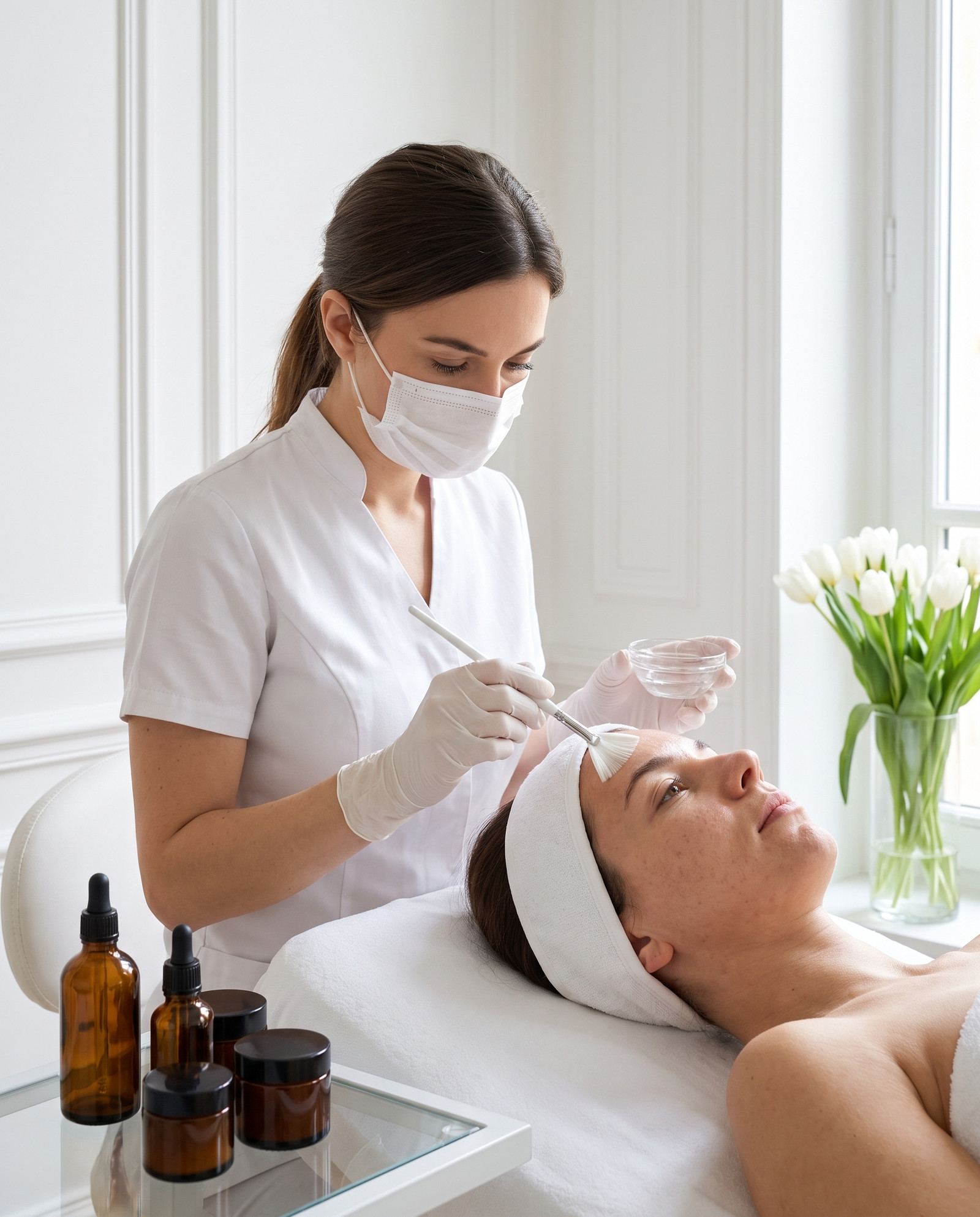
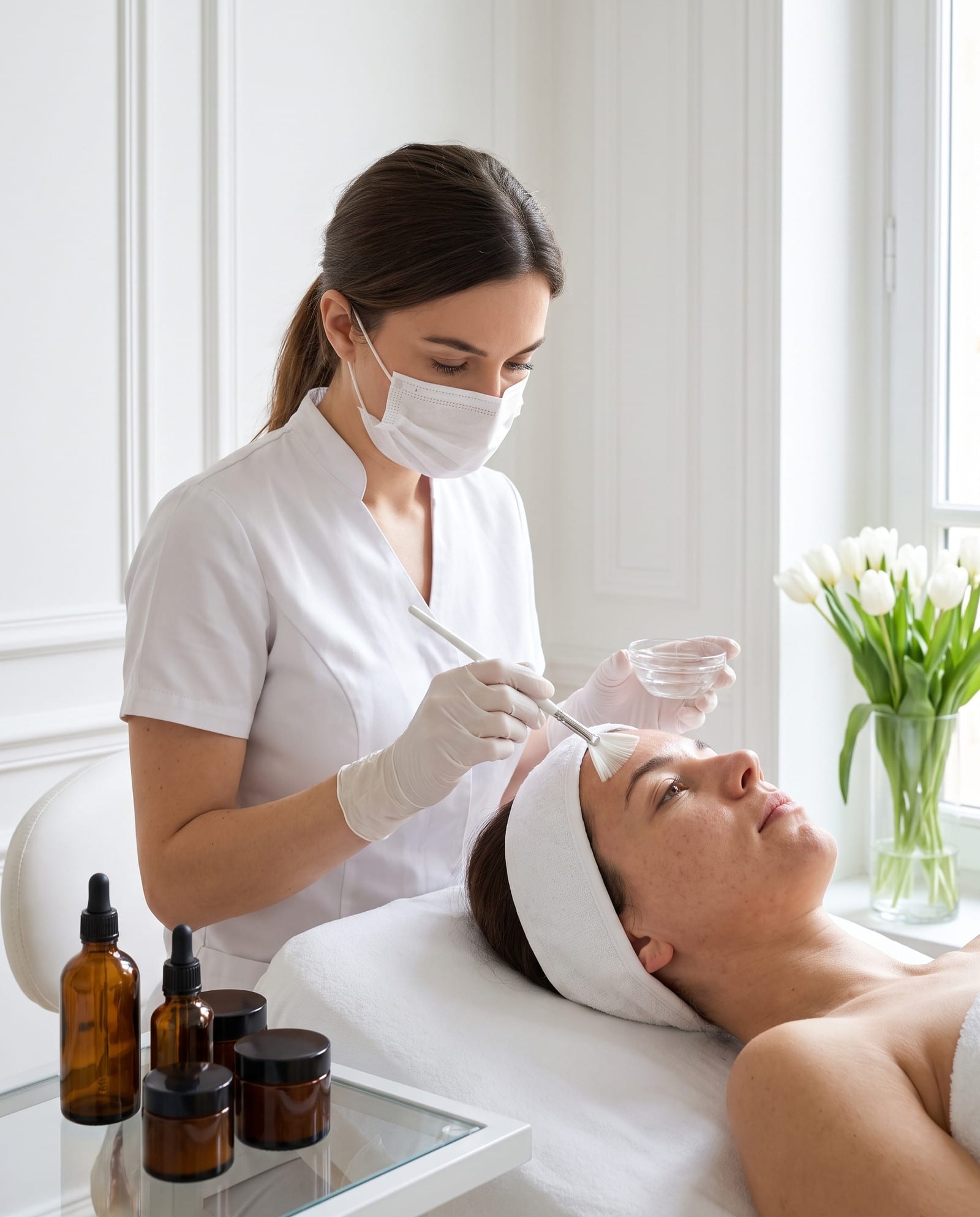
Product application
The formula is applied to the face in layers. You may feel slight tingling or warmth — this is a normal reaction to acids. The intensity is lower during the first session. The protocol is adjusted to your skin’s response.
- 04
Processing time and neutralisation
The product works for a specified time, then is neutralised or washed off. The whole treatment takes relatively little time. There is no lengthy lying down or complicated procedure.
- 05
After the treatment
Your skin may be slightly red, which usually resolves within a few hours. If peeling occurs, it appears after 2–4 days and lasts for several days. It is not dramatic — more like a light shedding of a layer than peeling off in flakes.
How many sessions, and what determines the results
Retix C is not a single treatment. Just as the gym does not deliver results after your first workout, skin remodels through cycles of cell renewal. Visible changes in texture and hyperpigmentation usually require several sessions at regular intervals.
For many people, the first session brings only a refreshed tone — the complexion is brighter and feels smoother. After completing the series, improvements in texture and scars become more noticeable. The number of sessions depends on the depth of the concern, skin thickness and protocol. This is discussed during consultation, not determined by a general chart.
Resurfacing works cumulatively. After a series of treatments, skin is in better condition not only aesthetically — it is denser, better hydrated and more resistant to further environmental damage. This effect remains visible in the following years if you maintain skincare and sun protection.
Skin after fifty — does a peel still make sense?
A question that often comes up: “Does this still make sense at my age, or has my skin aged too much to respond?” The answer is simple: skin responds to retinoids and vitamin C regardless of age — the biological processes they affect do not switch off after 50. The difference is that the more years of photoageing there are to address, the more sessions may be needed to achieve a visible result.
For men in their forties and fifties, the treatment often makes sense precisely because the skin has accumulated more sun damage over the years. Hyperpigmentation, dullness and loss of elasticity are changes that build up over time. A retinoid peel can help “turn back the clock” within the skin’s biological capacity, without surgery or downtime.
Treatment combinations — what enhances the result
Retix C fits well within a broader skincare protocol, especially when the concern is multifaceted — scars, hyperpigmentation and loss of skin density. Below are the combinations specialists use most often and that have a sound rationale:
Fractional laser
For deeper atrophic scars, the laser works at a different depth. Retix C can be used for Skin preparation before laser treatment or to maintain results after a series of laser sessions.
Needle mesotherapy
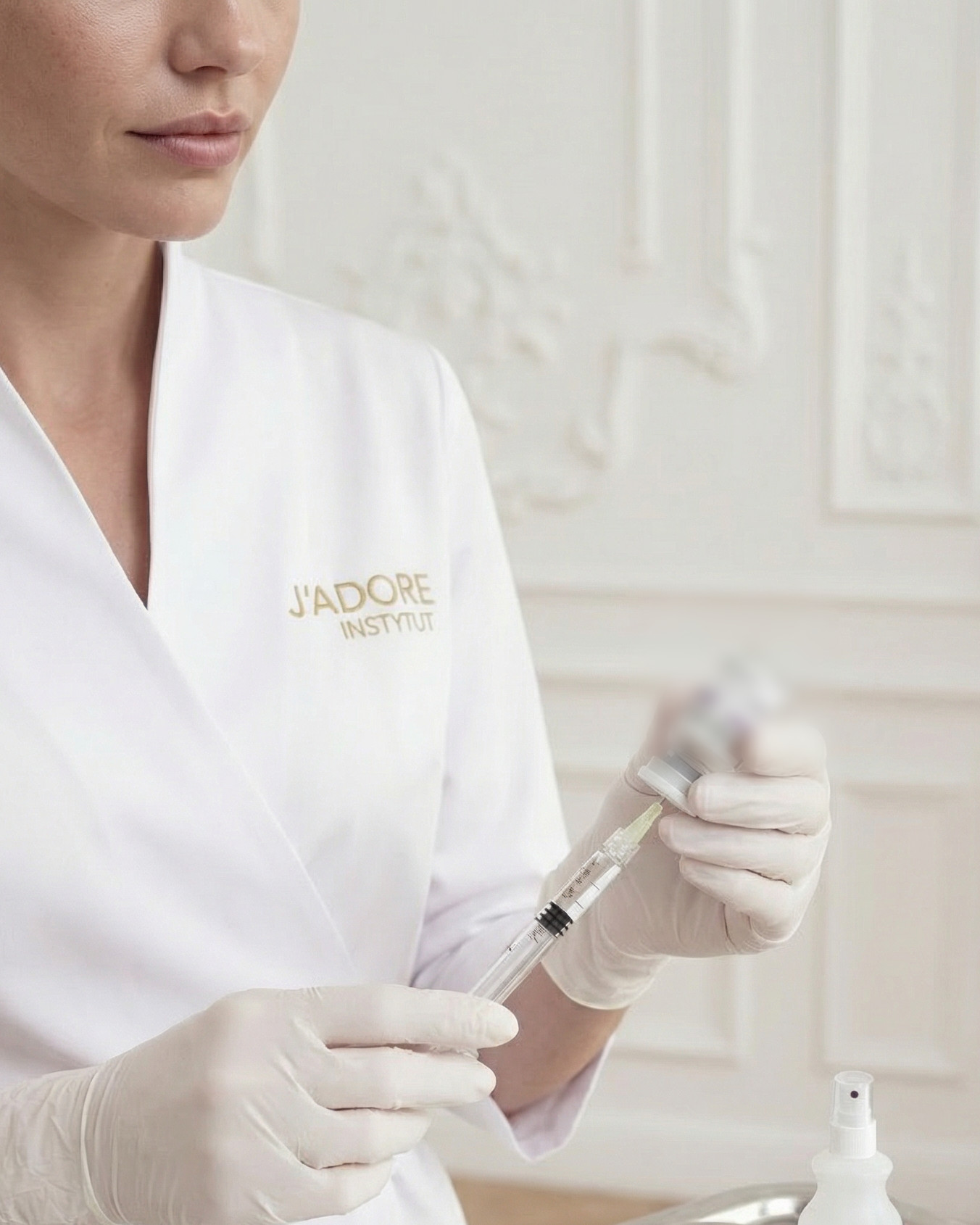
Mesotherapy delivers active ingredients — peptides, collagen and hyaluronic acid — directly into the dermis. Combining it with a retinoid peel may enhance the rebuilding result.
Platelet-rich plasma (PRP)
PRP stimulates growth factors that accelerate tissue regeneration. Combined with resurfacing, it may shorten recovery time and enhance collagen production — a combination used for more pronounced scars.
Dermapen / microneedling
Mechanical microchannels create an additional pathway for active ingredients and stimulate collagen synthesis. Combining this with the Retix C formula may increase penetration and the remodelling result.
One question before booking
The quickest way to check whether Retix C is right for you: stand in good lighting and look at your skin closely. If you see uneven post-acne texture, uneven tone or sun-related hyperpigmentation, and your skin looks thinner or less smooth than it did a few years ago — these are precisely the concerns a retinoid peel with vitamin C addresses. If your skin is in good condition and you are looking for prevention, it also makes sense. Maintaining quality is easier than rebuilding it.
We start with a consultation — with no pressure to “decide now”. A specialist will examine your skin, assess the extent of the changes and suggest a protocol tailored to your concerns, rather than a standard package.