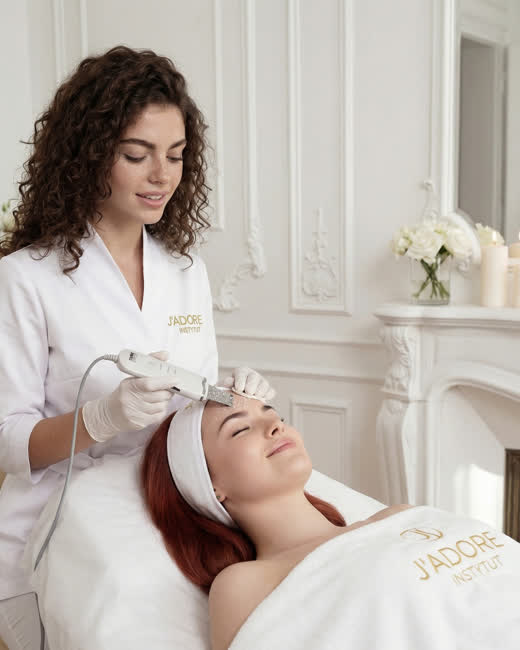
Exfoliation — why interfere with the skin's natural cycle at all?
Skin exfoliates itself constantly. Epidermal cells form deeper down, migrate towards the surface, and shed after a few weeks — replaced by fresh ones. In young skin, this cycle runs smoothly, and the surface stays smooth and fresh. With age, acne, excessive sun exposure, or simply stress, this rhythm slows down or falls out of sync. Dead cells linger longer than they should, the complexion turns grey, pores clog, and unevenness becomes entrenched.
A peel — in any form — intervenes in this cycle. It either speeds up exfoliation from the outside (removing lingering cells mechanically or chemically), or stimulates deeper layers to regenerate and build new structures. That's why skin often looks fresher and more even after a peel — it has literally revealed a new layer, or received a signal to get to work.
There's an important principle worth knowing before you try your first method: depth is not a measure of effectiveness. A deeper peel isn't always better. For many skin concerns, a superficial method used regularly gives a better and safer result than one aggressive session. It's a specialist — not an advert or a price tag — who should decide at what depth your skin needs to be treated.
Acid peels — chemistry in the service of exfoliation
Acid peels are the broadest family across the whole spectrum of exfoliation. The mechanism is simple to describe: the acid — usually applied as a serum or mask — breaks down the bonds between dead epidermal cells, so they release more easily. But the detail matters, because there are over a dozen types of acid, each behaving slightly differently in the skin.
- AHAs (alpha-hydroxy acids) — glycolic, mandelic, lactic, pyruvic. They work on the surface and in the upper layers of the epidermis. Glycolic acid has the smallest molecule in this group, so it penetrates deeper — stimulating collagen production and working on hyperpigmentation. Mandelic acid is gentler and absorbed more slowly, recommended for sensitive, acne-prone skin.
- BHA (beta-hydroxy acid) — salicylic. It's lipophilic, meaning it penetrates sebum and pores. That makes it a natural fit for oily, combination and acne-prone skin — it reaches where AHAs can't.
- PHAs (poly-hydroxy acids) — lactobionic acid, gluconolactone. Their molecules are much larger than AHAs, so they work superficially and very gently. They hydrate at the same time, making them a first choice for sensitive, reactive, atopic skin, and for skin that's dehydrated and doesn't tolerate stronger acids.
- Trichloroacetic acid (TCA) — a stronger acid that works deeper, within the dermis. Used for deeper hyperpigmentation, scars, and pronounced wrinkles. It requires greater precision and a longer recovery than AHA/BHA peels.
Enzyme peels — gentle precision
Enzymes work on a different principle from acids — they don't lower the skin's pH, they digest the keratin protein in dead epidermal cells. Papain from papaya, bromelain from pineapple, ficin from fig — these are the most common ingredients in enzyme masks and peels. The mechanism is selective: enzymes recognise dead, keratinised cells and break them down without disturbing living tissue.
This makes enzyme peels gentle and predictable — ideal for sensitive skin, skin prone to flushing, skin reactive to acids, and for anyone just starting out with regular exfoliation. They don't give results as dramatic as deeper acid or laser peels, but used regularly they even out skin tone, refresh the complexion and improve how well the skin absorbs active ingredients afterwards.
Microdermabrasion — mechanical resurfacing
Microdermabrasion is a physical, mechanical exfoliation method — no chemistry, no acids. In the classic crystal version, a device passes a stream of microscopic crystals (usually corundum) across the skin while simultaneously suctioning them away along with detached epidermal cells. In the diamond version, a tip coated with diamond particles resurfaces the skin directly.
The result is immediate and visible: skin feels smooth to the touch, a dull surface gains radiance, and pores appear smaller. Microdermabrasion works well for thickened skin, enlarged pores, minor acne scars and shallow hyperpigmentation. It doesn't address deeper changes or structures below the epidermis — this is a strictly superficial method.
Laser peels — precision at depth
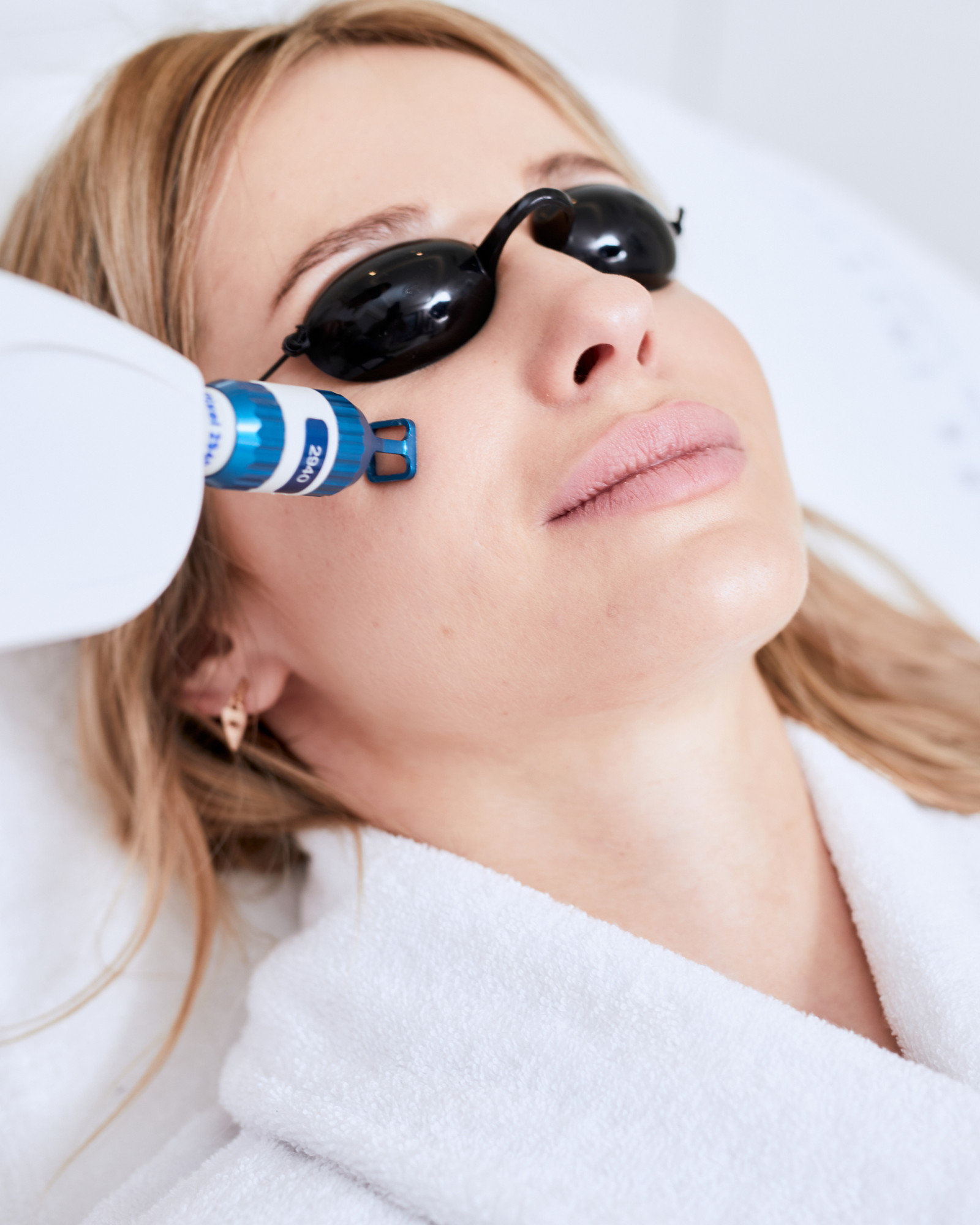
Laser is a completely different category of exfoliation — light energy converted into heat removes layers of skin with a precision no chemical or mechanical method can match. Depending on the type of laser and settings used, a session can work exclusively on the epidermis or reach deep into the dermis, stimulating collagen production for months after treatment.
Ablative laser (e.g. fractional CO₂)
deeper exfoliation and remodelling
- Removes fractions of skin at a set depth
- Strong stimulation of collagen and skin remodelling
- Visible results for scars, deeper wrinkles, hyperpigmentation
- Requires a healing period
Non-ablative / fractional laser
stimulation without removing a layer of skin
- Heat delivered deep into the skin, epidermis left intact
- Collagen stimulation with minimal downtime
- Better tolerated in darker skin phototypes
- Results build up gradually over a series of sessions
Laser peels work best on concerns that sit deeper — acne scars with a clear structural pattern, hyperpigmentation that keeps returning despite superficial methods, pronounced wrinkles, texture changed by years of photoageing. These treatments require proper qualification and careful matching of the method to your skin phototype and expectations — results can be striking, but getting there takes a plan.
How exfoliation depth relates to indications
One of the most common mistakes when choosing a peel is judging it on a single criterion — usually price, or how dramatic the advertised result sounds. What actually matters is the depth at which your concern sits. The rule is simple: the deeper the issue is rooted, the deeper the method needs to reach to make a real difference.
- 01
Epidermal surface — refresh and radiance
Grey, tired-looking skin, clogged pores, no radiance. Enzyme peels, gentle AHAs and microdermabrasion work well here. Results are immediate, with zero downtime.
- 02
Upper epidermal layers — shallow hyperpigmentation, acne
Sun-induced hyperpigmentation, marks left by breakouts (redness, uneven tone), oily skin with enlarged pores. AHA peels (glycolic, pyruvic), BHA — performed regularly.
- 03
Dermis — deeper hyperpigmentation and scars
Recurring hyperpigmentation, melasma, shallow acne scars, more pronounced wrinkles. This is where TCA, non-ablative fractional laser, and a series of deeper acid peels come in, under a specialist's supervision.
- 04
Structural remodelling — atrophic scars, deep texture changes
Acne scars with visible tissue loss (indentations), deep wrinkles, significantly altered texture. Ablative fractional laser, deep TCA peel — treatments that require proper qualification and healing time.
This leads to an important practical point: not every peel suits every stage of skincare. Anyone who has never exfoliated regularly should start with superficial methods and let the skin adapt — before moving on to deeper ones. Someone with active acne has different priorities from someone working on marks it left years ago.
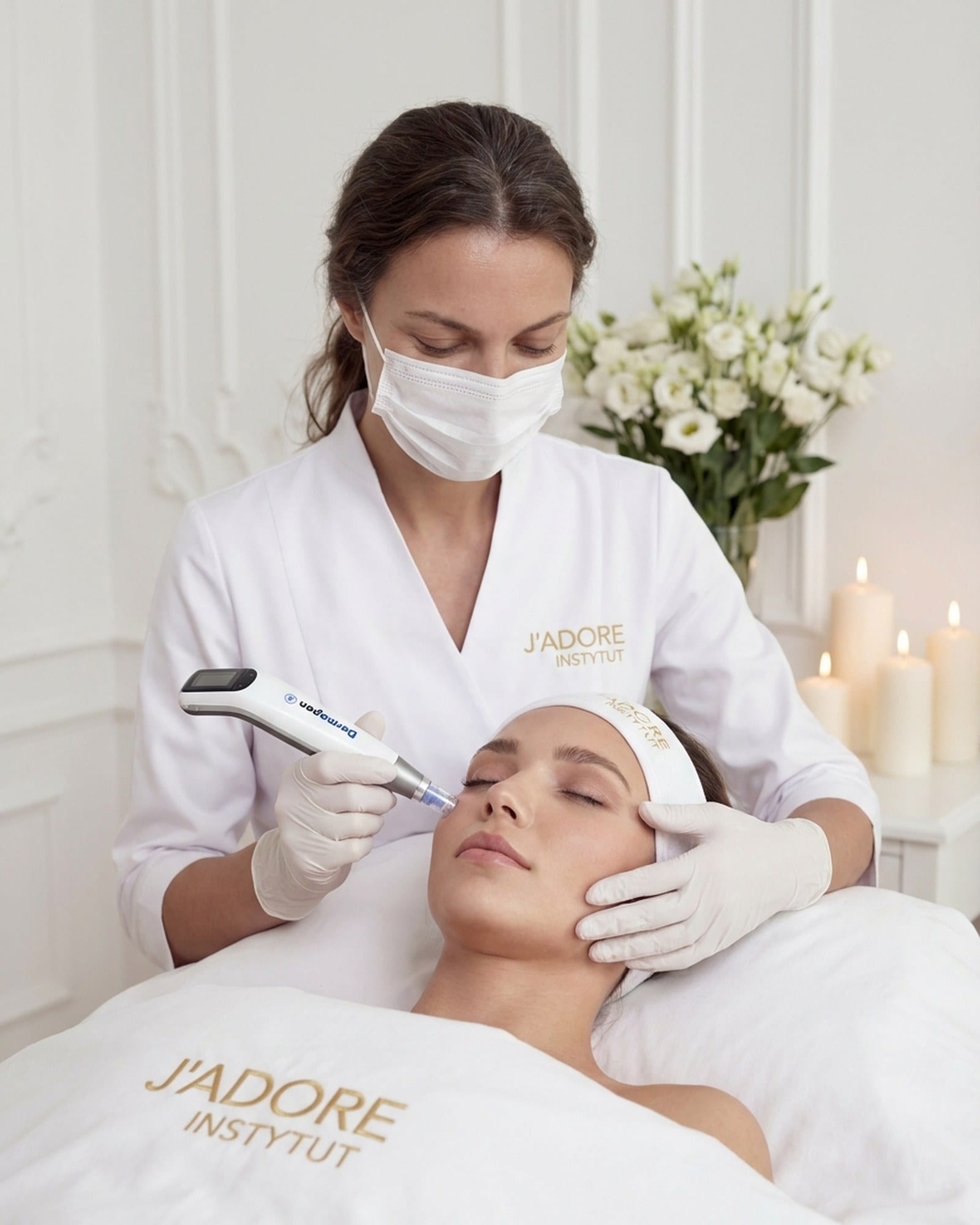
Which concern — which method: an overview of indications
Enough theory — here are the specifics. Below, we've gathered the most common reasons clients come to us for a peel, and the methods that, for many people with that concern, turn out to be the right choice. Consider this a starting point for a conversation, not a ready-made prescription — because your specific skin, phototype and history will always shape the choice.
- Grey, tired complexion, no radiance — enzyme or AHA (glycolic, lactic), microdermabrasion. Results are often visible after the first session, with minimal recovery.
- Oily skin, enlarged pores, tendency to clog — BHA (salicylic), glycolic-salicylic peels. Works within the pores and reduces excess sebum production.
- Sun-induced hyperpigmentation, uneven skin tone — a series of AHA peels (glycolic, pyruvic), TCA for deeper, recurring hyperpigmentation. Always with sun protection.
- Melasma (hormonal hyperpigmentation) — approached carefully and with a plan. Melasma sits deep and tends to recur; aggressive methods can make it worse. Usually a gentler series, hormonal stabilisation, and strict SPF use.
- Post-acne marks — redness and hyperpigmentation — regular acid peels (AHA+BHA), laser therapy for deeper hyperpigmentation. Not to be confused with atrophic scarring.
- Atrophic acne scars (indentations) — ablative or non-ablative fractional laser (depending on depth and phototype). TCA peels as a complement. Results are achievable, but require a series.
- Sensitive, reactive, vascular skin — enzyme peels, PHA. We avoid higher concentrations of AHA and TCA.
- Wrinkles, loss of firmness — a peel alone won't replace deep collagen stimulation, but it improves surface quality. It's worth combining with treatments that stimulate the skin's underlying structure.
How to combine peels with other treatments
A peel is rarely most effective on its own. It usually gives the best results as part of a sequence — either preparing the skin for another treatment (revealing fresh tissue that absorbs active ingredients better), or as one stage in a series of treatments working across different depths. This is the opposite of thinking "one strong session equals a solution" — and for many people, it's what delivers lasting results, not one-off ones.
Needle mesotherapy or platelet-rich plasma
The peel comes first — it reveals and "opens up" the skin; mesotherapy or PRP applied next makes better contact with the tissue. A popular sequence when working on skin quality, condition and revitalisation.
Biostimulators or hyaluronic acid at depth
The peel works on the surface, the biostimulator stimulates the underlying structure at depth. Combining the two lets you address several layers at once — when both surface quality and deeper firmness need attention.
Vascular laser therapy or IPL for hyperpigmentation
For skin with both hyperpigmentation and broken capillaries, both treatments can complement each other — the peel evens out surface tone, the laser addresses vascular changes or deeper melanin. This sequence needs to be planned with a specialist.
Hydrogen or ultrasonic cleansing
Combined in a single visit: cleansing first, followed by an enzyme or acid peel. Often used as a "starting point" for congested, clogged skin — before it's ready for deeper methods.
What to know about recovery
"Recovery" is a word that, with peels, covers a very wide range — from absolute zero (you can walk out of the salon and straight into a meeting) to a few days of mild flaking and redness. It depends entirely on the depth and intensity of the method used.
- Enzyme peels, gentle AHAs, PHAs — practically no recovery period. Any slight pinkness fades within an hour. Makeup can be applied straight away.
- Salon acid peels (higher-concentration AHA/BHA) — skin may be red for a few hours to a day; some people experience mild peeling after 2–4 days. Makeup is usually possible from the following day.
- TCA and deeper peels — more noticeable peeling for a few days, redness, and possible skin tightness. Recovery takes a few days; sun exposure should be approached with caution.
- Ablative fractional laser — several days of visible peeling and scabbing; skin stays pink even after the scabs have formed. Your specialist gives you a detailed aftercare plan before the treatment.