Why hyperpigmentation in men is different
Before we get to the acid itself, it helps to know what we're actually dealing with. Dark patches left after acne are post-inflammatory hyperpigmentation (PIH). The mechanism is simple: inflammation — whether from a breakout, shaving, or an abrasion — triggers melanocytes to produce melanin. Skin "protects itself" with pigment, which remains once the inflammation has settled.
Men face a few additional factors. First, shaving — the micro-trauma of daily razor shaving is a regular source of inflammation, especially on the neck and jawline. Second, higher density of sebaceous glands — oilier skin creates an environment more prone to clogged pores and breakouts. Third, less consistent skincare — effects build up over years when the issue gets ignored.
Azelaic acid — what it is and how it works
Azelaic acid comes from natural grains — wheat, rye, barley. It has been used in cosmetology and dermatology for decades. This isn't a substance that's been trendy since last year — it has solid clinical backing and well-documented mechanisms of action.
- Inhibits tyrosinase — an enzyme key to melanin synthesis. In practice: it limits further pigment production and gradually lightens existing patches.
- Has anti-inflammatory action — calms active breakouts, reduces redness and skin reactivity. For acne-prone skin, this is often more important than the lightening effect itself.
- Has keratolytic action — speeds up exfoliation of dead skin cells, which helps even out texture and improves absorption of other active ingredients.
- Regulates sebum production — for oily skin, it can reduce excess sebum, lowering the risk of further breakouts.
Azelaic Acid Peel vs Home Care — What's the Difference
You've got an azelaic acid cream from the pharmacy — so why bother sitting in a salon chair? That's a fair question.
In-salon treatment
when it's worth it
- higher concentration of active substance than OTC products
- controlled exposure and neutralisation
- often combined with other acids or needle mesotherapy
- visible results in less time
- a dedicated protocol for a specific issue (PIH, acne, skin tone)
Home care
a complement, not a replacement
- lower concentrations — slower but gentler results
- a convenient daily routine
- good for maintaining results after a series of treatments
- available without a visit
In practice, it's not an either/or choice. An in-salon treatment gives you a clear starting point; home care with the right ingredients maintains results and slows down relapses. It's a layered approach: intervention plus maintenance.
What happens in the salon — the straight version
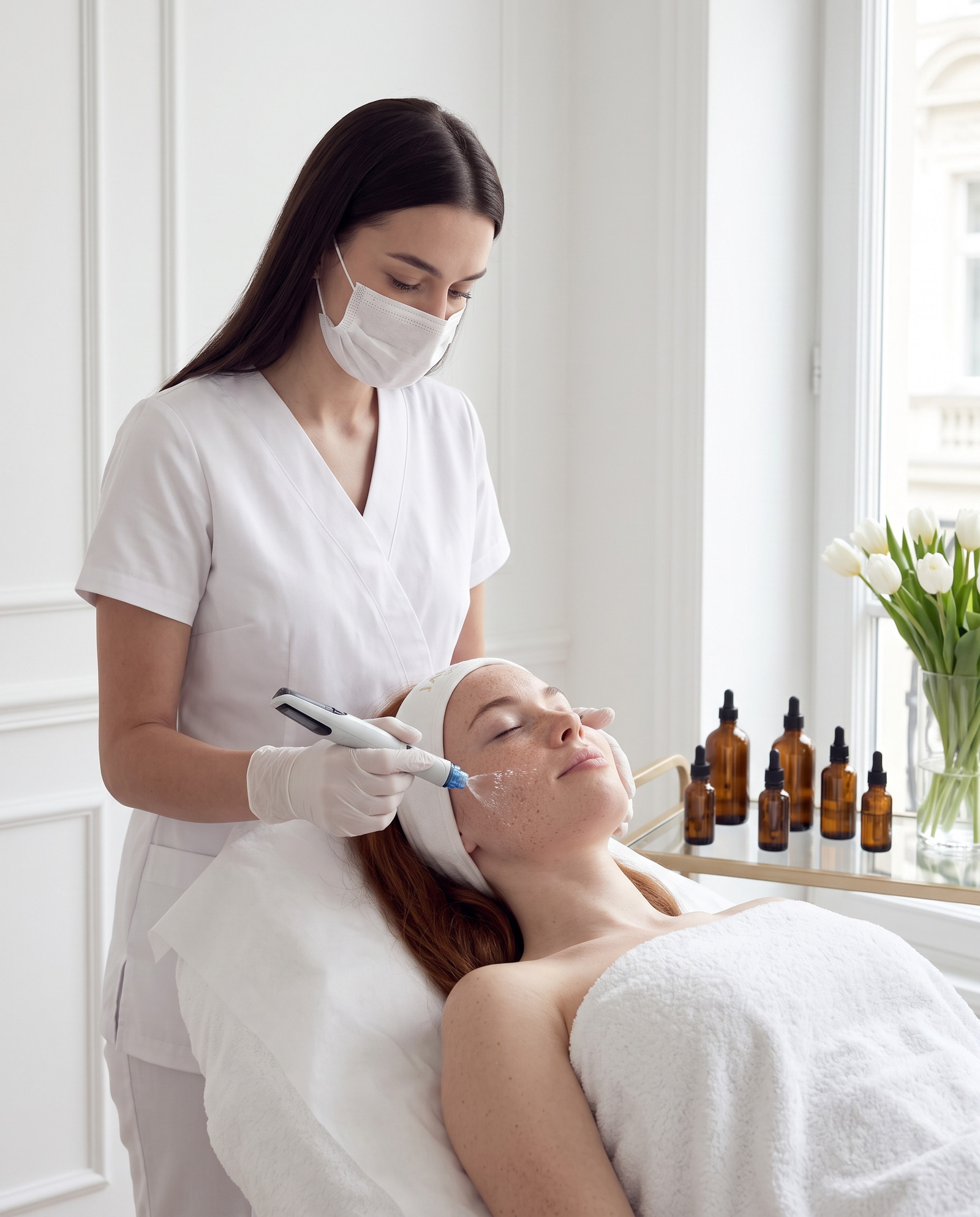
This is what men ask most often — not "does it hurt", but "what will I look like right after" and "do I need to take time off". The honest answer: with an azelaic acid peel, downtime is usually minimal or none at all. Skin may be red for a few hours after the treatment — for many people, that's it. If any flaking appears, it's subtle and lasts a few days at most.
- 01
Cleansing
Make-up removal and skin cleansing — clearing away sebum and impurities. Skin needs to be clean before the acid is applied.
- 02
Acid application
The product is applied to the skin, with exposure time chosen individually. You may feel slight tingling or warmth — that's a normal reaction.
- 03
Neutralisation or removal
Depending on the protocol, the product is either neutralised or washed off. Skin may be slightly red.
- 04
Soothing and SPF
A soothing cream and sun protection. You leave with SPF applied — this is mandatory in the days following the treatment.
A series of treatments brings better results than a single session. Hyperpigmentation — especially deeper marks a year old or more — takes time and consistency. For many people, the first clear results appear a few weeks after the second or third treatment. This isn't a quick fix — it's working with the skin's biological process.
Combine with — for a stronger effect
An azelaic acid peel rarely works in isolation. For more advanced issues — deep acne marks, extensive hyperpigmentation, uneven texture — the protocol often combines several methods.
Needle mesotherapy
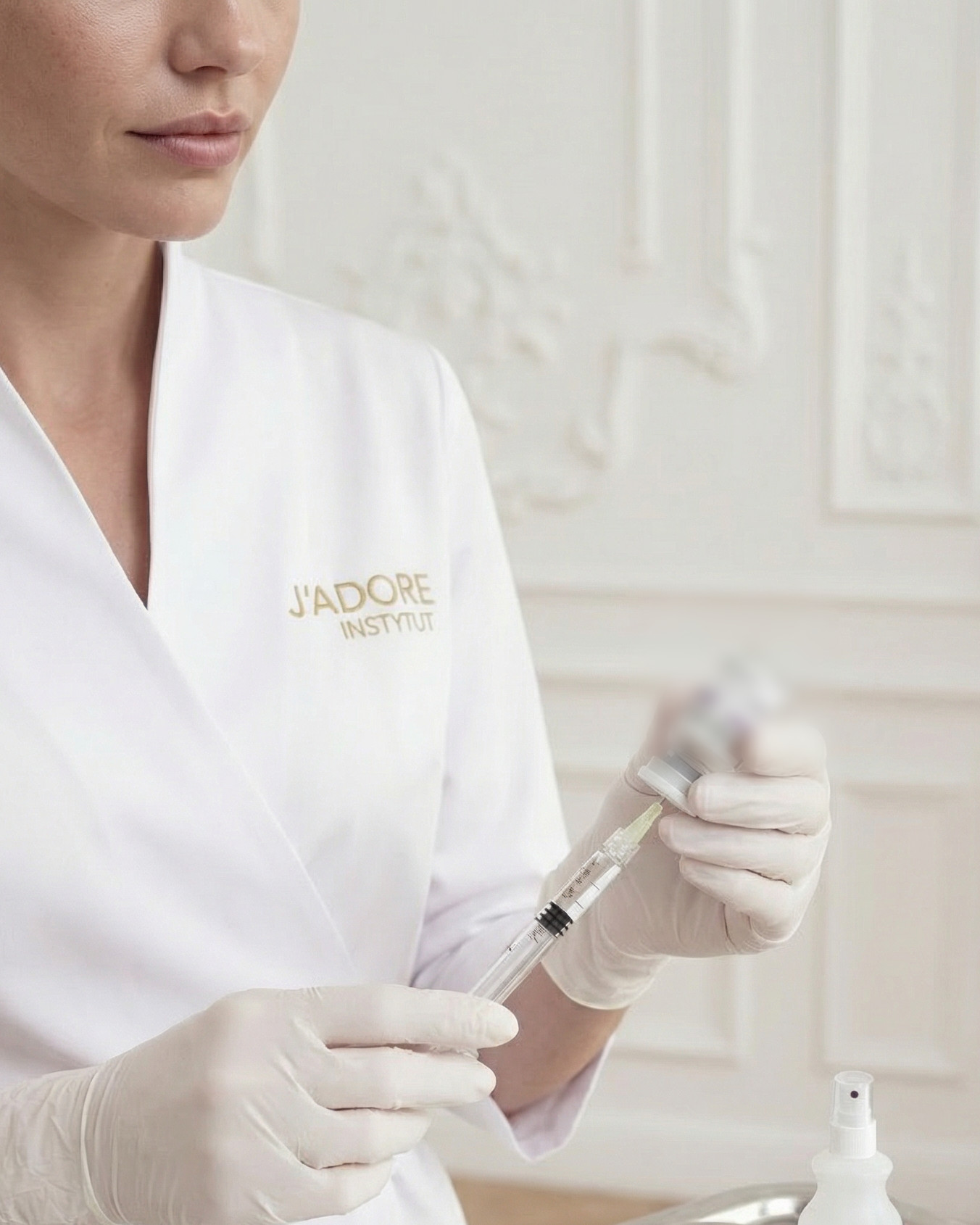
Delivers active ingredients directly into the dermis — vitamin C, hyaluronic acid, peptides. Combined with azelaic acid, this can enhance the lightening and hydrating effects at the same time.
Multi-acid peel
Combining acids (such as azelaic with mandelic or phytic) allows you to address hyperpigmentation, oiliness and texture at the same time. The protocol is chosen for your skin and its current condition.
Fractional laser
For deep acne scars, a peel is good skin preparation before laser treatment — it evens out the surface and reduces inflammation, which improves laser results and shortens recovery.
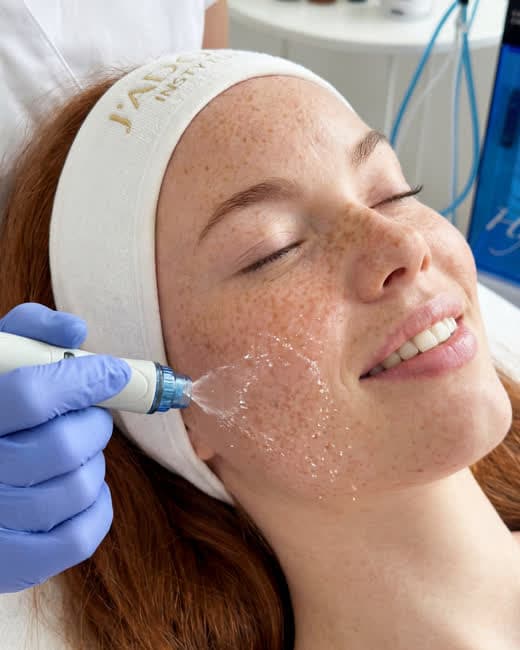
Hydrogen cleansing
As the first step in a series — it clears blackheads and sebum from pores, improving acid penetration in later treatments. A good option for oily or combination skin.
When it's not enough — the limits of azelaic acid
Azelaic acid is effective, but it's not the solution for every skin issue men face. It's worth knowing where its scope ends, so you don't waste time on a method that won't deliver results in a particular case.
- Deep, indented (atrophic) acne scars — this is territory for fractional lasers or microneedling (RF or mechanical). Acid evens out skin tone, but it won't fill in structural depressions.
- Melasma — hormonal pigmentation requires a comprehensive approach, often with a dermatologist. Azelaic acid can be part of the protocol, but it rarely works alone.
- Active, severe acne with papules and pustules — here the priority is a dermatologist and treating the underlying cause, not cosmetology. A peel can worsen active inflammation.
- Older, deeply set hyperpigmentation — this needs a series of treatments and time. There's no single visit that will resolve a years-long issue.
Who this is for — a simple test
The treatment works best when skin is in good baseline condition — no active breakouts, no shaving irritation, no open wounds. Before a series, it's worth waiting a few days after your last shave in the areas to be treated. This isn't forbidden, but skin right after close shaving is more delicate and may react more strongly.
A consultation before your first treatment is a required step. It lets us assess your skin phototype and the depth of hyperpigmentation, and choose the right protocol. It's a few minutes of conversation that decide whether the series will be effective or head in the wrong direction.