Why do hands age faster?
This isn't a matter of perception — it's physiology. The skin on the back of your hands is fundamentally different from facial skin. And almost everything works against it.
Thinner skin, less protection. Skin on the back of the hand is around 0.5 mm thick — one of the thinnest on the body (by comparison, cheek skin is roughly 1.5–2 mm). Less thickness means less of a cushion between you and the outside world.
Few sebaceous glands. The back of the hand has very few sebaceous glands — the natural producers of sebum that create a protective lipid film on skin. Your face produces sebum like a small factory. Your hands — barely at all. The result: chronic dryness, faster water loss, easier cracking.
Minimal fat tissue. With age we lose subcutaneous fat everywhere — but hands have very little to begin with. Past 40, hands start to look "skeletal": tendons, veins and joints become more visible because there's no fat left to cover them.
Constant UV exposure. Think about it: hands are exposed to sunlight practically all year round. You drive — your left hand sits in UVA coming through the windscreen. You go out for coffee — hands are exposed. Even in winter, even on a cloudy day, UVA still gets through. Have you ever applied SPF to your hands?
Daily contact with chemicals. Soap. Washing-up liquid. Cleaning products. Antibacterial gel (remember the pandemic?). Nail polish remover. Every one of these products disrupts the skin's lipid barrier. And hands come into contact with them multiple times a day.
Frequent washing = frequent damage. The average person washes their hands 8–12 times a day. Each wash strips away the natural protective layer. Hot water makes it worse. Bar soap makes it worse still — its pH is 9–10, while skin needs 4.5–5.5.
In short: hands have thinner skin, less sebum, less fat, more UV and chemical exposure, and get washed a dozen or more times a day. If you treated your face this way, it would look far worse.
"Hands don't lie" — the paradox of modern skincare
There's a term in aesthetic medicine: "age disconnect." The face says one thing, the hands say another. And the hands are telling the truth.
Dermatologist Dr Ellen Marmur of Mount Sinai in New York notes: "I can tell someone's age by looking at their hands — even if their face looks a decade younger. Hands are the last place people start taking care of, and they should be the first."
A study published in the Journal of the European Academy of Dermatology and Venereology (2024) confirmed that observers can estimate a person's age from a photo of their hands with an accuracy of 3–5 years. With a photo of the face (post-treatment), the margin of error reached 10–15 years. In other words, the face lies better than the hands.
This isn't about vanity. It's about consistency. If you invest in your facial appearance — and increasingly, people do, without shame — neglecting your hands is like buying a beautiful dress and pairing it with worn-out, dirty shoes. Details give you away.
A map of hand ageing — what changes, and when
Ages 30–35: the first signals
- Skin starts to lose elasticity — it doesn't bounce back as quickly after being pinched
- The first fine lines appear over the knuckles
- If you don't use SPF on your hands, the first hyperpigmentation appears (small, light brown spots)
Ages 35–45: visible changes
- Sun-induced hyperpigmentation (lentigines solares) — brown spots most people call "age spots" (a misleading term — they're SUN spots, not age spots)
- Skin becomes thinner and more delicate
- Veins start to become more visible
- Dry cuticles around the nails — chronic
Ages 45–55: pronounced ageing
- "Crepey" texture — skin looks like crumpled paper, especially when stretched
- Visible tendons and joints — from volume loss
- Hyperpigmentation spots grow larger and darker
- Nails grow more slowly and may become more brittle
Age 55+: advanced changes
- Significant volume loss — hands look "bony"
- Skin is paper-thin and injures easily
- A network of fine wrinkles covers the entire back of the hand
- Actinic keratoses (pre-cancerous lesions) — if UV protection was never used
What to do at home — a daily protocol
The good news: most hand ageing can be slowed, and partly reversed. The bad news: it takes consistency. But if you can apply cream to your face every day, you can do the same for your hands.
1. SPF on your hands — every day
This is the absolute basic, non-negotiable, starting point. Apply SPF 50 to the backs of your hands every morning — and, importantly, after every hand wash.
"But I wash my hands 10 times a day — I'm not reapplying SPF 10 times!"
You don't have to. But at minimum: in the morning (properly), after washing your hands at lunchtime, and again in the afternoon if you're heading out. Keep a small SPF tube in your bag — just like you would lipstick. It's a habit, not a procedure.
A 2013 Australian study — the only long-term, randomised SPF trial in history — found that people who applied sunscreen daily showed 24% fewer signs of skin ageing after 4 years. Hands respond to SPF exactly the way the face does.
2. Moisturiser after EVERY hand wash
The rule is simple: wash your hands → apply cream. Every time. Look for ceramides, shea butter, glycerine, urea (5–10%) and hyaluronic acid on the label. Avoid creams that list denatured alcohol high on the ingredients list.
The best time: in the evening, before bed, applied generously and thickly. You can put on a thick layer and slip on cotton gloves overnight — by morning your hands will feel like silk.
3. Retinol on your hands — twice a week
Yes, retinol on your hands. This isn't a mistake. What works wonders on your face works on your hands too: it speeds up cell turnover, stimulates collagen and reduces hyperpigmentation.
But mind the concentration. Skin on the hands is thinner and more sensitive. Start with a 0.3% retinol or a retinoid (such as retinal), twice a week, in the evening. If there's no irritation, you can increase to three times a week. The next morning: SPF is mandatory.
4. Gloves for chemicals — always
Washing dishes without gloves? Stop. Today. Washing dishes without gloves is like washing your face with floor cleaner. Sounds absurd? Because it is — and yet most of us do it.
Rubber gloves for: washing dishes, cleaning, contact with chemicals. Winter gloves: from October to March. Cotton gloves at night, after applying cream.
5. Exfoliation — once a week
A gentle enzyme peel or lactic acid peel (5–10%) on the backs of the hands once a week. It removes dead skin, evens out skin tone, and improves absorption of cream and retinol. You don't need a separate product — use the same one you use on your face.
In-salon treatments — when home care isn't enough
Home rituals slow ageing down. Salon treatments reverse it.
Skin biostimulator for hands
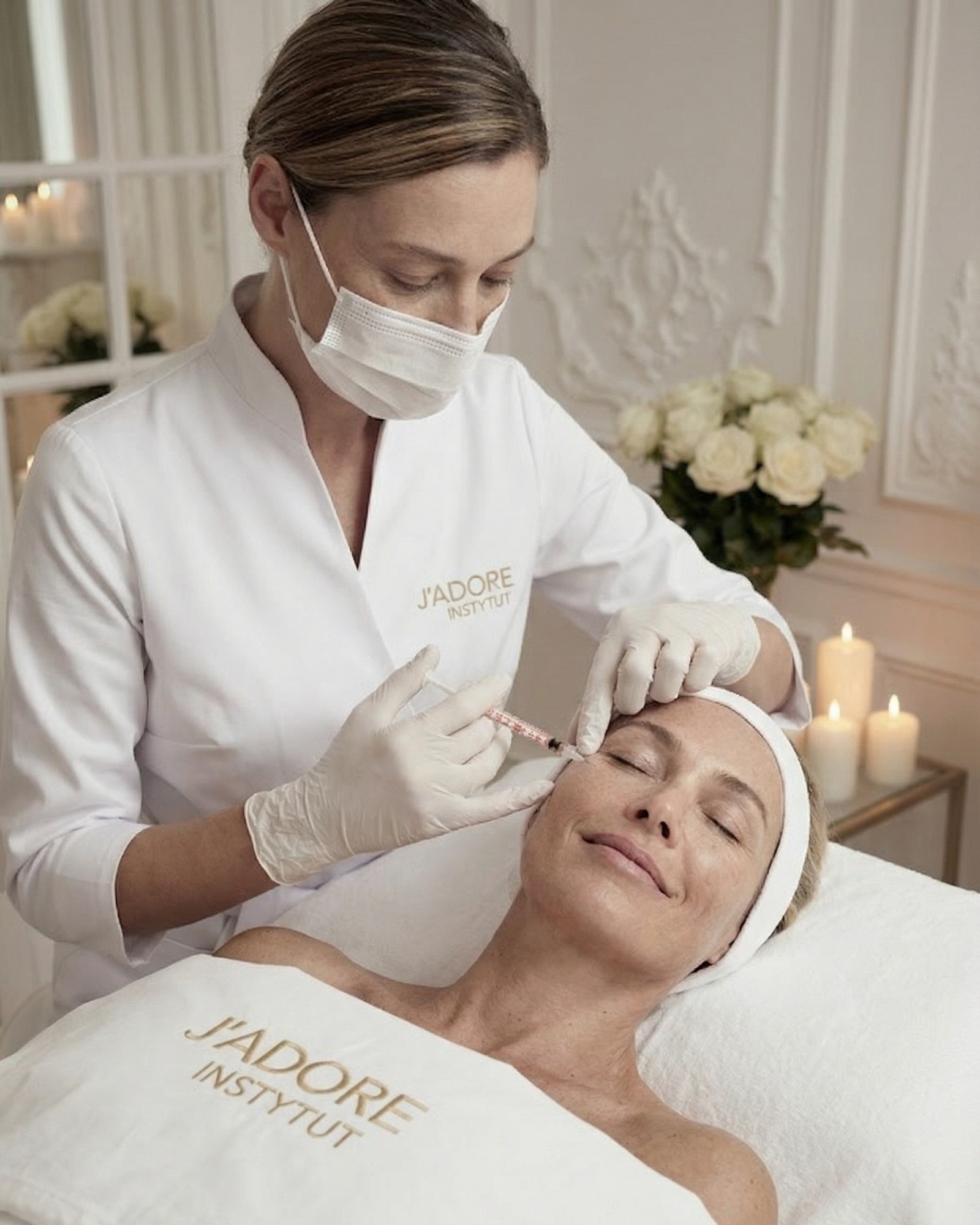
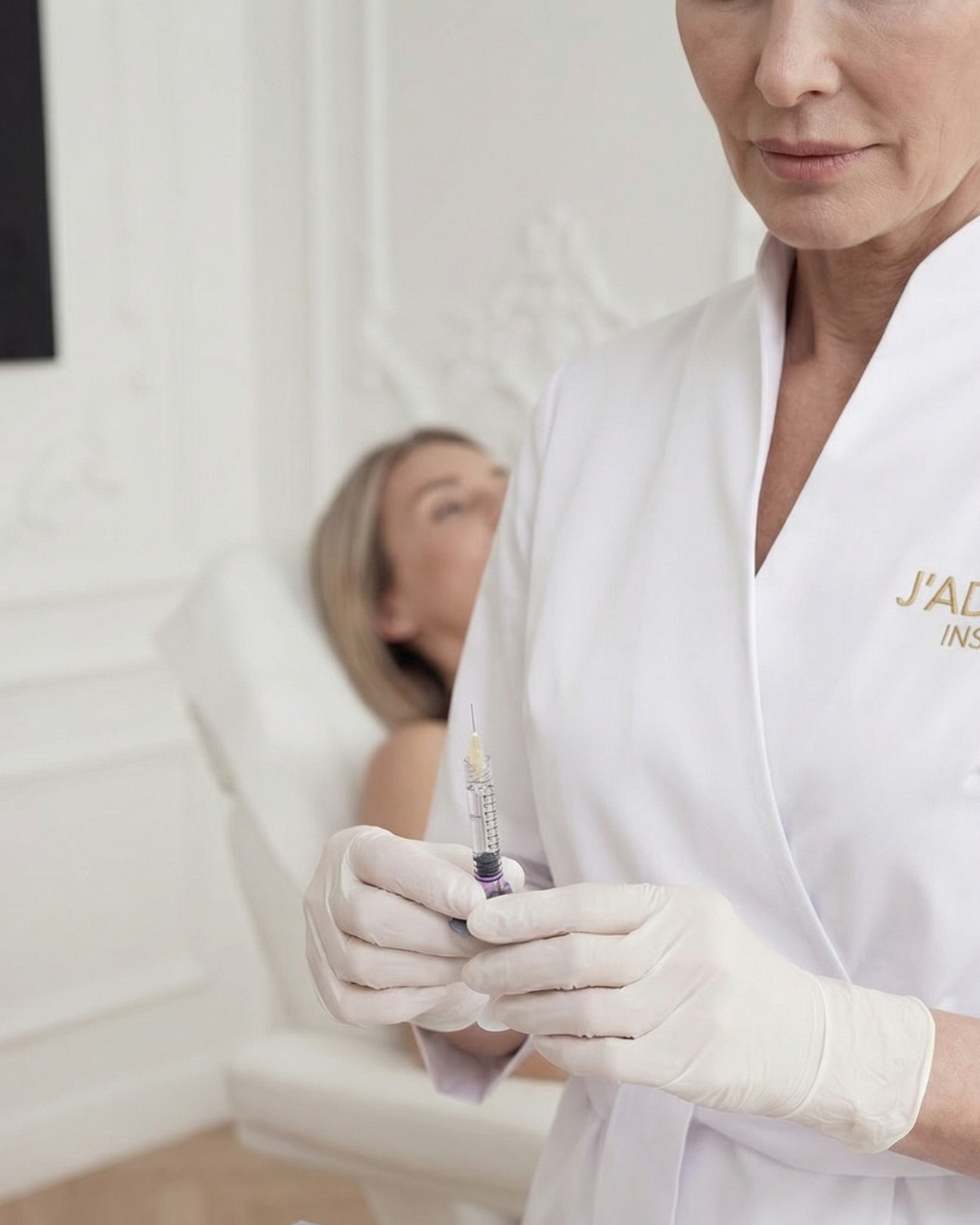
Some hyaluronic acid skin biostimulators are also intended for use on the hands. They may support hydration and skin quality. Indications for this area and the method of administration must be checked for the specific product.
How it works: hyaluronic acid preparations may support hydration and skin quality on the hands. The number of injection points, injection technique and expected effects depend on the chosen preparation and assessment of the skin.
Protocol: 2 sessions, 4 weeks apart. Results last 6–9 months.
The result: skin stops looking "crepey," veins become less visible, and hands look healthier and fuller. At the same time, the result looks natural. No one will say "you've had something done to your hands" — they'll say "you look great."
Hand mesotherapy
A blend of vitamins, amino acids, peptides and hyaluronic acid delivered through a series of micro-injections across the entire back of the hand. Revitalisation from within — improving skin tone, hydration and elasticity.
Series: 3–4 sessions every 2–3 weeks, followed by maintenance sessions every 2–3 months.
Chemical peels
Glycolic, lactic or TCA acid at a controlled concentration, targeting hyperpigmentation. A series of 3–4 sessions can significantly lighten sun spots and even out skin tone.
SPA manicure — a ritual, not just aesthetics
An SPA manicure isn't just "getting your nails done." It's a comprehensive regenerative ritual for your hands: exfoliation, mask, massage, hydration, cuticle and nail care. In an anti-ageing context, it provides regular nourishment and stimulation that — repeated every 3–4 weeks — keep your hands in good condition.
Rescue plan — if your hands are already giving away your age
Don't panic. Even if your hands look older than you'd like, there's plenty you can do. Here's the plan:
Months 1–2: home foundation
- SPF every day
- Cream after every hand wash
- Retinol twice a week, in the evening
- Gloves for chemicals
- Exfoliation once a week
Months 2–3: skin biostimulator
- Session 1 + session 2, 4 weeks apart
- Between sessions: continue your home routine
Months 3–4: mesotherapy or peels
- Depending on your main concern (volume loss → mesotherapy, hyperpigmentation → peels)
Ongoing: SPA manicure every 3–4 weeks
- Maintaining results plus regular regeneration
After 3–4 months of following this protocol, the difference is dramatic. Your hands won't look like a twenty-year-old's — but they'll look like the best possible version of your own hands. Consistent with your face. Well cared for. Beautiful.
The detail that says everything
In fashion, elegance is said to show in the details — the quality of a handbag's leather, the way a scarf is tied, a pair of shoes. In skincare, that detail is your hands. You can have a flawless face, perfect hair, a beautiful manicure — but if the skin on your hands is shouting "I don't look after this," the overall effect falls apart.
At J'ADORE INSTYTUT, we treat hands as an integral part of an anti-ageing protocol, not an afterthought. Your consultation includes an assessment of your hand skin, treatment recommendations (skin biostimulator, mesotherapy, peels), and a tailored home routine. And our SPA manicure isn't just about beautiful nails — it's a full regenerative ritual for hands that deserve just as much attention as your face. Because your hands tell a story — make sure it's the story you want to tell.