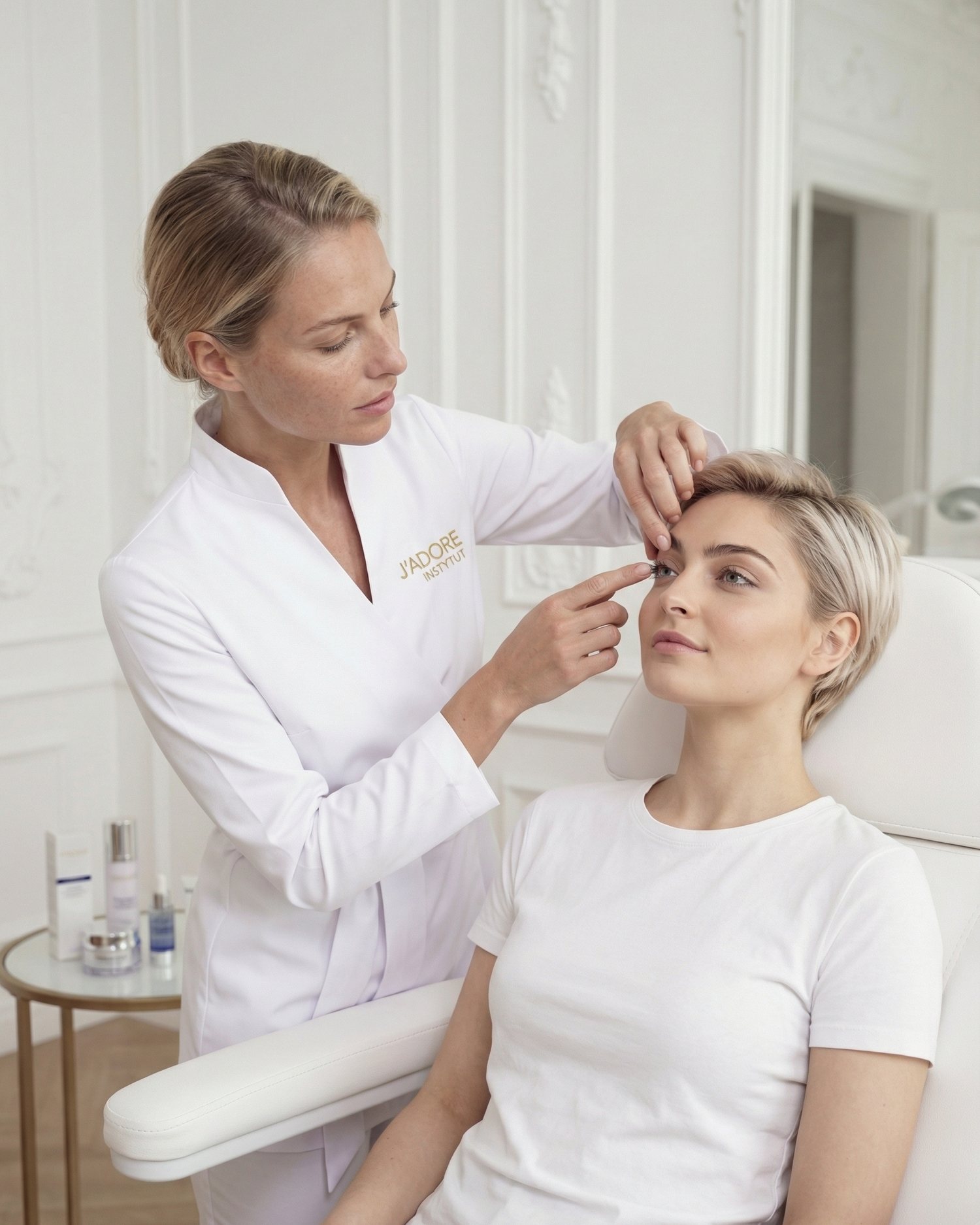
First, establish what the review is actually about
Plasma IQ is sometimes described with a single slogan, although it can apply to different areas. A review after treating a small skin lesion does not tell you what the healing of both eyelids will look like. A review of an upper eyelid lift does not provide answers about work around the lips. Even in the same area, the extent of the treatment and the initial skin condition matter.
Before you consider a comment useful, look for answers to four questions: what was the goal, which area was treated, when was the review written, and does the author also describe the healing period? The lack of this data does not mean the review is untrue. It only means it cannot be safely applied to your own situation.
What reviews and photos usually do not show
A before and after photo may look convincing, but without the conditions under which it was taken, it remains just an illustration. Different lighting, a raised eyebrow, forehead tension, a changed head angle, or make-up can alter the appearance of an eyelid. With minor differences, even the distance of the camera matters. A good comparison photo should be taken in a similar position, with similar facial expressions and lighting — and described with the date relative to the treatment.
What a review can reliably suggest
an experience that can be described
- whether a professional qualification took place before the treatment
- whether the real downtime and care method were explained
- how noticeable the swelling, tension, and presence of scabs were
- whether the salon answered questions during the healing period
- whether the result was assessed after healing, not immediately after the visit
What a review will not decide for you
elements requiring a consultation
- whether your problem is suitable for Plasma IQ
- how your skin will react to point-by-point thermal action
- whether the risk of hyperpigmentation is acceptable in your case
- what scope and intensity will be appropriate
- whether another method or a doctor's consultation is a better solution
Reviews rarely list all medications, previous treatments, susceptibility to hyperpigmentation, or sun exposure. This is understandable — they are an account of an experience, not qualification documentation. This is precisely why a positive description from a person of a similar age is not proof that your skin has the same risk profile and potential for results.
Healing is part of the treatment, not a footnote
Plasma IQ leaves a grid of tiny points on the skin. After the treatment, swelling appears, which can be significant around the eyelids, and the points darken to form scabs. They should fall off spontaneously; picking or rubbing them increases the risk of scarring and hyperpigmentation. After the scabs fall off, the skin may remain pink and more sensitive.
- 01
Immediately after the visit
The treatment points, redness, and increasing swelling are visible. This is not the moment to assess the final result.
- 02
Visible healing stage
Swelling can be noticeable, and small scabs are visible. You must accept the post-treatment appearance and not try to mechanically accelerate it.
- 03
Spontaneous shedding of scabs
The points do not fall off at the same time, so for a while, the skin may look uneven. Introduce make-up and skincare according to the recommendations, not according to the timeline from someone else's review.
- 04
Assessment after healing
Only when the swelling subsides, the scabs disappear, and the skin calms down can you more honestly assess the direction of the change. The final result does not have to be identical for two different people.
This is where disappointment most often arises: someone hears there is no surgery or stitches, and assumes there is no recovery period. Meanwhile, swelling and scabs can be visible for several, and sometimes over a dozen, days. Therefore, dates before a wedding, photoshoot, or important meeting must be planned with a buffer established during the consultation.
How to recognise a well-conducted visit
A good result starts with the decision of whether Plasma IQ is the right tool at all. For moderate excess eyelid skin, it may be considered as a salon treatment, but it will not replace surgery in every case. If the problem is significant or has a cause other than skin laxity, an honest qualification may end in a refusal or a referral to another specialist.
- The medical history is taken before the decision to treat. Questions about health, medications, healing, tanning, and previous procedures are not a formality.
- The specialist assesses the phototype and susceptibility to hyperpigmentation. Not every skin type has the same risk profile after thermal action.
- The scope is precisely defined. You know whether the work concerns the upper eyelids, lower eyelids, the eye area, or a single lesion.
- Limitations are stated before consent. You hear both the possible goal and information about what plasma will not correct.
- Downtime is entered into your calendar. No one presents scabs and swelling as an insignificant detail.
- You receive clear aftercare recommendations. These include sun protection, gentle skincare, and rules regarding make-up, swimming pools, saunas, and physical exertion.
- An unclear skin lesion is not removed "on the side". It first requires proper assessment, and only then a decision on the method.
What can lead to disappointment — even when the treatment was performed correctly
Not every disappointment means a technical error. Sometimes expectations were greater than the method's capabilities. Plasma IQ does not remove an arbitrary amount of skin, does not stop natural ageing, and does not give everyone an identical result. A subtle change may be clinically and aesthetically appropriate, while simultaneously insufficient for a person who expected a result like that after surgery.
A useful review also mentions what the treatment did not change. The absence of such a statement in reviews does not prove that there are no limitations. During your consultation, ask for a description of a realistic goal for your skin and an alternative plan if Plasma IQ proves unsuitable.
Red flags in promises and communication
The most concerning signs are not isolated critical comments, but promises that contradict the nature of the treatment. Plasma IQ disrupts the skin surface at controlled points, so an honest discussion must cover healing, risks and contraindications. If communication focuses solely on a quick lift, half of the necessary information is missing.
- The promise of a visible lift with no healing period at all.
- Assurances that the treatment is suitable for every skin phototype and every degree of the problem.
- A lack of questions about recent tanning, medications, a tendency towards keloids and active skin lesions.
- Encouraging a treatment just before an important event despite the lack of time for swelling and scabs to subside.
- Removing a lesion of unclear character without prior assessment.
- Before and after photos taken in different lighting or with clearly altered facial expressions.
- Avoiding questions about who qualifies you, who performs the treatment and who to contact during the healing process.
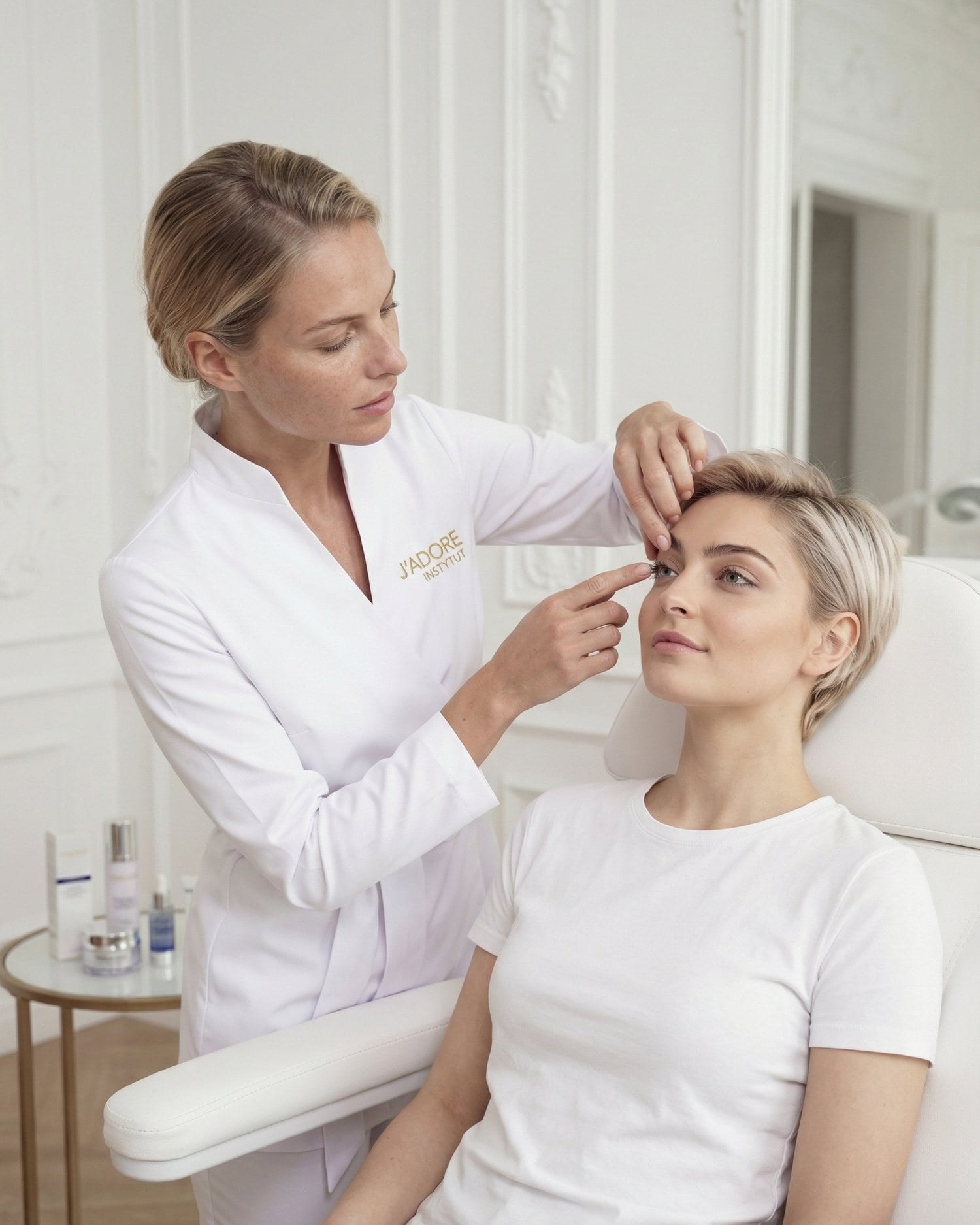
When not to perform Plasma IQ or when to postpone it
It is not worth planning the treatment if you cannot accept visible scabs, temporarily give up make-up in that area or follow sun protection rules. This is not a matter of willpower, but of healing conditions. If your calendar does not allow for recovery, it is more sensible to change the date.
- Postpone your visit if you have an active infection, inflammation or skin damage in the area where the work is planned.
- Do not plan the treatment on freshly tanned skin or if you cannot avoid the sun during the healing period.
- Pregnancy and breastfeeding are reasons to refrain from the treatment, in accordance with qualification standards.
- A tendency towards keloids, post-inflammatory discolouration, healing disorders and certain illnesses or medications require individual assessment.
- Do not use plasma to remove a lesion whose character has not been identified.
- If you expect a result equivalent to surgery for a large excess of skin, you first need an honest comparison of methods.
Plasma IQ in Krakow — where to check the scope and book a consultation
In Krakow, we perform Plasma IQ at J'ADORE INSTYTUT at Karmelicka 45/2B, 31-128 Krakow. The salon is open Mon–Sat 8–20. You can find information about the treatment and our local offer on the Plasma IQ in Krakow page.
For your consultation, prepare a list of medications taken and previous treatments. Mention your skin's reaction to the sun and any tendency towards discolouration or abnormal scarring. If you are considering work on your eyelids, show exactly what bothers you without tensing your forehead. If it concerns a skin lesion, do not assume in advance that it will be removed during the same visit.
Summary: a good review helps you ask questions, it does not make decisions
Reviews of Plasma IQ are valuable if you read them as accounts of a specific case. Check the area, the goal, the timing of the assessment, the description of healing and information about qualification. Do not transfer one person's result to your own skin and do not treat a brief moment of delight as a guarantee.
- Look for specifics regarding swelling, scabs and contact with the salon after the visit.
- Only evaluate photos if the conditions and the timing of the shot are comparable.
- Appreciate places that speak about limitations and are able to refuse a treatment.
- Plan your downtime according to your own work and calendar, not someone else's comfort threshold.
- Base your final decision on the qualification and use the review as a list of questions.
The most credible promise sounds unspectacular: first, we will check if this method fits your problem; then, we will honestly discuss the visible healing stage; and we will only assess the result once the skin has calmed down. In the case of Plasma IQ, such caution is a good sign.