Is this treatment right for you — before anything else
Before we get to the steps, one important question first: Plasma IQ isn't for everyone. It's a treatment with a real effect, but also a real healing process — and it's worth knowing who can benefit and who shouldn't have it.
Plasma IQ (salon treatment)
Non-surgical skin firming
- No incisions, no stitches
- May be suitable for early to moderate eyelid drooping
- Healing takes several days to around two weeks (scabbing, swelling)
- Results emerge gradually over several weeks
Blepharoplasty (eyelid surgery)
Surgical removal of excess skin and tissue
- Permanent removal of excess skin
- Suitable for significant drooping or eyelid fat pads
- Longer recovery, bruising and swelling for 2–4 weeks
- Long-lasting results
In practical terms: if the eyelid droop is significant and affects your field of vision, speak to an ophthalmologist or plastic surgeon before deciding on any treatment — Plasma IQ may not be enough on its own. If the concern is aesthetic, the excess skin is moderate, and you're looking for a non-surgical route — a consultation at an aesthetic cosmetology salon is the right next step.
How Plasma IQ works — the short version, no jargon
To go through each step of preparation and healing with full understanding, it helps to know the mechanism behind it — without numbers, parameters or abbreviations that mean nothing to you.
Plasma IQ uses a plasma discharge — a point of energy that forms a millimetre above the skin and instantly heats its surface across a microscopic area. The skin in that spot contracts and undergoes controlled damage, which prompts the body to repair and remodel the tissue. The result of this repair is a reduction in excess skin, improved firmness and smoother lines.
Importantly: the number of points and the treatment area are chosen individually, based on your skin condition and desired result. That's why results vary between women — they depend on your starting skin firmness, its thickness, your lifestyle, aftercare, and your individual capacity for regeneration.
Step by step through the whole process
This is the heart of the guide. Below, we describe each stage in order — from your first contact with the salon to assessing results several weeks later. No shortcuts: the order genuinely matters here.
- 01
Consultation — the starting point
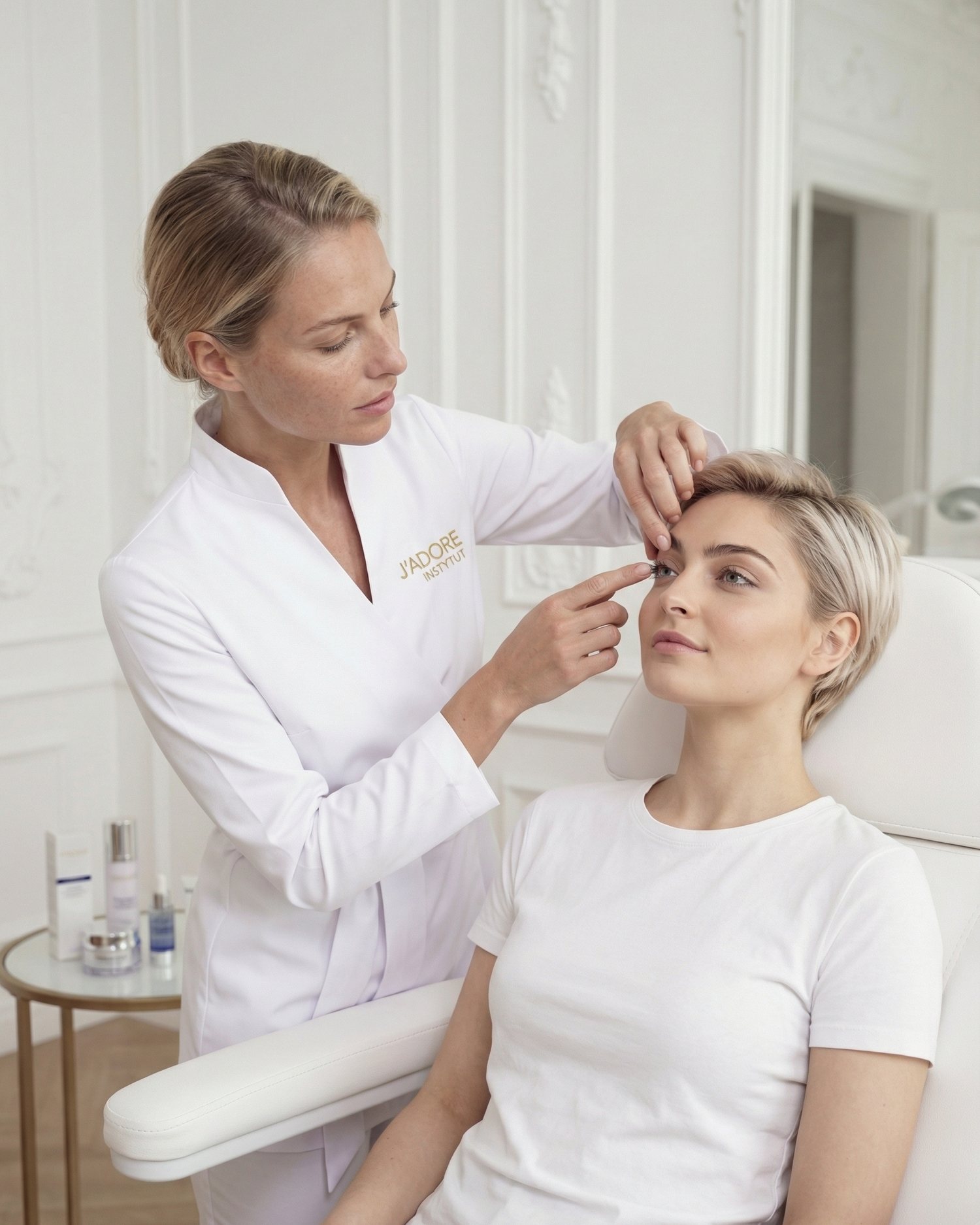
Before anything happens, you'll have a conversation with a specialist. We assess the condition of the eyelid skin, the type and degree of excess, skin thickness, and any contraindications. This is also your moment to say what you're hoping for — and to hear an honest answer about whether the treatment can deliver it. A good consultation takes time and doesn't skip the difficult questions.
- 02
Preparing your skin before the treatment
In the weeks before the treatment, skin condition matters. Avoid sunbathing, sunbeds and strong acids on the face. If you're using photosensitising medication or isotretinoin, mention it during the consultation — you may need a break from it beforehand. On the day of the treatment, don't apply makeup to the eye area.
- 03
The treatment itself — what to expect
A numbing cream is applied before the treatment, and you'll wait a short while for it to take effect. The treatment is performed with local anaesthesia, but you may still feel slight stinging or warmth. Tiny points appear on the skin — these mark the plasma discharge sites. Once it's finished, the skin is red and some immediate swelling may appear.
- 04
The first 24–48 hours — swelling and scabbing
This is the most visually difficult stage. The eyelids may be swollen, and scabs form at the discharge points. This is a completely normal and expected part of healing — it doesn't indicate an error or a complication. Cool compresses (not ice directly on the skin) can bring relief. Don't rub, don't scratch, don't touch.
- 05
Healing — the first 7–14 days
Scabs come away gradually, usually within 7–10 days. During this time, avoid: makeup around the eyes, saunas, swimming pools, the gym, and unprotected sun exposure. Use the products recommended by your specialist (often mild antiseptics, followed later by a regenerating cream). Your skin may stay pink for a few weeks — this is normal and fades.
- 06
Weeks after the treatment — assessing results
Full results usually appear 4–8 weeks after the treatment, once the collagen has had time to remodel. Some women choose a second session a few months later to strengthen the effect. This is a good moment for "before and after" photos — the contrast is often clearer when comparing pre-treatment photos with those taken 6–8 weeks on.
What absolutely not to do after the treatment
How well Plasma IQ heals depends on you as much as on the treatment itself. A few mistakes can extend healing, raise the risk of discolouration, or weaken the result. Here are the ones that matter most.
In short: healing skin needs calm and protection, not optimisation. It's a couple of weeks invested in a result that can last a year or longer.
What results are realistic — an honest assessment
Plasma IQ is often marketed with phrases like "a lift without a scalpel" — and in a sense that's true, but it's worth being clear about what that really means.
- For many women, there's a visible reduction in excess eyelid skin and an improvement in the contour of the gaze.
- Fine lines around the eyes can appear shallower and smoother — this effect is especially noticeable on fine, "paper-thin" lines.
- Skin firmness below the eyelid (in the crow's feet area) improves noticeably for some people.
- Results are individual — they depend on your starting skin condition, the extent of the treatment, your lifestyle and your aftercare.
- The treatment doesn't stop ageing — results may need refreshing after a year or a few years.

When it's worth combining Plasma IQ with other treatments
Plasma IQ focuses on excess skin and fine lines — but the eye area ages on several fronts at once. Volume loss, skin tone, epidermal quality — these are separate issues. For a comprehensive approach to refreshing the eye area, Plasma IQ is often part of a broader plan.
Mesotherapy for the eye area
Hydrates and nourishes the skin below the eyelid — it complements what Plasma IQ doesn't address (deeper skin quality, regenerating cocktails). It's best to space these treatments apart.
Laser skin smoothing
For pronounced lines and uneven skin texture, laser can deepen the smoothing effect after Plasma IQ — discuss the sequence and timing with your specialist.
Facial firming treatments (RF, HIFU)
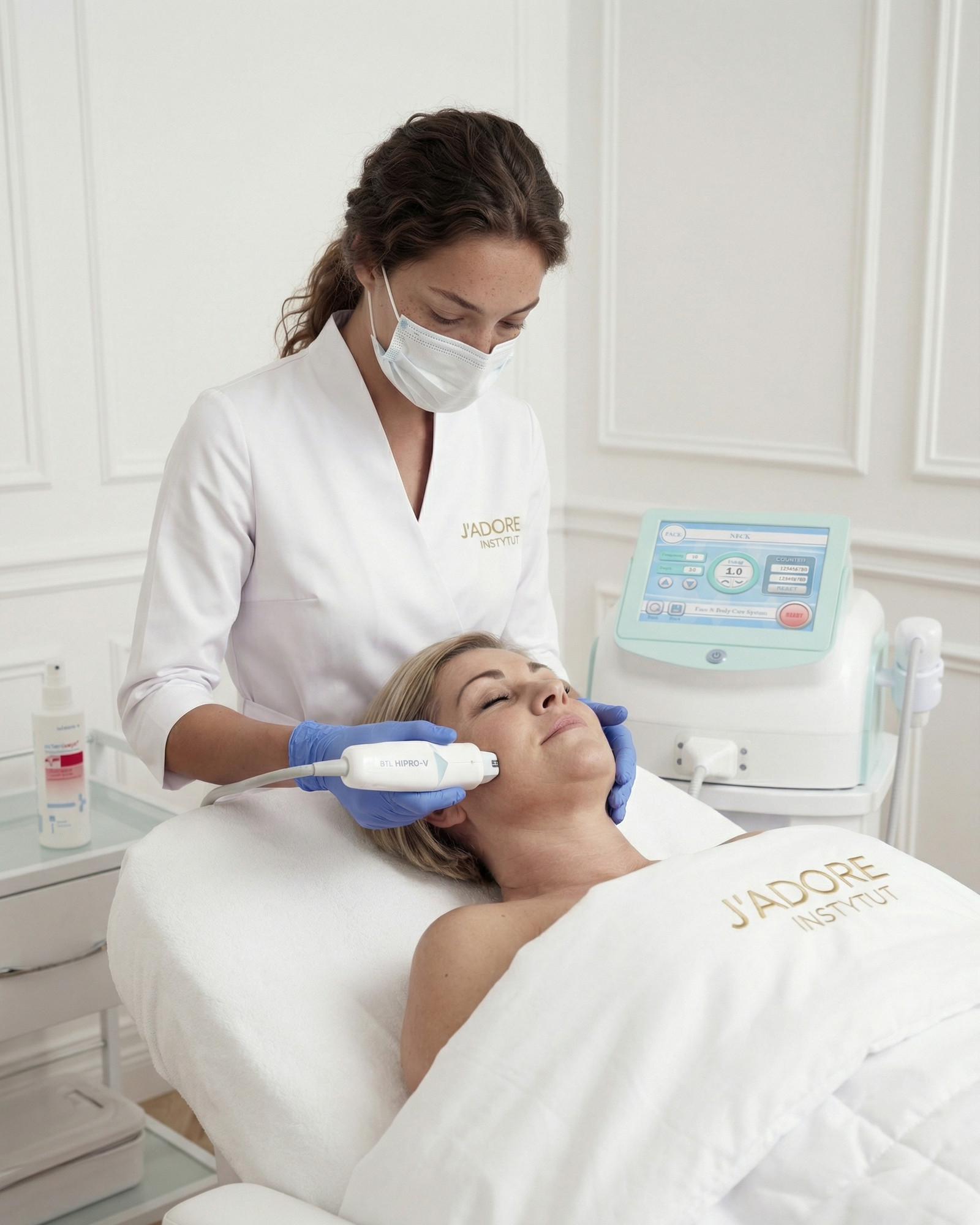
If, alongside your eyelids, you're interested in firming your face and contour overall, radiofrequency or focused ultrasound treatments can work synergistically with Plasma IQ as part of a longer-term plan.
Home care with retinoids and peptides
Once your skin is fully healed (at least 6–8 weeks), daily care with retinoids and peptides can sustain and deepen the collagen stimulation from the treatment.
When to talk to a specialist
Plasma IQ requires individual assessment — not every skin type, and not every eyelid concern, is a good indication for it. If you're considering the treatment, a few situations deserve an honest conversation before you decide.
- You're not sure whether the issue is really excess skin or whether it's the eyelid itself drooping (ptosis) — the two look similar but call for different approaches.
- You're prone to discolouration, hypertrophic scars or keloids — this is important information for your consultation.
- You're taking systemic medication or have an active skin condition on your face.
- Your expectations involve removing a very large amount of excess skin — here, an honest conversation is essential.
- You want to understand what the treatment can realistically change in your specific case (not "the woman in the video").
A good consultation before Plasma IQ isn't a formality — it's the moment that decides whether the treatment makes sense for you, or whether another direction is worth considering. At J'adore Instytut, we start with a conversation, not a booking.